


























Views
Downloads
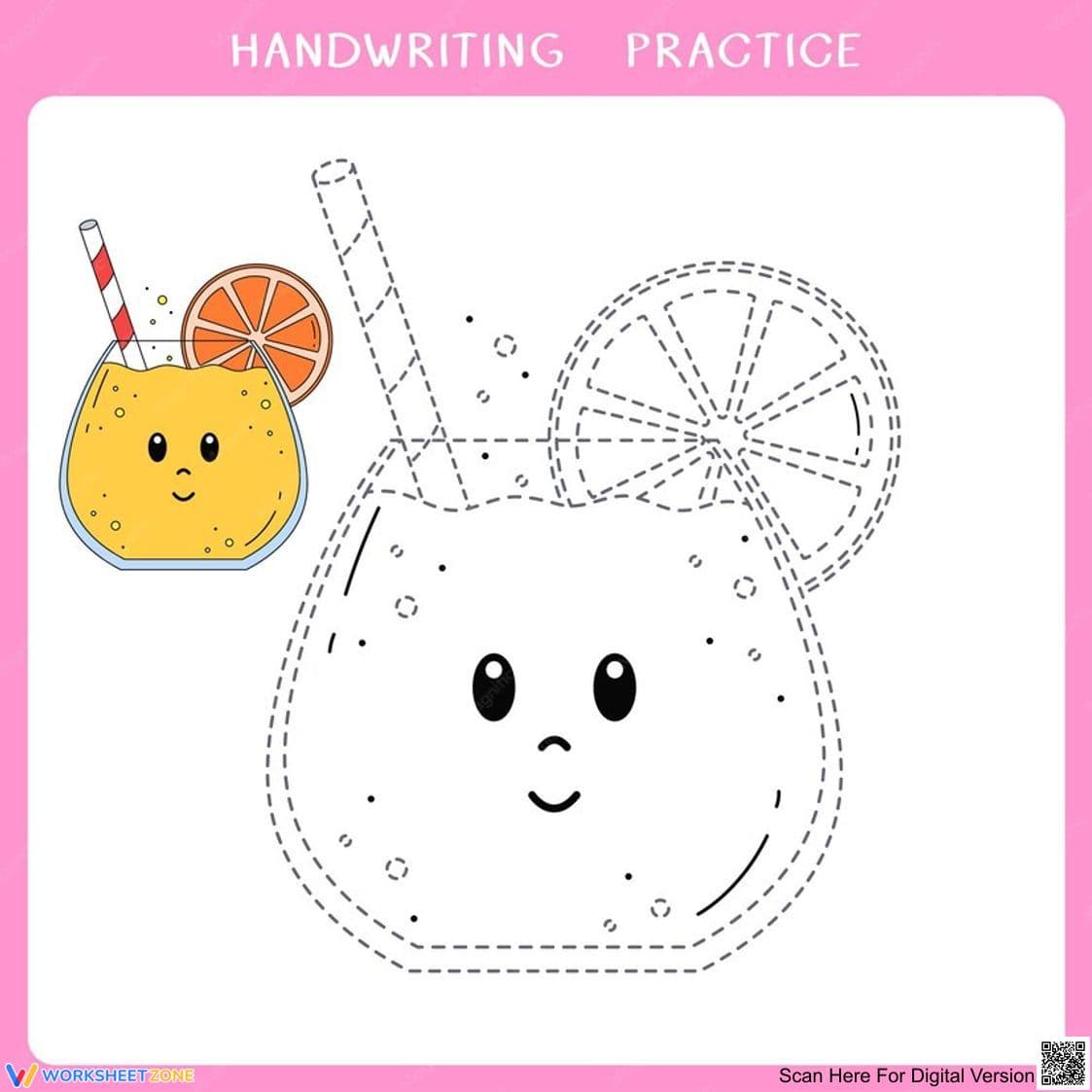

Orange Juice Tracing Fun | Essential Preschool Worksheet
Paste this activity's link or code into your existing LMS (Google Classroom, Canvas, Teams, Schoology, Moodle, etc.).
Students can open and work on the activity right away, with no student login required.
You'll still be able to track student progress and results from your teacher account.
This Orange Juice Tracing Fun worksheet provides young learners with a delightful way to develop the fine motor control necessary for successful handwriting. By following the dashed lines of a cheerful orange drink, students practice the steady hand movements required for letter formation. This activity transforms essential pre-writing practice into an engaging creative session.
At a Glance
At a Glance
- Grade: Preschool · Subject: Handwriting
- Standard:
CCSS.ELA-LITERACY.L.K.1.A— Print many upper- and lowercase letters through fine motor control- Skill Focus: Fine motor tracing
- Format: 1 page · 1 task · Answer key N/A · PDF
- Best For: Early finishers and morning work
- Time: 10–15 minutes
What's Inside
Inside this single-page PDF, you will find one large-scale tracing activity featuring a cute orange juice glass, a straw, and a citrus slice. The worksheet includes a colored reference image in the top-left corner to guide students in their artistic choices. The bold dashed lines are specifically designed for small hands using crayons or thick markers.
Zero-Prep Workflow
The zero-prep workflow for this resource is designed for maximum efficiency. First, print the single-page PDF (30 seconds). Next, distribute the sheets along with crayons or markers to your students (1 minute). Finally, review the completed drawings to check for line accuracy and grip (30 seconds). Total teacher preparation time is under two minutes, making it an ideal sub plan addition.
Standards Alignment
This resource aligns with `CCSS.ELA-LITERACY.L.K.1.A`, which focuses on the physical mechanics of writing. It also supports `CCSS.ELA-LITERACY.RF.K.1` by introducing students to the concept that marks on a page carry meaning. Both standard codes can be copied directly into lesson plans, IEP goals, or district curriculum mapping tools.
How to Use It
Use this worksheet during your morning entry routine to settle students or as a quiet activity after direct instruction in fine arts. It serves as an excellent formative assessment tool; observe how students hold their writing utensils and whether they follow the line directionality. Expect students to spend 10 to 15 minutes completing the tracing and coloring.
Who It's For
This worksheet is designed for Preschool and Kindergarten students, particularly those who need additional support with grip strength or hand-eye coordination. It pairs naturally with a lesson on healthy foods or a "Letter O" unit. It is also a great resource for occupational therapy sessions focusing on distal control.
Research from Fisher & Frey (2014) emphasizes the importance of scaffolded fine motor activities in the early childhood classroom to bridge the gap between drawing and formal writing. This Orange Juice Tracing Fun worksheet utilizes the CCSS.ELA-LITERACY.L.K.1.A framework to provide students with the low-stakes practice necessary for developing pencil pressure and stroke precision. By engaging with familiar, friendly imagery, learners are more likely to persist through the repetitive motions required for muscle memory. According to NAEP data, early mastery of fine motor skills is a significant predictor of later academic success in literacy and composition. This printable resource ensures that every child has access to high-quality, standards-aligned pre-writing practice that is both developmentally appropriate and classroom-ready. It serves as a vital tool for educators looking to integrate art and handwriting into a cohesive instructional block without increasing their daily preparation burden.


