


























Views
Downloads
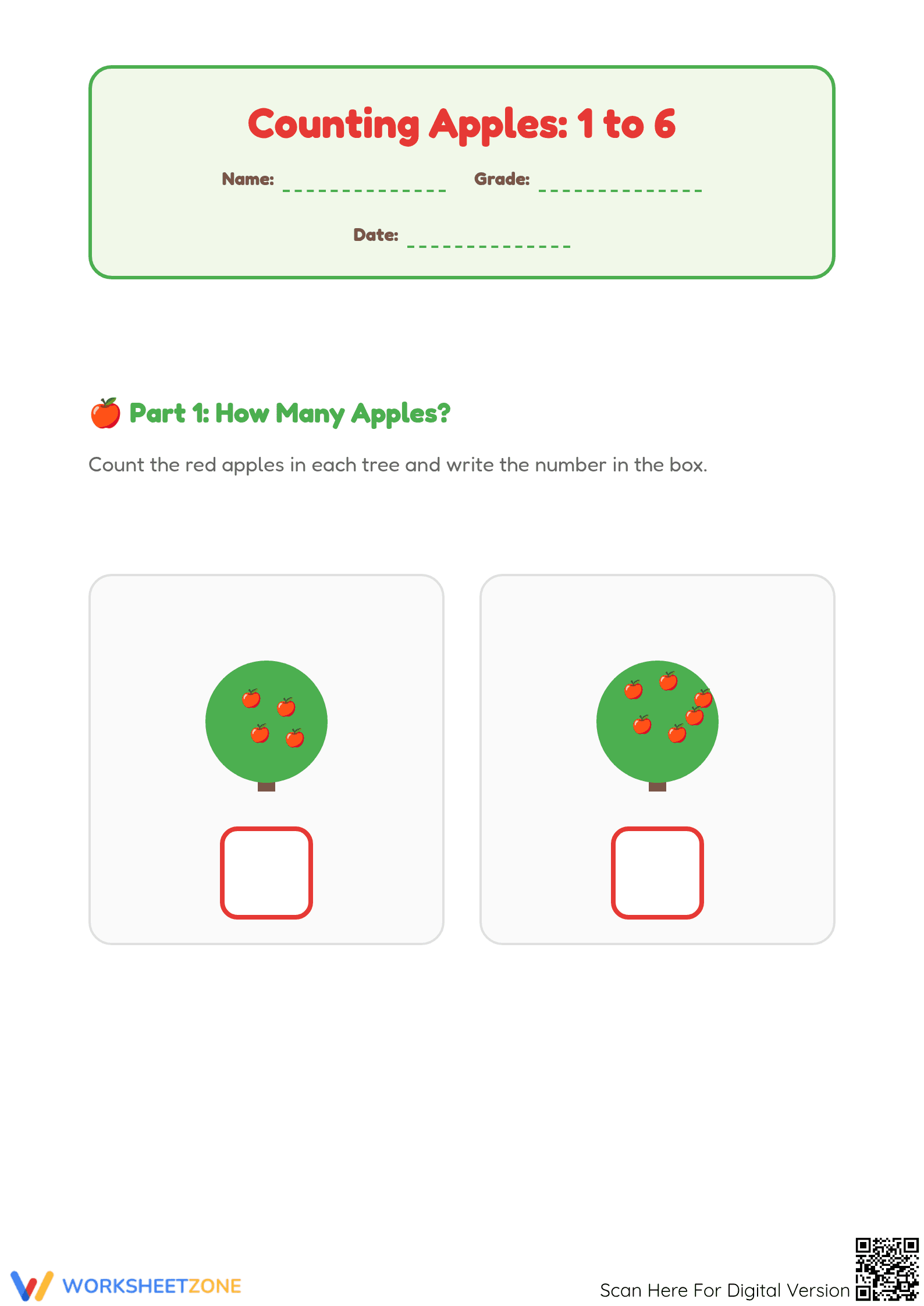
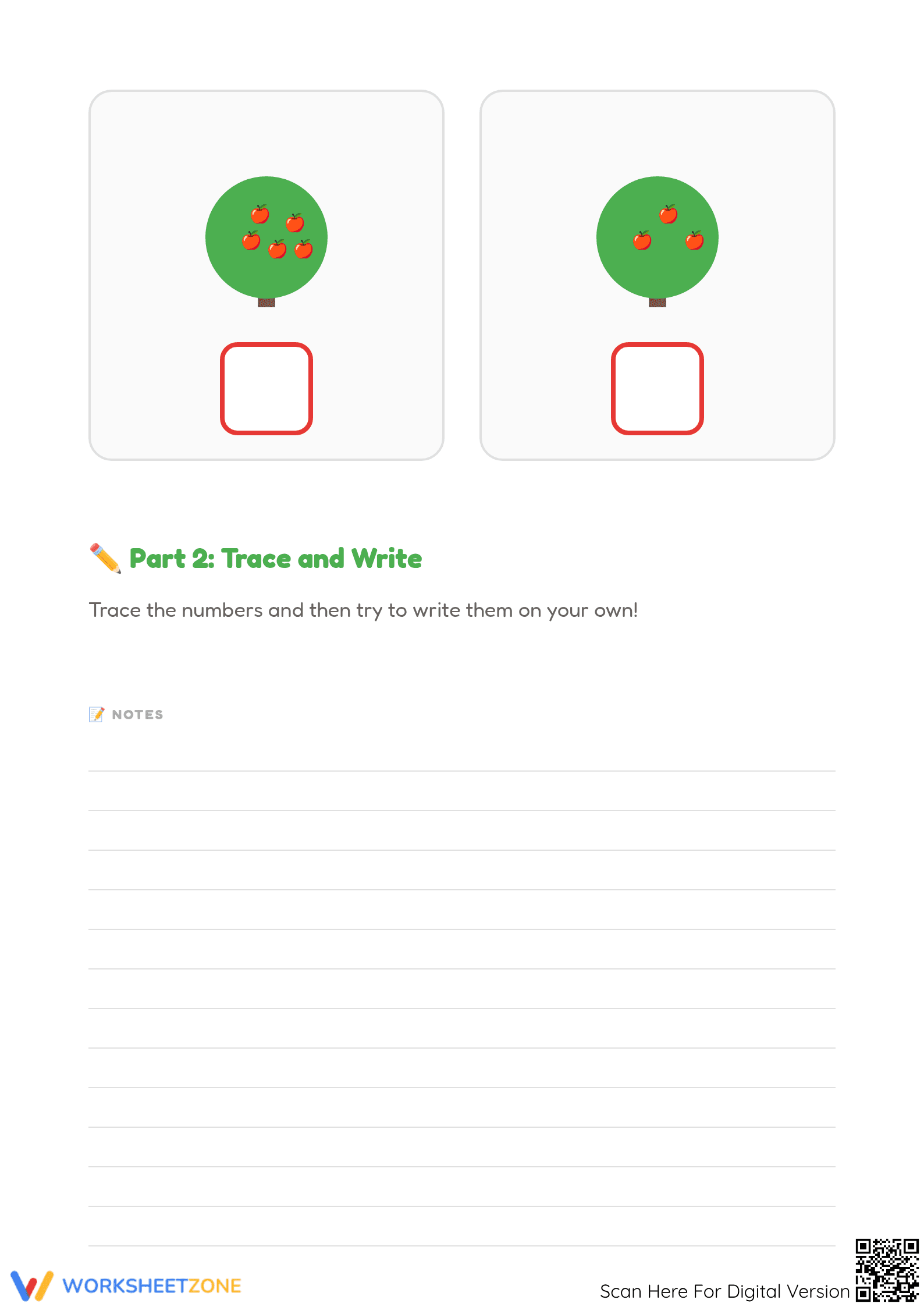
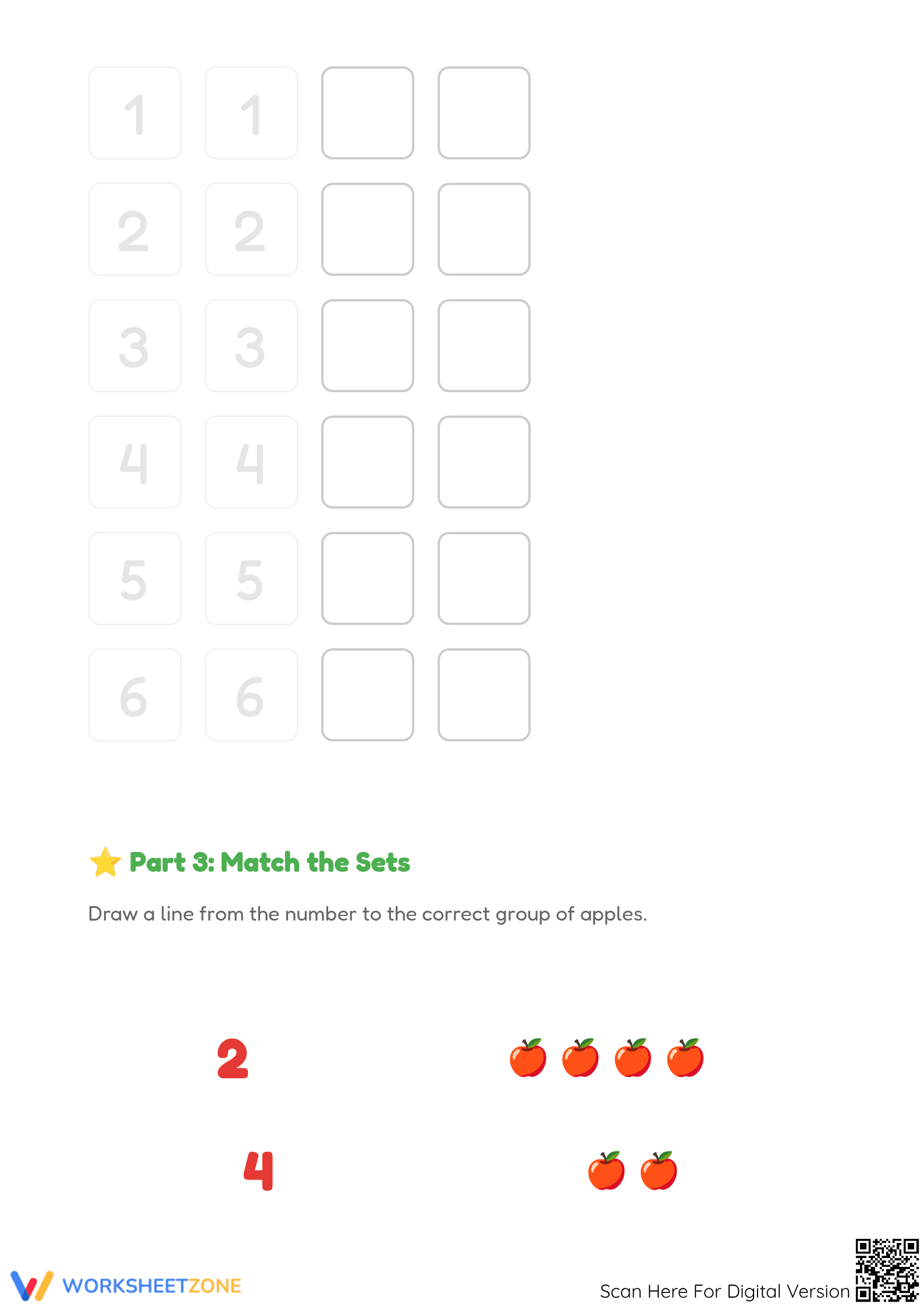
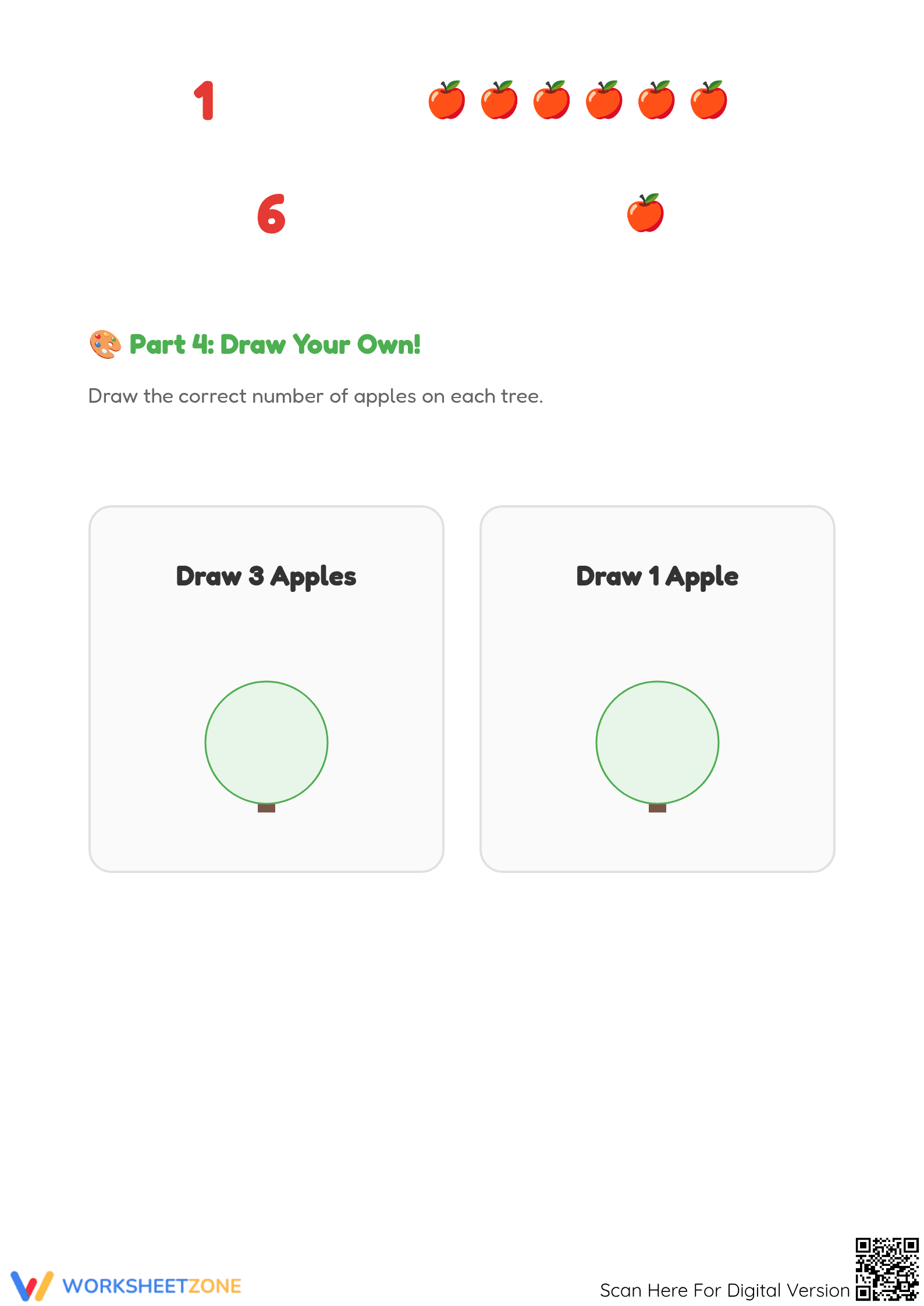

Numbers 1 to 6 — Printable No-Prep Counting Worksheet
Paste this activity's link or code into your existing LMS (Google Classroom, Canvas, Teams, Schoology, Moodle, etc.).
Students can open and work on the activity right away, with no student login required.
You'll still be able to track student progress and results from your teacher account.
This essential Kindergarten counting worksheet helps young learners master numbers 1 to 6 through engaging visual exercises and hands-on writing practice. By connecting quantities to written digits, students build a strong foundation for early numeracy and mathematical fluency. This printable resource ensures learners can confidently identify, count, and represent small sets of objects.
At a Glance
- Grade: Kindergarten Students · Subject: Elementary Math
- Standard:
K.CC.B.4— Count objects and understand that the last number tells the total count- Skill Focus: Counting and Writing Numbers 1-6
- Format: 4 pages · 11 total problems · Answer key included · PDF
- Best For: Early childhood numeracy centers and independent morning work
- Time: 15–20 minutes
What's Inside
This four-page PDF features 11 tasks focused on cardinality and number formation. Pages one and two ask students to count animal illustrations and write the digit. Page three targets fine motor skills through coloring specific quantities, while page four involves identifying groups of six. A full answer key ensures quick checking.
Zero-Prep Workflow
Implementation is simple. Step 1: Print the four pages. Step 2: Distribute to your class. Step 3: Review work with the answer key. With a total preparation time under two minutes, this packet is ideal for morning work or as an emergency sub-plan. The tasks are self-explanatory, requiring minimal teacher intervention during the activity.
Standards Alignment
Aligned to `K.CC.B.4`, this resource helps students connect numbers to quantities. It emphasizes that the last number said tells the total count. It also supports `K.CC.A.3` through number writing practice. Both standard codes can be copied directly into lesson plans, IEP goals, or district curriculum mapping tools.
How to Use It
Use this worksheet during the guided practice phase of your math lesson to observe how students handle one-to-one correspondence. One effective formative assessment tip is to watch if students touch each object as they count, ensuring they do not skip items or count them twice. The packet is designed for completion within a 15-to-20 minute window, making it a perfect transition activity.
Who It's For
This material is designed for preschool and kindergarten students who are developing their initial number sense. It includes visual scaffolds like clear boxes and distinct object groupings to support English Language Learners and students with IEP accommodations. This packet pairs naturally with physical manipulatives such as counting bears or blocks, allowing students to mirror the printed tasks with tangible objects.
The `K.CC.B.4` standard is a fundamental building block for all future mathematical operations, establishing the critical link between abstract symbols and physical reality. Research from Fisher & Frey (2014) emphasizes the importance of the gradual release of responsibility, where students move from teacher-led counting to independent verification of sets. This worksheet facilitates that transition by providing clear visual cues that guide the learner through the counting sequence without overwhelming them with complex text. By focusing specifically on the numbers 1 to 6, the resource allows for repeated practice within a manageable range, which is proven to increase retention in early childhood settings. The inclusion of diverse task types, from coloring to circling, ensures that the mathematical concepts are reinforced through multiple sensory modalities. This comprehensive approach supports the development of cardinality, which is a strong predictor of later academic success in elementary mathematics.


