


























Views
Plays

Neolithic Age Worksheet | Grade 6 Essential Guide
Paste this activity's link or code into your existing LMS (Google Classroom, Canvas, Teams, Schoology, Moodle, etc.).
Students can open and work on the activity right away, with no student login required.
You'll still be able to track student progress and results from your teacher account.
This Grade 6 Neolithic Age worksheet provides a comprehensive review of the Agricultural Revolution and the rise of early civilizations. Students analyze historical data to understand how the shift from hunting and gathering to systematic farming transformed human society. By completing these 10 targeted questions, learners demonstrate mastery over key prehistoric milestones and technological breakthroughs.
At a Glance
- Grade: 6 · Subject: Social Studies
- Standard:
CCSS.ELA-LITERACY.RH.6-8.7— Integrate visual information with other information in print and digital texts- Skill Focus: Neolithic Age & Agricultural Revolution
- Format: 2 pages · 10 problems · Answer key included · PDF
- Best For: Quick assessment or sub plan
- Time: 15–20 minutes
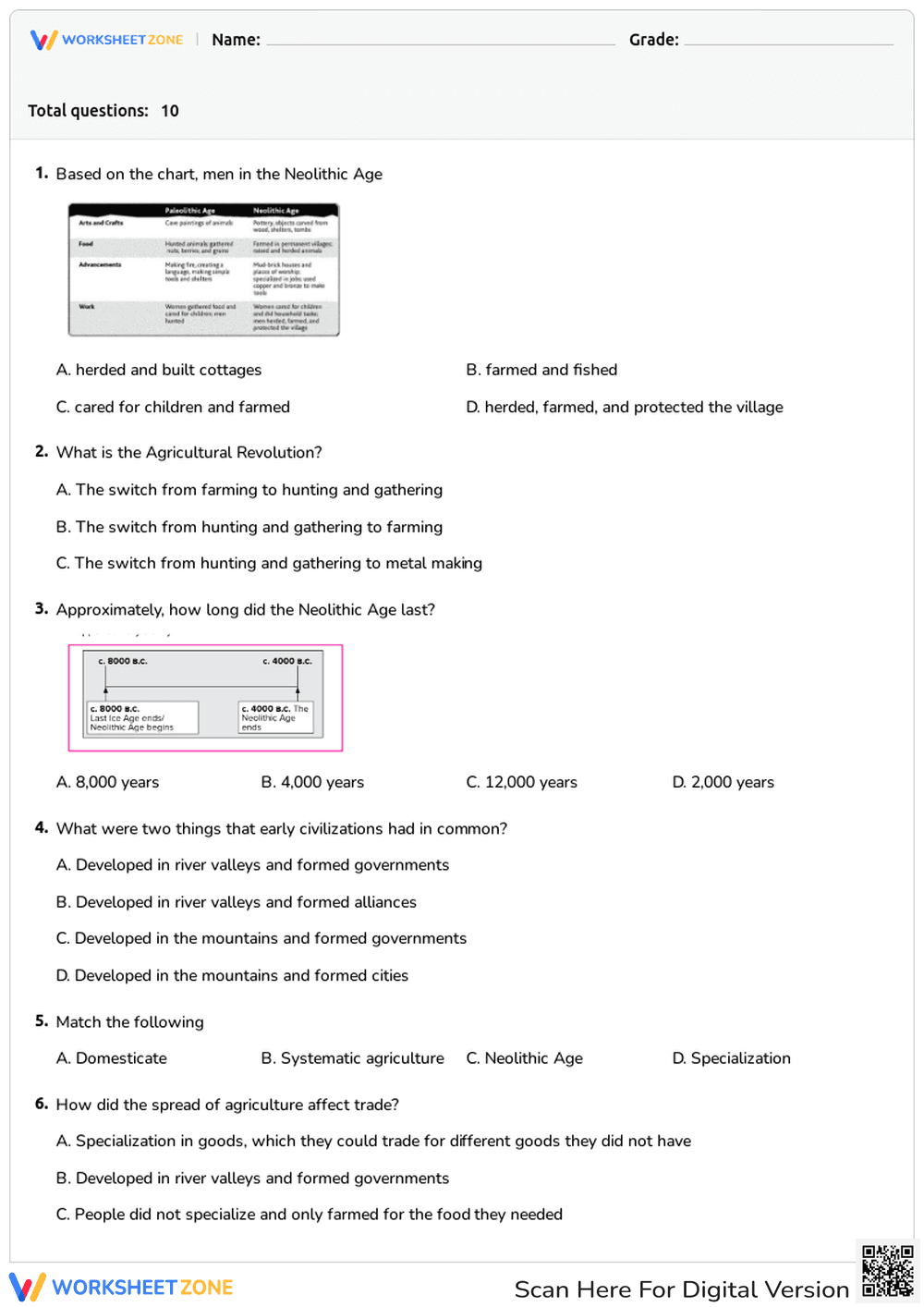
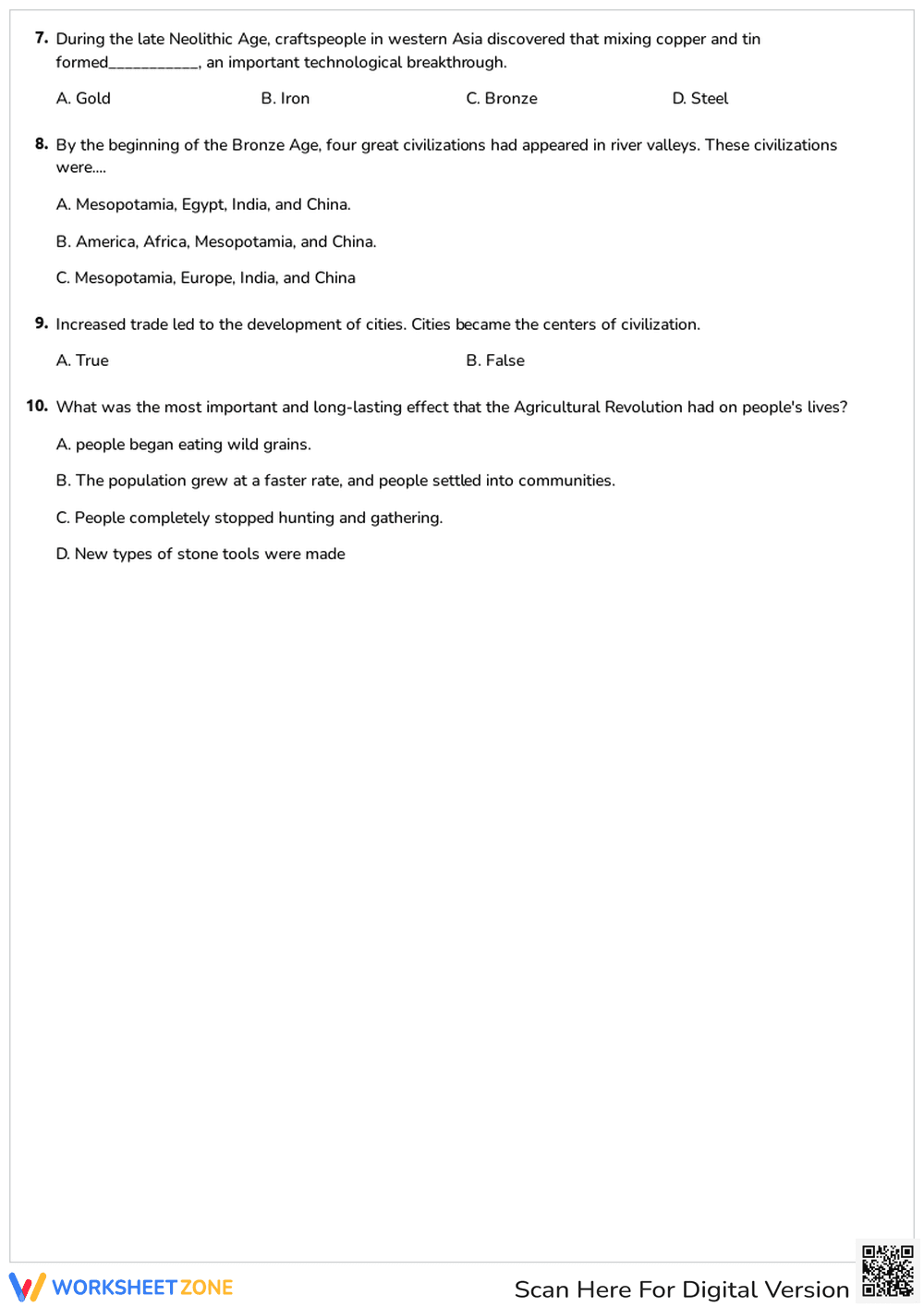
This two-page PDF features a variety of question formats designed to keep students engaged. It includes a comparative chart of Paleolithic and Neolithic life, a chronological timeline of the era, and 10 assessment items. The tasks range from multiple-choice questions about the Bronze Age to matching exercises on specialization and systematic agriculture. A full answer key is provided for immediate feedback and grading efficiency.
Zero-Prep Workflow
- Print: Generate copies of the two-page document for your class in seconds.
- Distribute: Hand out the sheets for independent work or as a quiet bell-ringer activity.
- Review: Use the included key to identify common misconceptions in under five minutes.
Total teacher preparation time is under two minutes, making it an ideal choice for emergency sub plans or end-of-unit reviews.
Standards Alignment
The primary focus is CCSS.ELA-LITERACY.RH.6-8.7, which requires students to integrate visual information (such as charts and timelines) with other information in print texts. This worksheet specifically utilizes a comparison chart and a timeline to support historical claims. Both standard codes can be copied directly into lesson plans, IEP goals, or district curriculum mapping tools.
How to Use It
Use this worksheet as a formative assessment after a unit on early humans to gauge student understanding of the Agricultural Revolution. It also serves as an excellent retrieval practice tool during mid-term reviews. Teachers should observe how students interact with the timeline in question 3 to assess their chronological reasoning skills. Expected completion time is 15 to 20 minutes.
Who It's For
This resource is tailored for Grade 5, 6, and 7 students studying World History or Ancient Civilizations. It is particularly effective for visual learners who benefit from the included diagrams. Pair this worksheet with a primary source reading on Mesopotamia or an anchor chart detailing the characteristics of a civilization for a complete instructional block.
According to the RAND AIRS 2024 report, the integration of visual literacy tools like timelines and charts significantly improves historical retention in middle school learners. This Neolithic Age worksheet aligns with these findings by requiring students to synthesize data from multiple visual formats to answer complex questions about the Agricultural Revolution. By focusing on the standard CCSS.ELA-LITERACY.RH.6-8.7, the resource ensures that students are not just memorizing dates but are actively interpreting the evidence of human progress. The transition from nomadic lifestyles to settled communities is a foundational concept in the NAEP Social Studies framework, and this 10-question assessment provides the structured practice necessary for mastery. Educators can rely on this evidence-based approach to build the critical thinking skills required for high school history courses and beyond.


