


























1 / 2
0
Views
0
Downloads

0.0
0
Save
0 Likes
Share
Naming Acids Worksheet with Rules for Acid Naming
0 Views
0 Downloads
Paste this activity's link or code into your existing LMS (Google Classroom, Canvas, Teams, Schoology, Moodle, etc.).
Students can open and work on the activity right away, with no student login required.
You'll still be able to track student progress and results from your teacher account.
Information
Description
What It Is:
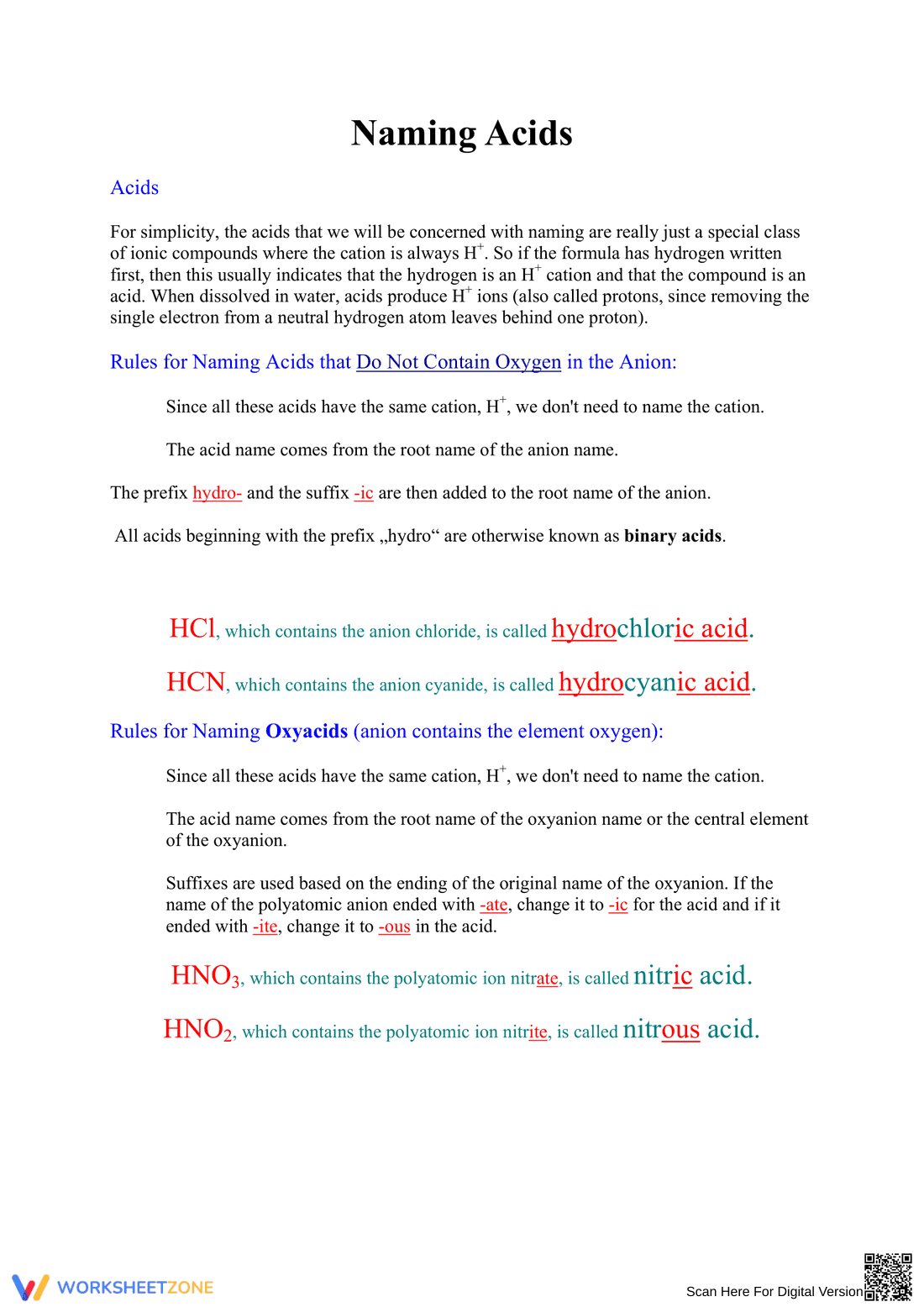
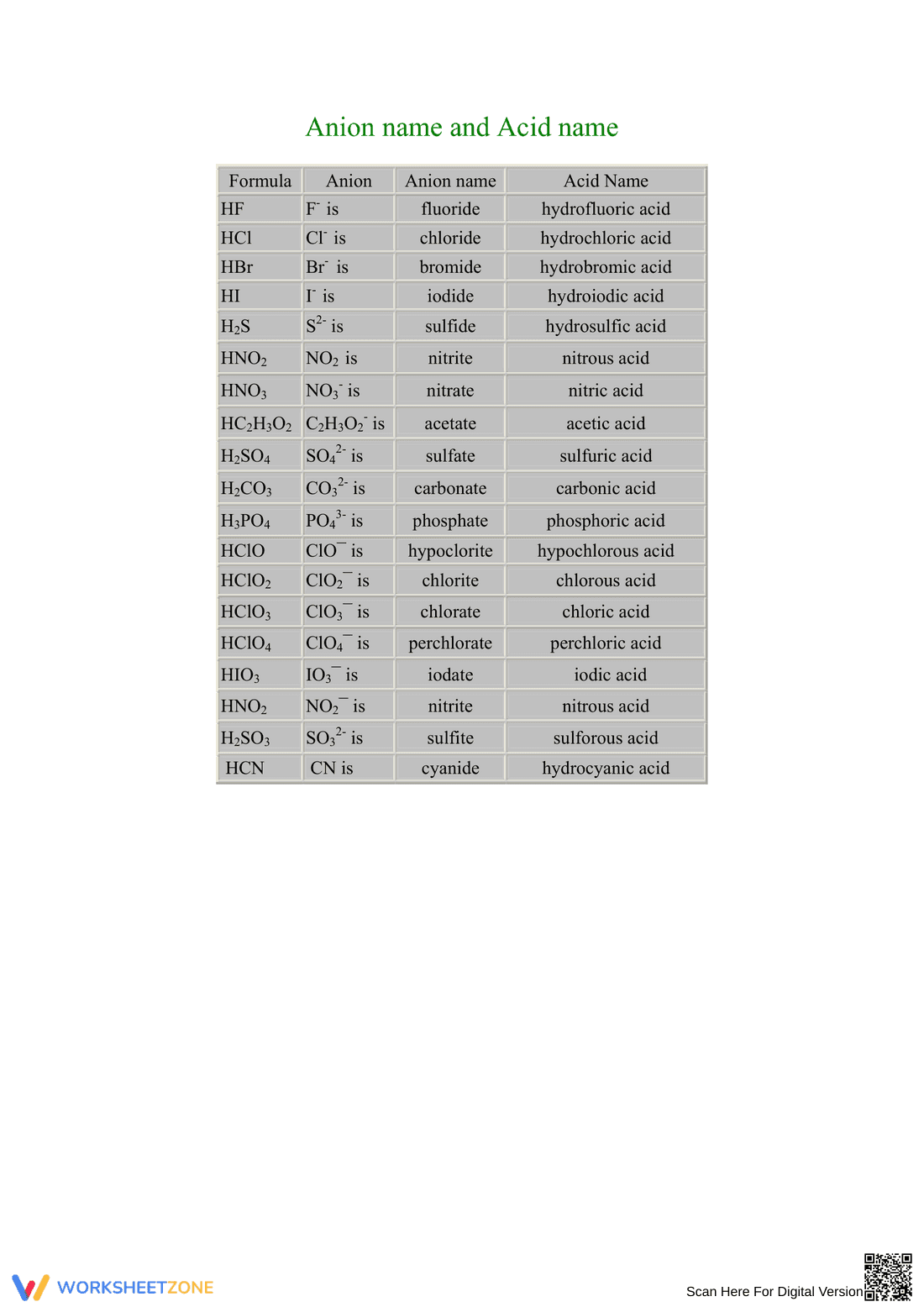
A chemistry worksheet that guides students in naming acids according to the rules for binary acids and oxyacids. The worksheet includes examples like hydrochloric acid (HCl) and nitric acid (HNO₃) and explains how to identify and name acids based on their anion groups.
Why Use It:
This worksheet reinforces key concepts about acid nomenclature, helping students learn the difference between binary acids and oxyacids. It is perfect for high school chemistry students preparing for exams or needing practice in naming acids correctly according to IUPAC rules.
How to Use It:
• Students follow the instructions to name acids based on their given formulas and anion types.
• Use the provided rules to guide students in naming binary acids and oxyacids.
• Assign as practice or homework after teaching acid nomenclature.
• Extend learning by discussing real-world applications of different types of acids in chemistry.
Grade Suitability:
Best suited for Grades 9–12.
• Ideal for high school chemistry students learning about acids and their nomenclature.
• Useful for reinforcing acid naming conventions before exams.
Target Users:
Teachers, homeschool educators, tutors, and high school students studying acid nomenclature.
A chemistry worksheet that guides students in naming acids according to the rules for binary acids and oxyacids. The worksheet includes examples like hydrochloric acid (HCl) and nitric acid (HNO₃) and explains how to identify and name acids based on their anion groups.
Why Use It:
This worksheet reinforces key concepts about acid nomenclature, helping students learn the difference between binary acids and oxyacids. It is perfect for high school chemistry students preparing for exams or needing practice in naming acids correctly according to IUPAC rules.
How to Use It:
• Students follow the instructions to name acids based on their given formulas and anion types.
• Use the provided rules to guide students in naming binary acids and oxyacids.
• Assign as practice or homework after teaching acid nomenclature.
• Extend learning by discussing real-world applications of different types of acids in chemistry.
Grade Suitability:
Best suited for Grades 9–12.
• Ideal for high school chemistry students learning about acids and their nomenclature.
• Useful for reinforcing acid naming conventions before exams.
Target Users:
Teachers, homeschool educators, tutors, and high school students studying acid nomenclature.


