


























Views
Downloads


Essential Using a Protractor Worksheet | Grade 5-7 Math
Paste this activity's link or code into your existing LMS (Google Classroom, Canvas, Teams, Schoology, Moodle, etc.).
Students can open and work on the activity right away, with no student login required.
You'll still be able to track student progress and results from your teacher account.
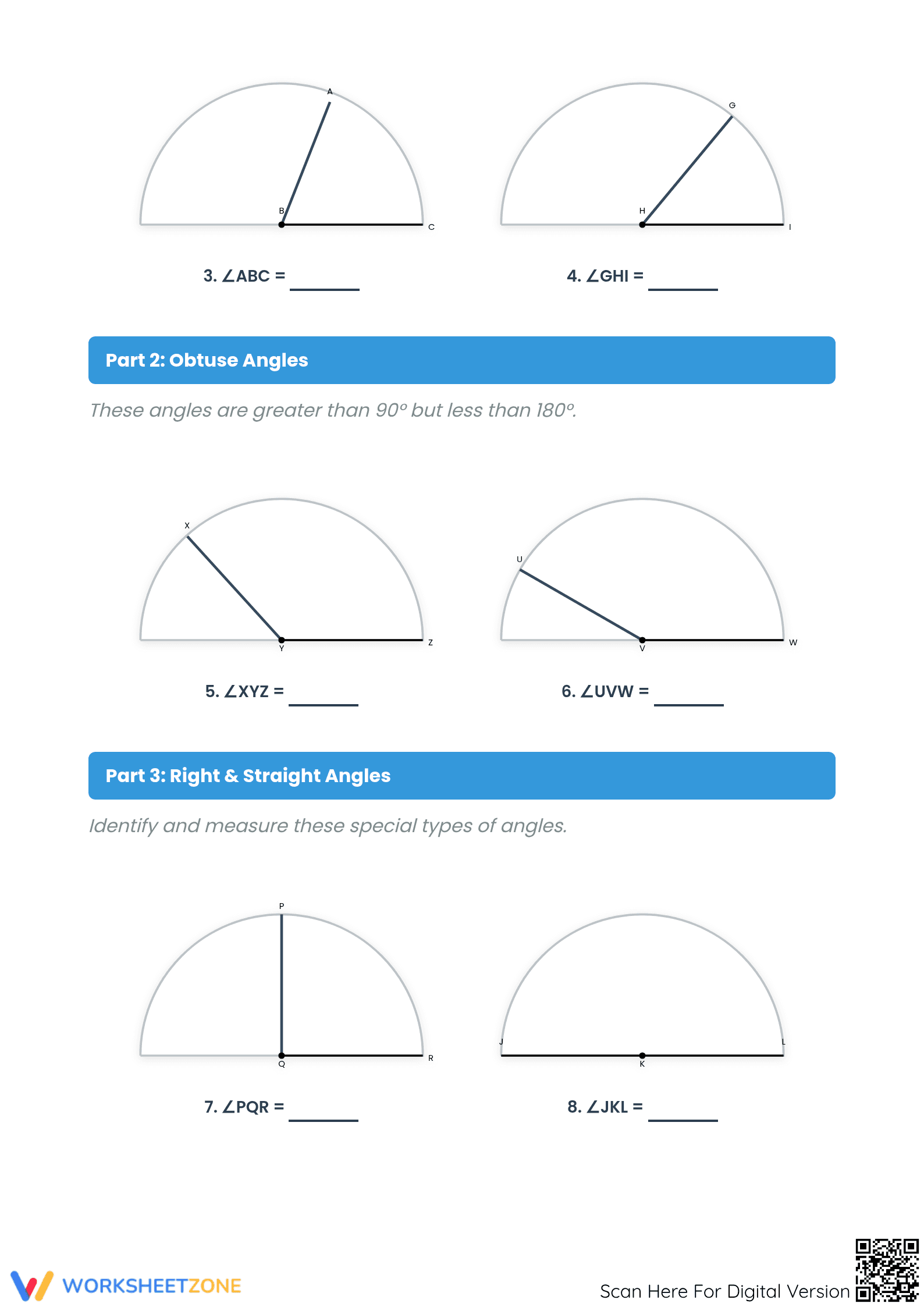
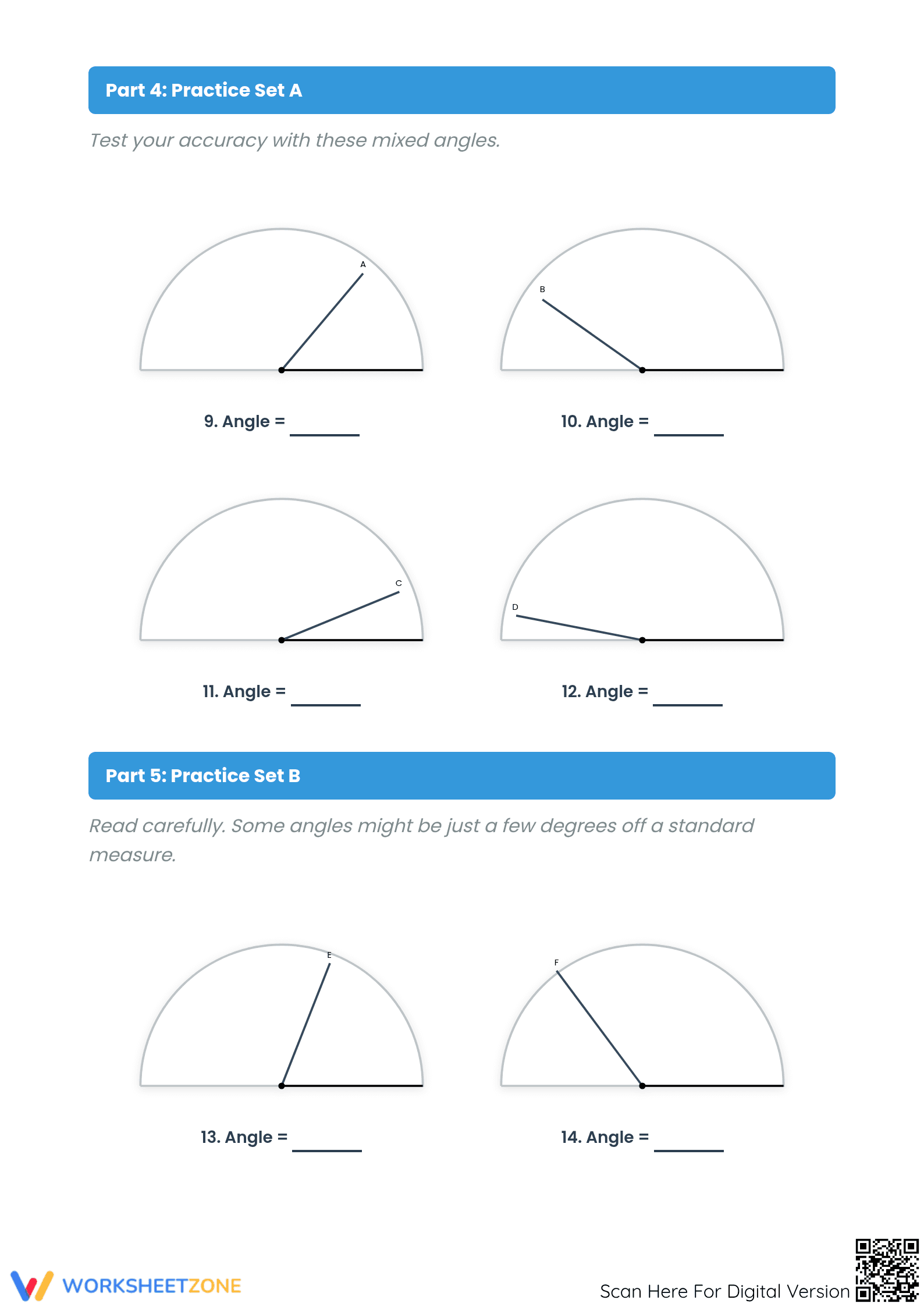
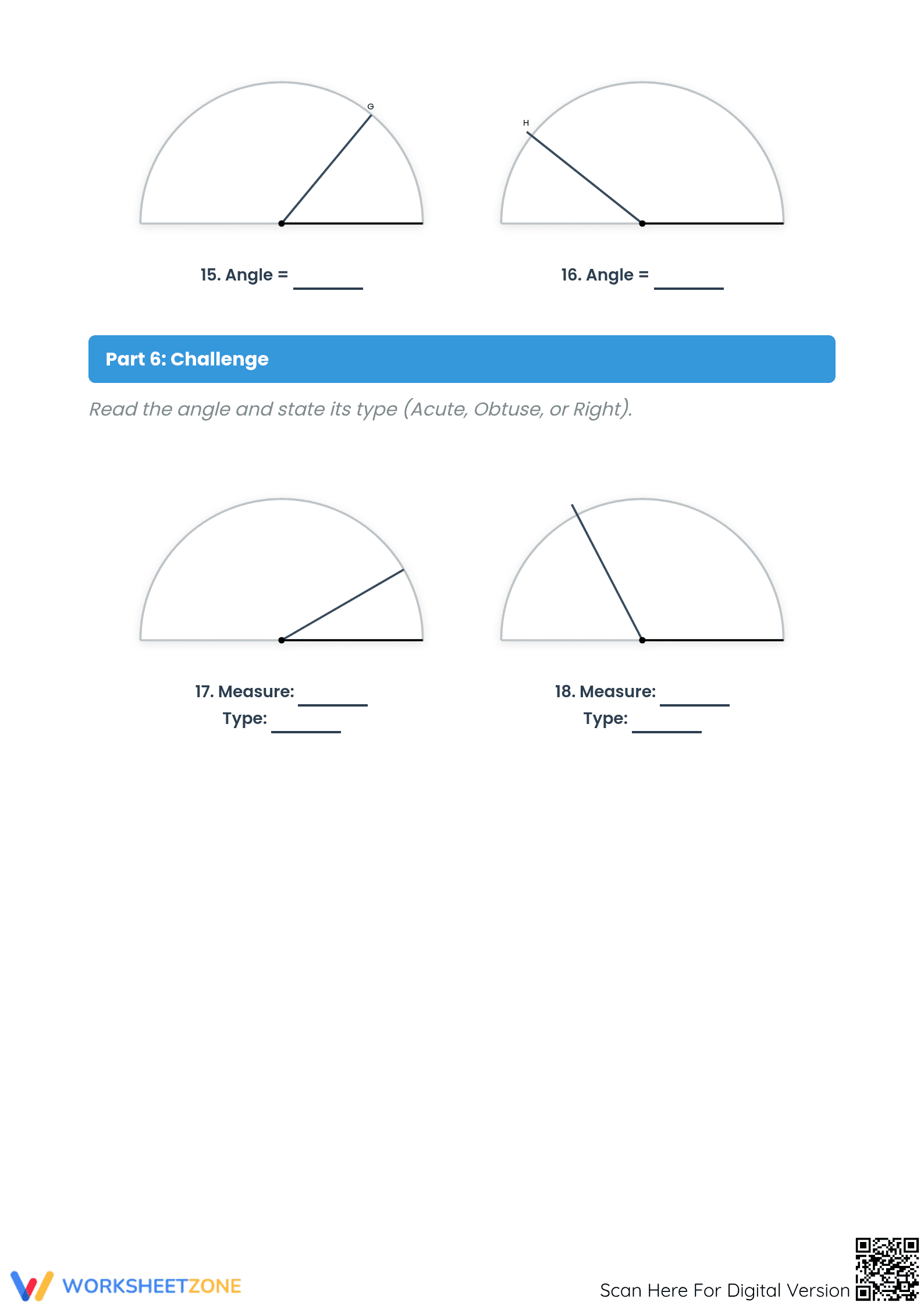
This comprehensive math resource helps students master the precision of measuring and classifying various angles. By providing 18 structured problems across four pages, the worksheet ensures learners gain the procedural fluency needed to use a protractor accurately. Students will identify acute, obtuse, right, and straight angles while achieving specific geometric outcomes aligned with middle school standards.
At a Glance
- Grade: 5–7 · Subject: Math
- Standard:
CCSS.MATH.CONTENT.4.MD.C.6— Measure angles in whole-number degrees using a protractor and identify types accurately- Skill Focus: Angle Measurement and Classification
- Format: 4 pages · 18 problems · Answer key included · PDF
- Best For: Independent practice, homework, or sub plans
- Time: 25–40 minutes
Inside this four-page practice set, educators will find a logically sequenced progression of tasks. The first page includes a visual guide on how to align the protractor center and vertex, followed by specific sections for acute and obtuse angles. The final pages offer mixed practice sets and a challenge section. A complete answer key is included to facilitate rapid grading and student self-correction.
The zero-prep workflow for this resource is designed to maximize instructional time. Teachers can implement this in three simple steps: First, Print (less than 1 minute) the four-page PDF set which includes clear, student-facing instructions and worked examples. Second, Distribute (under 1 minute) to students as an independent practice packet or sequential homework assignment. Third, Review (approximately 5 minutes) using the comprehensive answer key provided to check for common measurement errors or protractor misalignment. The entire setup requires less than two minutes of teacher preparation.
This worksheet is strictly aligned to CCSS.MATH.CONTENT.4.MD.C.6, which requires students to measure angles in whole-number degrees using a protractor. It also supports higher-grade geometry standards by reinforcing the classification of angles based on their degree measures. Both standard codes can be copied directly into lesson plans, IEP goals, or district curriculum mapping tools.
To use this resource effectively, assign it after a direct instruction session on protractor alignment. It serves as an excellent formative assessment tool; observe students during Part 1 to ensure they are using the correct scale (inner vs. outer) before they move to the mixed practice sets. Expected completion time ranges from 25 to 40 minutes depending on individual student calculation speed.
This practice set is ideal for Grade 5, 6, and 7 students who are developing or refining their measurement skills. It is particularly helpful for learners requiring additional scaffolding, as the clear visual aids and segmented parts prevent cognitive overload. It pairs naturally with an interactive geometry lesson or a physical protractor demonstration.
According to the RAND AIRS 2024 report, high-quality mathematics instructional materials that emphasize procedural fluency alongside conceptual understanding significantly improve student outcomes in geometric measurement. This worksheet aligns with those findings by providing 18 structured opportunities for students to apply the CCSS.MATH.CONTENT.4.MD.C.6 standard in diverse contexts. The transition from guided examples to independent challenge problems mirrors the gradual release of responsibility model advocated by Fisher & Frey (2014). By requiring students to not only measure but also classify acute, obtuse, right, and straight angles, the resource builds a robust mental framework for spatial reasoning. Research suggests that repetitive, precise measurement practice reduces cognitive load during more complex multi-step geometry tasks. This self-contained practice set ensures that Grade 5, 6, and 7 learners achieve the precision required for middle-school mathematical mastery while maintaining a zero-prep workflow for educators.


