




























Views
Downloads
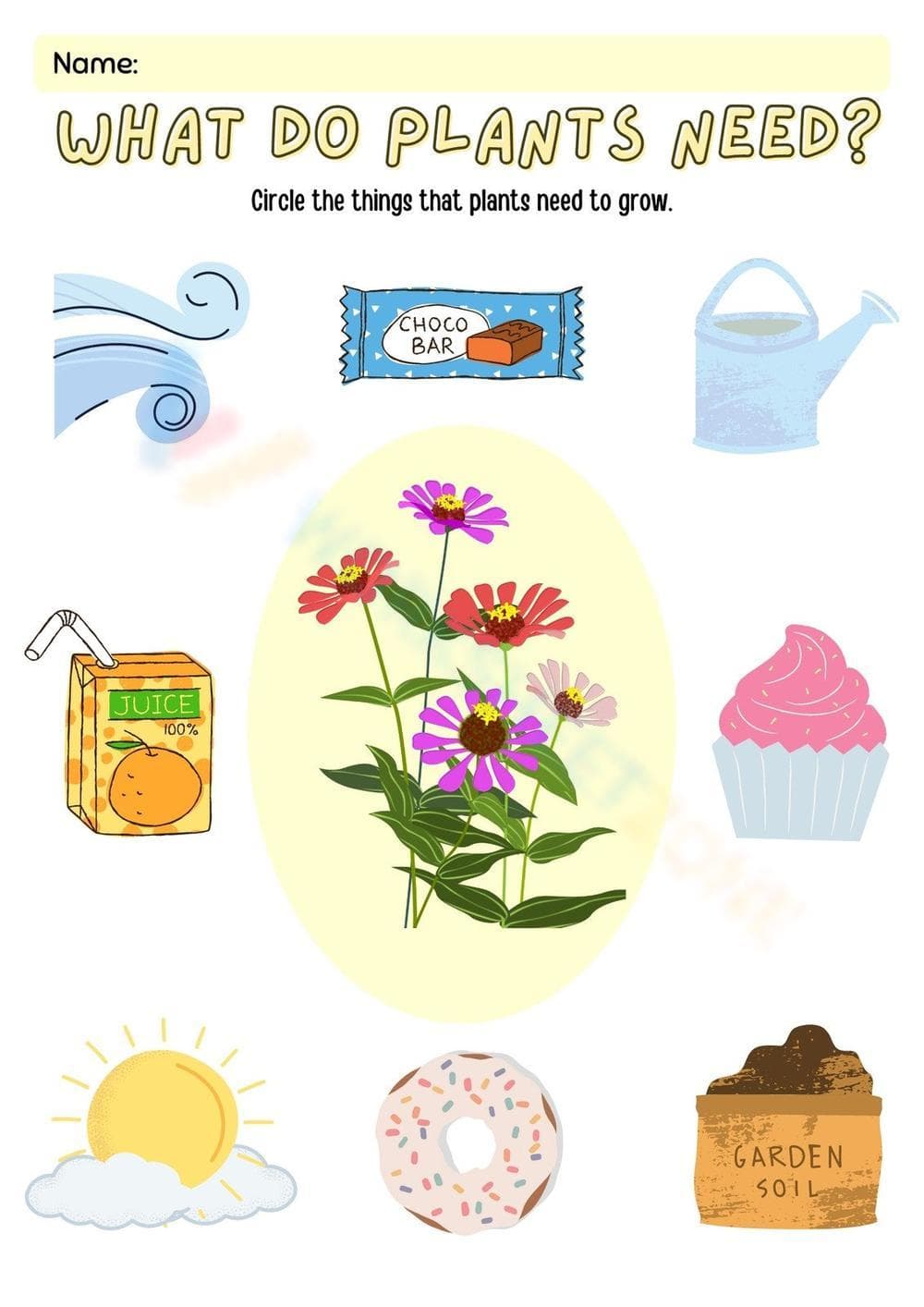

Plant Needs Worksheet | Grade K Science Essential

Paste this activity's link or code into your existing LMS (Google Classroom, Canvas, Teams, Schoology, Moodle, etc.).
Students can open and work on the activity right away, with no student login required.
You'll still be able to track student progress and results from your teacher account.
This Kindergarten science worksheet helps young learners identify the essential elements plants require for growth and survival. By distinguishing between natural necessities and non-essential items, students build foundational biological knowledge. This activity encourages observation and critical thinking as children evaluate 8 different objects to determine their role in a plant's life cycle.
At a Glance
- Grade: K · Subject: Science
- Standard:
K-LS1-1— Use observations to describe patterns of what plants need to survive- Skill Focus: Identifying Plant Needs
- Format: 1 page · 8 problems · Answer key included · PDF
- Best For: Introduction to life science units
- Time: 10–15 minutes
The worksheet features a clear, central illustration of flowers surrounded by 8 distinct icons representing both plant needs (sun, soil, water, air) and distractors (juice, donuts, chocolate). This 1-page PDF includes a simple "circle the answer" format, making it accessible for pre-readers. A full answer key is provided to ensure quick grading or self-correction.
This resource is designed for immediate classroom implementation with a total teacher prep time of under 2 minutes. Simply print the single-page PDF, distribute it to your students during your life science block, and review the correct answers together as a whole-class formative check. It serves as an ideal sub plan or morning work activity.
Standards Alignment
This activity aligns with `K-LS1-1`, requiring students to use observations to describe patterns of what plants need to survive. It supports the core idea that plants require water and light to grow. Both standard codes can be copied directly into lesson plans, IEP goals, or district curriculum mapping tools.
How to Use It
Use this worksheet during the "Explore" phase of a 5E lesson on living things. After a brief discussion about what humans need to live, assign this task to see if students can transfer that logic to botany. It also works well as a quick exit ticket to assess understanding after a garden walk or a classroom planting activity.
Who It's For
This resource is perfect for Kindergarten students, English Language Learners (ELLs) who benefit from visual cues, and students with IEPs requiring simplified tasks. It pairs naturally with a classroom seed-planting project or a read-aloud about the sun and rain.
Identifying basic needs is a critical milestone in early childhood science education, as it establishes the groundwork for understanding ecosystems and interdependence. According to the NAEP framework, early exposure to life science concepts through visual identification helps bridge the gap between concrete observation and abstract biological reasoning. This Grade K worksheet focuses on K-LS1-1, ensuring students can distinguish between environmental requirements like sunlight and soil versus human-made items. Research from EdReports 2024 emphasizes that high-quality, aligned materials for early grades must prioritize clear visual representations to support vocabulary acquisition. By engaging with these 8 tasks, students practice the scientific habit of categorization. This printable resource provides a structured way for educators to document student progress toward mastery of foundational NGSS standards while maintaining a low-barrier entry point for young learners.


