


























Views
Downloads
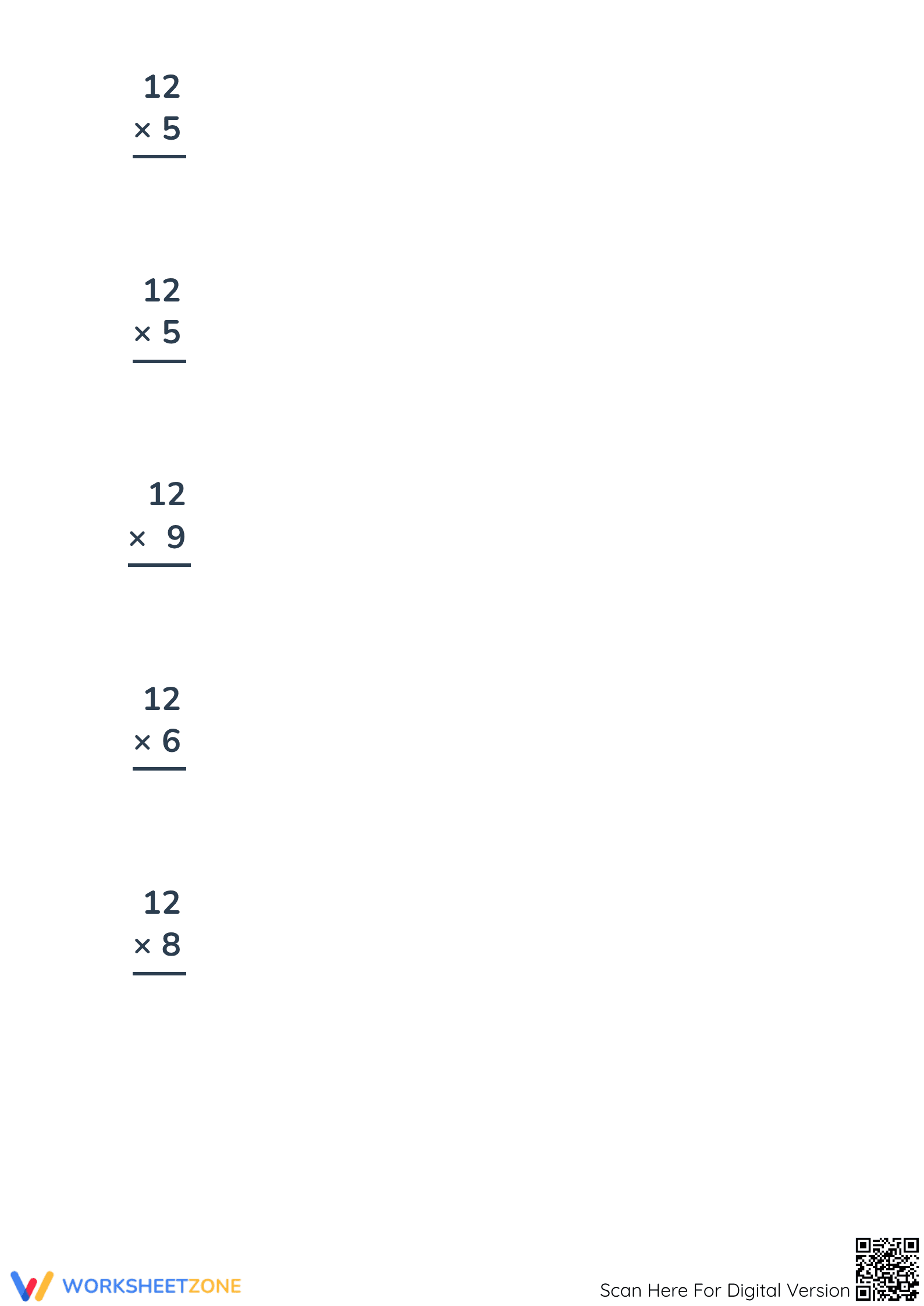

Multiply By 12 Printable Worksheet | Grade 3-4 Math
Paste this activity's link or code into your existing LMS (Google Classroom, Canvas, Teams, Schoology, Moodle, etc.).
Students can open and work on the activity right away, with no student login required.
You'll still be able to track student progress and results from your teacher account.
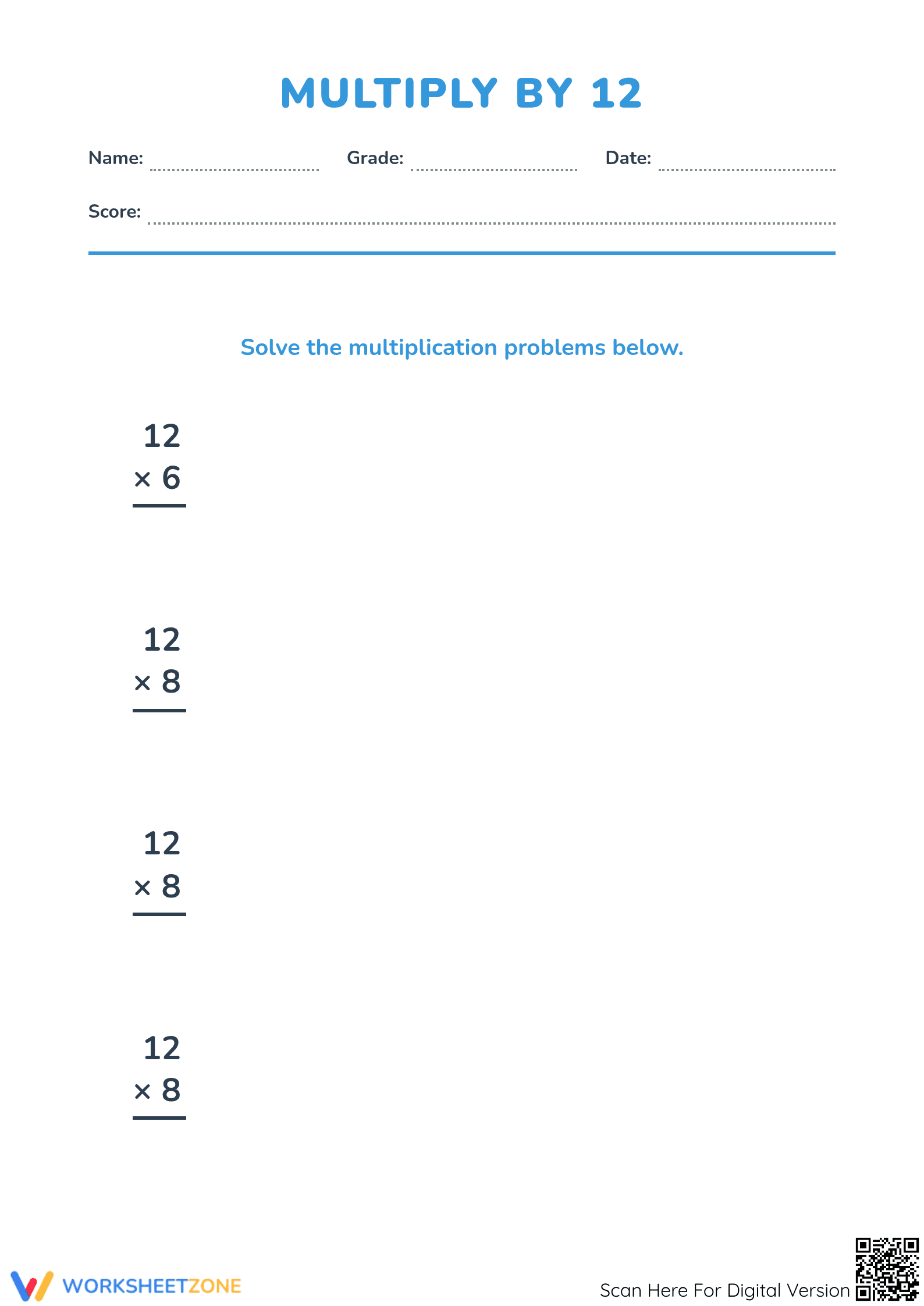
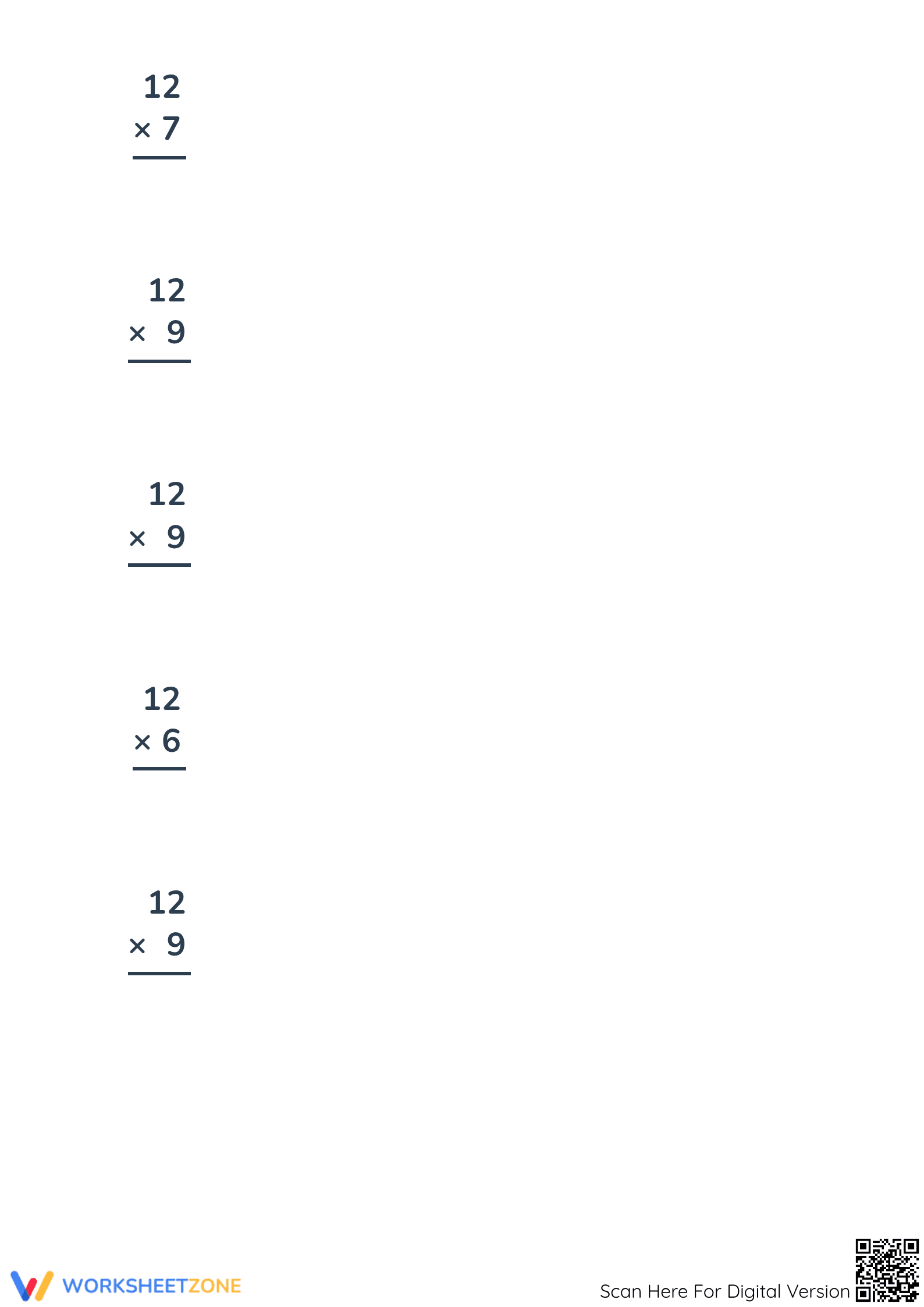
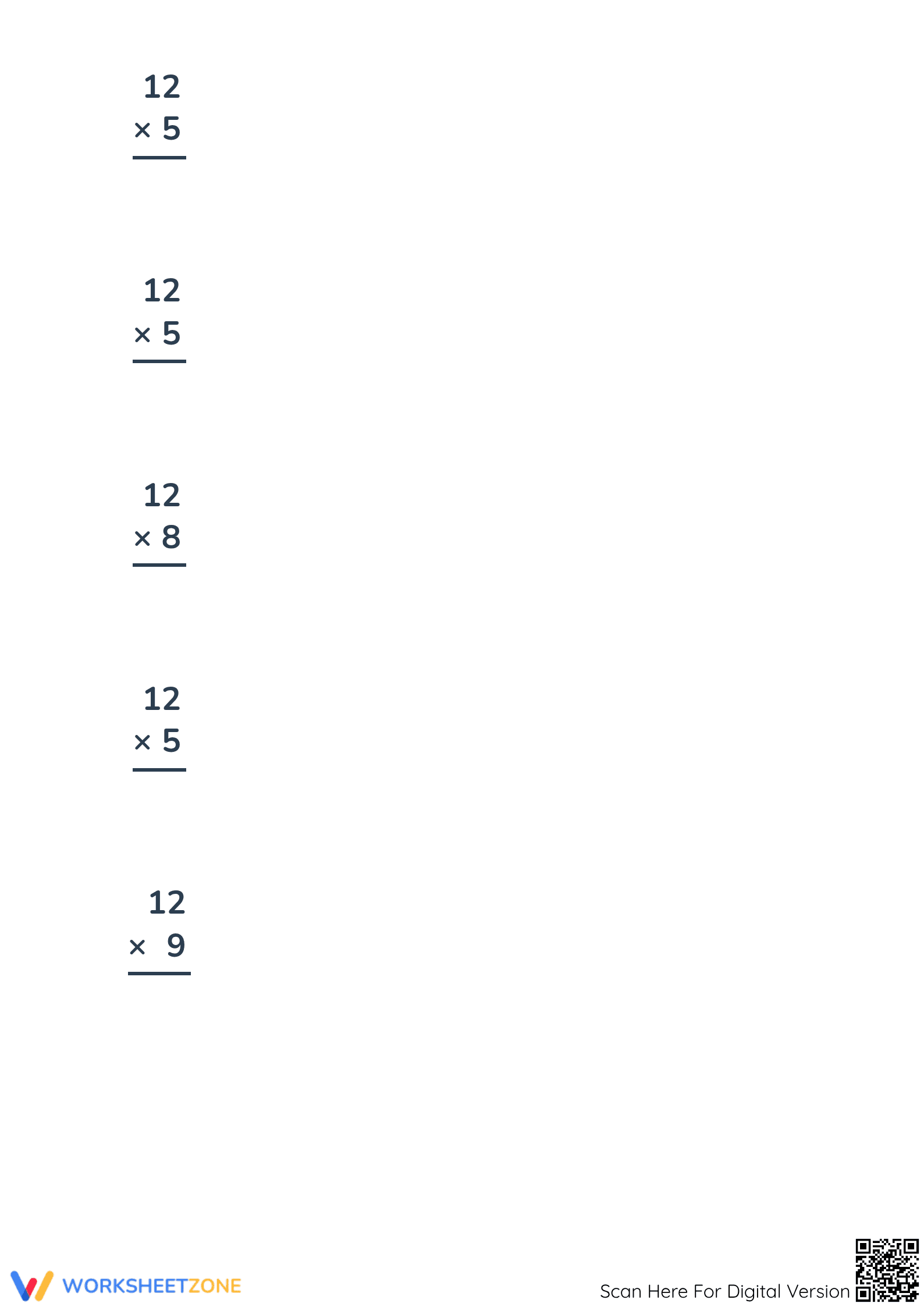
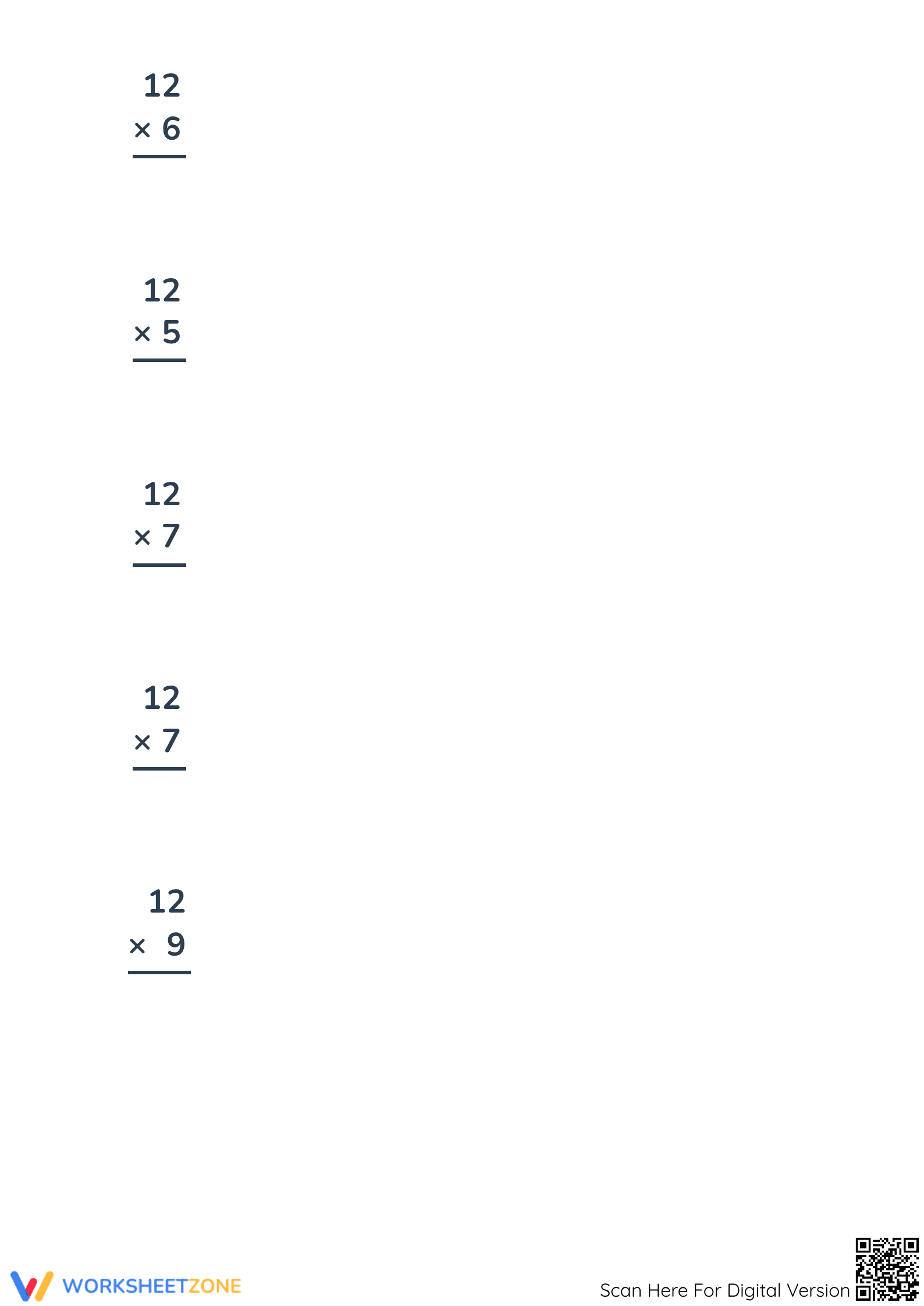
Master the 12 times table with this comprehensive multiplication practice set. Designed for Grade 3 and Grade 4 learners, these worksheets focus on building fluency and accuracy when multiplying by twelve. Students solve vertically arranged problems that reinforce their understanding of multi-digit multiplication principles and regrouping techniques, ensuring they are ready for complex math challenges.
At a Glance
- Grade: 3 · 4 · Subject: Math
- Standard:
CCSS.MATH.CONTENT.3.OA.C.7— Fluently multiply and divide within 100 using strategies like relationship between operations- Skill Focus: Multiplying by 12
- Format: 5 pages · 24 problems · Answer key included · PDF
- Best For: Independent fluency practice and morning work
- Time: 15–25 minutes
This printable PDF contains five distinct pages dedicated to the number twelve. Each page presents a series of vertical multiplication problems with ample white space for student work. The set includes a full answer key for rapid grading and self-correction, making it a complete resource for educators looking to solidify multiplication foundations in their classrooms.
Skill Progression
- Guided practice: The initial pages feature familiar factors that allow students to apply known multiplication properties to the 12s family. (8 problems)
- Supported practice: Mid-level tasks introduce higher factors, requiring consistent application of the distributive property or standard algorithm. (8 problems)
- Independent practice: Final sets challenge learners with a mix of all 12s facts to ensure long-term retention and automaticity. (8 problems)
Standards Alignment
This resource is primarily aligned with `CCSS.MATH.CONTENT.3.OA.C.7`, focusing on fluency within multiplication. It also supports `CCSS.MATH.CONTENT.4.NBT.B.5` as students practice the algorithm for multiplying a two-digit number by a one-digit number. Both standard codes can be copied directly into lesson plans, IEP goals, or district curriculum mapping tools for administrative compliance.
How to Use It
Use this set as a timed fluency warm-up at the start of your math block. Teachers can observe which students still rely on skip-counting versus those who have achieved automaticity. Alternatively, assign specific pages as homework to reinforce classroom instruction. During the review, have students explain their regrouping steps to identify any misconceptions about place value when the product exceeds ten in the ones column.
Who It's For
This packet is ideal for third graders gaining initial fluency or fourth graders needing remedial review. The clear layout supports students with executive functioning challenges, while the extensive problem set allows for easy differentiation by task volume. Pair this with a 12s anchor chart or a multiplication grid for extra support.
The Multiply By 12 Worksheet is a standards-aligned educational tool designed to facilitate the mastery of multiplying within 144, specifically targeting the 12s times table. By providing 24 vertically formatted problems across 5 pages, it aligns with CCSS.MATH.CONTENT.3.OA.C.7, which emphasizes the plain-English skill of fluently multiplying and dividing within 100. Research from the RAND AIRS 2024 report highlights that high-quality, focused practice materials are essential for closing fluency gaps in elementary mathematics. The structured repetition found in this set mirrors the cognitive load theories described in Fisher & Frey (2014), where gradual release through targeted problem sets builds the mental pathways necessary for automaticity. This resource serves as a reliable instrument for formative assessment, allowing educators to track student progression toward Grade 3 and Grade 4 benchmarks while providing a clear evidence base for instructional adjustments in the classroom environment.


