




























Views
Downloads
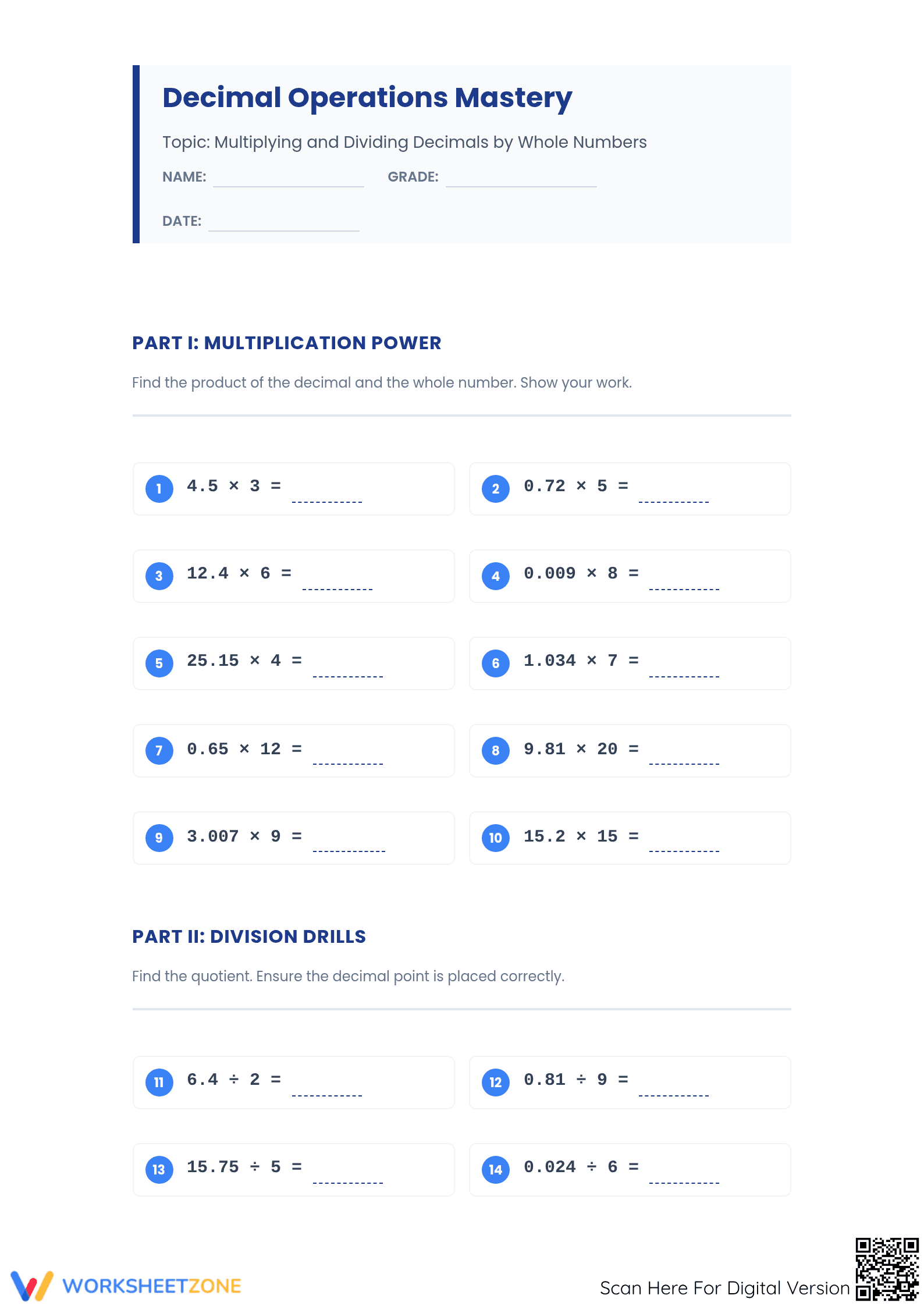
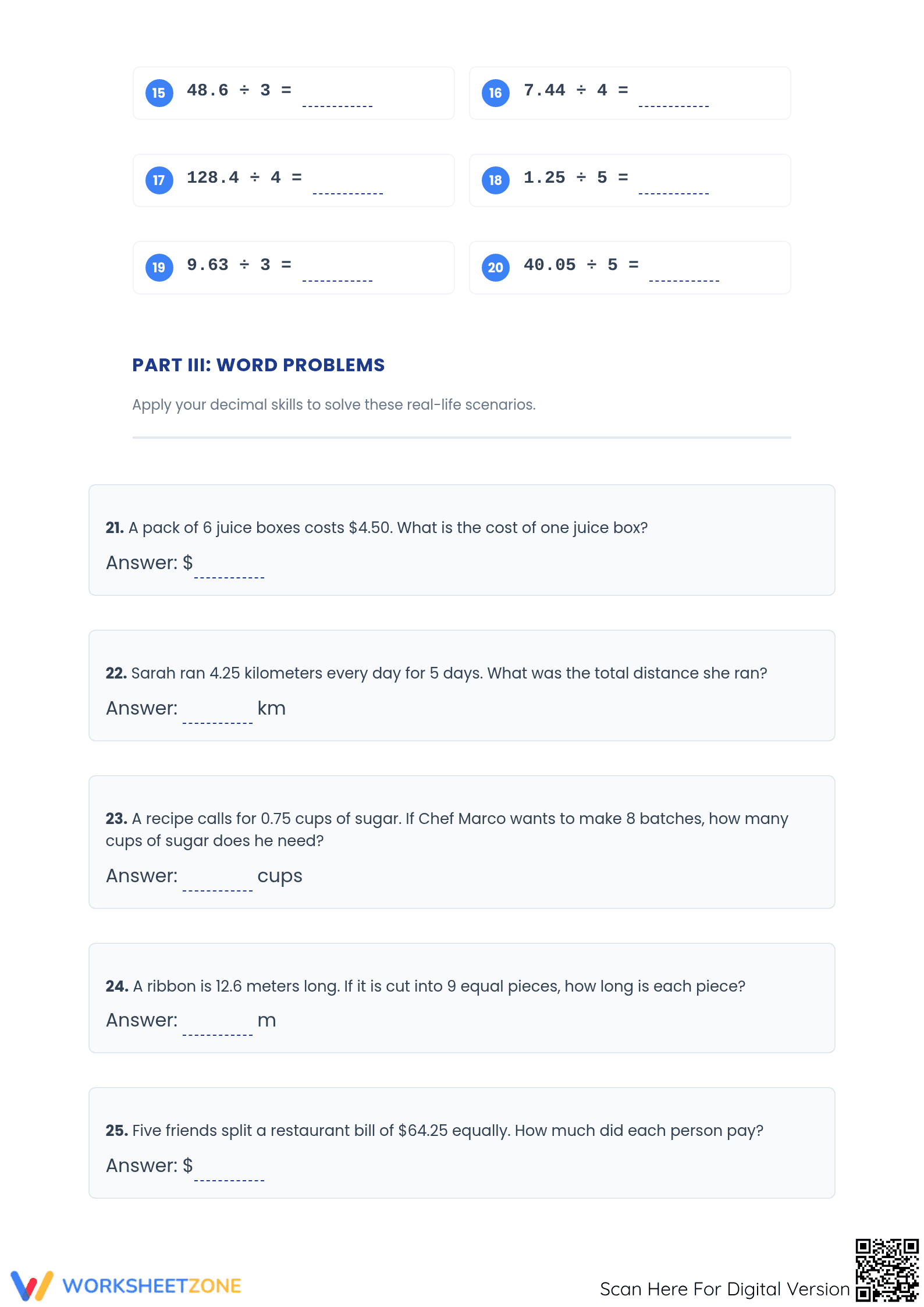
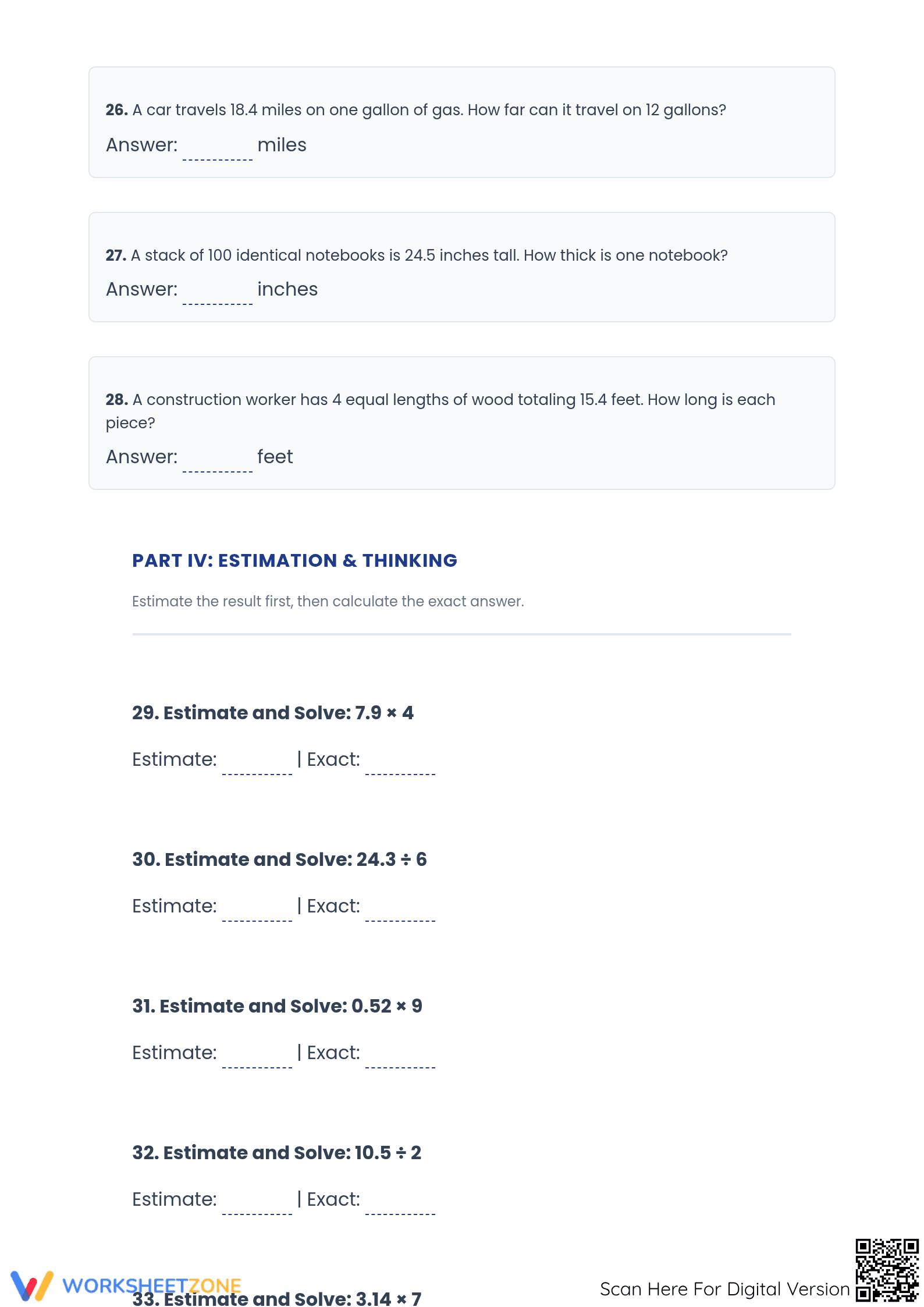
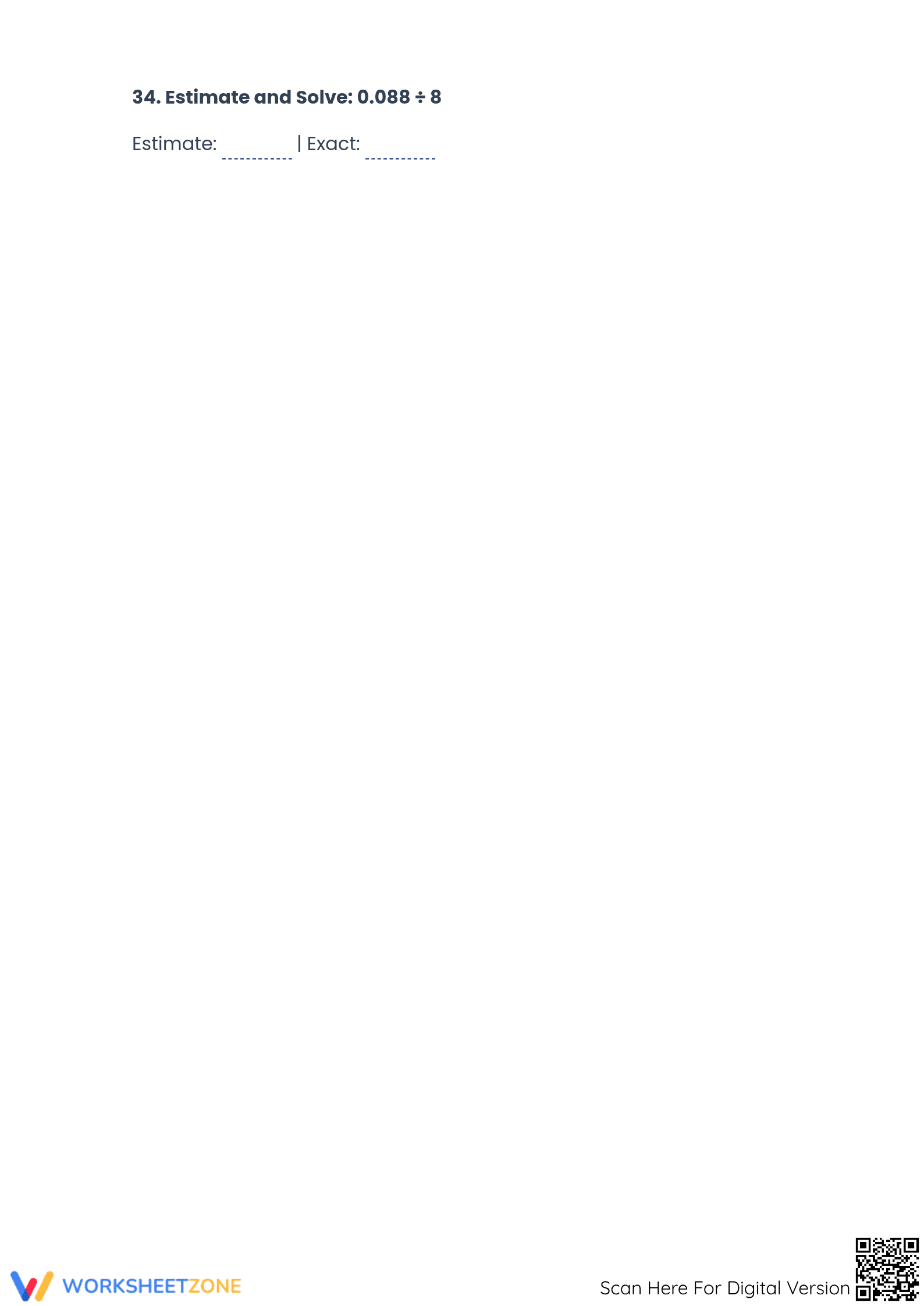

Essential Grade 6 Decimal Multiplication & Division

Paste this activity's link or code into your existing LMS (Google Classroom, Canvas, Teams, Schoology, Moodle, etc.).
Students can open and work on the activity right away, with no student login required.
You'll still be able to track student progress and results from your teacher account.
This essential Grade 6 Math worksheet provides comprehensive practice for students mastering the multiplication and division of decimals by whole numbers. By focusing on the standard algorithm, students build the computational fluency required for advanced middle school mathematics. The worksheet features 40 structured problems designed to reinforce place value understanding and precise decimal point placement.
At a Glance
- Grade: 6 · Subject: Math
- Standard:
CCSS.MATH.CONTENT.6.NS.B.3— Fluently multiply and divide multi-digit decimals using the standard algorithm- Skill Focus: Decimal Multiplication and Division
- Format: 4 pages · 40 problems · Answer key included · PDF
- Best For: Classroom practice, homework, or formative assessment
- Time: 45–60 minutes
What's Inside
This 4-page PDF resource contains a balanced mix of multiplication and division problems involving decimals and whole numbers. Each page is clearly organized with ample workspace for students to perform long division and multi-digit multiplication. A comprehensive answer key is included, allowing for quick teacher grading or student self-correction.
Skill Progression
- Guided Practice: The initial problems involve smaller decimals and single-digit whole number multipliers or divisors to build student confidence and reinforce basic procedural steps.
- Supported Practice: Mid-range tasks introduce hundredths and two-digit divisors, requiring more rigorous application of the standard algorithm and careful tracking of place value.
- Independent Practice: The final set of problems challenges students with complex decimal values and multi-digit whole numbers, ensuring complete mastery of the computational process.
This sequence follows a gradual-release model, transitioning from instructional examples to independent proficiency.
Standards Alignment
This resource is strictly aligned to `6.NS.B.3`: "Fluently add, subtract, multiply, and divide multi-digit decimals using the standard algorithm for each operation." The worksheet focuses specifically on the multiplication and division components of this standard, ensuring students develop the procedural skill and fluency necessary for successful progression into Grade 7 ratios and proportions. Both standard codes can be copied directly into lesson plans, IEP goals, or district curriculum mapping tools.
How to Use It
Use this worksheet as a primary practice tool after direct instruction on the standard algorithm for decimals. It serves as an excellent formative assessment; teachers should observe students' placement of the decimal point in products and their handling of remainder steps in division. For a 60-minute block, assign the first two pages for classwork and the remaining pages for independent practice or homework.
Who It's For
Designed for 6th and 7th-grade students, this resource is ideal for general education classrooms, math intervention groups, or special education students working toward IEP goals involving decimal computation. It pairs naturally with instructional videos or anchor charts that visualize decimal movement during arithmetic operations.
According to the RAND AIRS 2024 report, procedural fluency in decimal operations is a critical predictor of success in algebraic reasoning. This worksheet addresses the common student struggle with decimal point placement by providing repetitive, high-volume practice within a structured framework. By adhering to the standard algorithm as defined in `6.NS.B.3`, the resource ensures that students are not merely following a trick but are building a conceptual bridge between whole-number arithmetic and rational number operations. Research by Fisher & Frey (2014) emphasizes that the gradual release of responsibility, as mirrored in the skill progression of these 40 tasks, significantly improves long-term retention of complex mathematical procedures. This printable PDF serves as a robust tool for educators aiming to close achievement gaps in middle school mathematics while maintaining alignment with rigorous state and national frameworks.


