




























Views
Downloads
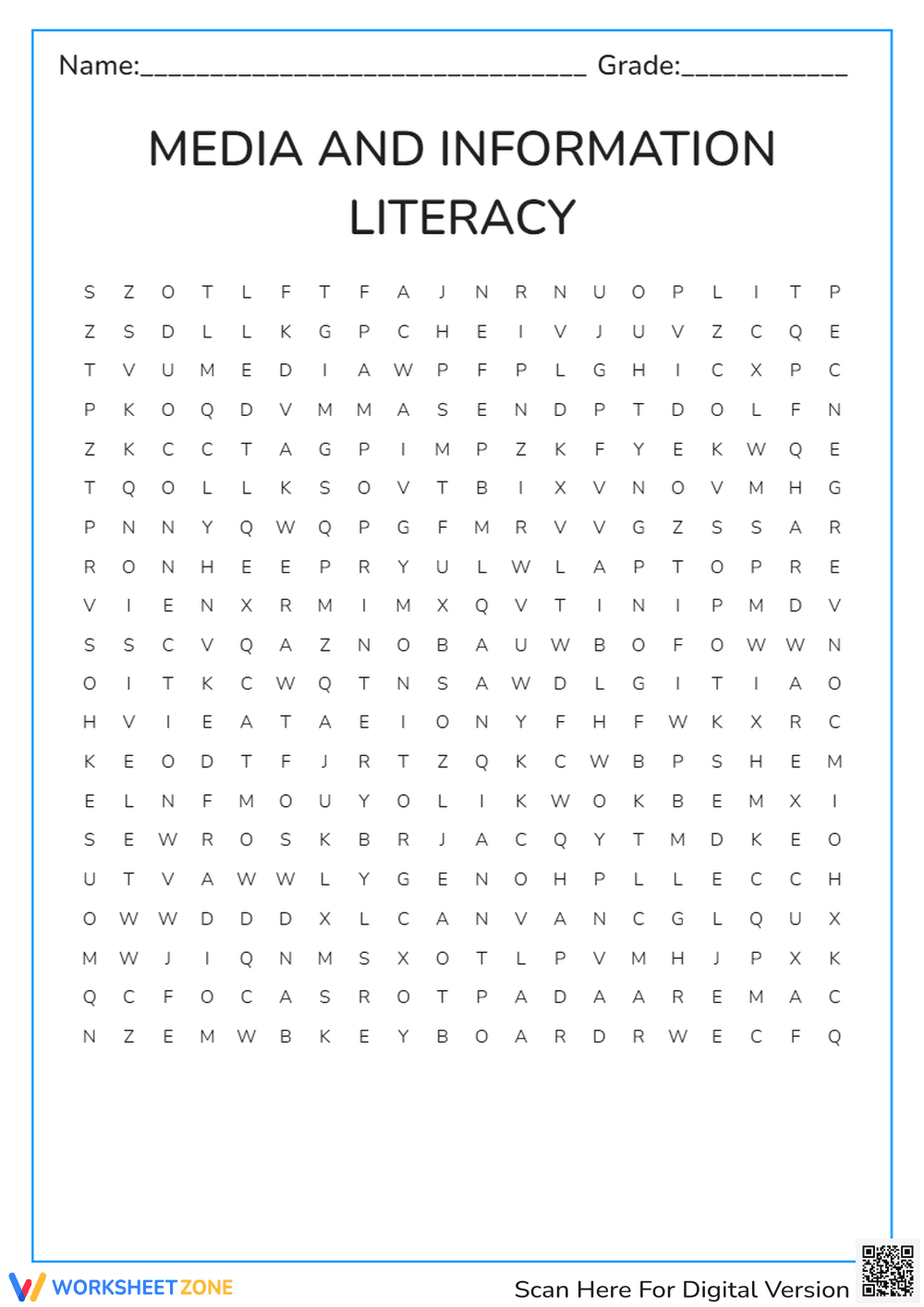
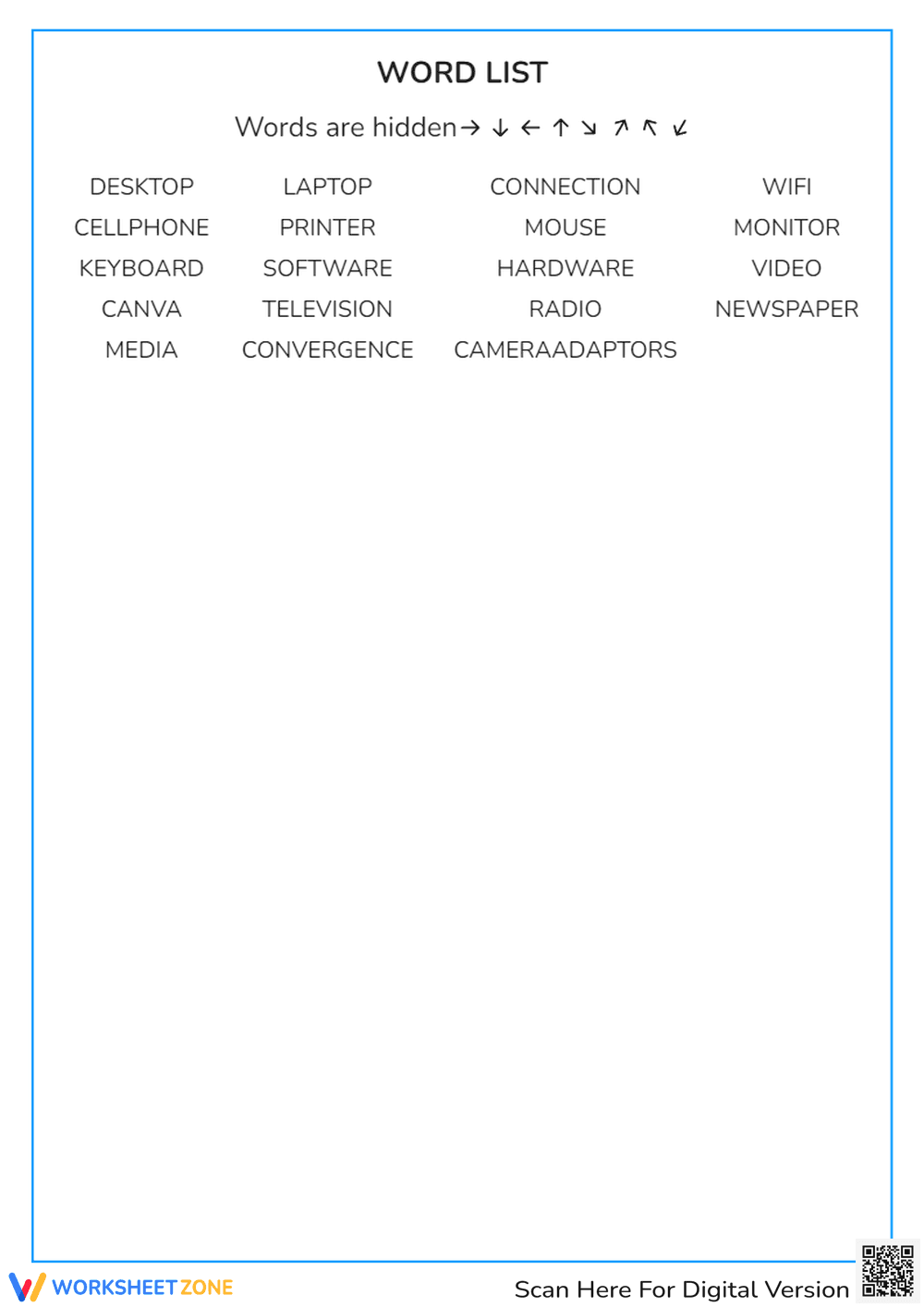

Media Literacy Word Search | Grade 12 Essential Worksheet

Paste this activity's link or code into your existing LMS (Google Classroom, Canvas, Teams, Schoology, Moodle, etc.).
Students can open and work on the activity right away, with no student login required.
You'll still be able to track student progress and results from your teacher account.
This Grade 12 Media and Information Literacy (MIL) worksheet introduces students to foundational terminology through a structured word search puzzle. By identifying 19 core concepts, learners build the domain-specific vocabulary necessary for analyzing modern communication systems and digital environments. It serves as an engaging diagnostic tool or introductory activity for high school students.
At a Glance
- Grade: 12 · Subject: Media Literacy
- Standard:
CCSS.ELA-LITERACY.L.11-12.6— Acquire and use accurately general academic and domain-specific words and phrases- Skill Focus: MIL Vocabulary Recognition
- Format: 2 pages · 19 problems · PDF
- Best For: Introductory pretest or emergency sub plans
- Time: 15–20 minutes
The resource consists of a high-density letter grid and a comprehensive word list containing 19 essential terms. Key vocabulary includes technical hardware like "Monitor" and "Camera Adaptors," as well as conceptual terms like "Convergence" and "Media." The layout is clean and professional, designed for high-school-level engagement without unnecessary visual distractions, ensuring students focus entirely on the terminology.
Zero-Prep Workflow
- Print: Generate the two-page PDF in less than 30 seconds.
- Distribute: Hand out the puzzle to students as they enter the classroom.
- Review: Spend 5 minutes at the end of the period defining the most difficult terms found.
Total teacher preparation time is under 2 minutes, making this an ideal resource for busy educators or as a reliable component of a substitute teacher folder.
Standards Alignment
This worksheet aligns with `CCSS.ELA-LITERACY.L.11-12.6`, which requires students to "Acquire and use accurately general academic and domain-specific words and phrases, sufficient for reading, writing, speaking, and listening at the college and career readiness level." By focusing on the specialized language of media studies, students prepare for more complex textual analysis. This standard code can be copied directly into lesson plans, IEP goals, or district curriculum mapping tools.
How to Use It
Use this puzzle as a pre-assessment at the start of a Media and Information Literacy unit to gauge student familiarity with technical terms. It also functions effectively as a formative assessment during a lesson on hardware and software. Observe which students struggle to identify terms like "Convergence" to identify those who may need additional conceptual support. The expected completion time is approximately 15 to 20 minutes.
Who It's For
This resource is designed for Grade 12 students enrolled in MIL, Journalism, or Computer Science courses. It is particularly helpful for English Language Learners (ELL) who benefit from visual word recognition and repetitive scanning. Pair this worksheet with a digital literacy anchor chart or a short introductory video on media evolution for a complete instructional block.
According to the RAND AIRS 2024 report on secondary literacy, the acquisition of domain-specific vocabulary is a critical predictor of success in technical subjects. This worksheet addresses CCSS.ELA-LITERACY.L.11-12.6 by providing a low-stakes environment for students to interact with 19 specialized terms such as "Convergence" and "Hardware." Research by Fisher & Frey (2014) suggests that word-level familiarity through puzzles can lower the cognitive load during subsequent complex reading tasks. By integrating this printable MIL puzzle into the curriculum, educators provide a structured pathway for students to master the language of media and information systems. This alignment ensures that students are not only recognizing words but are building the linguistic foundation required for college and career readiness in a digital-first society.


