


























Views
Downloads
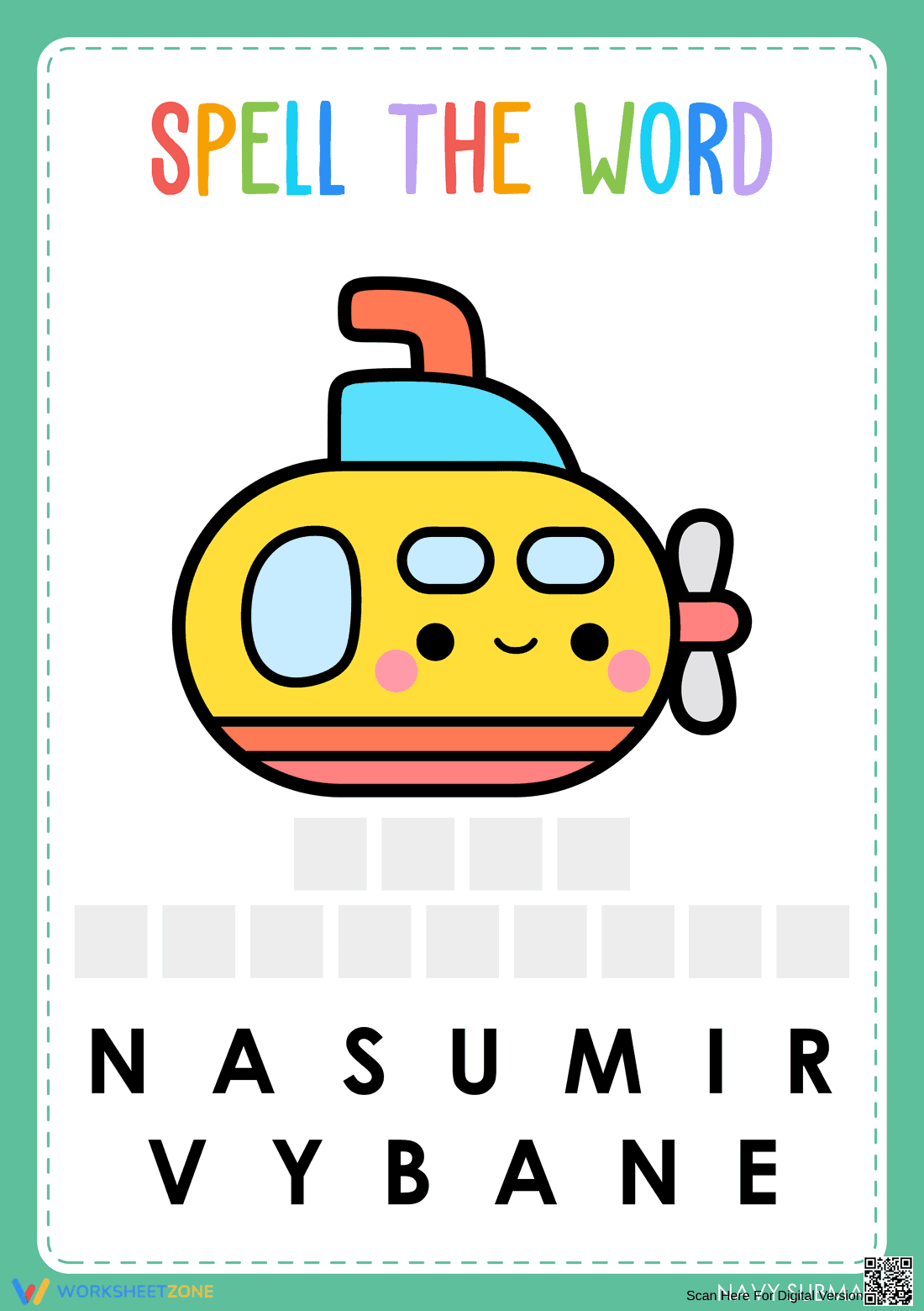

Preschool Spelling Worksheet | Printable Transportation
Paste this activity's link or code into your existing LMS (Google Classroom, Canvas, Teams, Schoology, Moodle, etc.).
Students can open and work on the activity right away, with no student login required.
You'll still be able to track student progress and results from your teacher account.
This Preschool spelling worksheet introduces early learners to letter recognition and word formation through an engaging transportation theme. Students unscramble letters to spell "navy submarine," reinforcing visual discrimination and fine motor skills. The self-contained activity provides immediate visual feedback, building foundational literacy confidence before formal kindergarten instruction begins.
At a Glance
- Grade: Preschool · Subject: ELA
- Standard:
CCSS.ELA-LITERACY.RF.K.1.B— Recognize that spoken words are represented by specific letter sequences- Skill Focus: Spelling and Letter Recognition
- Format: 1 page · 1 problem · Answer key included · PDF
- Best For: Independent morning work
- Time: 5–10 minutes
This single-page printable features a vibrant, kid-friendly illustration of a yellow submarine alongside a targeted spelling challenge. The layout includes a scrambled letter bank and clearly defined blank boxes. A subtle text hint serves as a built-in self-checking mechanism. The clean design ensures preschoolers focus entirely on sequencing letters.
Designed for maximum efficiency, this resource requires zero teacher setup:
- Print (1 minute): Download the PDF and print.
- Distribute (1 minute): Hand out the sheets. The intuitive layout means students immediately understand the task.
- Review (1 minute): Use visual cues to quickly check progress. Total teacher prep time is under two minutes, making this an ideal sub plan.
This activity aligns with early literacy readiness, specifically targeting CCSS.ELA-LITERACY.RF.K.1.B: Recognize that spoken words are represented in written language by specific sequences of letters. It also supports foundational phonics and word recognition skills by encouraging students to map scrambled letters to their correct sequential positions. Both standard codes can be copied directly into lesson plans, IEP goals, or district curriculum mapping tools.
Deploy this worksheet during morning arrival as a quiet, focused bell-ringer activity to settle students into the daily routine. Alternatively, integrate it into a transportation-themed literacy center where students can work collaboratively to identify the letters. As a formative assessment tip, observe how students approach the scrambled letters—note whether they search for the first letter of the word or pick letters randomly. This provides valuable insight into their developing phonemic awareness. Expected completion time ranges from five to ten minutes.
This resource is perfectly tailored for preschool and pre-K students who are beginning to show interest in letters and spelling. It serves as an excellent bridge activity for children transitioning from simple letter recognition to actual word formation. For differentiation, teachers can provide physical letter tiles for tactile learners to manipulate over the printed page. Pair this worksheet with a read-aloud book about ocean vehicles or a direct instruction lesson on the letter S to maximize engagement and context.
Early exposure to letter sequencing and word formation is a critical predictor of future reading success. By aligning with CCSS.ELA-LITERACY.RF.K.1.B, this resource helps students recognize that spoken words are represented by specific letter sequences. According to Fisher & Frey (2014), providing structured, visually supported tasks during the foundational years significantly enhances cognitive retention and independent problem-solving capabilities. When preschoolers engage with targeted spelling activities, they develop essential visual discrimination skills required for fluent reading. This worksheet translates complex early literacy objectives into an accessible, developmentally appropriate format. The combination of thematic illustrations and explicit letter manipulation ensures that young learners remain engaged while mastering core pre-reading competencies. Consistent practice with these targeted, single-focus activities builds the necessary stamina and confidence for kindergarten readiness and beyond.


