


























Views
Downloads

Preschool Spelling Worksheet | Printable Transportation
Paste this activity's link or code into your existing LMS (Google Classroom, Canvas, Teams, Schoology, Moodle, etc.).
Students can open and work on the activity right away, with no student login required.
You'll still be able to track student progress and results from your teacher account.
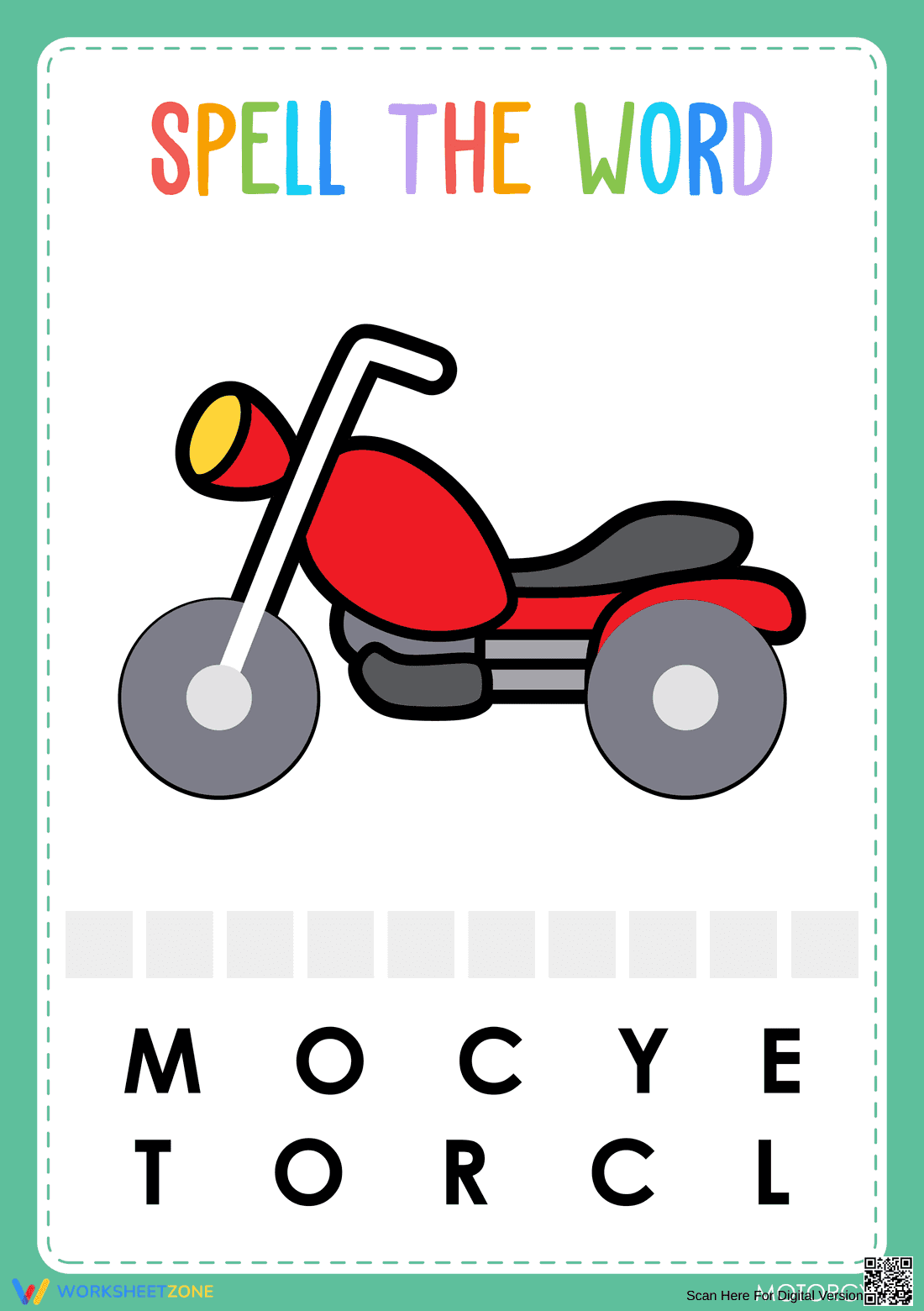
This printable preschool spelling worksheet helps early learners practice letter recognition and vocabulary building. By unscrambling letters to spell the word "motorcycle," students develop foundational phonics skills and fine motor control. The engaging transportation theme keeps young children focused while they connect visual cues to written language.
At a Glance
- Grade: Preschool · Subject: ELA
- Standard:
CCSS.ELA-LITERACY.L.K.2.D— Spell simple words using letter-sound knowledge- Skill Focus: Spelling and letter recognition
- Format: 1 page · 1 problem · No answer key needed · PDF
- Best For: Morning work or literacy centers
- Time: 5–10 minutes
This single-page resource features a vibrant, kid-friendly illustration of a motorcycle to capture student interest. Below the image, ten blank boxes provide a clear visual structure for the target word's length. A scrambled letter bank at the bottom gives children the exact characters they need to complete the spelling task. A small text hint in the corner offers built-in support for independent workers.
This resource is designed for immediate classroom implementation with a simple three-step workflow:
- Print (1 minute): Download the PDF and print copies for your class.
- Distribute (1 minute): Hand out the sheets with pencils. No complex teacher setup is required.
- Review (3 minutes): Check student work quickly by glancing at the filled boxes.
Total teacher prep time is under two minutes, making this an excellent addition to an emergency sub plan.
This activity aligns with CCSS.ELA-LITERACY.L.K.2.D: Spell simple words phonetically, drawing on knowledge of sound-letter relationships. While designed for preschool, it introduces kindergarten-level expectations by asking students to map letters to a specific vocabulary word. It also supports early print awareness concepts. The standard code can be copied directly into lesson plans, IEP goals, or district curriculum mapping tools.
Teachers can utilize this worksheet during morning arrival as a focused bell-ringer activity. It also functions perfectly within a thematic transportation literacy center, where students can use physical letter blocks to match the printed scrambled letters before writing them down. As a formative assessment tip, observe whether students search for the initial "M" sound first or if they randomly place letters into the boxes. Expect children to complete this task in five to ten minutes.
This material is ideal for preschool and transitional kindergarten students who are beginning to transition from letter recognition to word formation. The visual scaffolding makes it accessible for early readers and English Language Learners building basic vocabulary. Pair this worksheet with a read-aloud book about vehicles or a direct instruction lesson on the letter "M" to reinforce the concepts.
Early exposure to structured spelling tasks significantly impacts long-term literacy outcomes for young learners. This worksheet directly targets CCSS.ELA-LITERACY.L.K.2.D, requiring students to spell simple words using letter-sound knowledge. According to Fisher & Frey (2014), providing visual scaffolds alongside targeted vocabulary practice increases student retention and lowers the affective filter during challenging phonics tasks. By combining a highly engaging transportation theme with a constrained letter bank, this specific activity reduces cognitive overload while maintaining appropriate academic rigor. The scrambled letter format forces early learners to analyze individual graphemes rather than relying solely on whole-word memorization strategies. This targeted practice builds the exact decoding and encoding pathways necessary for future fluent reading. Integrating such focused, single-task activities into daily classroom routines ensures consistent reinforcement of foundational literacy skills without overwhelming students. Educators can confidently use this evidence-based approach to support early childhood development and continuous academic growth.


