


























Views
Plays

U.S. Constitution Quiz | Grade 8 Printable Worksheet
Paste this activity's link or code into your existing LMS (Google Classroom, Canvas, Teams, Schoology, Moodle, etc.).
Students can open and work on the activity right away, with no student login required.
You'll still be able to track student progress and results from your teacher account.
This Grade 8 Civics worksheet gives students focused practice analyzing primary source excerpts from the U.S. Constitution. By evaluating specific clauses and amendments, students will strengthen their understanding of legislative powers, checks and balances, and the fundamental structure of the American government.
At a Glance
- Grade: 8 · Subject: Social Studies
- Standard:
CCSS.ELA-LITERACY.RH.6-8.2— Determine the central ideas of a primary source- Skill Focus: Analyzing U.S. Constitution excerpts
- Format: 4 pages · 8 problems · Answer key included · PDF
- Best For: Formative assessment or test prep
- Time: 15–20 minutes
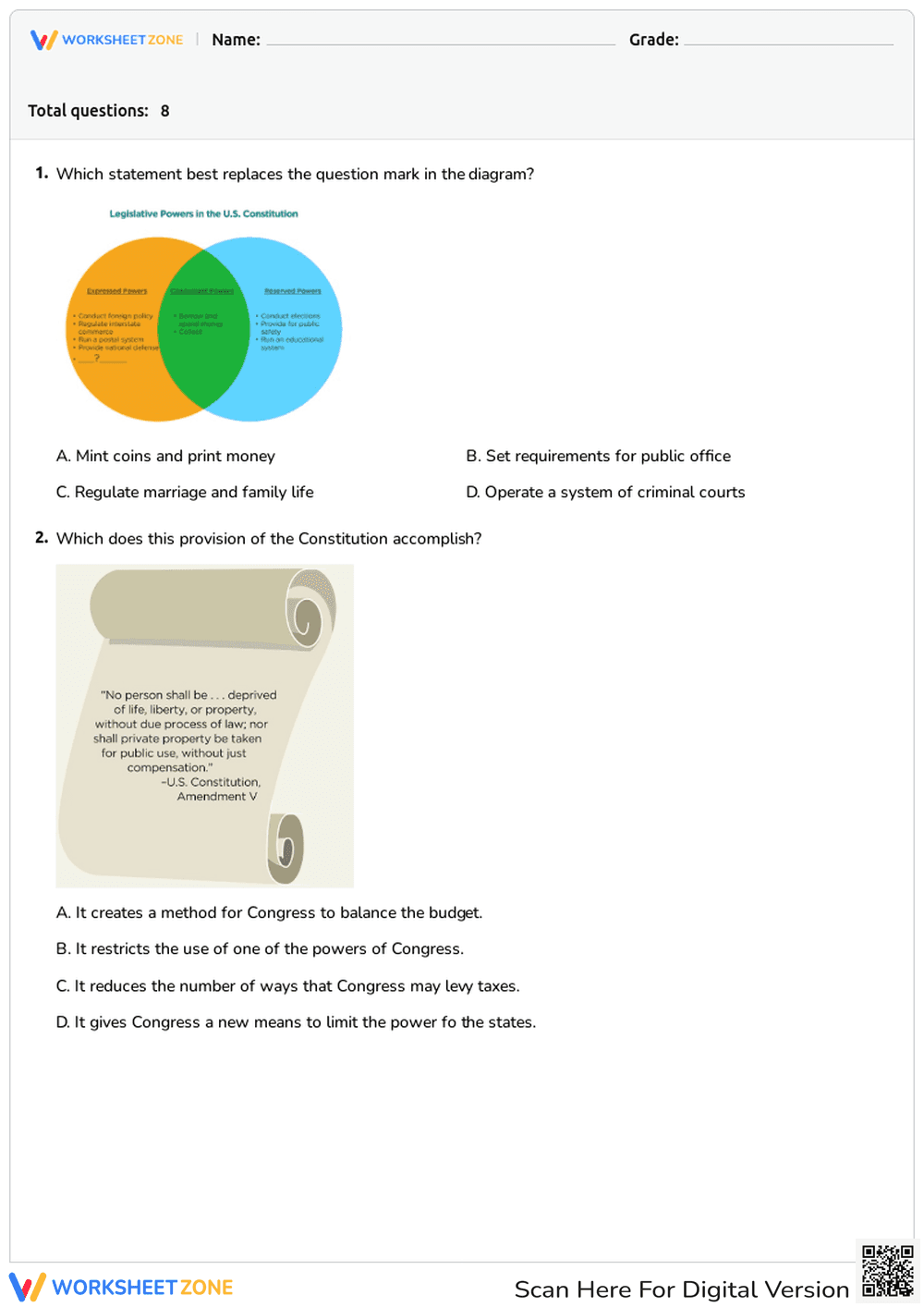
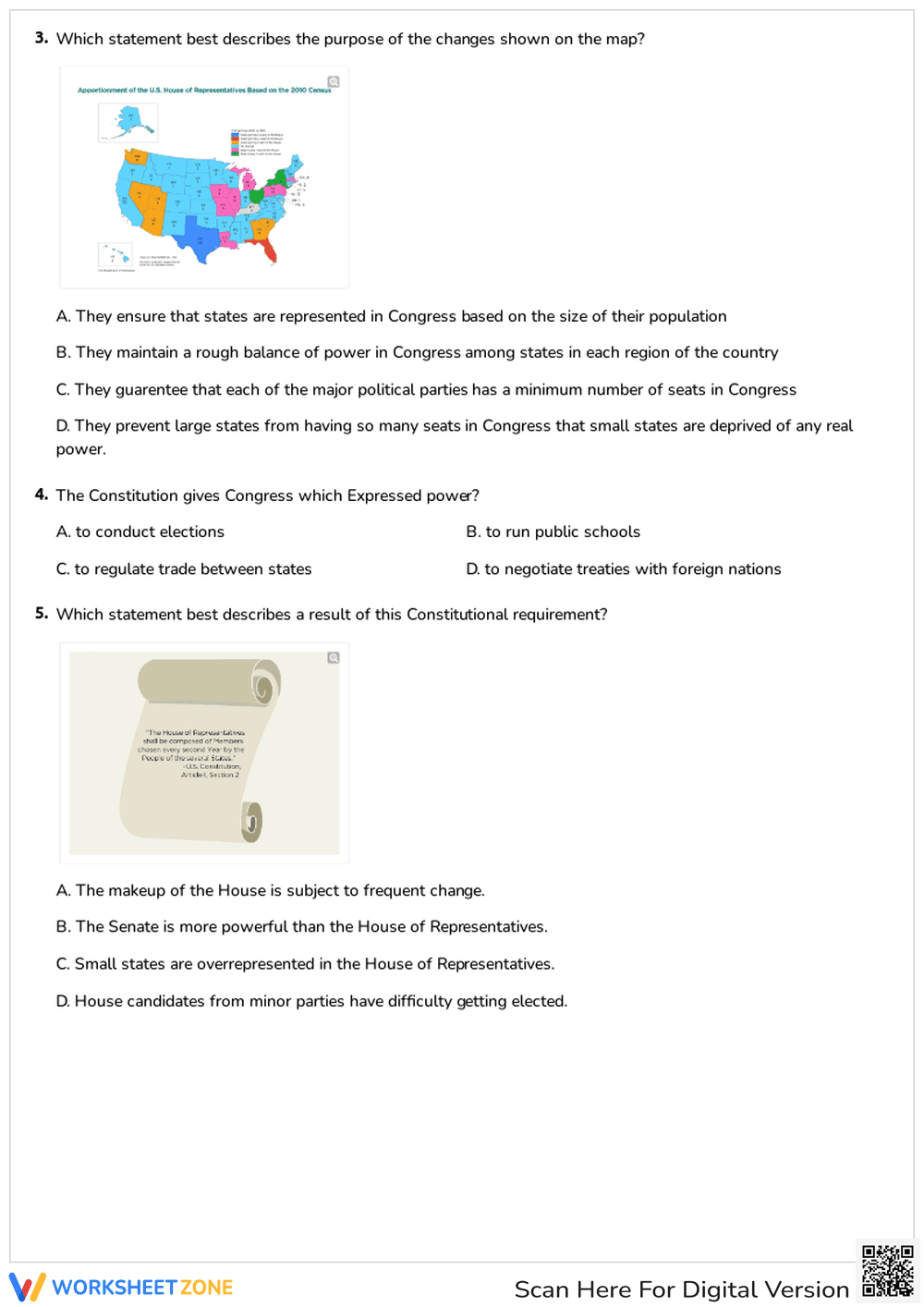
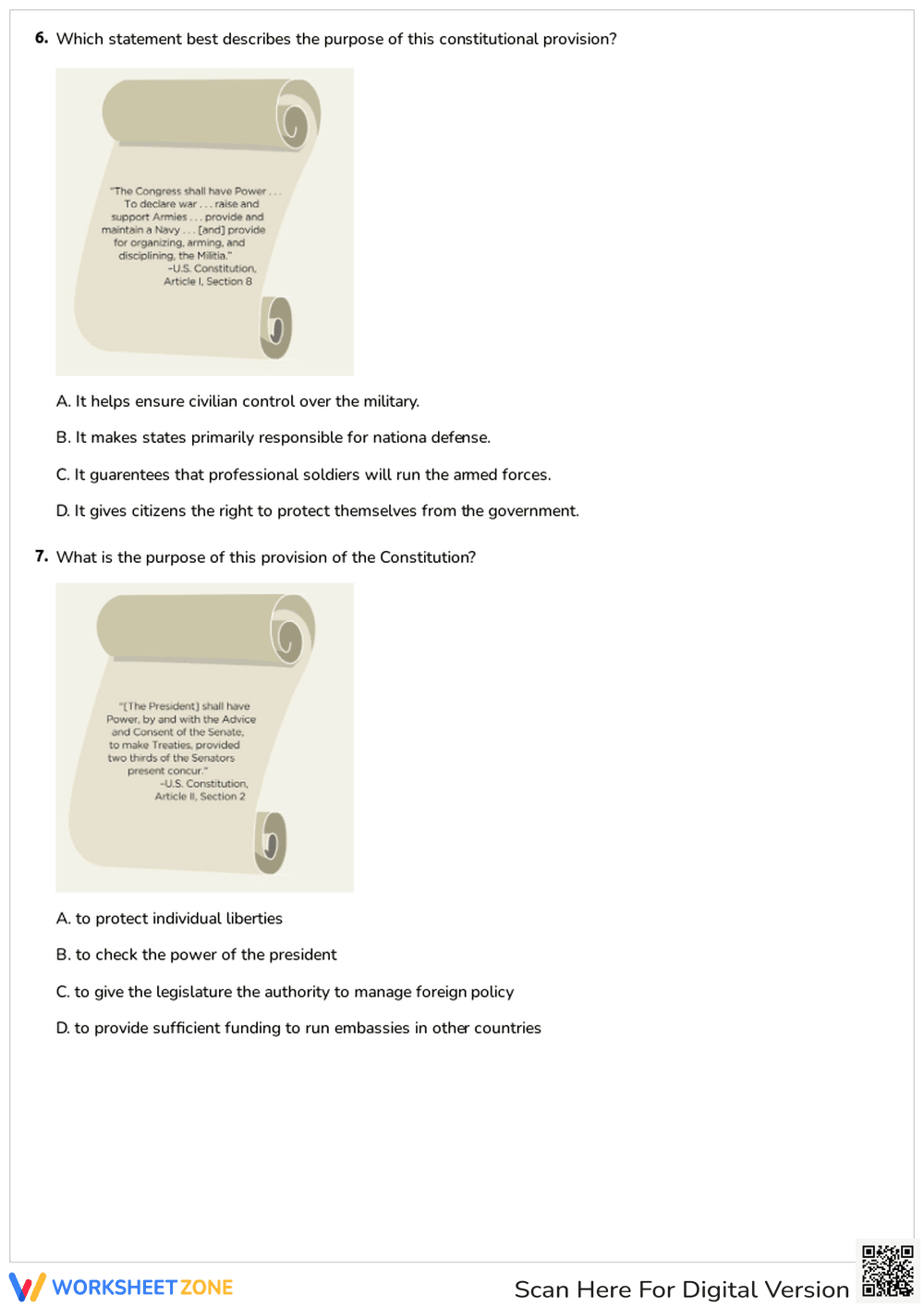
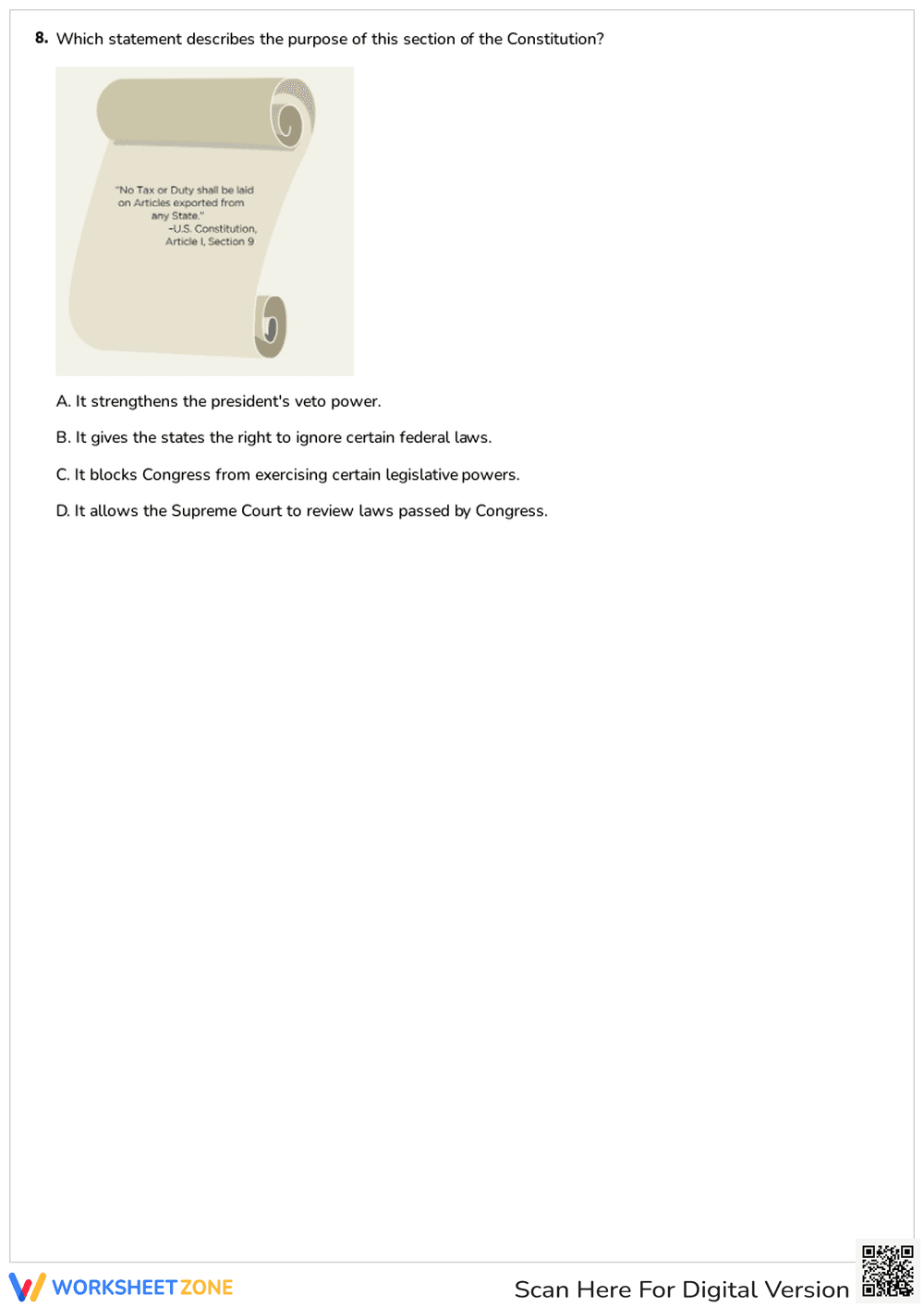
This comprehensive resource features eight multiple-choice questions spread across four pages. Each task presents a visual stimulus, such as a Venn diagram of legislative powers, a map of congressional apportionment, or a direct excerpt from the U.S. Constitution. Students must read the provided text or graphic and select the statement that best describes its constitutional purpose or result. A complete answer key is included for quick grading.
Zero-Prep Workflow
- Print (1 minute): Simply download the PDF and print a class set. No special formatting or additional materials are required.
- Distribute (1 minute): Hand out the four-page packet at the beginning of the lesson or as an independent review activity.
- Review (5 minutes): Use the included answer key to quickly score student responses or guide a whole-class review session.
The straightforward multiple-choice format keeps total teacher prep time under two minutes, making it an excellent option for emergency sub plans.
Standards Alignment
Aligned to CCSS.ELA-LITERACY.RH.6-8.2, this worksheet requires students to determine the central ideas or information of a primary or secondary source. Students practice this by reading actual constitutional text and identifying its core function, such as ensuring civilian control over the military or checking the president's power. Both standard codes can be copied directly into lesson plans, IEP goals, or district curriculum mapping tools.
How to Use It
This worksheet is highly versatile for middle school civics classrooms. Use it as a formative assessment after direct instruction on the branches of government to gauge student comprehension. Alternatively, assign it as independent test prep before a unit exam. As students work, observe whether they struggle more with the text-based excerpts or the visual diagrams to help target future review sessions. Expected completion time is 15 to 20 minutes.
Who It's For
Designed primarily for seventh and eighth-grade students in U.S. History or Civics courses. The clear, multiple-choice format provides built-in scaffolding for students who benefit from structured options rather than open-ended responses. It pairs perfectly with a primary source analysis lesson or an anchor chart detailing the separation of powers.
Integrating primary source analysis into middle school social studies is critical for developing civic literacy and historical reasoning. Aligned with CCSS.ELA-LITERACY.RH.6-8.2, this resource challenges students to determine the central ideas of a primary source by examining specific excerpts from the U.S. Constitution. According to Fisher & Frey (2014), providing students with structured opportunities to interact with complex informational texts significantly improves their critical thinking and reading comprehension skills across content areas. By evaluating authentic constitutional clauses, amendments, and historical diagrams, learners move beyond rote memorization to actively analyze the mechanisms of American government. This targeted practice helps students understand complex concepts such as checks and balances, legislative apportionment, and the separation of powers. Ultimately, engaging directly with these foundational documents equips students with the analytical tools necessary to participate thoughtfully in civic life and succeed in advanced high school coursework.


