


























Views
Downloads

3.NBT.A.2 Worksheet: Math Test — Grade 3 Aligned
Paste this activity's link or code into your existing LMS (Google Classroom, Canvas, Teams, Schoology, Moodle, etc.).
Students can open and work on the activity right away, with no student login required.
You'll still be able to track student progress and results from your teacher account.
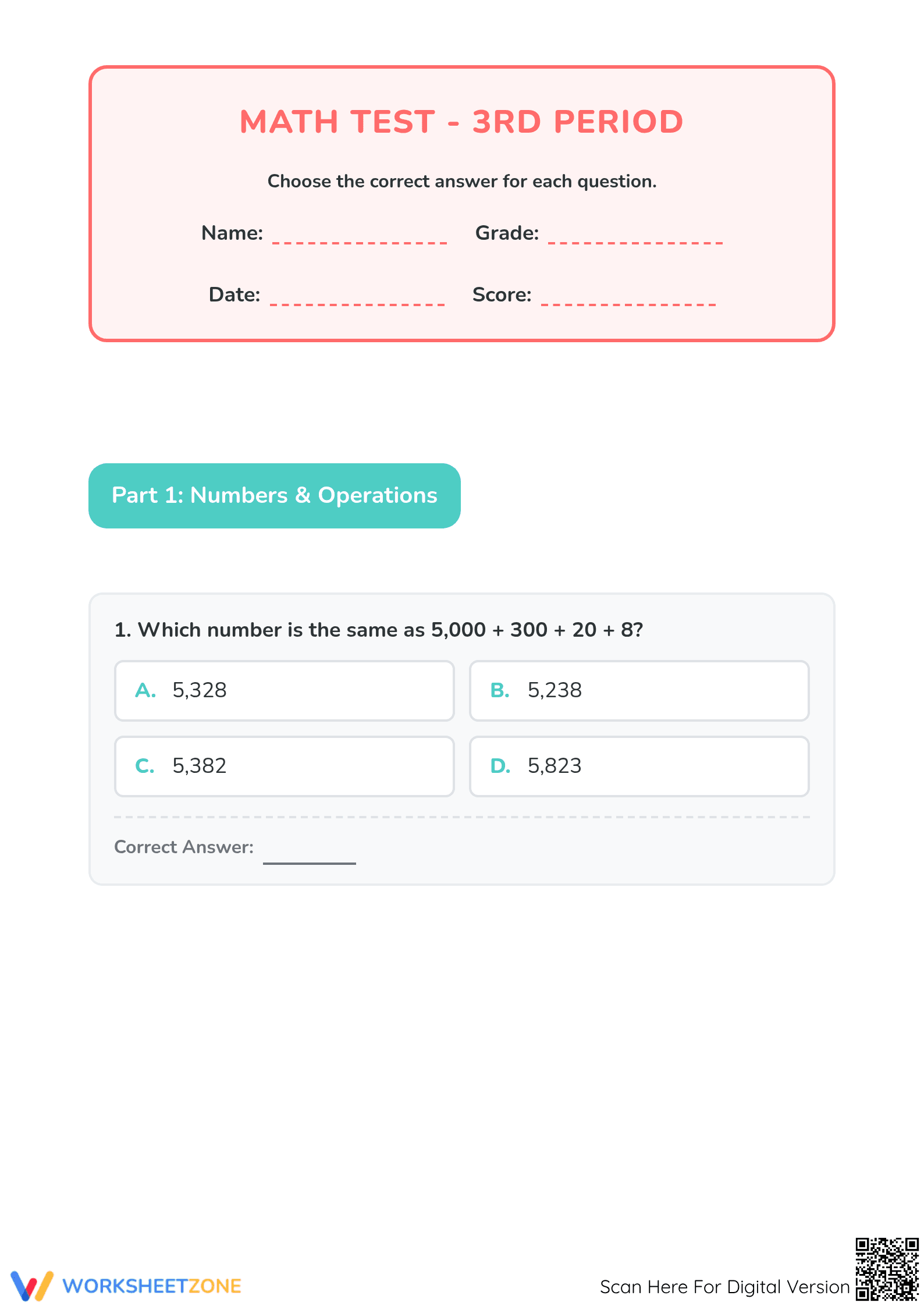
This comprehensive Grade 3 Math assessment provides a robust diagnostic tool for evaluating student mastery across critical mid-year domains. By integrating numbers and operations with introductory fractions and measurement, this test ensures students can demonstrate their mathematical reasoning in a standardized format. Teachers can use this Essential printable to identify specific learning gaps before moving into advanced curriculum.
At a Glance
- Grade: 3 · Subject: Math
- Standard:
CCSS.MATH.CONTENT.3.NBT.A.2— Fluently add and subtract within 1000 using strategies and algorithms- Skill Focus: Place Value, Mixed Operations, Fractions, and Time
- Format: 5 pages · 11 problems · Answer key included · PDF
- Best For: End-of-unit assessment and standardized test prep
- Time: 30–45 minutes
What's Inside
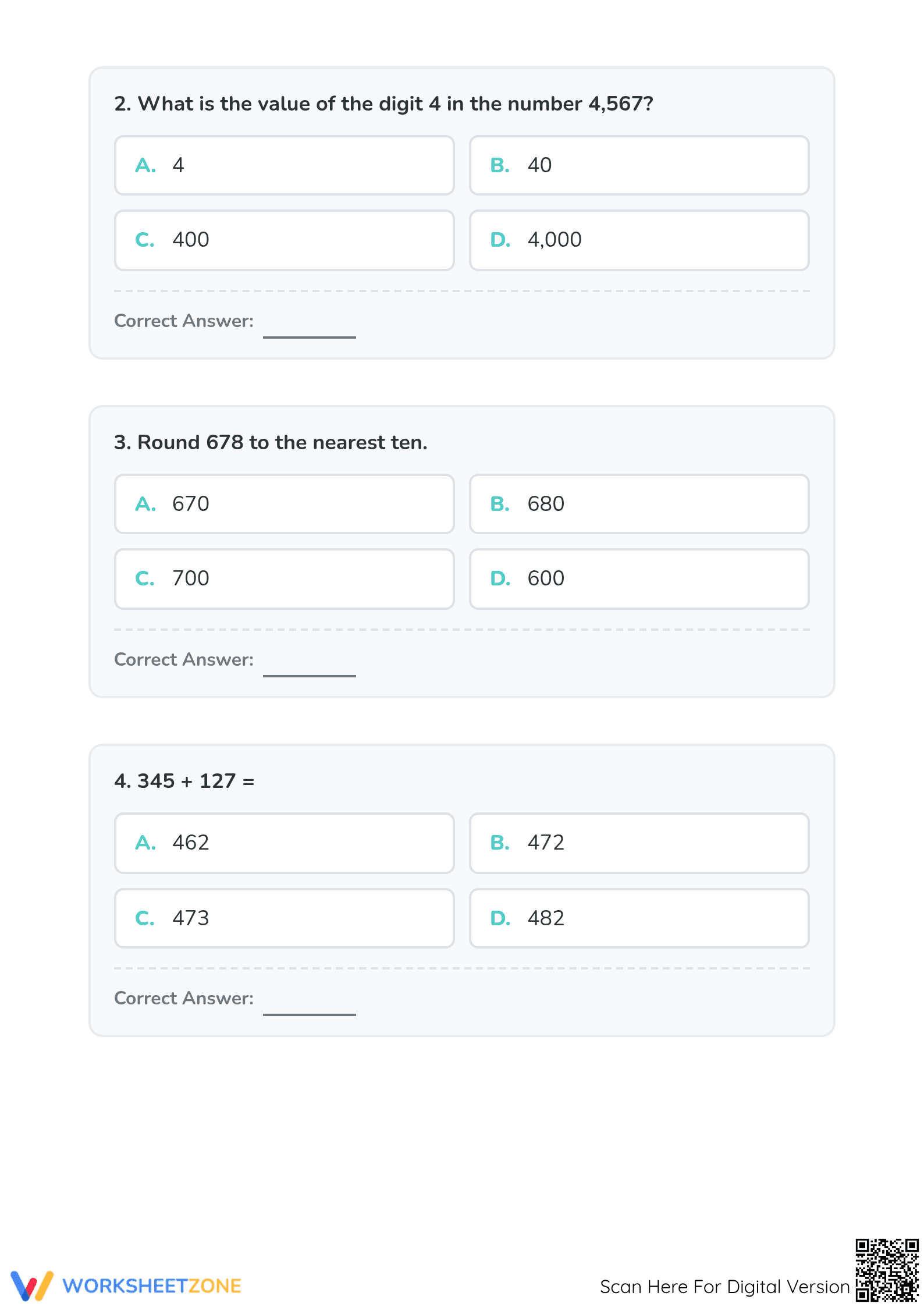
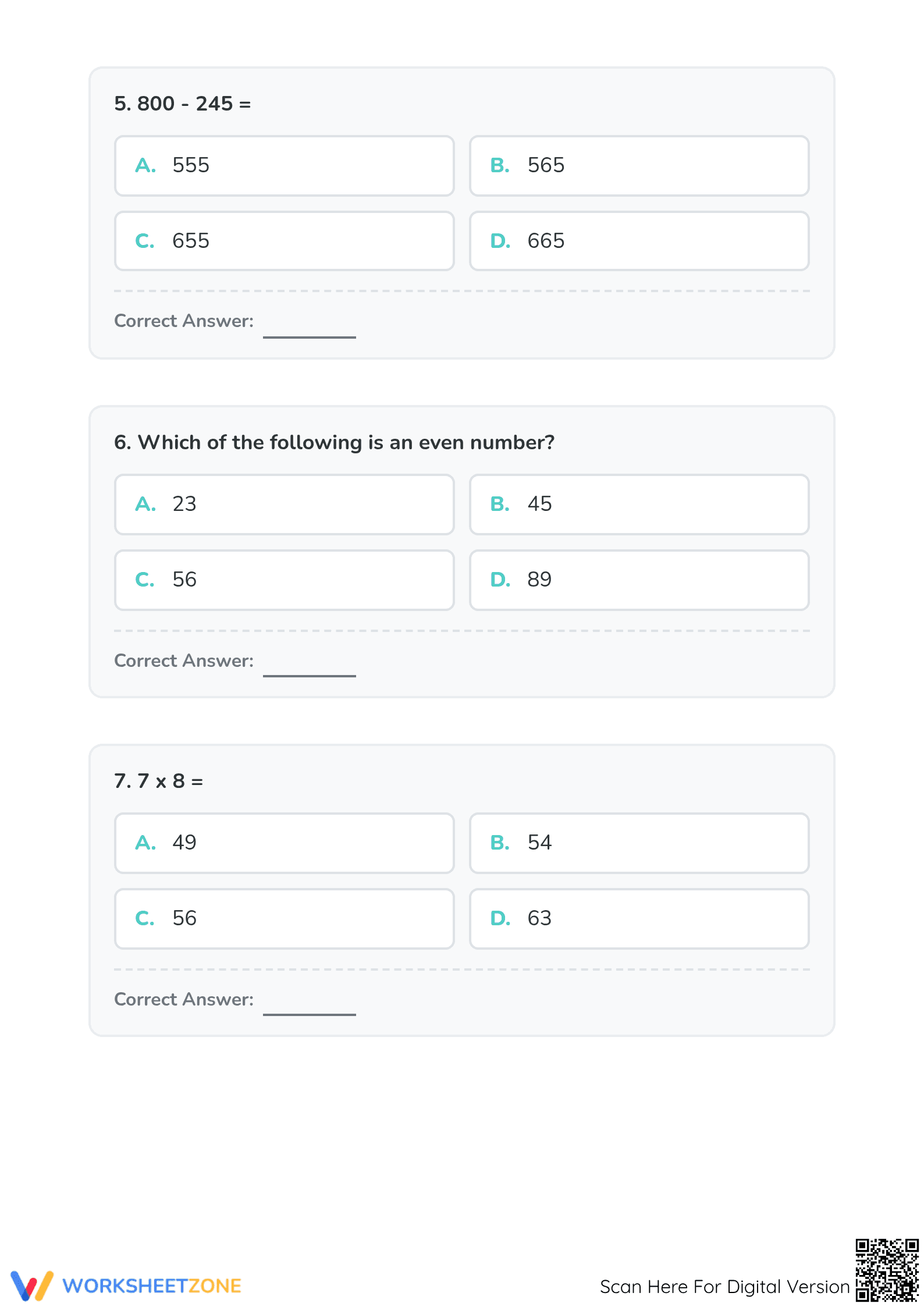
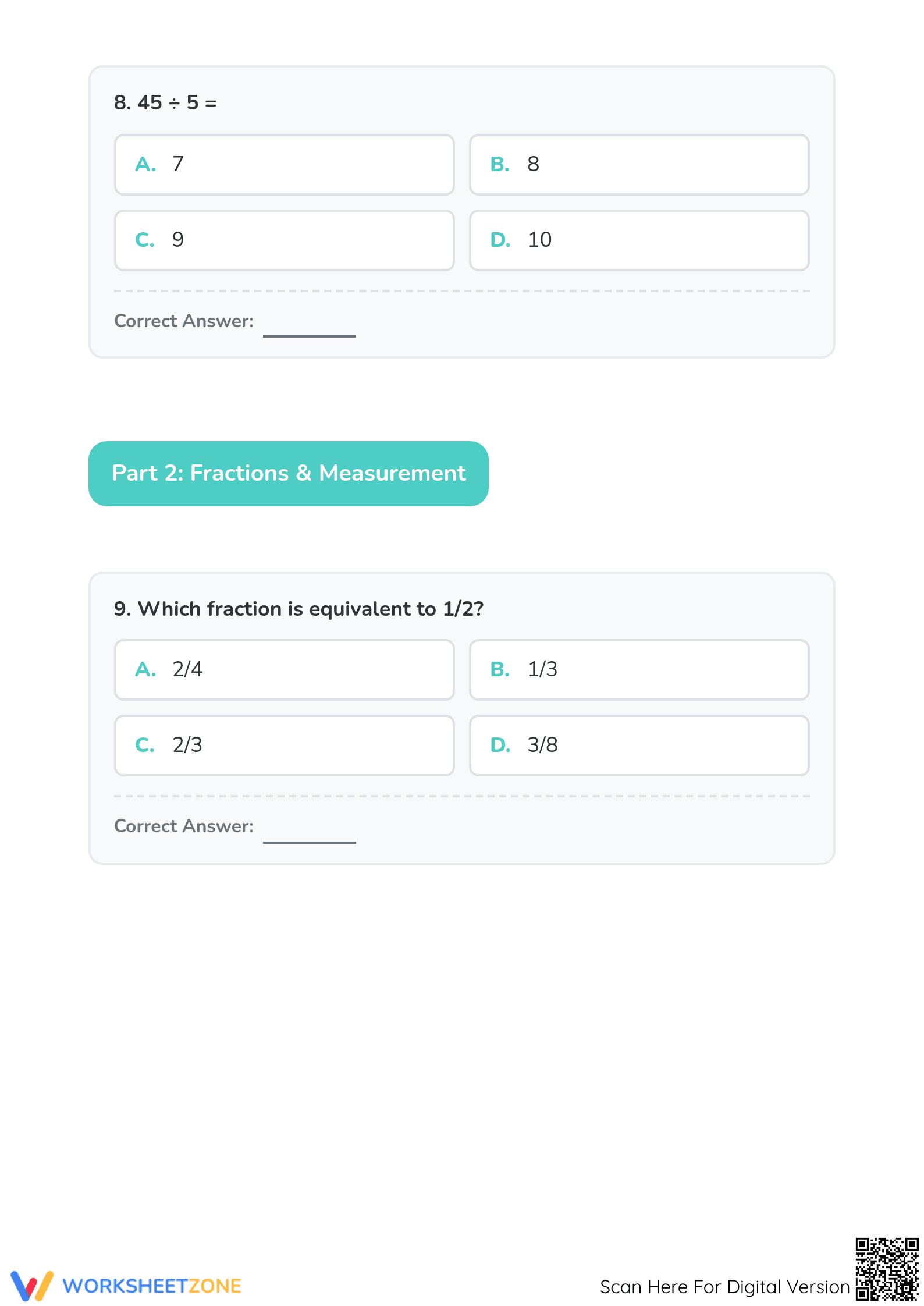
This five-page assessment features 11 professionally formatted multiple-choice questions designed to mirror the rigor of high-stakes testing. The worksheet includes a dedicated header for student information and scoring, followed by clear section breaks for Numbers and Operations and Fractions and Measurement. A complete answer key is provided to ensure rapid grading and immediate feedback.
Mastery Evidence
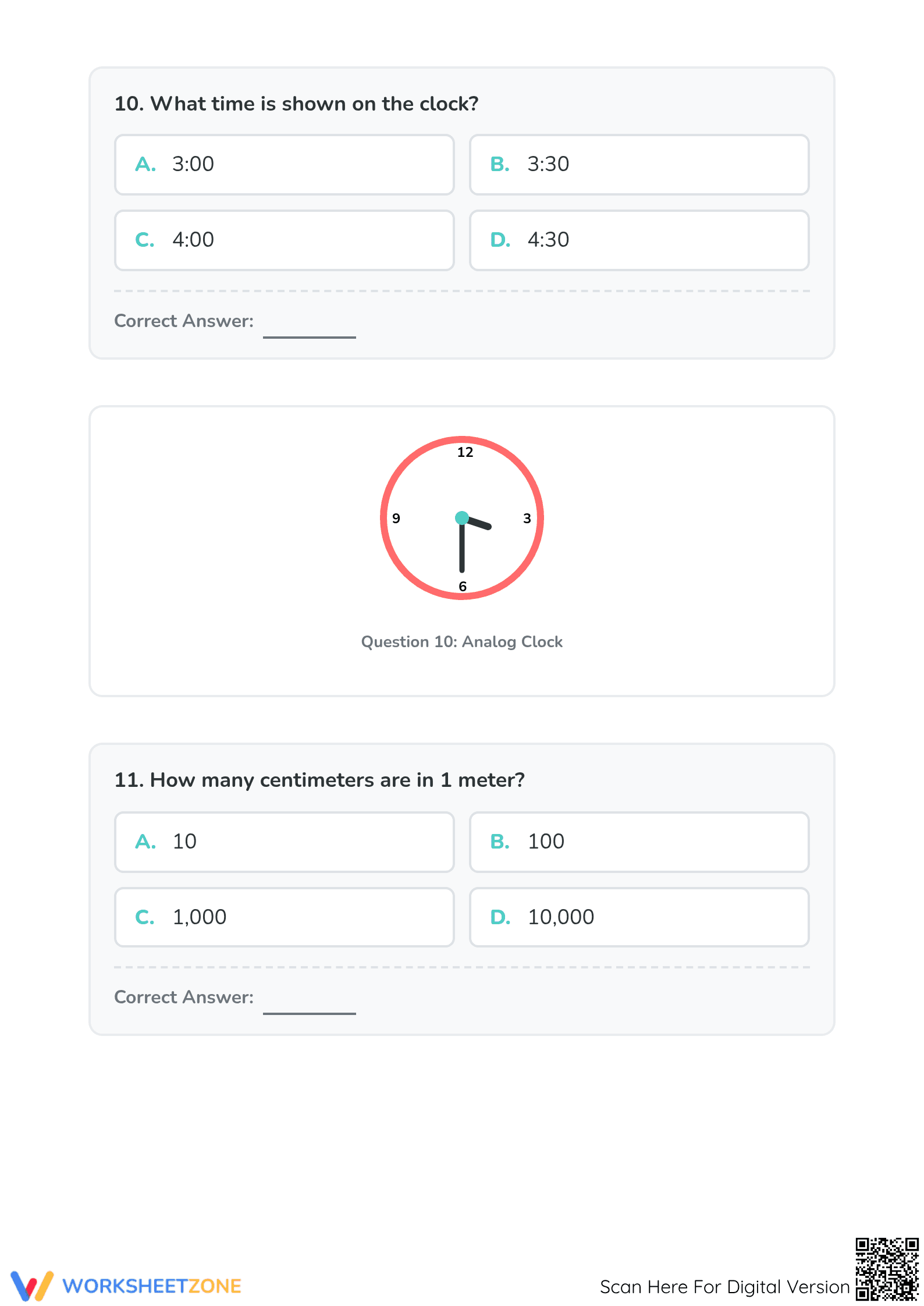
Each task in this assessment is strategically mapped to hierarchical sub-skills of the Grade 3 standards. Questions progress from basic place value recognition and rounding to multi-digit operations and conceptual understanding of equivalent fractions. The inclusion of an analog clock reading task provides concrete evidence of measurement mastery. Teachers can enter scores directly into progress monitors or IEP reports to document student growth toward benchmarks.
Standards Alignment
The primary focus of this assessment is `CCSS.MATH.CONTENT.3.NBT.A.2`: "Fluently add and subtract within 1000 using strategies and algorithms based on place value, properties of operations, and/or the relationship between addition and subtraction." Additionally, the worksheet addresses rounding (3.NBT.A.1) and equivalent fractions (3.NF.A.3). Both standard codes can be copied directly into lesson plans, IEP goals, or district curriculum mapping tools.
How to Use It
This assessment is best administered as a formal summative test after completing the third bimester of instruction. For a formative approach, teachers can observe students during the Fractions and Measurement section to identify if misconceptions are rooted in conceptual understanding or calculation errors. Expect most students to complete the 11-item set within 40 minutes, providing a clear snapshot of their independent performance levels.
Who It's For
This resource is tailored for third-grade classrooms, but it serves as an excellent challenge for advanced second graders or a necessary review for fourth-grade intervention groups. It pairs naturally with math anchor charts or visual fraction models to support students who require visual scaffolds during the assessment phase.
As highlighted by Fisher & Frey (2014), the integration of formative and summative assessment is vital for the gradual release of responsibility in mathematics. This Grade 3 Math assessment utilizes structured multiple-choice items to verify that students have transitioned from guided practice to independent mastery of `CCSS.MATH.CONTENT.3.NBT.A.2`. By evaluating multi-digit addition, place value, and fractional equivalency in a single 11-task instrument, the resource provides the high-frequency data points required for evidence-based instruction. Research from the NAEP consistently indicates that student success in later algebraic thinking is predicated on early fluency with base-ten operations and measurement concepts. This printable worksheet offers a standards-aligned method to capture that data, ensuring that instructional adjustments are grounded in objective student performance metrics rather than anecdotal observation.


