




























Views
Downloads
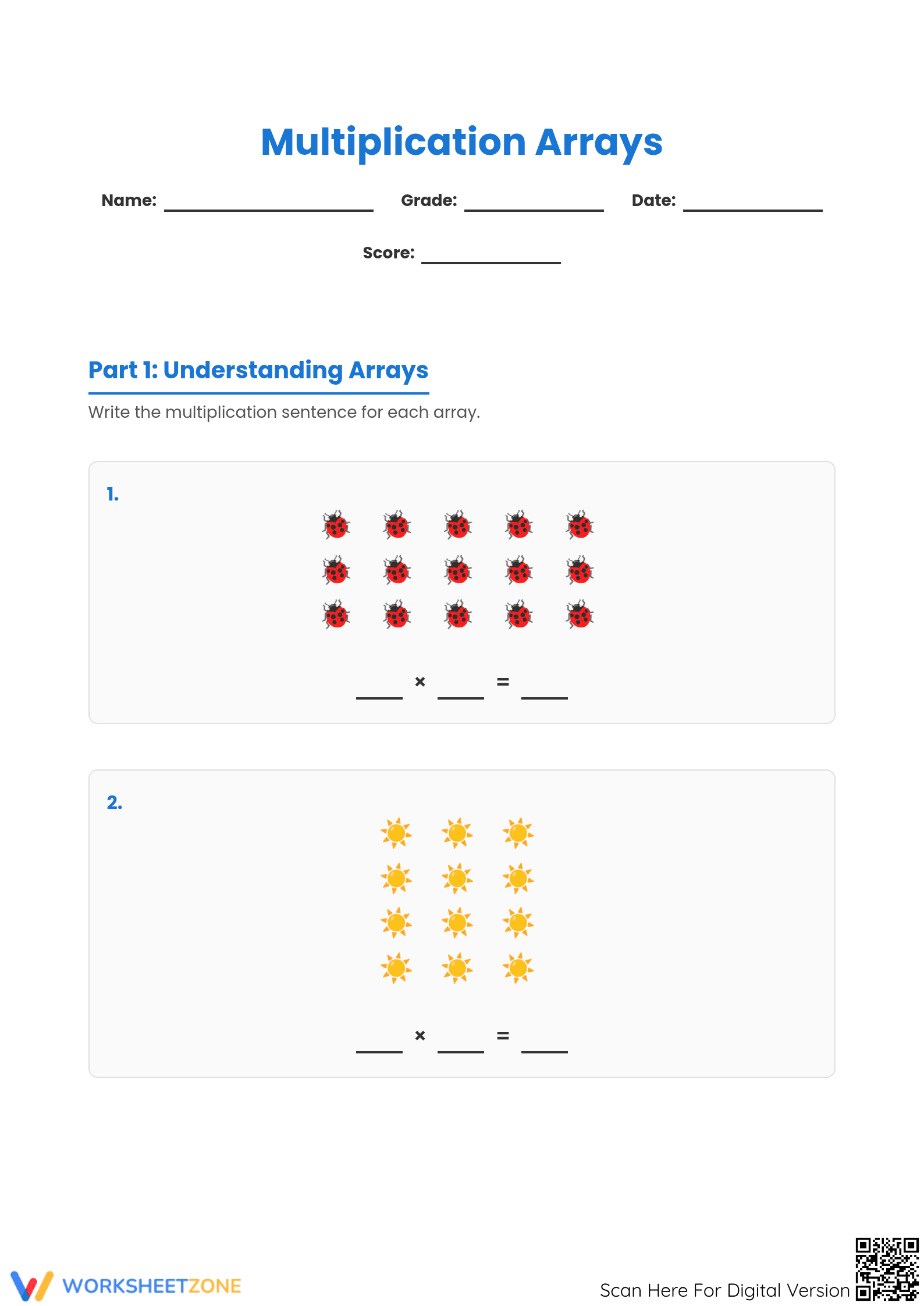
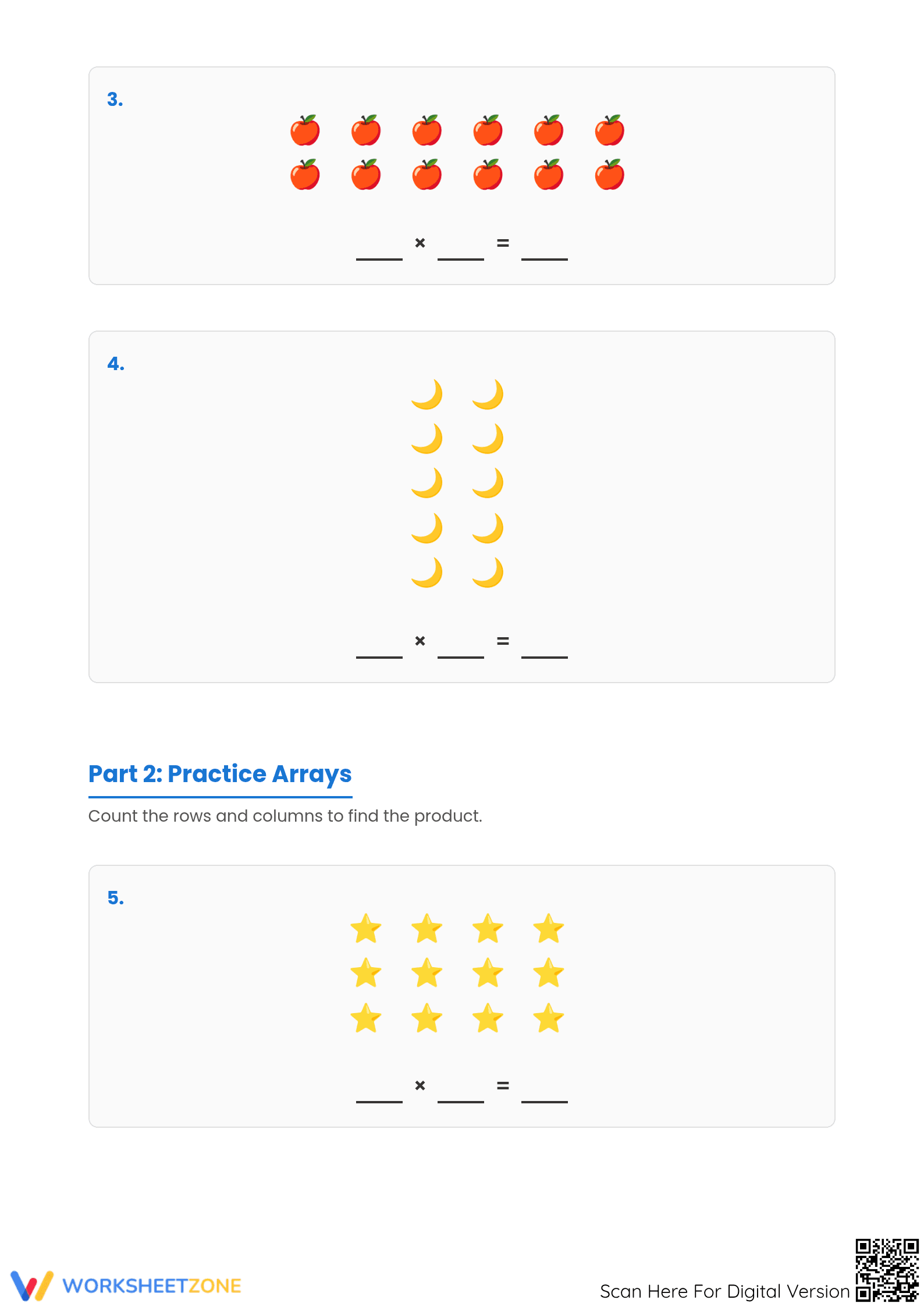
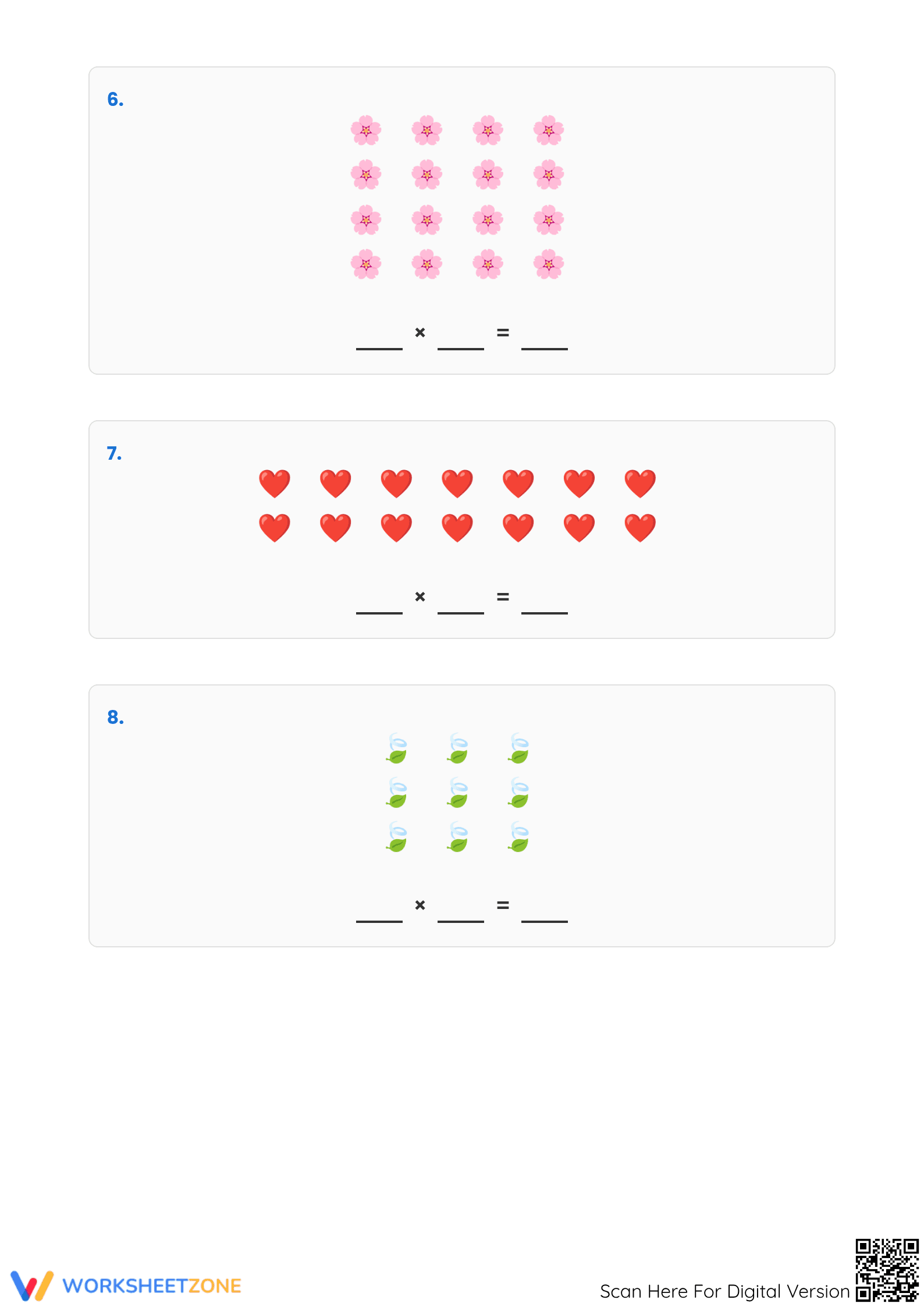
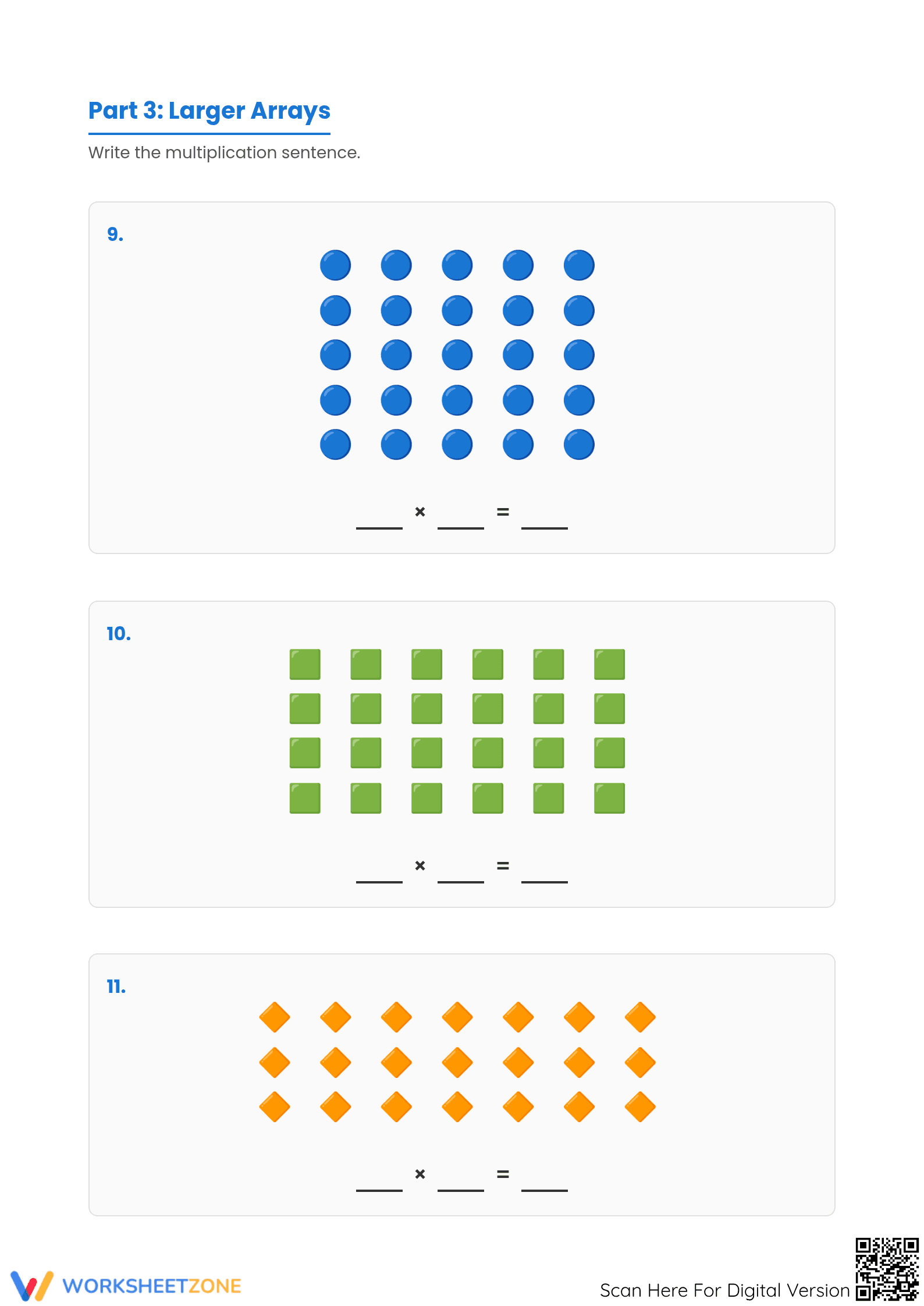

Essential Arrays Multiplication Worksheet | Grade 5-8 Math

Paste this activity's link or code into your existing LMS (Google Classroom, Canvas, Teams, Schoology, Moodle, etc.).
Students can open and work on the activity right away, with no student login required.
You'll still be able to track student progress and results from your teacher account.
This worksheet provides essential practice for students to visualize multiplication using rectangular arrays. By translating visual groupings into formal equations, learners solidify their understanding of the relationship between repeated addition and multiplicative products. This 5-page resource is ideal for reinforcing foundational math concepts in middle school classrooms where visual models support conceptual clarity.
At a Glance
- Grade: 5–8 · Subject: Math
- Standard:
CCSS.MATH.CONTENT.3.OA.A.1— Interpret products of whole numbers as total objects in equal groups- Skill Focus: Multiplication Arrays
- Format: 5 pages · 20 problems · Answer key included · PDF
- Best For: Foundational review and remedial math support
- Time: 25–40 minutes
What's Inside
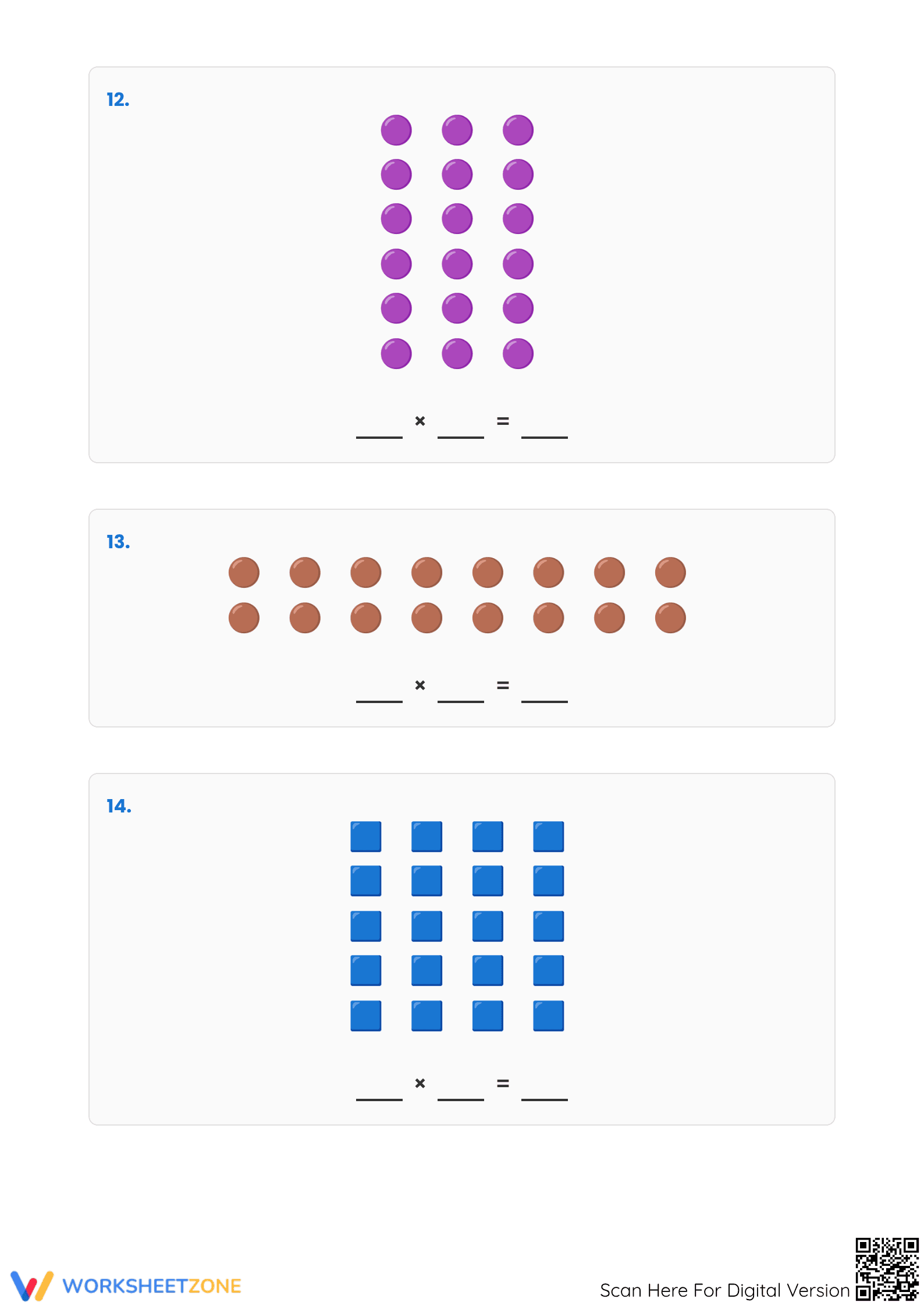
The packet contains 5 distinct pages, each featuring 4 clear rectangular arrays. Students are tasked with observing the rows and columns to determine the total count and writing the corresponding multiplication sentence. A comprehensive answer key is included for every page, allowing for quick grading or student self-correction. The layout is clean and focused, minimizing distractions for students who benefit from structured visual data.
Skill Progression
- Guided Practice: The initial arrays use simple, low-number dimensions to build student confidence and establish the row-by-column identification pattern.
- Supported Practice: Mid-range problems introduce larger arrays requiring more careful counting and application of skip-counting strategies to reach the product.
- Independent Practice: The final pages present diverse array orientations to ensure students can generalize the concept across different visual representations.
This resource utilizes the gradual-release model, moving students from basic visual identification to abstract mathematical modeling through repeated, successful practice hits.
Standards Alignment
This resource is aligned to CCSS.MATH.CONTENT.3.OA.A.1: "Interpret products of whole numbers, e.g., interpret 5 × 7 as the total number of objects in 5 groups of 7 objects each." While the content aligns with third-grade benchmarks, the visual representation is critical for older students in Grades 5-8 who require targeted intervention in basic operations. Both standard codes can be copied directly into lesson plans, IEP goals, or district curriculum mapping tools.
How to Use It
Use this during small-group intervention for students struggling with basic multiplication facts or mental math. It works effectively as a "do-now" activity to activate prior knowledge before moving into multi-digit multiplication. Educators should observe if students are counting every object individually or using sophisticated skip-counting strategies for rows and columns. Expect most students to complete the 20 tasks within a single 40-minute instructional block.
Who It's For
This is intended for middle school students in Grades 5 through 8 who need to strengthen their mental math and visualization skills. It pairs naturally with physical manipulatives like counters or grid paper to bridge the gap between concrete objects and symbolic equations. It is also suitable for special education settings where visual scaffolding is a mandated accommodation for mathematics instruction.
According to the RAND AIRS 2024 report, visual representations such as rectangular arrays are pivotal in helping students transition from additive to multiplicative reasoning. Research in the ScienceDirect TpT Analysis indicates that worksheets emphasizing the spatial organization of numbers improve a student's ability to recall multiplication facts with greater accuracy and speed. This resource targets CCSS.MATH.CONTENT.3.OA.A.1 by requiring learners to translate visual data into formal mathematical equations. By providing 20 unique opportunities for practice across five pages, the worksheet ensures that the concept is reinforced through repeated exposure. This systematic approach aligns with the findings of Fisher & Frey (2014) regarding the importance of scaffolding foundational skills for diverse learners. Middle school educators can utilize this tool to close achievement gaps for students who missed core conceptual development in earlier grades, providing a clear path toward mastery of multiplication and division relationships.


