


























Views
Downloads

Essential Area Formulas Worksheet | Grades 4-8 Printable
Paste this activity's link or code into your existing LMS (Google Classroom, Canvas, Teams, Schoology, Moodle, etc.).
Students can open and work on the activity right away, with no student login required.
You'll still be able to track student progress and results from your teacher account.
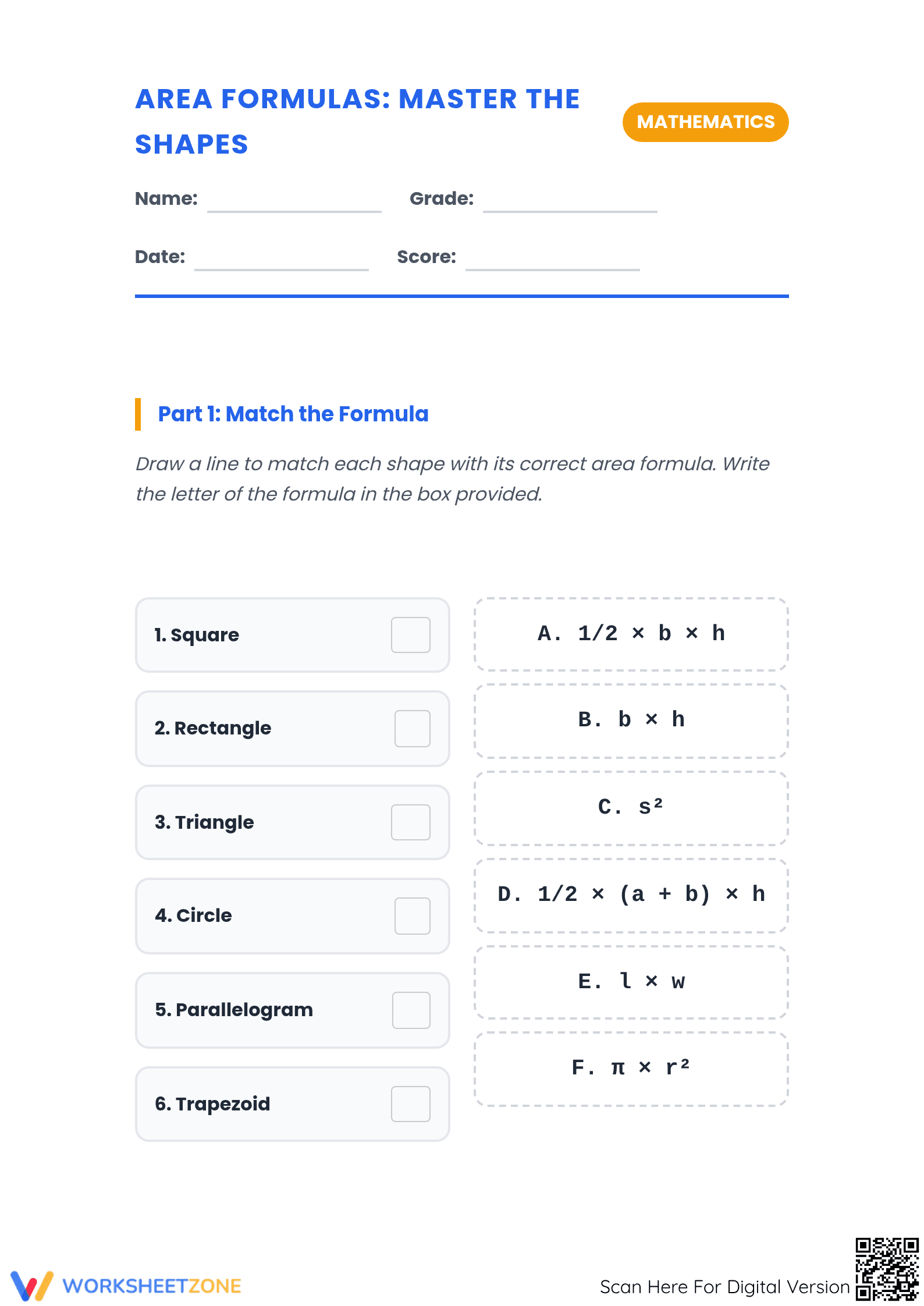
This comprehensive area formulas worksheet provides students with a structured path to mastering the geometric calculations required for triangles, circles, and various quadrilaterals. By matching formulas to shapes and solving practical application problems, learners develop a deep conceptual understanding of spatial measurement. This resource ensures students can confidently calculate area across multiple mathematical contexts.
At a Glance
- Grade: 6 · Subject: Math
- Standard:
CCSS.MATH.CONTENT.6.G.A.1— Find the area of triangles, special quadrilaterals, and polygons by composing into rectangles- Skill Focus: Geometric Area Formulas
- Format: 4 pages · 15 problems · Answer key included · PDF
- Best For: Middle school geometry practice and review
- Time: 30–45 minutes
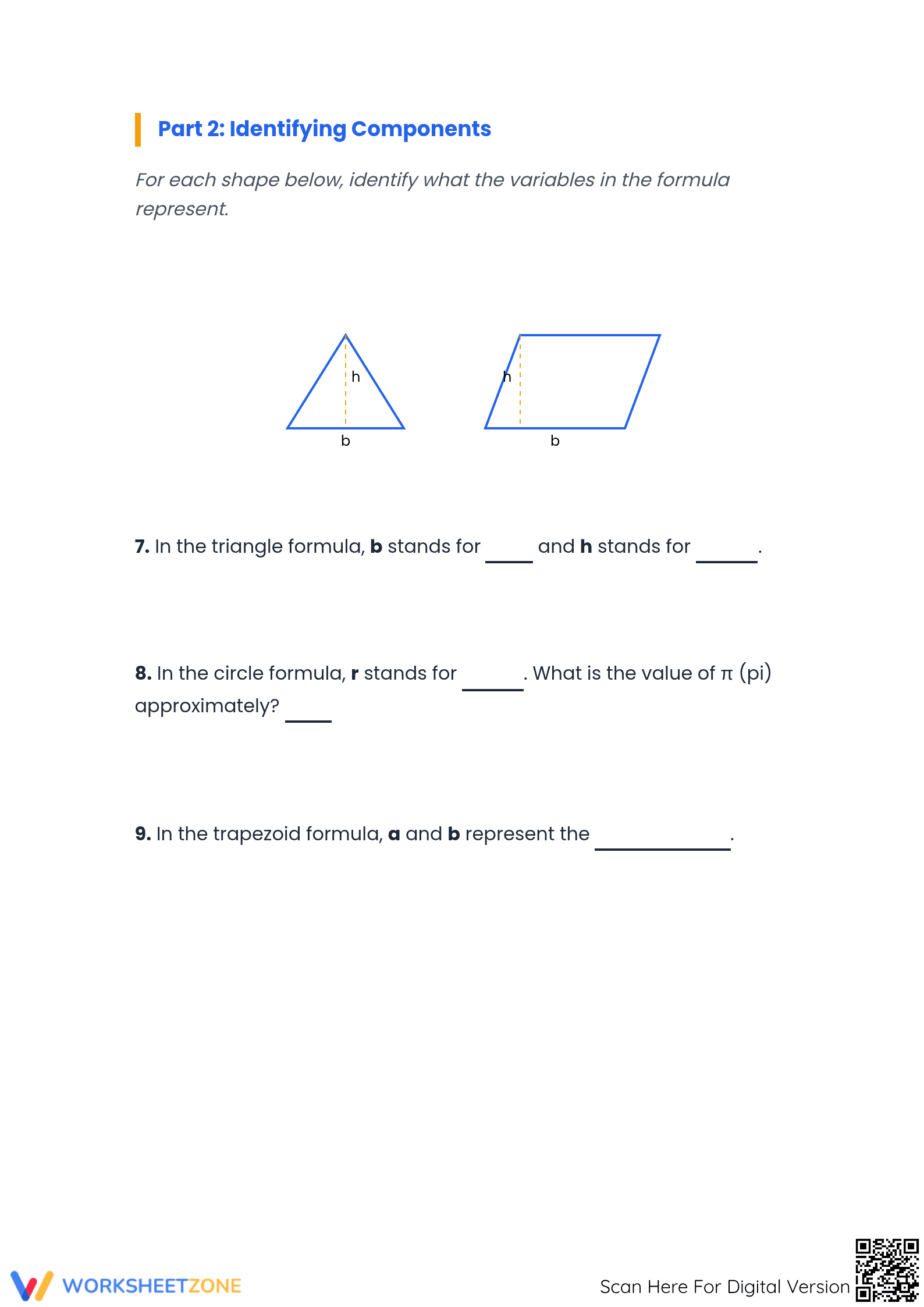
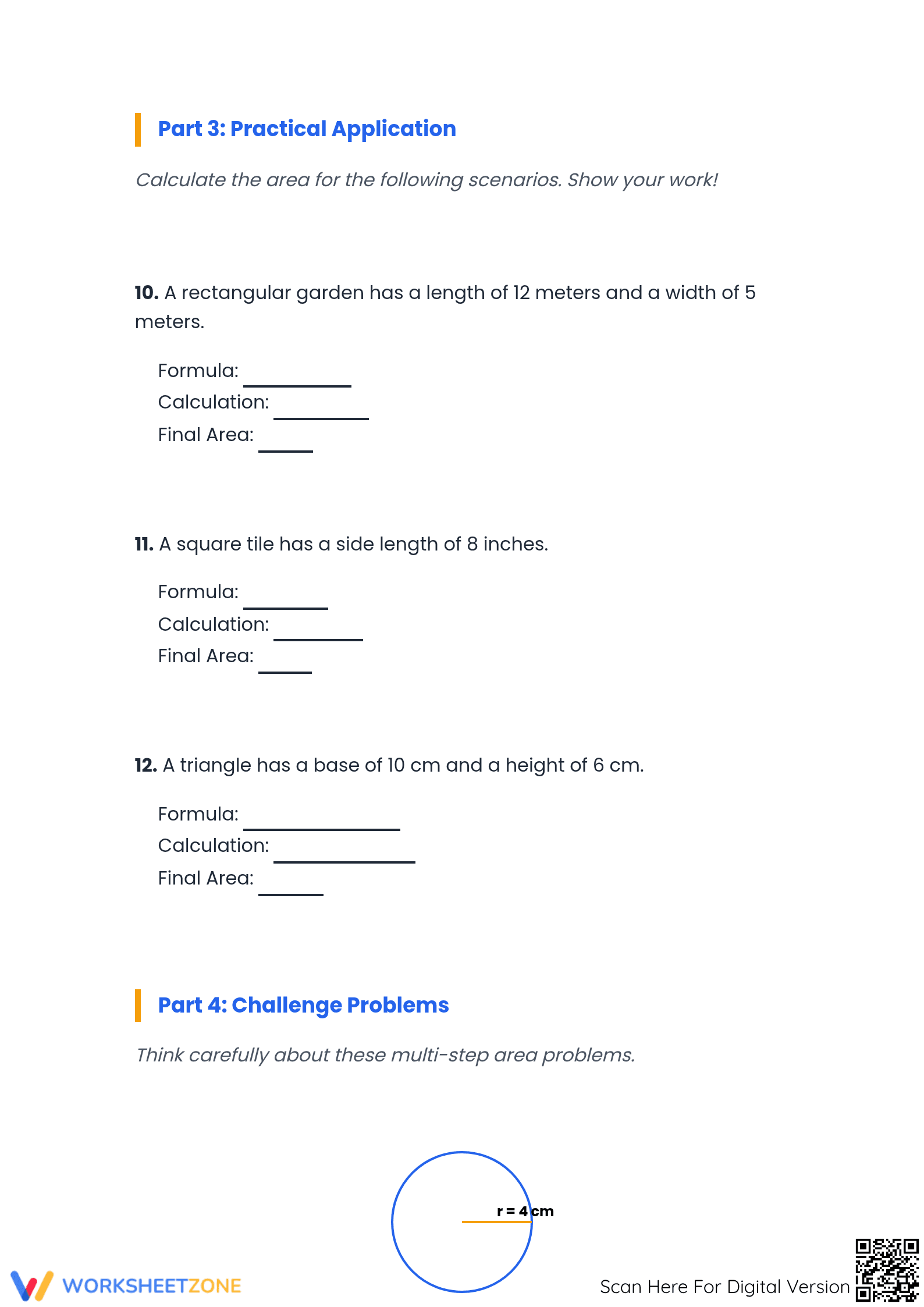
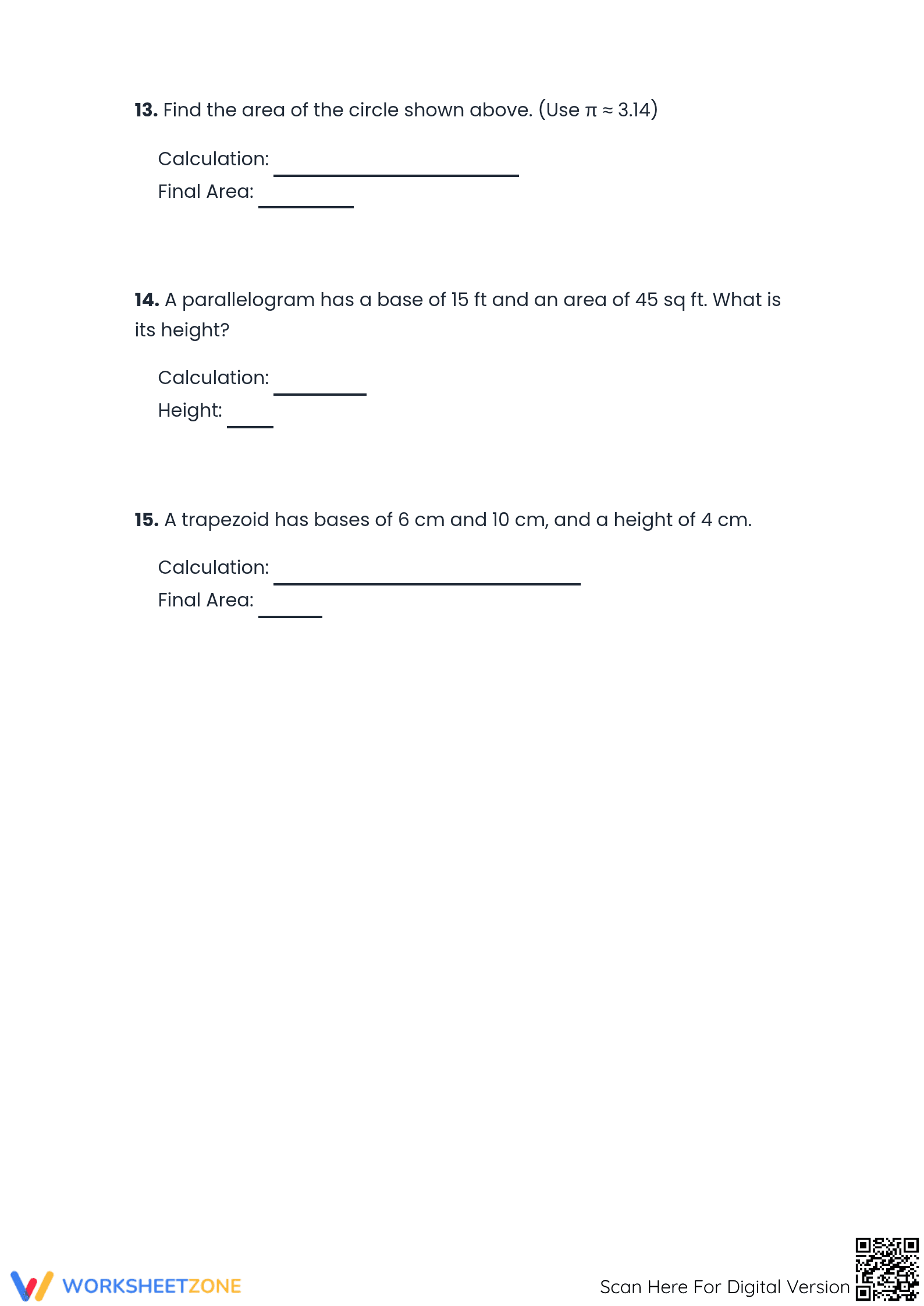
This 4-page instructional packet is divided into four sections. It begins with a matching activity where students pair shapes like trapezoids and parallelograms with their correct formulas. The worksheet then moves into variable identification and practical word problems. It concludes with high-interest challenge problems that require multi-step thinking. A full answer key is provided for immediate feedback.
The zero-prep workflow for this resource is designed for efficiency. First, print the four-page PDF, which takes less than 60 seconds for a standard classroom set. Second, distribute the materials to students; no additional manipulatives are required for completion. Finally, review the answers using the included key in under 5 minutes to identify common misconceptions. Total prep time is under two minutes.
The primary alignment for this resource is `CCSS.MATH.CONTENT.6.G.A.1`, which focuses on finding the area of triangles, special quadrilaterals, and polygons. It also supports circle-specific mastery through `CCSS.MATH.CONTENT.7.G.B.4`. Both standard codes can be copied directly into lesson plans, IEP goals, or district curriculum mapping tools to ensure instructional consistency across the grade level.
Use this worksheet as a summative review after direct instruction on area formulas has been completed. It serves as an excellent tool for identifying which specific shapes or formula components students struggle with most. Teachers should observe students during the application phase to see if they correctly identify height and base. Completion typically takes between 30 and 45 minutes for most middle school learners.
This resource is ideal for Grade 6 and 7 students who are transitioning to more complex shapes. It provides enough scaffolding for struggling learners through the initial matching section, while the challenge problems offer necessary extension for advanced students. It pairs naturally with a geometric anchor chart or a short video demonstration of formula derivation.
According to the RAND AIRS 2024 report on mathematics instructional materials, the use of high-quality, standards-aligned worksheets that provide a mix of procedural fluency and conceptual application is a hallmark of effective middle school geometry instruction. This resource specifically targets `CCSS.MATH.CONTENT.6.G.A.1` by requiring students to not only memorize area formulas but to identify their components and apply them to real-world scenarios. Research from Fisher & Frey (2014) emphasizes that the gradual release of responsibility—moving from matching and identification to independent problem-solving—supports long-term retention of mathematical concepts. By including 15 diverse tasks across 4 pages, this worksheet ensures that students receive the volume of practice necessary to move from initial exposure to mastery of area calculations for polygons and circles. This balanced approach to geometric practice aligns with the NAEP framework for measuring student progress in mathematics.


