




























Views
Downloads

Matching Identical Items Worksheet | Essential Ready

Paste this activity's link or code into your existing LMS (Google Classroom, Canvas, Teams, Schoology, Moodle, etc.).
Students can open and work on the activity right away, with no student login required.
You'll still be able to track student progress and results from your teacher account.
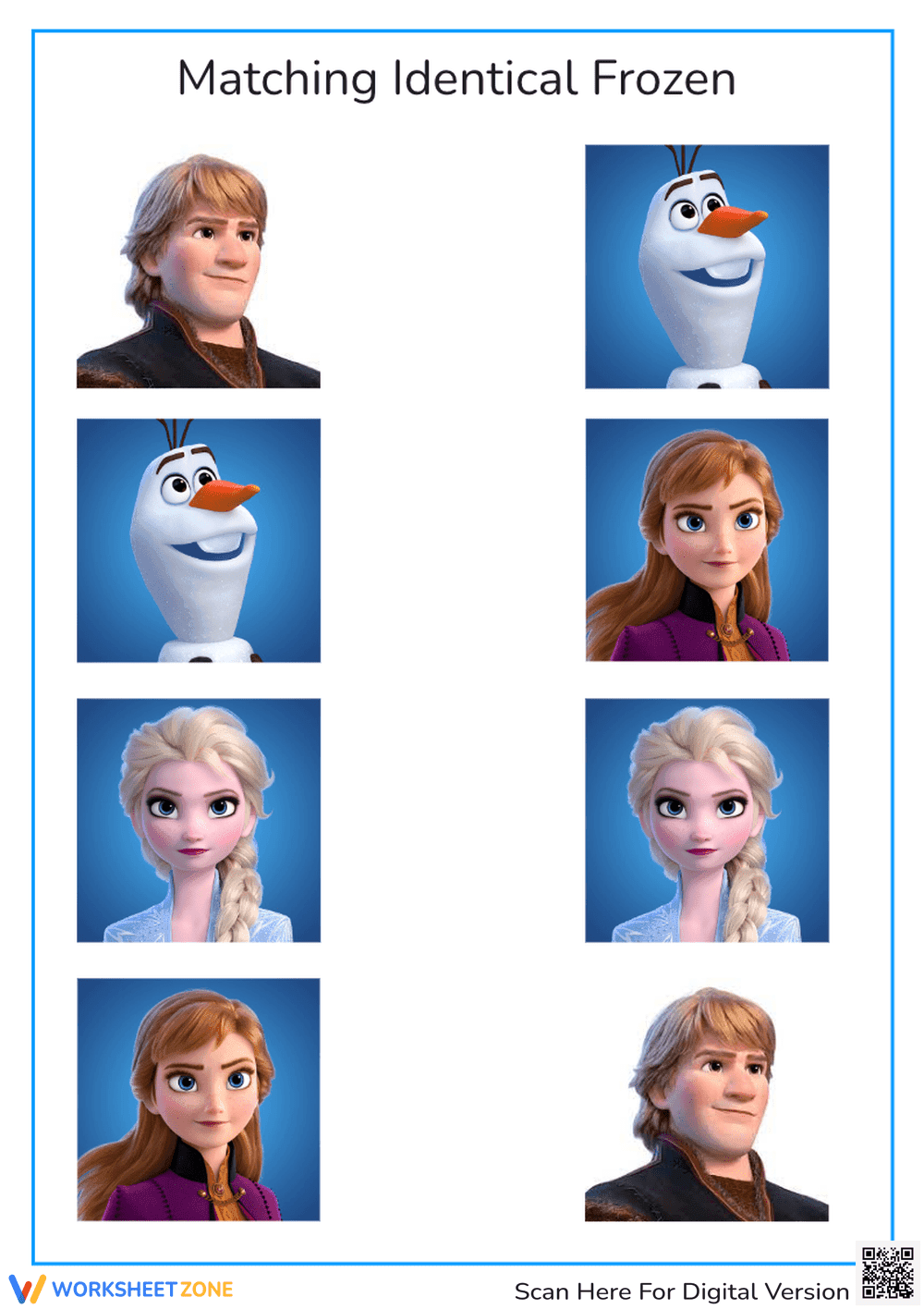
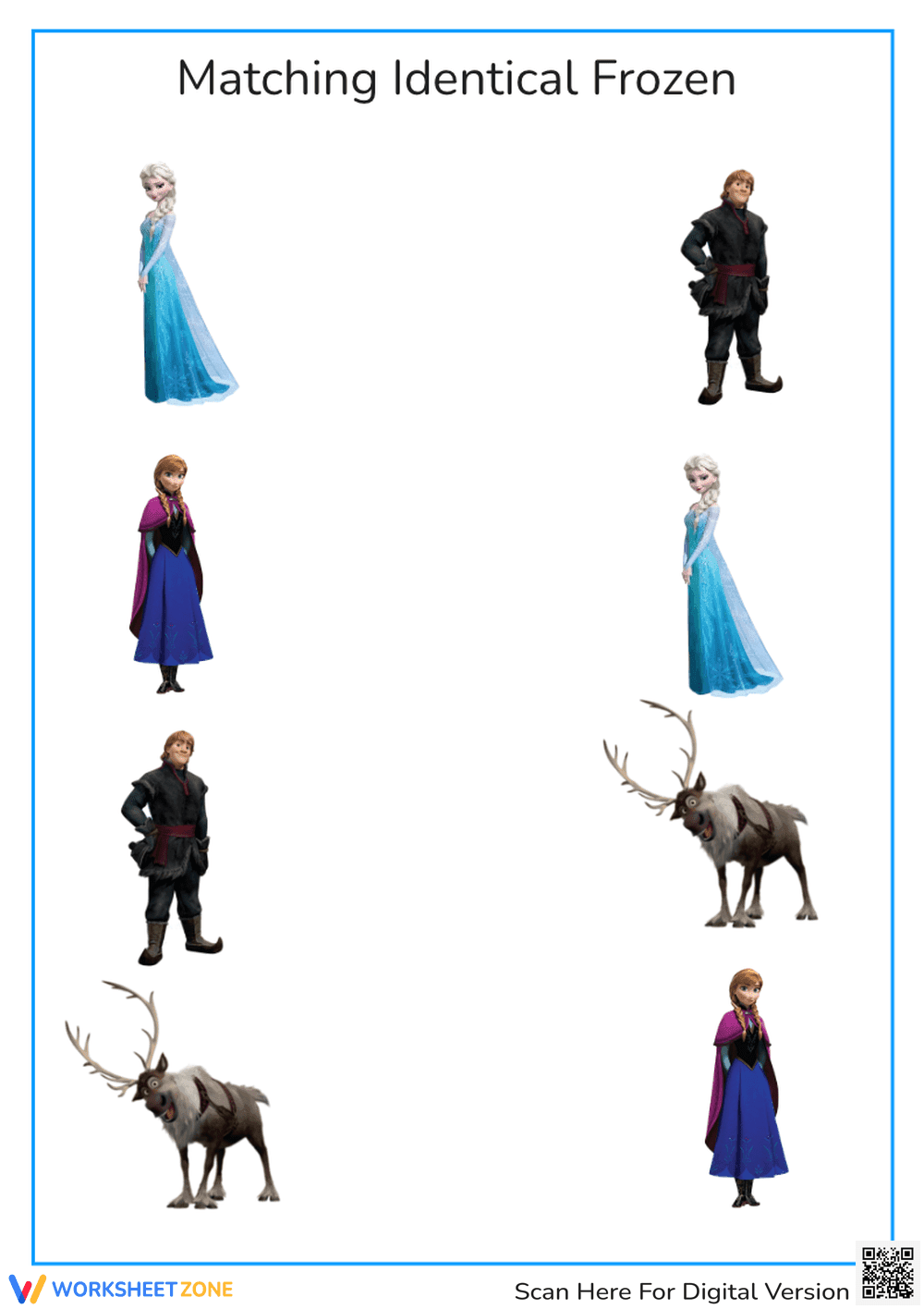
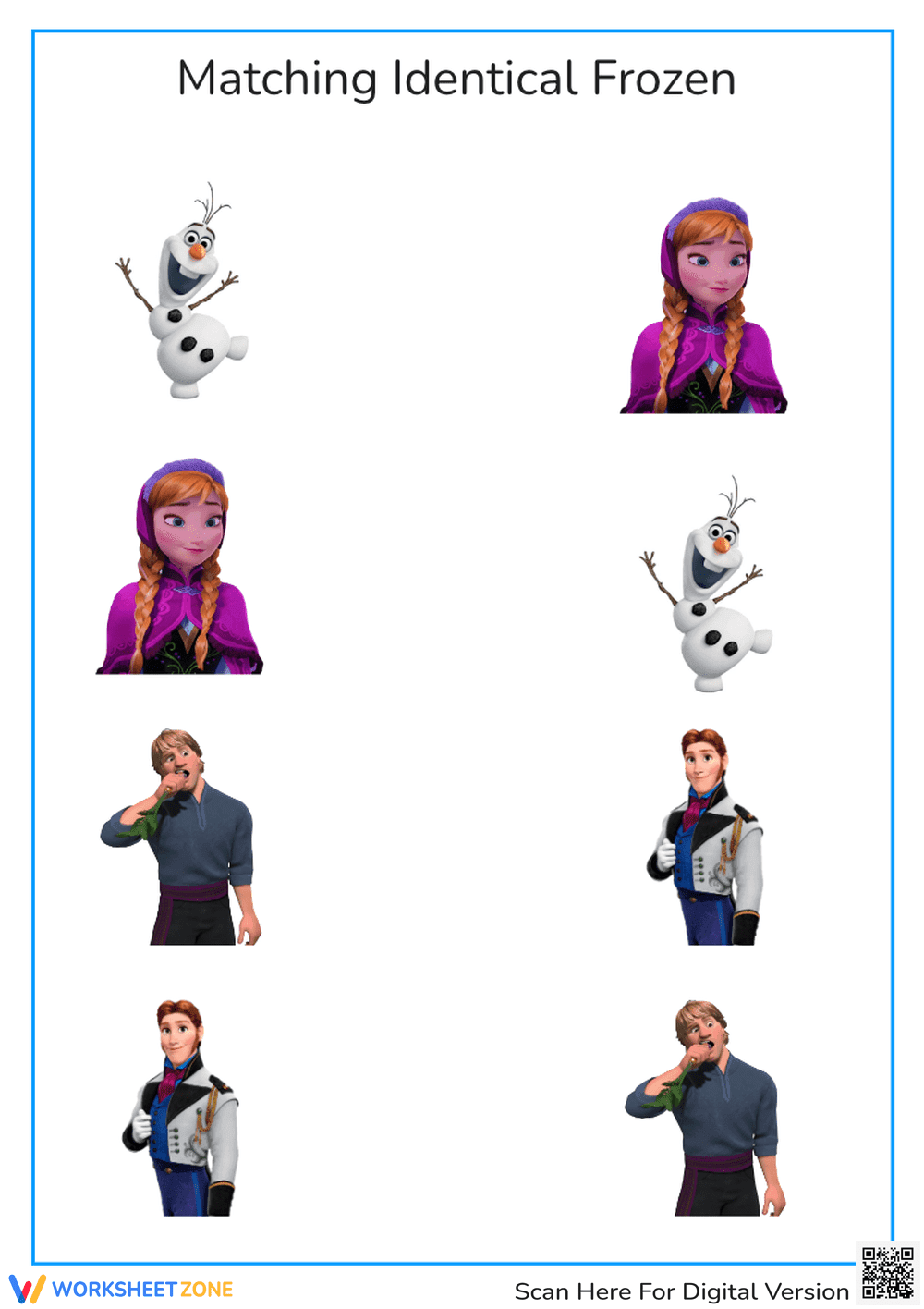
This Preschool and Kindergarten visual discrimination worksheet helps early learners identify and match identical images of popular characters. By focusing on high-interest visuals, students develop the foundational scanning skills necessary for letter recognition and reading readiness. It provides a structured way to practice one-to-one correspondence through engaging, familiar imagery.
At a Glance
- Grade: Preschool · Subject: Visual Literacy
- Standard:
CCSS.MATH.CONTENT.K.MD.B.3— Classify objects into categories and count the number of objects in each- Skill Focus: Visual Discrimination
- Format: 3 pages · 12 problems · Answer key included · PDF
- Best For: Morning work or independent centers
- Time: 5–10 minutes
What's Inside: The resource contains three full-color pages, each featuring four distinct matching pairs. Students draw lines to connect identical character portraits, such as Elsa, Anna, Olaf, and Kristoff. The layout is clean with ample white space to prevent visual overwhelm, making it ideal for students with fine motor or processing challenges. A complete answer key is provided for quick checking.
Zero-Prep Workflow: This resource is designed for immediate classroom implementation. First, print the three PDF pages in color or grayscale (30 seconds). Second, distribute the sheets to students during center rotations or as a quiet morning activity (30 seconds). Third, review the completed matches with students to reinforce vocabulary and character names (1 minute). Total teacher preparation time is under two minutes, making it an ideal sub-plan addition.
Standards Alignment: The primary standard addressed is CCSS.MATH.CONTENT.K.MD.B.3, which requires students to classify objects into given categories. While this worksheet focuses on identical matching, it serves as the essential prerequisite for more complex categorization and sorting tasks. Both standard codes can be copied directly into lesson plans, IEP goals, or district curriculum mapping tools.
How to Use It: Use this worksheet during the independent practice phase of a lesson on similarities and differences. It works exceptionally well as a formative assessment tool; observe if students scan from left to right or if they struggle to distinguish between similar character features. Expect most students to complete one page within five to seven minutes during a small group rotation.
Who It's For: This resource is tailored for preschool and kindergarten students, as well as older students in special education settings who require practice with basic visual discrimination. It pairs naturally with a direct instruction lesson on same and different or can be used alongside a character-themed reading unit to maintain high engagement levels.
According to the RAND AIRS 2024 report, visual discrimination is a critical precursor to successful literacy acquisition in early childhood education. This worksheet targets the specific ability to distinguish between similar visual stimuli, a skill that directly correlates with the eventual recognition of graphemes and phonemes. By utilizing high-interest character imagery, the resource leverages the interest effect to sustain student attention during repetitive cognitive tasks. Research from Fisher & Frey (2014) emphasizes that scaffolded visual tasks allow students to build the working memory needed for more complex academic demands. This resource aligns with the CCSS.MATH.CONTENT.K.MD.B.3 standard by requiring students to categorize visual information through identical matching. It provides a low-stakes environment for students to practice fine motor control and visual tracking. Educators can use these twelve tasks to gather baseline data on a student's ability to process visual details accurately before moving to abstract symbols.


