


























Views
Downloads

Essential Homonyms Worksheet | Preschool ELA Ready
Paste this activity's link or code into your existing LMS (Google Classroom, Canvas, Teams, Schoology, Moodle, etc.).
Students can open and work on the activity right away, with no student login required.
You'll still be able to track student progress and results from your teacher account.
Introduction to Multiple Meaning Words
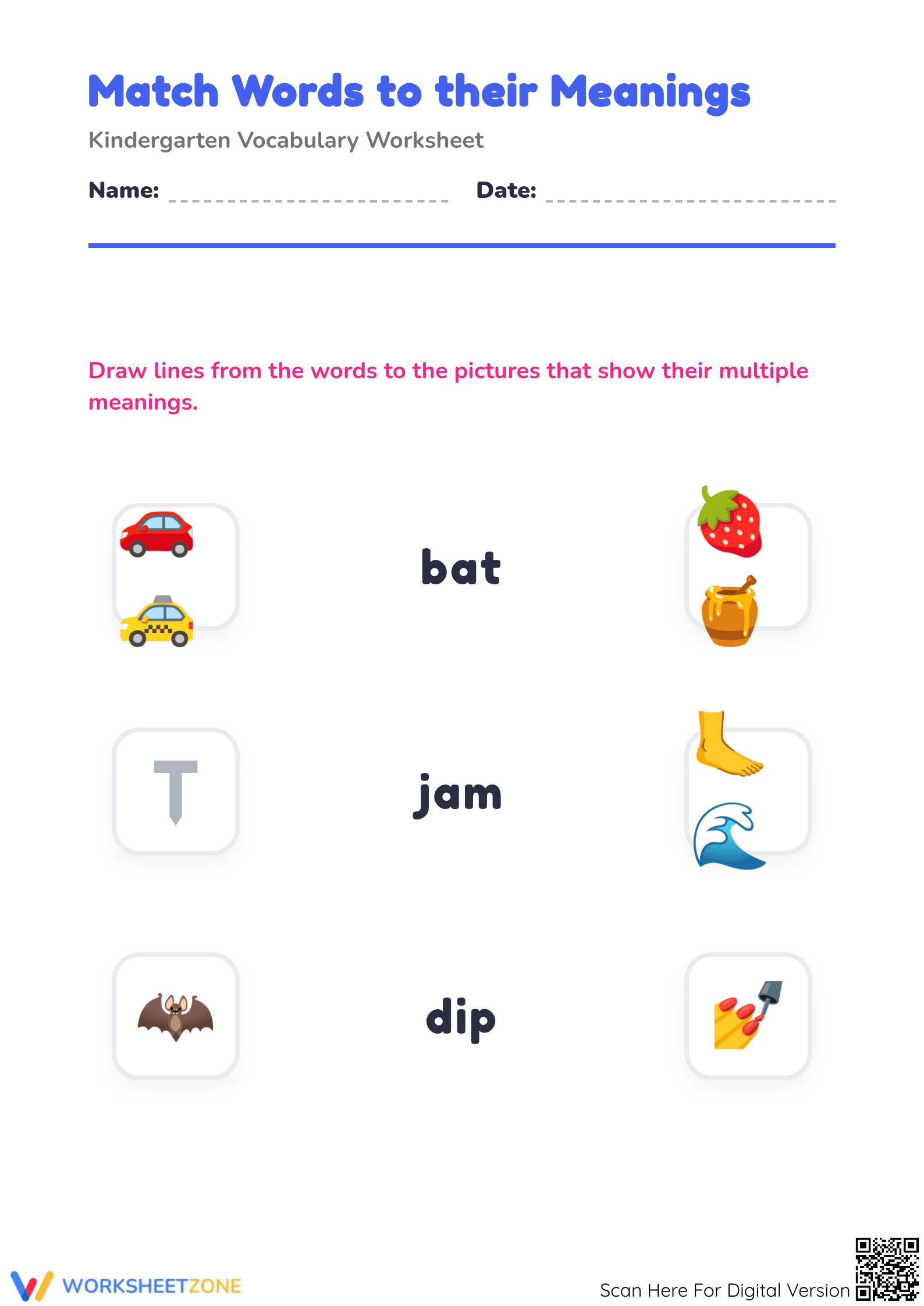
This Preschool ELA worksheet introduces young learners to the concept of homonyms through engaging visual matching. Students identify how a single word like "bat" or "jam" can represent two entirely different objects or actions. By connecting words to multiple images, children build essential vocabulary depth and semantic flexibility before entering primary grades.
At a Glance
- Grade: Preschool · Subject: English Language Arts
- Standard:
CCSS.ELA-LITERACY.L.K.4.A— Identify new meanings for familiar words and apply them accurately- Skill Focus: Homonyms and Multiple Meaning Words
- Format: 2 pages · 4 tasks · Answer key included · PDF
- Best For: Morning work or small group centers
- Time: 10–15 minutes
What's Inside
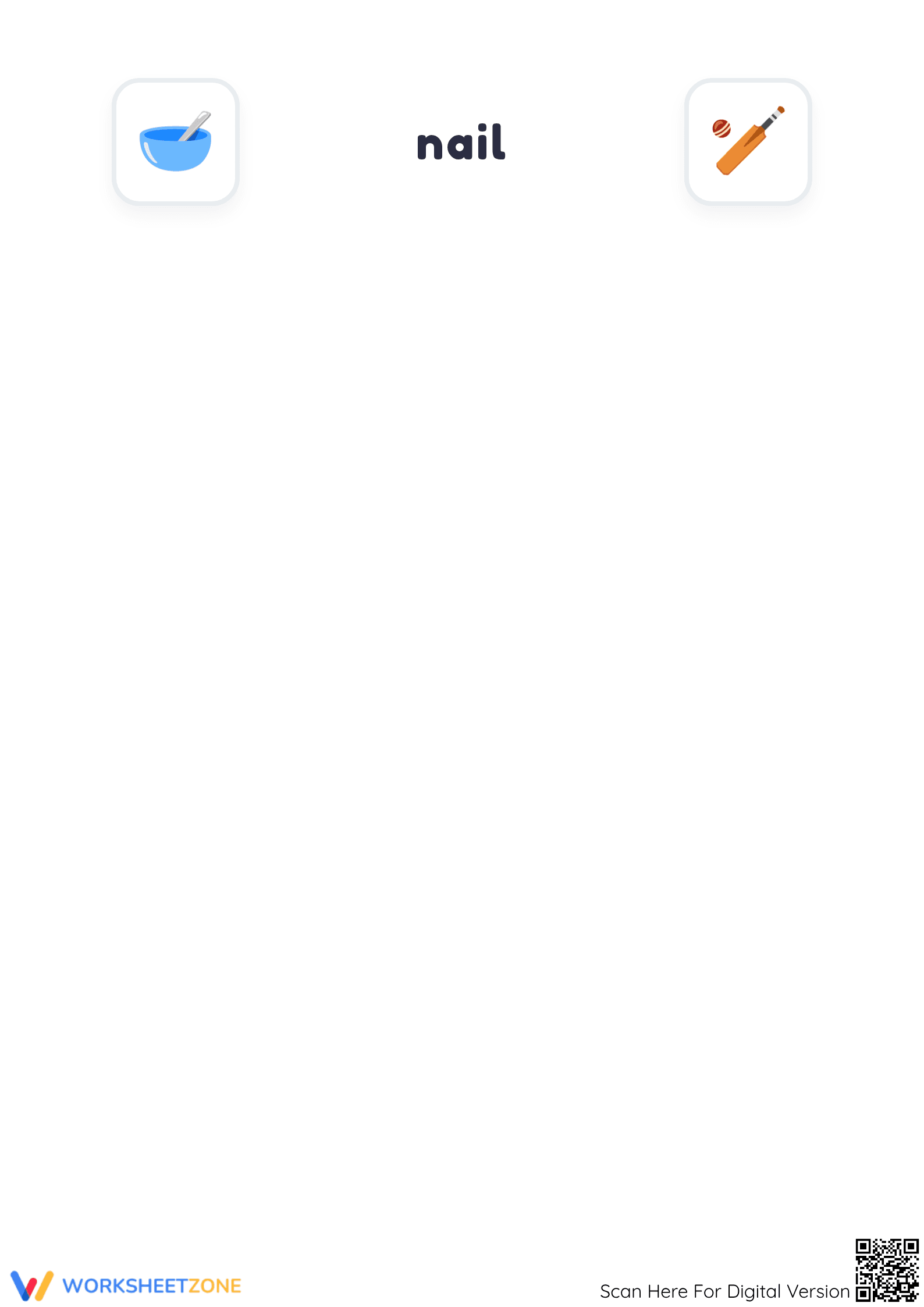
The resource consists of 2 printable pages featuring 4 high-frequency homonyms: bat, jam, dip, and nail. Each word is flanked by two distinct illustrations representing its different meanings. The layout uses large, clear fonts and vibrant icons to support pre-readers. A full answer key is provided to ensure quick grading or self-correction during independent work time.
Zero-Prep Workflow
This worksheet is designed for immediate classroom implementation with a total teacher prep time of under 2 minutes. Simply print the PDF, distribute it to students with crayons or pencils, and spend 5 minutes reviewing the dual meanings as a whole group. Its self-explanatory visual format makes it an ideal choice for emergency sub plans or independent quiet time during literacy blocks.
Standards Alignment
This activity aligns with `CCSS.ELA-LITERACY.L.K.4.A`, which requires students to identify new meanings for familiar words and apply them accurately. It also supports foundational phonological awareness by linking spoken sounds to varied semantic contexts. Both standard codes can be copied directly into lesson plans, IEP goals, or district curriculum mapping tools for easy tracking.
How to Use It
Use this during a direct instruction lesson on vocabulary as a guided practice phase. After showing real-world examples of a "bat" (animal vs. sports equipment), have students complete the matching tasks to reinforce the concept. It also serves as a quick formative assessment; observe if students can verbally explain the difference between the two pictures to gauge mastery. Completion typically takes 10 to 15 minutes.
Who It's For
This resource is tailored for preschool and kindergarten students who are beginning to expand their expressive language. It is particularly effective for English Language Learners (ELLs) who benefit from the explicit visual representation of multiple-meaning words. Pair this with a "Word of the Day" anchor chart or a picture book about homonyms for a comprehensive vocabulary unit.
Vocabulary acquisition in early childhood is significantly enhanced when students are exposed to the polysemous nature of language. According to Fisher & Frey (2014), providing visual scaffolds for multiple-meaning words helps students build more complex mental lexicons, which is a critical predictor of later reading comprehension. This worksheet targets CCSS.ELA-LITERACY.L.K.4.A by requiring students to distinguish between different semantic representations of the same phonetic string. Research from the RAND AIRS 2024 report suggests that early exposure to semantic flexibility reduces "word gap" issues in primary grades. By engaging with 4 specific homonyms and 8 corresponding images, learners move beyond one-to-one word mapping. This structured approach ensures that preschool students develop the linguistic agility necessary for the more rigorous demands of the Common Core State Standards in Kindergarten and beyond.


