


























Views
Downloads

Printable Grade 3 Magnetism Worksheet: Magnet Magic
Paste this activity's link or code into your existing LMS (Google Classroom, Canvas, Teams, Schoology, Moodle, etc.).
Students can open and work on the activity right away, with no student login required.
You'll still be able to track student progress and results from your teacher account.
Magnetic Properties and Attraction
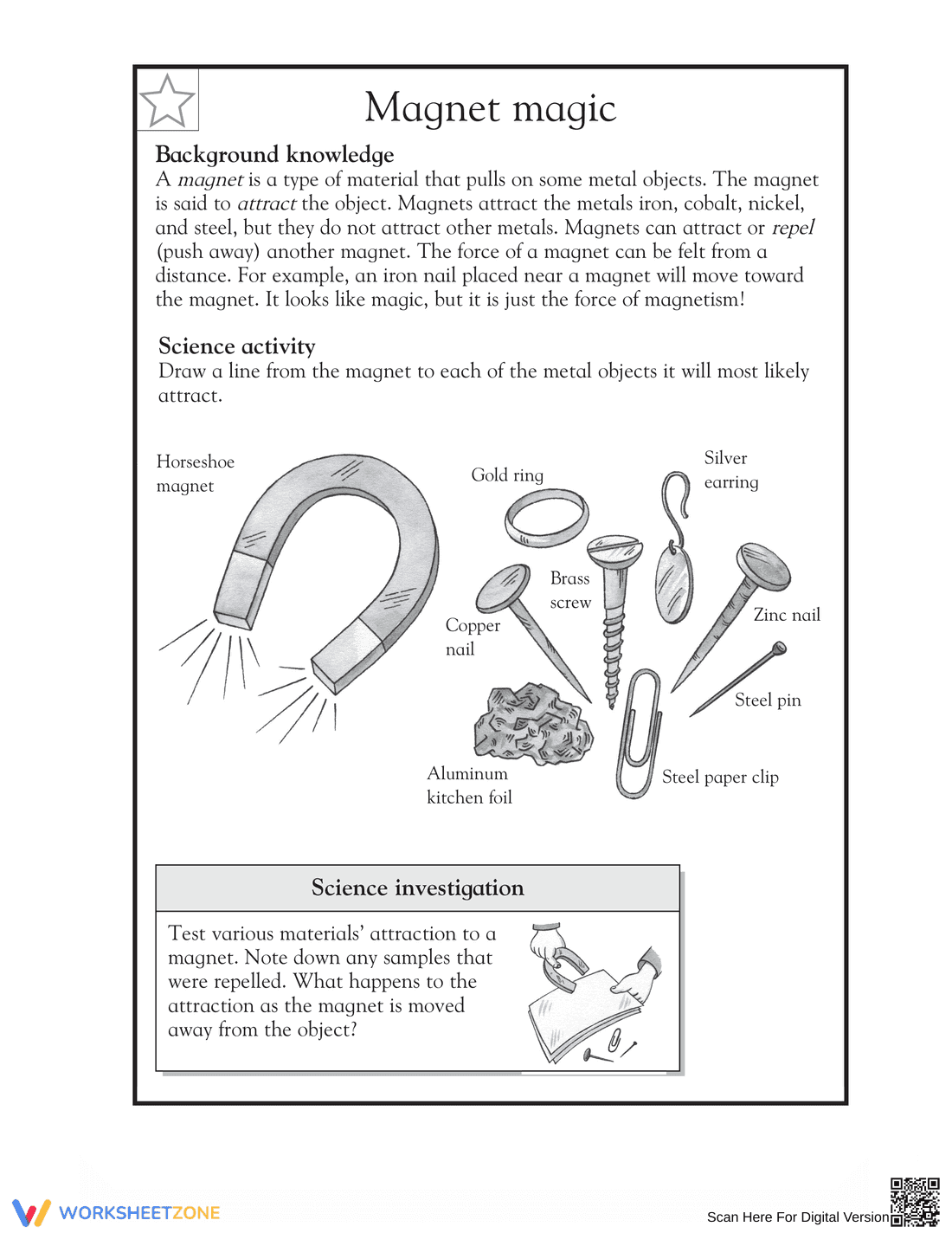
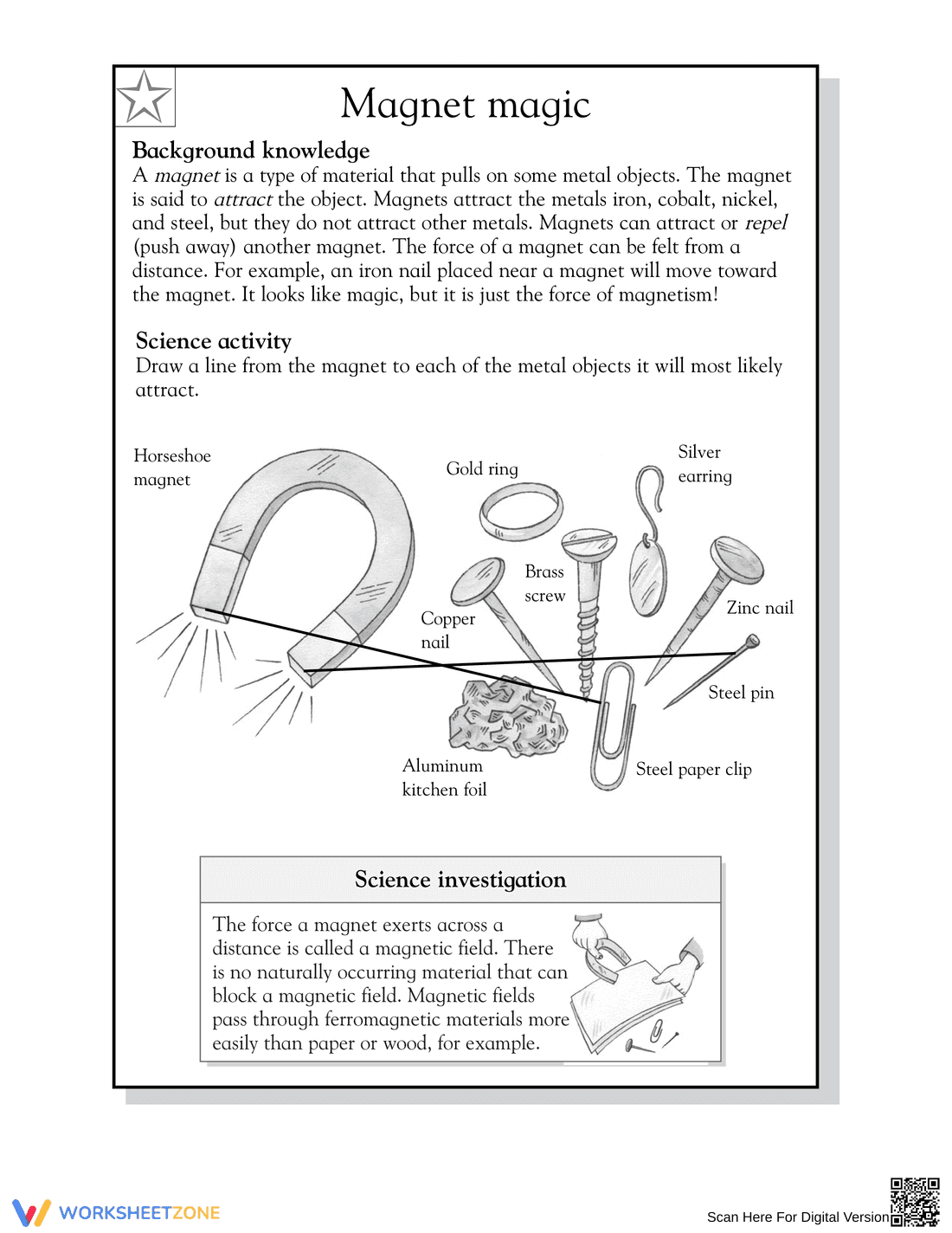
This Grade 3 magnetism worksheet provides a clear, hands-on introduction to the physical properties of magnets and the materials they attract. Students learn to distinguish between magnetic and non-magnetic metals through a guided matching activity. By analyzing common household objects, learners build a conceptual understanding of magnetic forces and material science outcomes.
At a Glance
- Grade: 3 · Subject: Science
- Standard:
3-PS2-3— Determine cause and effect relationships of magnetic interactions between objects- Skill Focus: Magnetic attraction and material properties
- Format: 1 page · 8 tasks · Answer key included · PDF
- Best For: Independent science centers or homework
- Time: 15–20 minutes
What's Inside
This single-page PDF includes a comprehensive background knowledge section that defines magnets, attraction, and repulsion. The primary science activity features high-quality illustrations of eight metal objects—including a steel paper clip, copper nail, and gold ring—for students to evaluate. A follow-up science investigation section provides prompts for further inquiry into magnetic distance and repulsion.
Zero-Prep Workflow
The zero-prep design allows teachers to implement this lesson in under two minutes. Simply print the single-page PDF for your class (30 seconds), distribute the worksheets to students (30 seconds), and facilitate a quick group review of the background concepts (60 seconds). This streamlined workflow makes it an ideal resource for substitute plans or emergency science blocks.
Standards Alignment
The worksheet is directly aligned to `3-PS2-3`, which requires students to ask questions and determine cause-and-effect relationships of magnetic interactions. It specifically addresses the observable property of attraction between a magnet and certain metallic objects. This standard code can be copied directly into lesson plans, IEP goals, or district curriculum mapping tools.
How to Use It
Use this worksheet during the "Explain" phase of a magnetism unit to solidify concepts after an initial demonstration. It also serves as an excellent formative assessment tool; observe if students correctly identify that not all metals are magnetic. Most Grade 3 students will complete the reading and matching portions in approximately 15 to 20 minutes.
Who It's For
Designed for general education third-grade classrooms, this resource also supports English Language Learners through visual cues and labeled diagrams. It pairs naturally with a hands-on lab using actual horseshoe magnets and the objects listed on the page. Teachers can use the background text as a shared reading passage to integrate ELA skills.
According to the RAND AIRS 2024 report on elementary science pedagogy, visual sorting tasks help 3rd-grade learners bridge the gap between abstract physical forces and concrete material properties. This Magnet Magic worksheet leverages this principle by requiring students to differentiate between various metals—such as iron and steel versus copper and gold—based on their magnetic permeability. By engaging with 3-PS2-3, students develop the foundational observational skills necessary for predicting magnetic interactions. The inclusion of a background knowledge section aligns with Fisher & Frey (2014) recommendations for integrated literacy within science instruction, ensuring students have the vocabulary (attract, repel, force) needed to explain their findings. This resource provides a structured environment for investigating forces that act at a distance, a key concept in physical science that prepares students for more complex electromagnetic studies in middle school.


