


























Views
Downloads

Vibrant Vocabulary Worksheet | Grade 6 ELA Printable
Paste this activity's link or code into your existing LMS (Google Classroom, Canvas, Teams, Schoology, Moodle, etc.).
Students can open and work on the activity right away, with no student login required.
You'll still be able to track student progress and results from your teacher account.
This Grade 6 writing worksheet helps students eliminate overused vocabulary by replacing "tired" words with vibrant, precise alternatives. By guiding learners through targeted synonym generation and sentence revision, this resource transforms dull writing into engaging prose, ensuring students can effectively communicate their ideas with descriptive flair.
At a Glance
- Grade: 6 · Subject: ELA
- Standard:
CCSS.ELA-LITERACY.W.6.3.D— Use precise words and phrases to convey experiences.- Skill Focus: Word Choice and Synonyms
- Format: 2 pages · 10 problems · Answer key included · PDF
- Best For: Independent practice and writing centers
- Time: 20–30 minutes
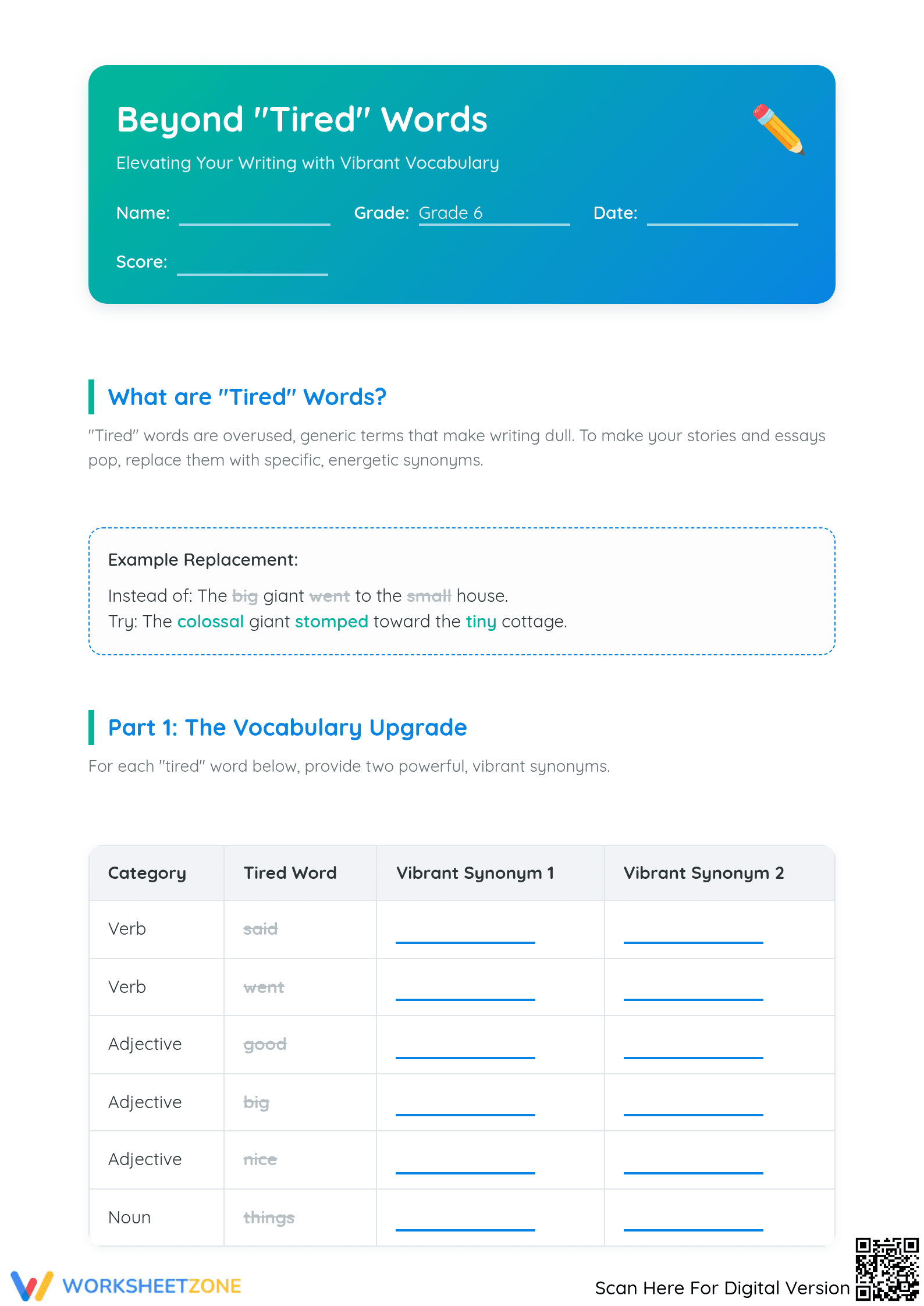
Inside this two-page resource, educators will find a structured progression of vocabulary exercises. The worksheet begins with a clear definition and worked example of "tired" words versus vibrant alternatives. Students then tackle a synonym generation table, rewrite individual sentences, and finally revise an entire paragraph. A complete answer key is provided to streamline grading.
Skill Progression
- Guided practice: Students begin by generating two vibrant synonyms for six common "tired" words (like said, went, and good) in a structured table format.
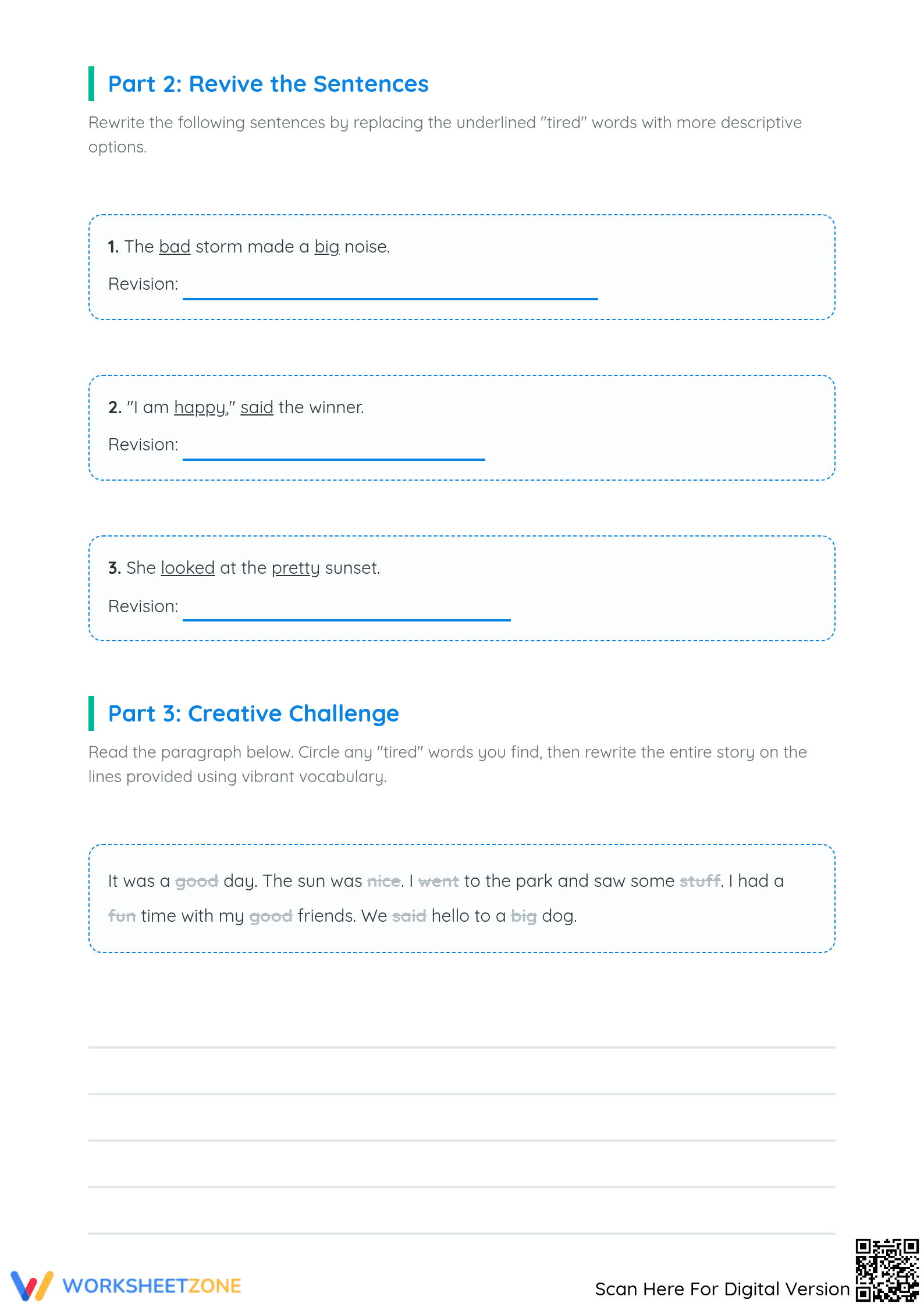
- Supported practice: Learners apply their new vocabulary by rewriting three isolated sentences, replacing the underlined generic terms with descriptive options.
- Independent practice: The activity culminates in a creative challenge where students identify and replace all overused words within a full paragraph.
This gradual-release approach ensures students build confidence at the word level before applying their skills to broader writing contexts.
Standards Alignment
This resource is directly aligned to CCSS.ELA-LITERACY.W.6.3.D, requiring students to use precise words and phrases, relevant descriptive details, and sensory language to convey experiences and events. It also supports general vocabulary acquisition by encouraging the use of grade-appropriate academic words. Both standard codes can be copied directly into lesson plans, IEP goals, or district curriculum mapping tools.
How to Use It
Deploy this worksheet during the revision phase of a narrative writing unit or as a standalone mini-lesson on word choice. It works well as a writing center activity, typically taking 20 to 30 minutes to complete. For formative assessment, observe the synonyms students generate in Part 1; if they rely on basic words, provide a classroom thesaurus before moving to the paragraph revision.
Who It's For
This worksheet is designed for Grade 6 ELA students developing their narrative and descriptive writing skills. It is particularly helpful for reluctant writers who struggle to expand their vocabulary beyond basic terms. To support diverse learners, pair this activity with a visual anchor chart of strong verbs and adjectives, or allow students to use a digital thesaurus during the creative challenge.
Developing strong vocabulary skills is a critical component of effective written communication. According to Fisher & Frey (2014), explicit vocabulary instruction combined with opportunities for immediate application significantly improves students' ability to produce complex texts. This worksheet targets CCSS.ELA-LITERACY.W.6.3.D, focusing on the essential skill where students use precise words and phrases to convey experiences. By systematically guiding learners to identify and replace overused vocabulary, educators foster a deeper understanding of nuance and tone. Transitioning from isolated synonym generation to full paragraph revision mirrors evidence-based practices for language acquisition, ensuring students internalize new terms rather than just memorizing them. Providing structured practice with word choice directly supports broader literacy goals, equipping middle school students with the linguistic tools necessary for advanced academic writing and creative expression.


