


























Views
Downloads
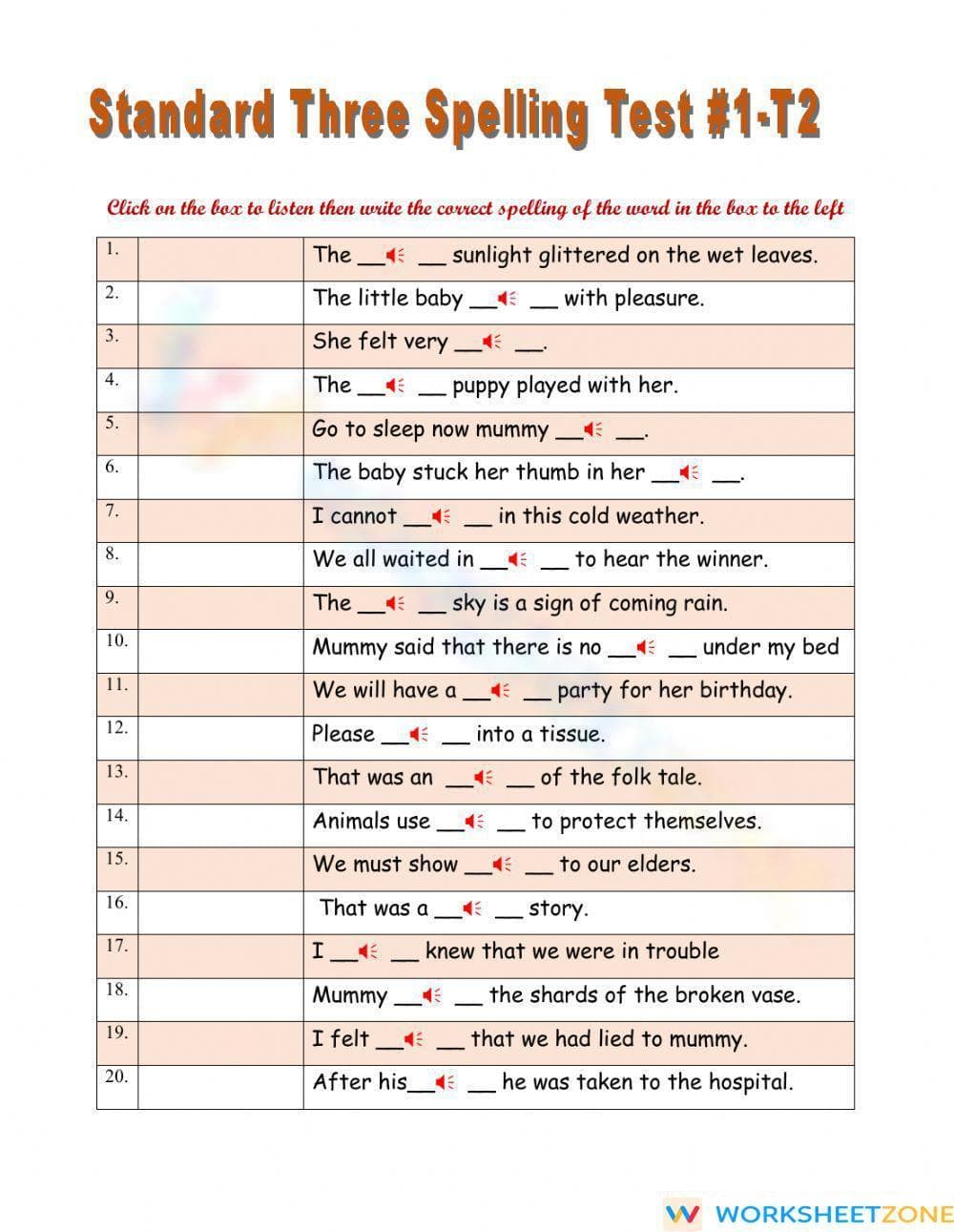

Essential Grade 3 Spelling Test: L.3.2 Aligned Worksheet
Paste this activity's link or code into your existing LMS (Google Classroom, Canvas, Teams, Schoology, Moodle, etc.).
Students can open and work on the activity right away, with no student login required.
You'll still be able to track student progress and results from your teacher account.
This Grade 3 spelling assessment provides students with 20 context-rich sentences to demonstrate mastery of conventional spelling patterns and high-frequency vocabulary. By integrating listening and writing, the worksheet ensures students can apply orthographic rules within meaningful sentence structures rather than isolated lists. It is a robust tool for measuring retention and phonetic accuracy.
At a Glance
- Grade: Grade 3 · Subject: English Language Arts
- Standard:
L.3.2— Spell words correctly using conventional patterns and generalizations when writing.- Skill Focus: Contextual Spelling, Phonetic Generalization, and Dictation
- Format: 1 page · 20 problems · Answer key included · PDF
- Best For: Weekly spelling assessments, formative checks, or sub plans
- Time: 15–20 minutes
This single-page PDF features 20 numbered sentences with strategically placed blanks for target spelling words. Each sentence is accompanied by a speaker icon, indicating it is designed for a "listen and write" format where students hear the word in context before spelling it. The layout is clean and professional, including a comprehensive answer key to facilitate efficient scoring for teachers or parents.
The assessment maps directly to the proficiency tiers required for Grade 3 standards. Each of the 20 tasks evaluates a specific orthographic pattern or high-frequency word choice, allowing educators to identify exactly where phonetic gaps or rule-breaking errors occur. Performance data from this worksheet can be transcribed into gradebooks or used to inform IEP progress monitoring, providing clear evidence of whether a student is approaching, meeting, or exceeding grade-level expectations.
This resource is aligned with CCSS.ELA-LITERACY.L.3.2, which requires students to demonstrate command of standard English spelling conventions. Specifically, it addresses sub-standards related to high-frequency words and suffix applications. This standard code can be copied directly into lesson plans, IEP goals, or district curriculum mapping tools to ensure instructional consistency and accountability.
Assign this worksheet as a summative assessment at the end of a spelling unit or use it as a mid-week formative check. During instruction, teachers should read the sentences aloud, emphasizing the target word to evaluate listening comprehension alongside spelling skills. Students typically require 15 to 20 minutes to complete the full 20-item set. Observe whether students use phonetic strategies or visual memory to fill the blanks.
This worksheet is designed for third-grade students developing fluency in standard English conventions. It is equally effective for ESL/ELL learners needing contextual vocabulary support and students receiving RTI Tier 2 interventions. Pair this resource with a grade-level reading passage or a phonics anchor chart to reinforce the connection between decoding and encoding in a comprehensive literacy block.
According to the RAND AIRS 2024 report on literacy instructional materials, the integration of contextual application with orthographic practice is a fundamental component of effective spelling acquisition in elementary learners. This worksheet fulfills that requirement by tasking Grade 3 students with applying L.3.2 standards within complete sentences rather than rote memorization lists. By requiring students to listen and spell 20 specific words in context, the resource provides educators with actionable data regarding phonetic generalizations and visual word recognition. Research from Fisher & Frey (2014) emphasizes that when students engage with spelling in the context of writing, they are more likely to transfer those skills to independent compositions. This assessment serves as a reliable bridge between isolated skill practice and fluent writing, making it a valuable asset for classrooms focused on evidence-based literacy instruction and systematic progress monitoring within the English Language Arts curriculum.


