


























Views
Downloads

Snowflake Life Cycle Worksheet | Grade 3-5 Printable
Paste this activity's link or code into your existing LMS (Google Classroom, Canvas, Teams, Schoology, Moodle, etc.).
Students can open and work on the activity right away, with no student login required.
You'll still be able to track student progress and results from your teacher account.
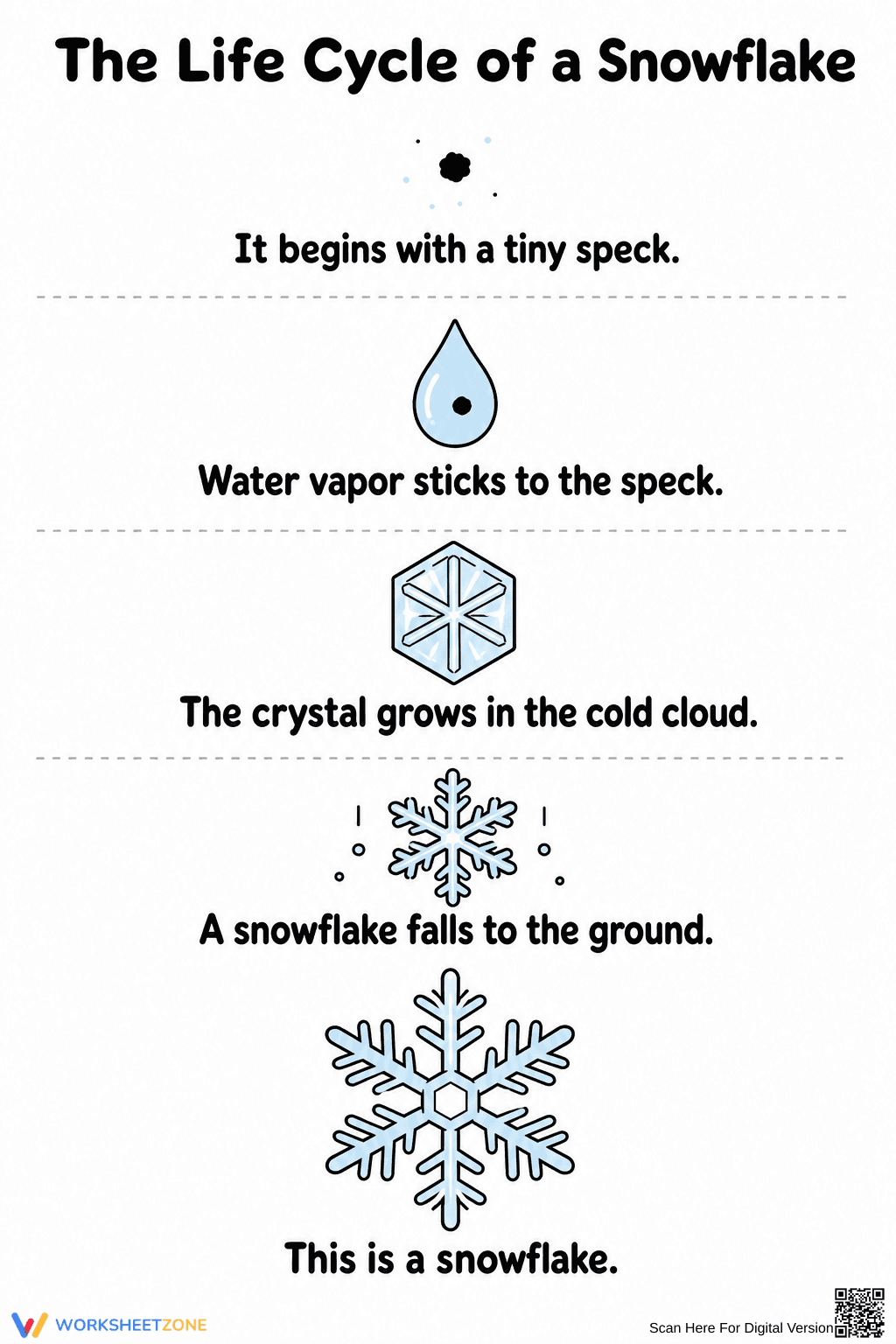
This Grades 3–5 science worksheet introduces students to the fascinating life cycle of a snowflake. By reading through the illustrated stages and completing targeted activities, students will build a concrete understanding of precipitation, crystal formation, and the continuous water cycle.
At a Glance
- Grade: 3–5 · Subject: Science
- Standard:
5-ESS2-1— Describe ways the hydrosphere and atmosphere interact- Skill Focus: Snowflake formation and the water cycle
- Format: 13 pages · 3 problems · No answer key · PDF
- Best For: Science centers or winter activities
- Time: 15–20 minutes
What's Inside
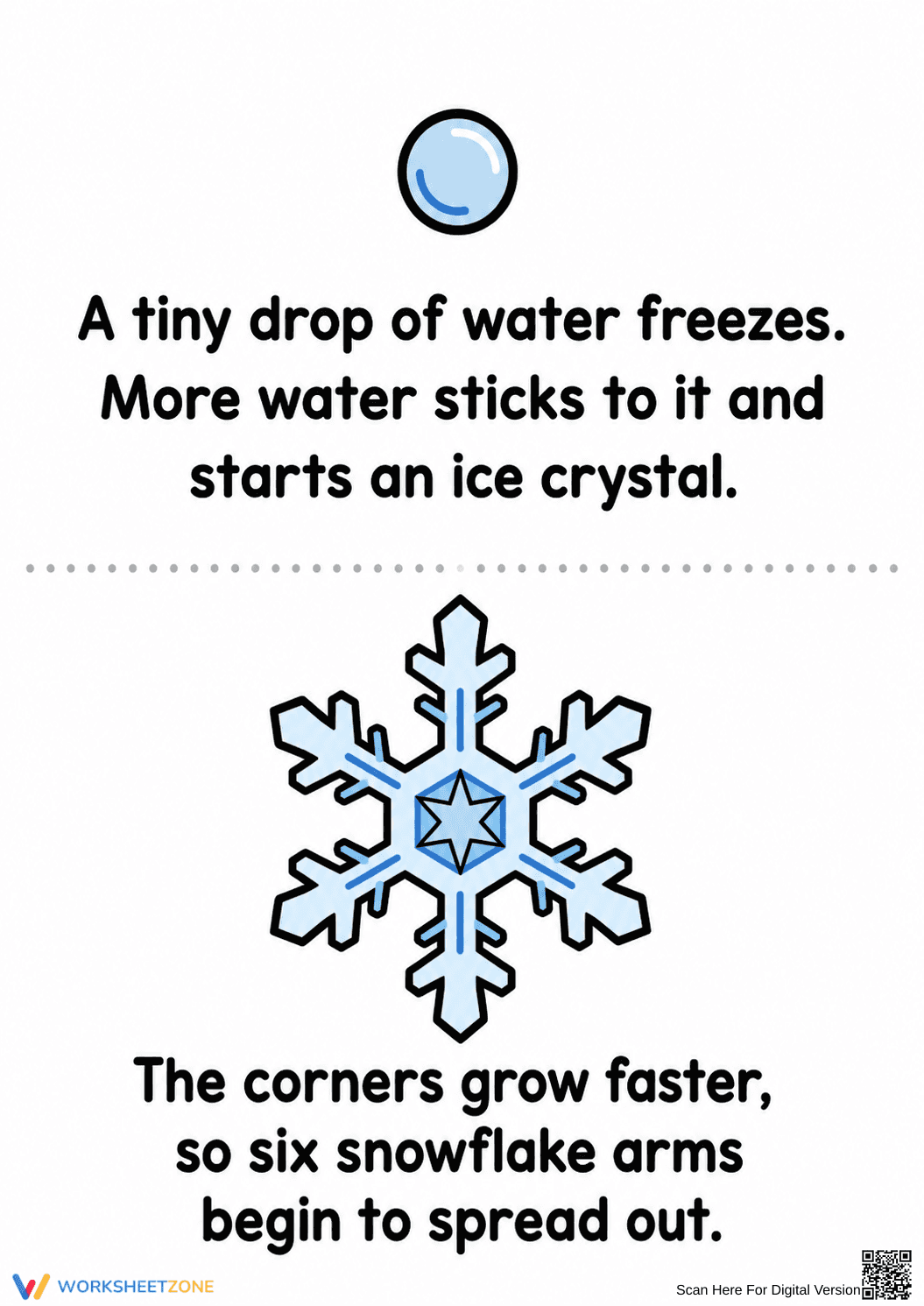
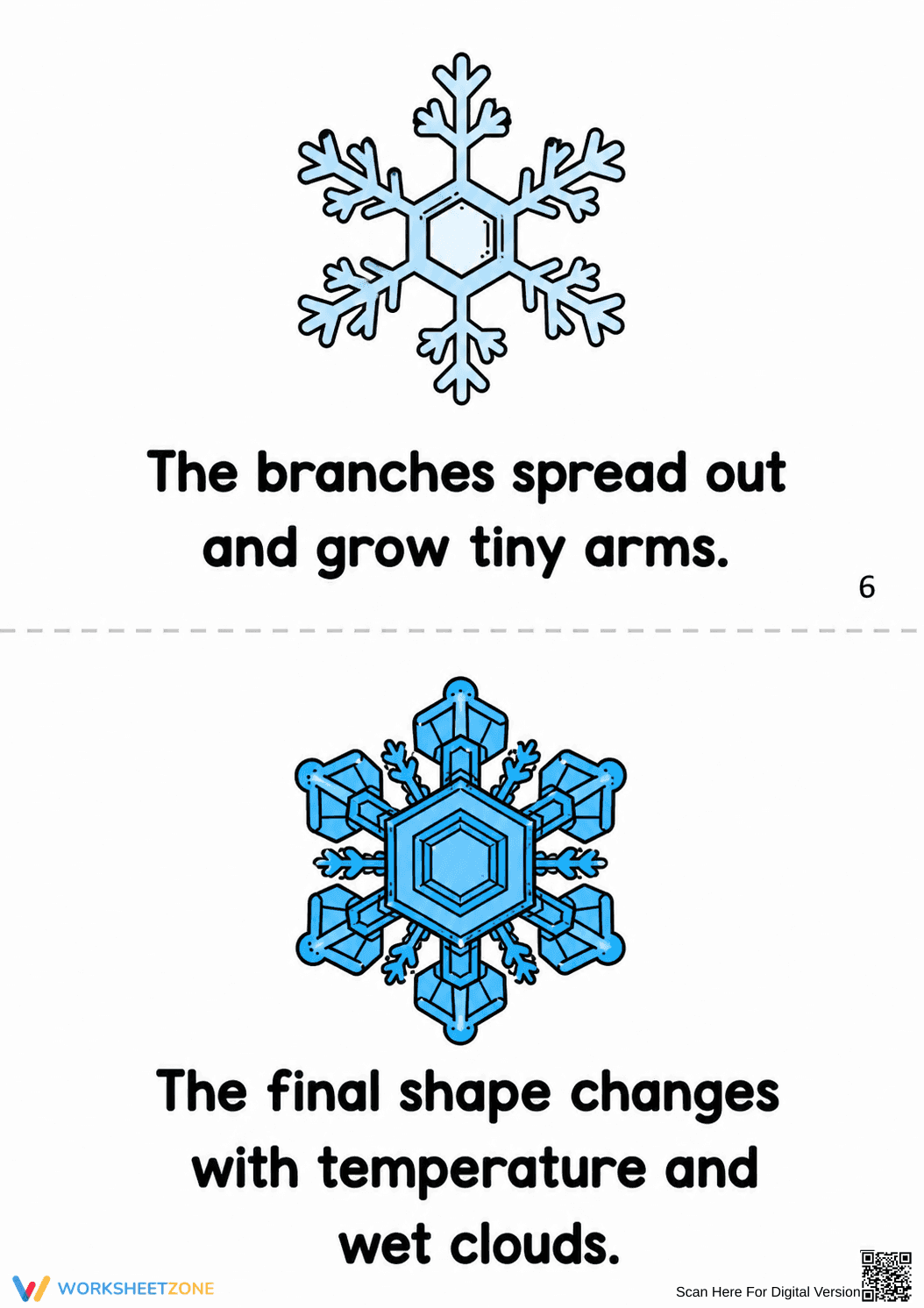
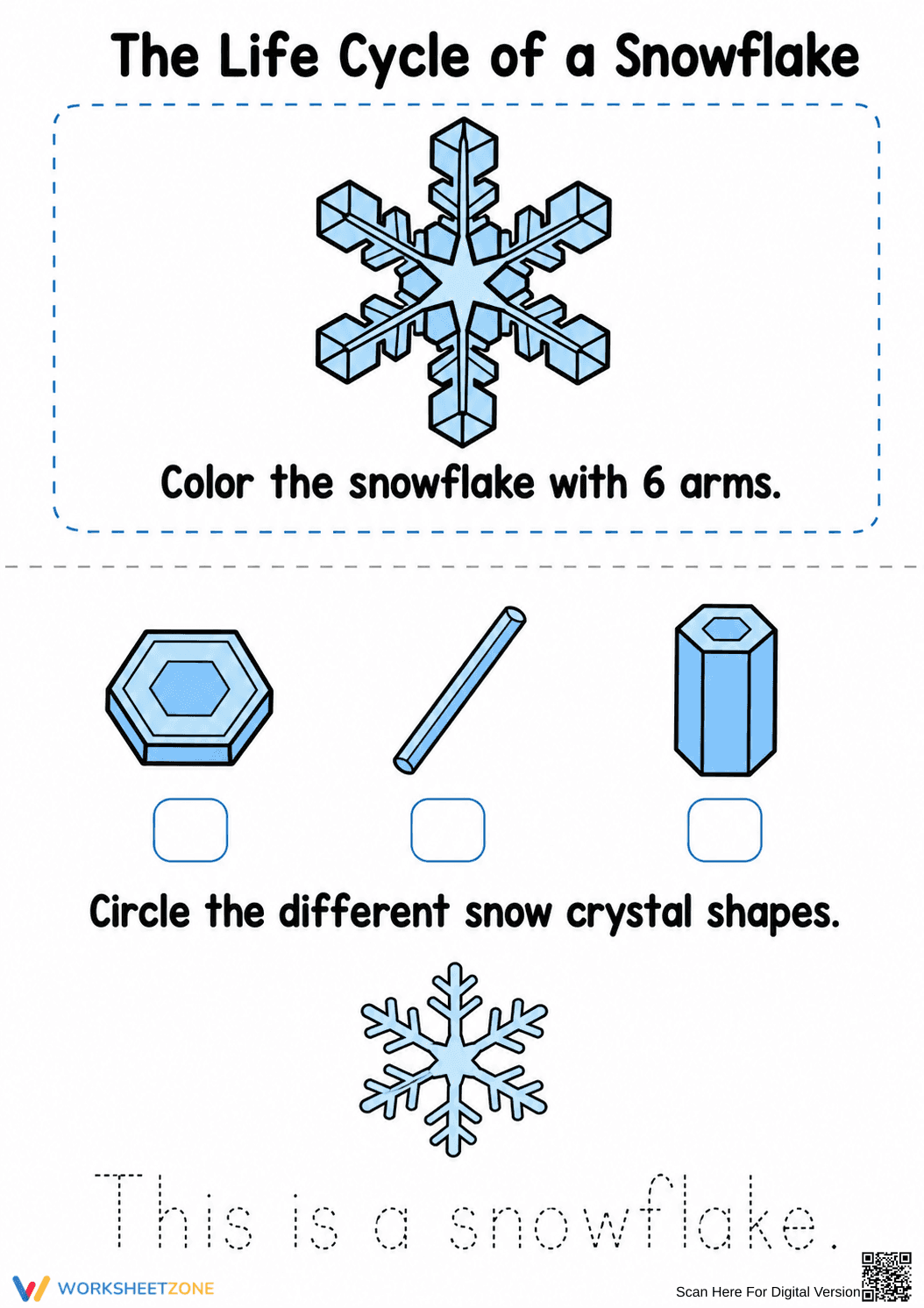
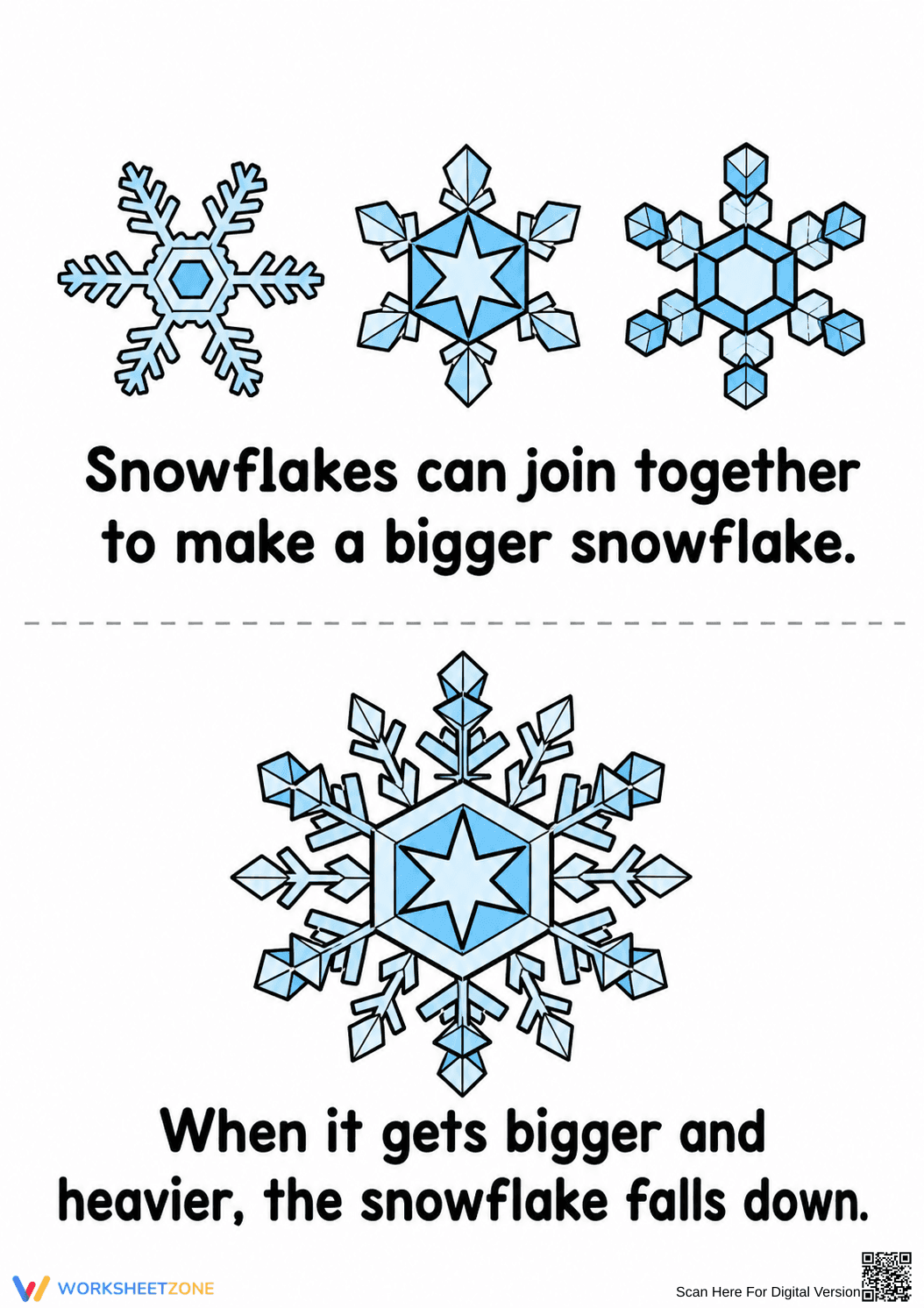
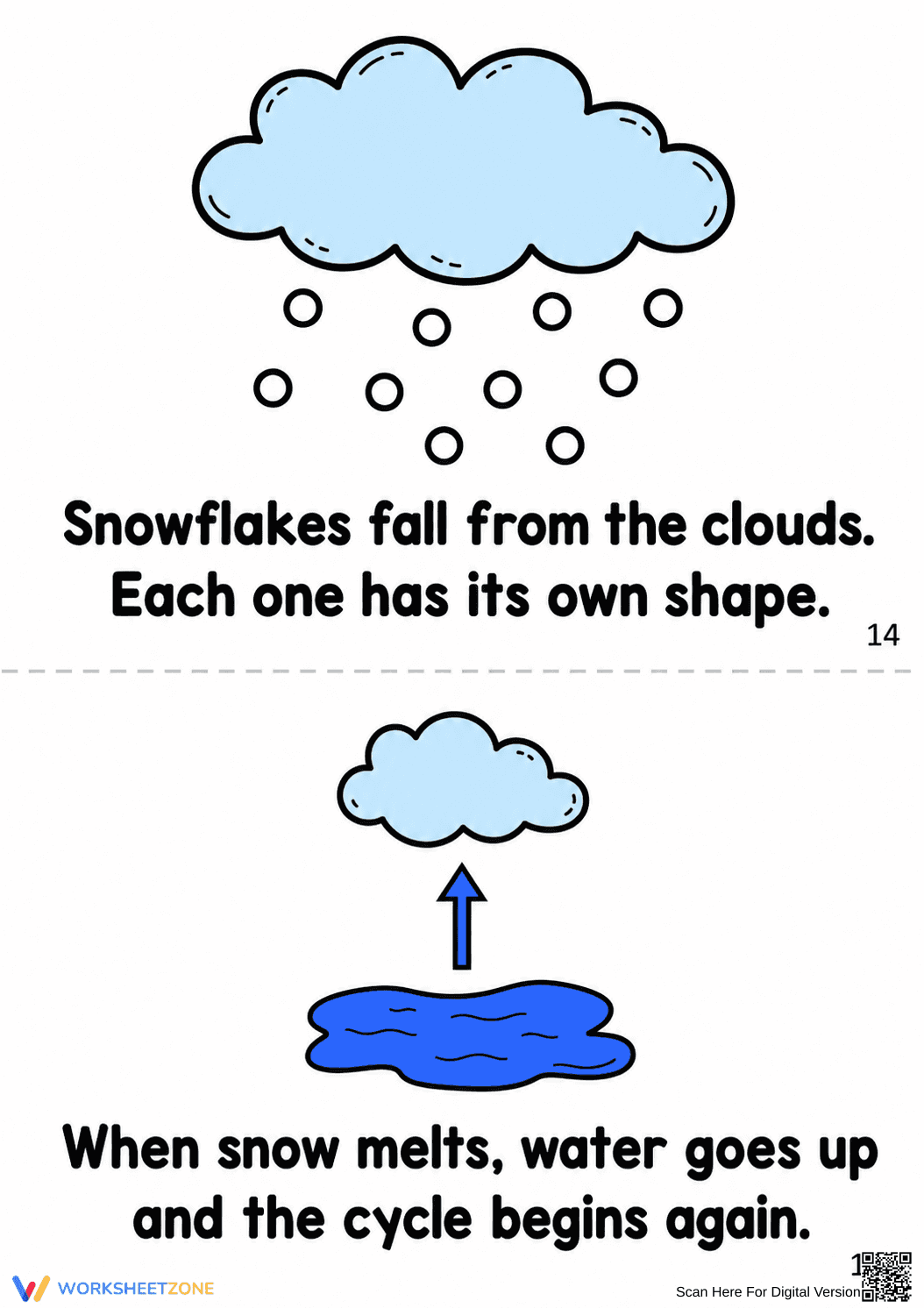
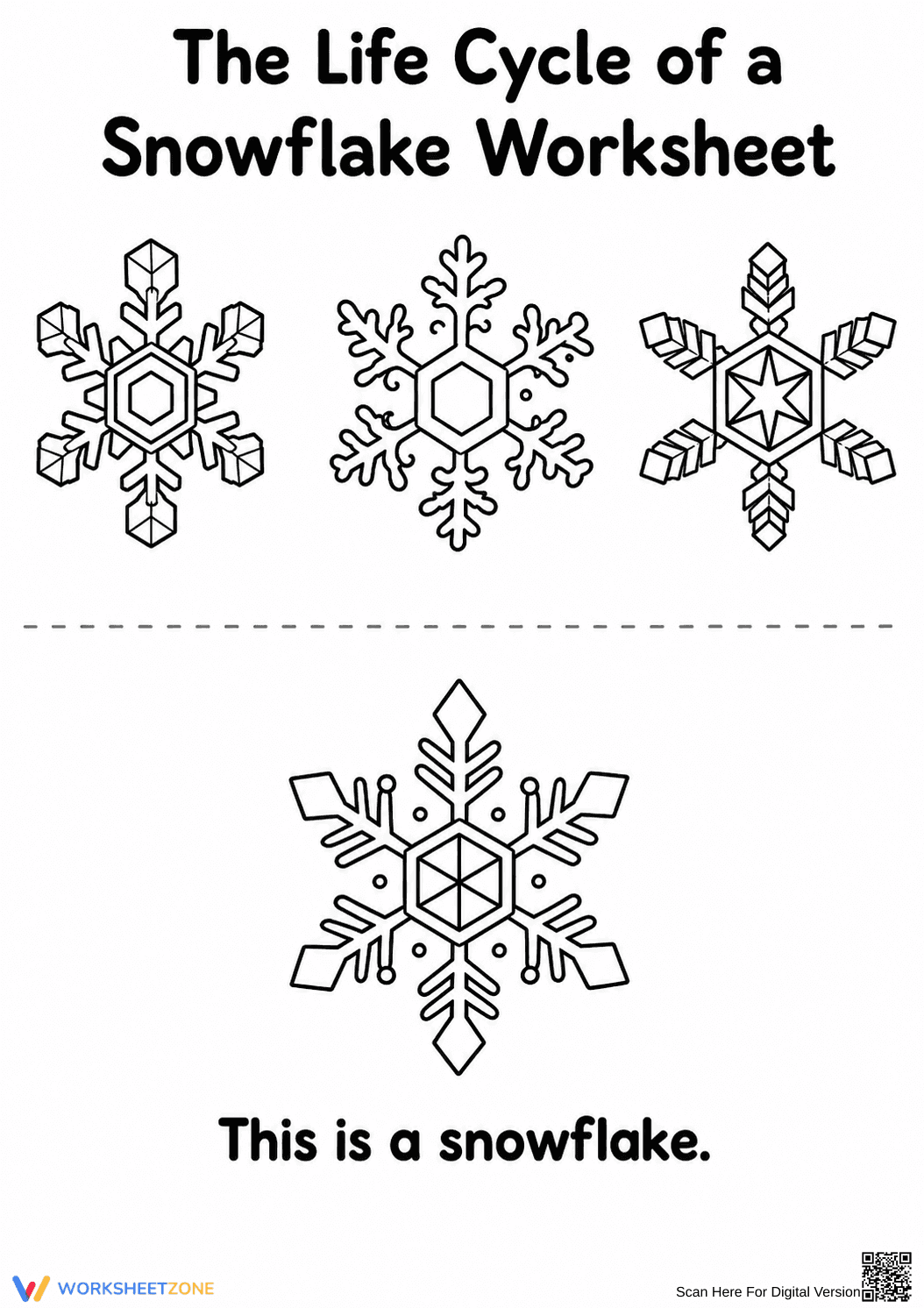
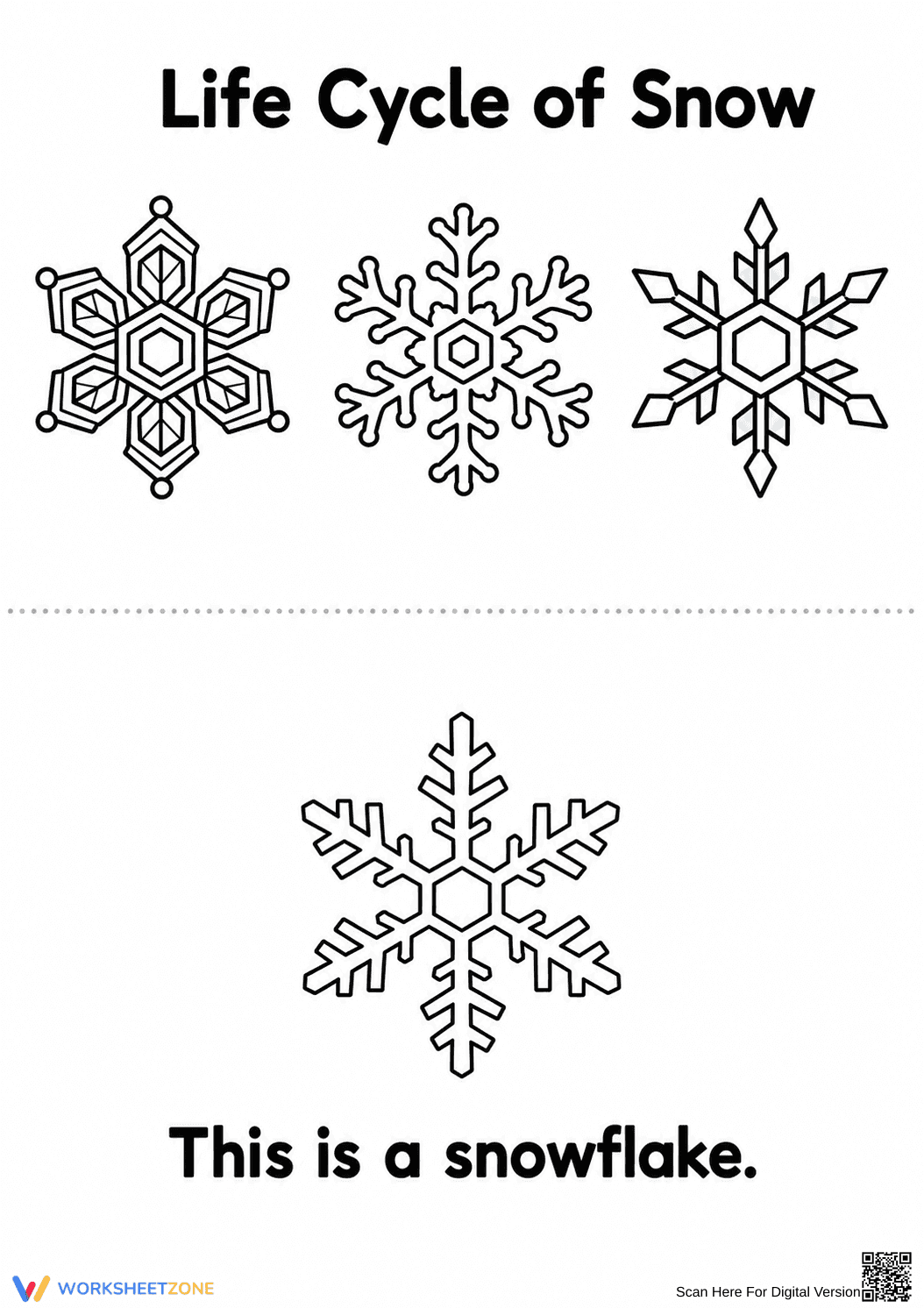
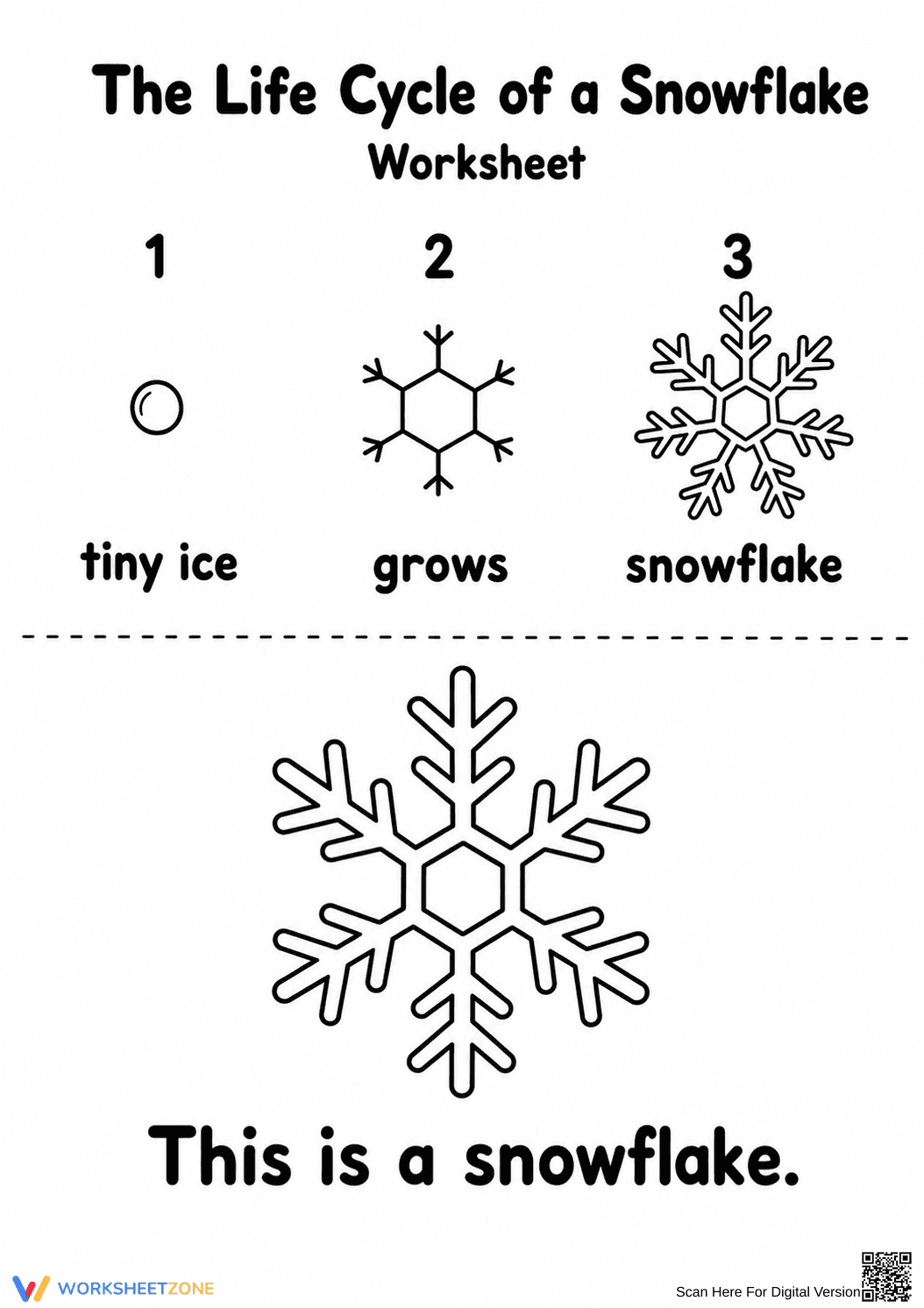
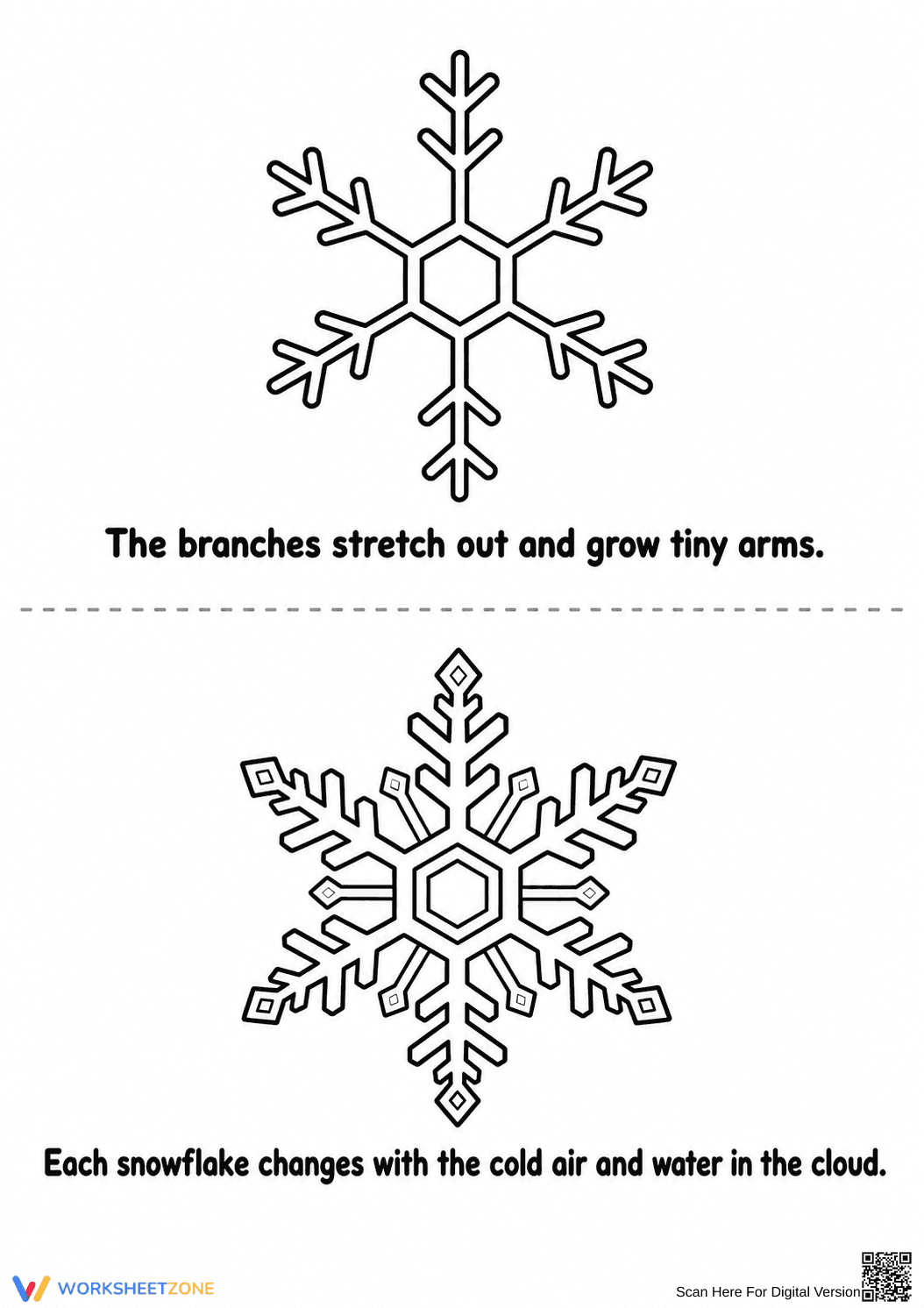
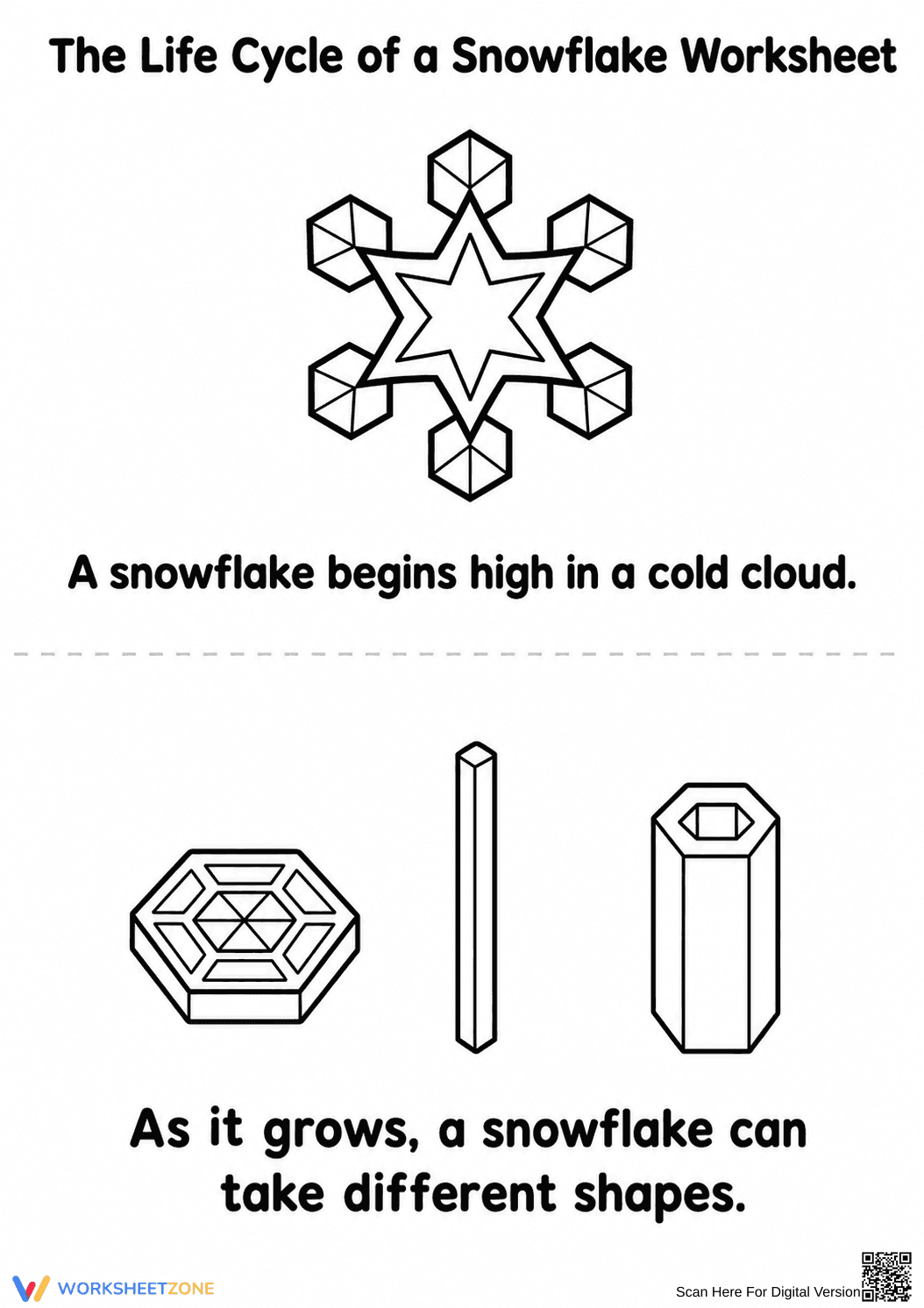
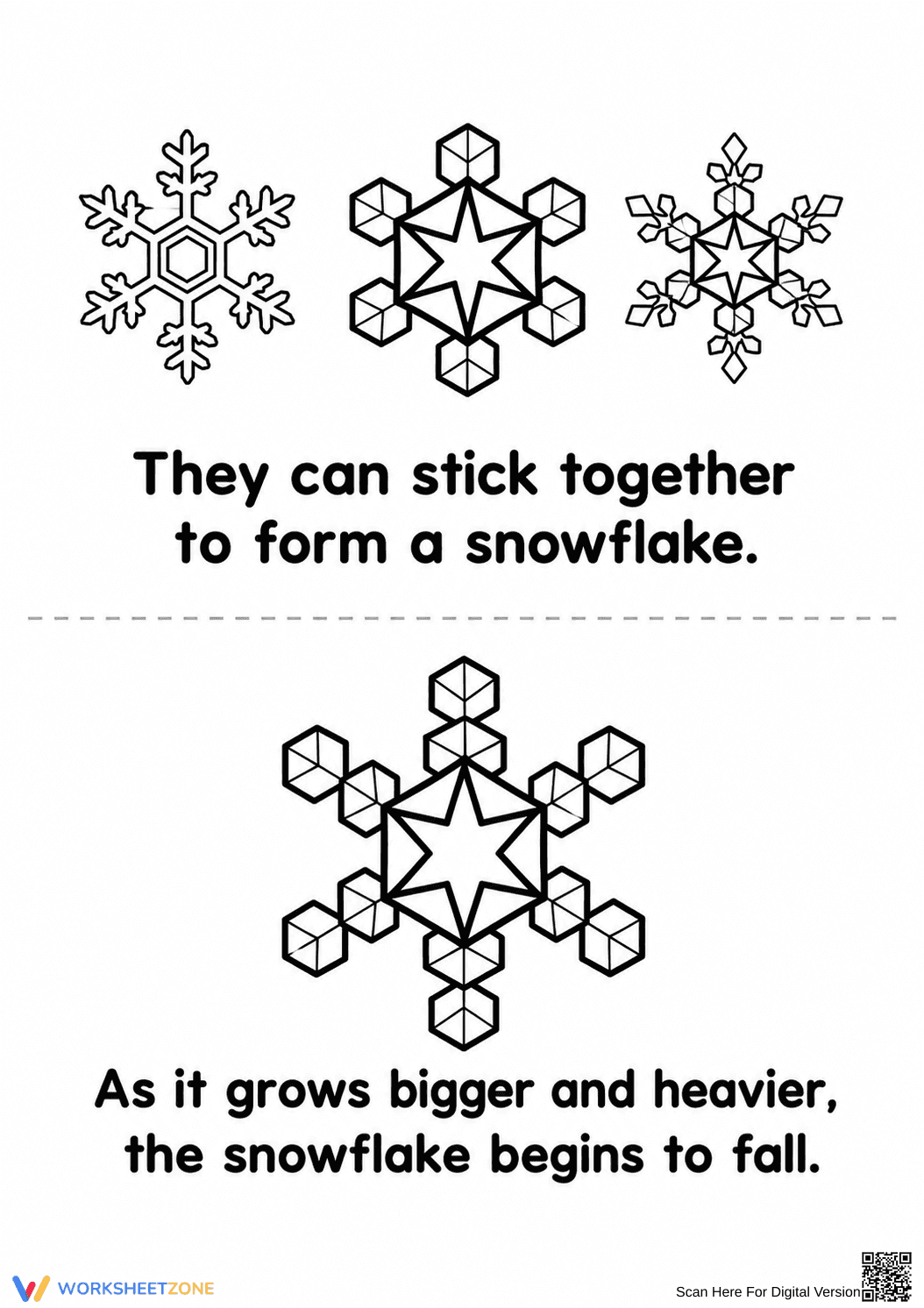
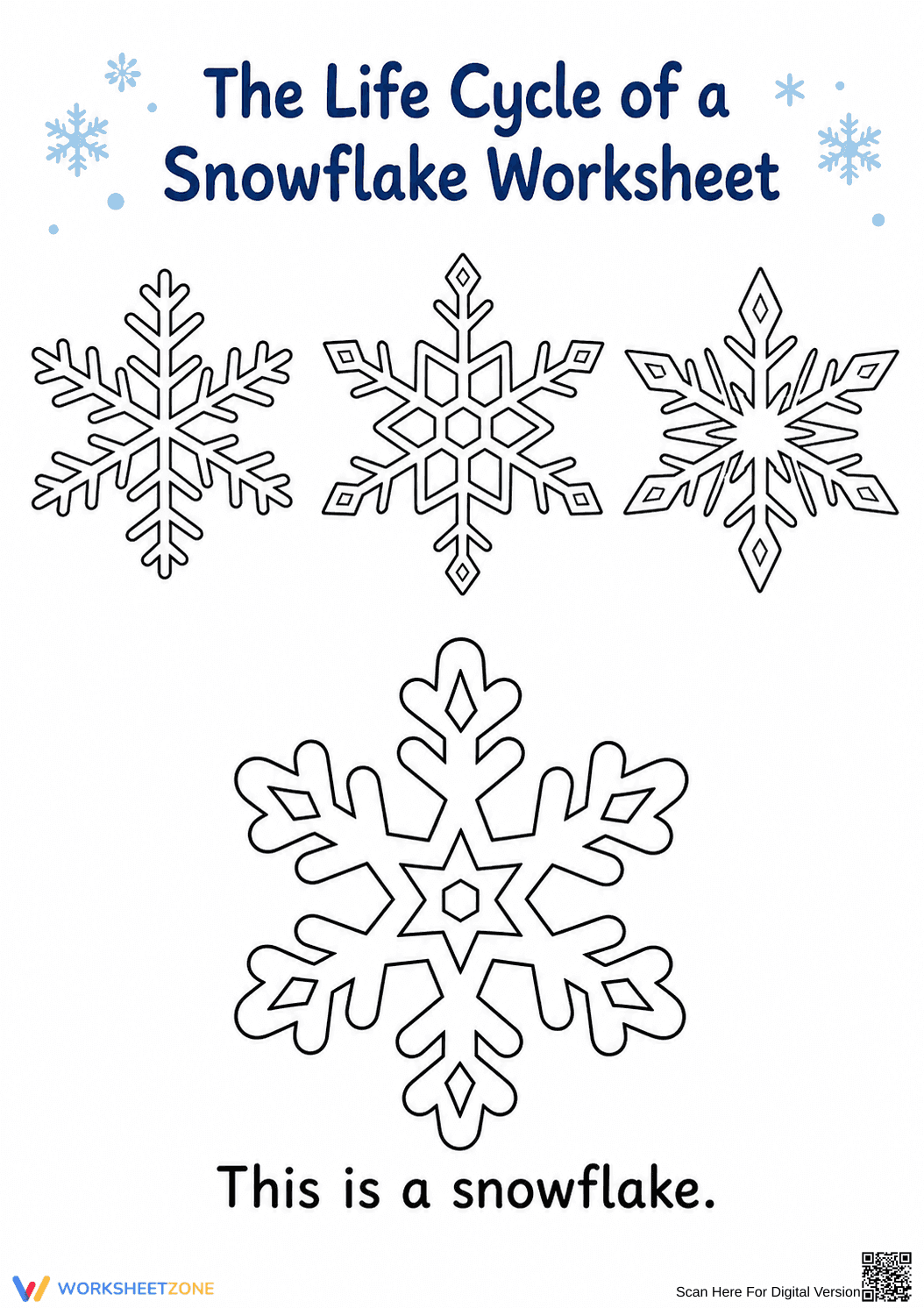
This 13-page mini-book format combines informational text with interactive tasks. The reading pages explain how a tiny drop of water freezes, grows six arms, and falls to the ground. It concludes with 3 specific activities: coloring a six-armed snowflake, identifying and circling different snow crystal shapes, and tracing key vocabulary to reinforce the lesson.
Zero-Prep Workflow
- Print (1 minute): Print the PDF double-sided and staple the pages to create individual mini-books.
- Distribute (1 minute): Hand out the booklets to students along with crayons and pencils.
- Review (0 minutes): The text is highly visual and self-explanatory, requiring zero teacher setup. Total teacher prep time is under 2 minutes, making it an ideal science sub plan.
Standards Alignment
This resource is aligned to 5-ESS2-1: Develop a model using an example to describe ways the geosphere, biosphere, hydrosphere, and/or atmosphere interact. It also supports foundational Earth Science concepts regarding weather patterns and the states of water. Both standard codes can be copied directly into lesson plans, IEP goals, or district curriculum mapping tools.
How to Use It
Deploy this mini-book during a winter science unit as an independent reading and activity station, or use it as a whole-class read-aloud before a larger water cycle experiment. As a formative assessment tip, observe students as they circle the different snow crystal shapes to ensure they recognize the structural variations of snowflakes. Expected completion time is 15 to 20 minutes.
Who It's For
This resource is designed for 3rd through 5th graders, though the highly visual, step-by-step illustrations provide excellent scaffolds for ELL students and struggling readers. It pairs naturally with a hands-on snowflake cutting craft or a direct instruction lesson on winter precipitation.
Understanding precipitation and the water cycle is a foundational element of elementary science education. This resource aligns with 5-ESS2-1, helping students describe ways the hydrosphere and atmosphere interact through the specific, engaging example of snowflake formation. According to a recent ScienceDirect TpT Analysis, integrating highly visual, step-by-step models into Earth Science instruction significantly improves retention of complex cyclical concepts like the water cycle. By breaking down the snowflake life cycle into observable stages—from a freezing water droplet to a six-armed crystal—students can better conceptualize atmospheric changes. This printable mini-book provides a concrete representation of abstract weather phenomena, ensuring learners grasp the continuous nature of melting and evaporation. Utilizing such structured, illustrated materials supports cognitive development and scientific literacy in young learners, bridging the gap between everyday weather observations and formal scientific principles.


