


























Views
Downloads


Printable Compare and Contrast Worksheet | Grade 5 ELA
Paste this activity's link or code into your existing LMS (Google Classroom, Canvas, Teams, Schoology, Moodle, etc.).
Students can open and work on the activity right away, with no student login required.
You'll still be able to track student progress and results from your teacher account.
This Grade 5 reading worksheet uses the futuristic story "In Grandfather's Day" to build essential close reading skills. Students work through a series of text-dependent questions that guide them to compare and contrast characters, settings, and events, ultimately strengthening their analytical abilities and comprehension of complex narratives.
At a Glance
- Grade: 5 · Subject: English Language Arts
- Standard:
CCSS.ELA-LITERACY.RL.5.3— Compare and contrast characters, settings, or events using specific details.- Skill Focus: Close Reading, Compare & Contrast
- Format: 4 pages · 6 problems · Answer key included · PDF
- Best For: Independent practice or literacy centers
- Time: 25–35 minutes
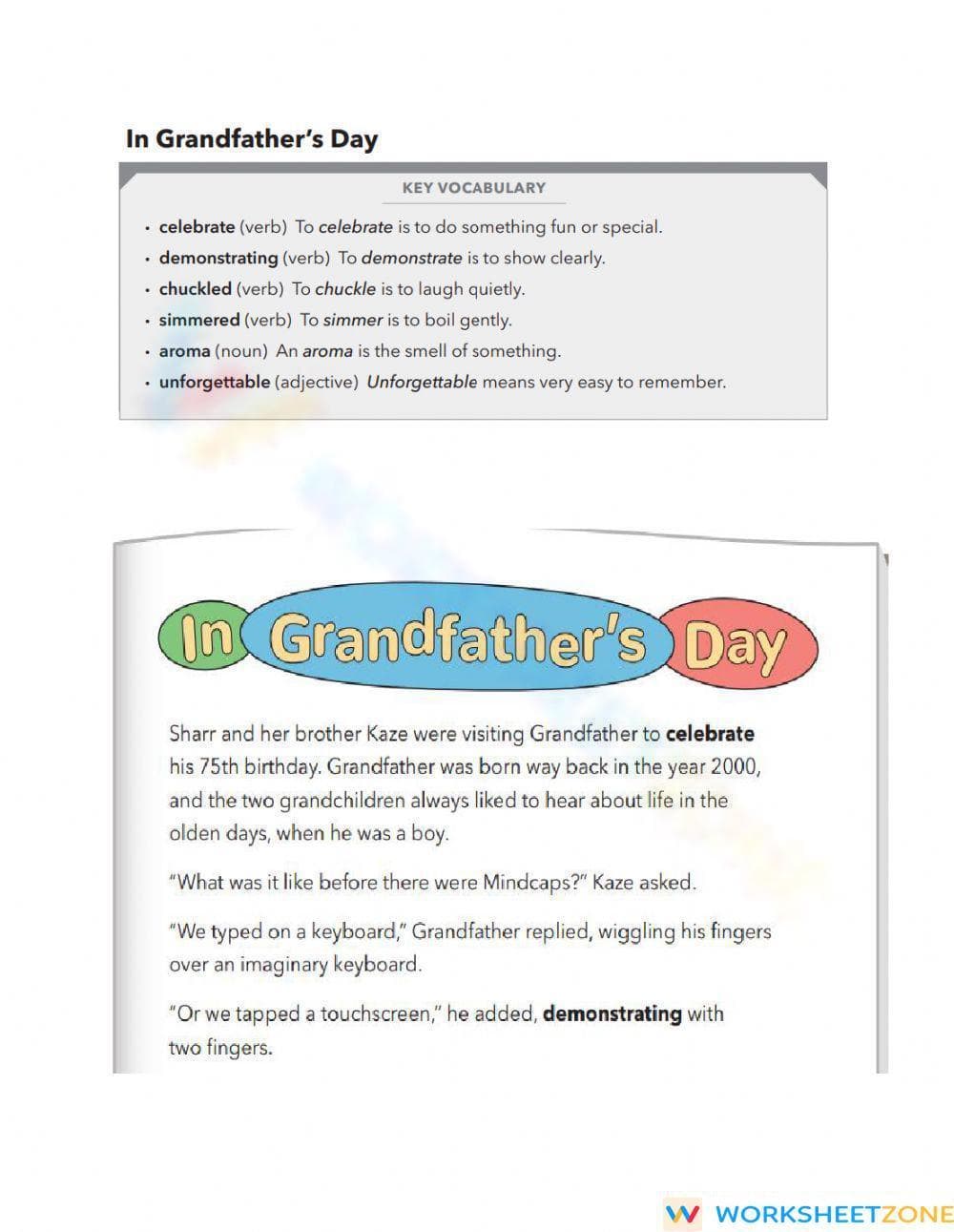
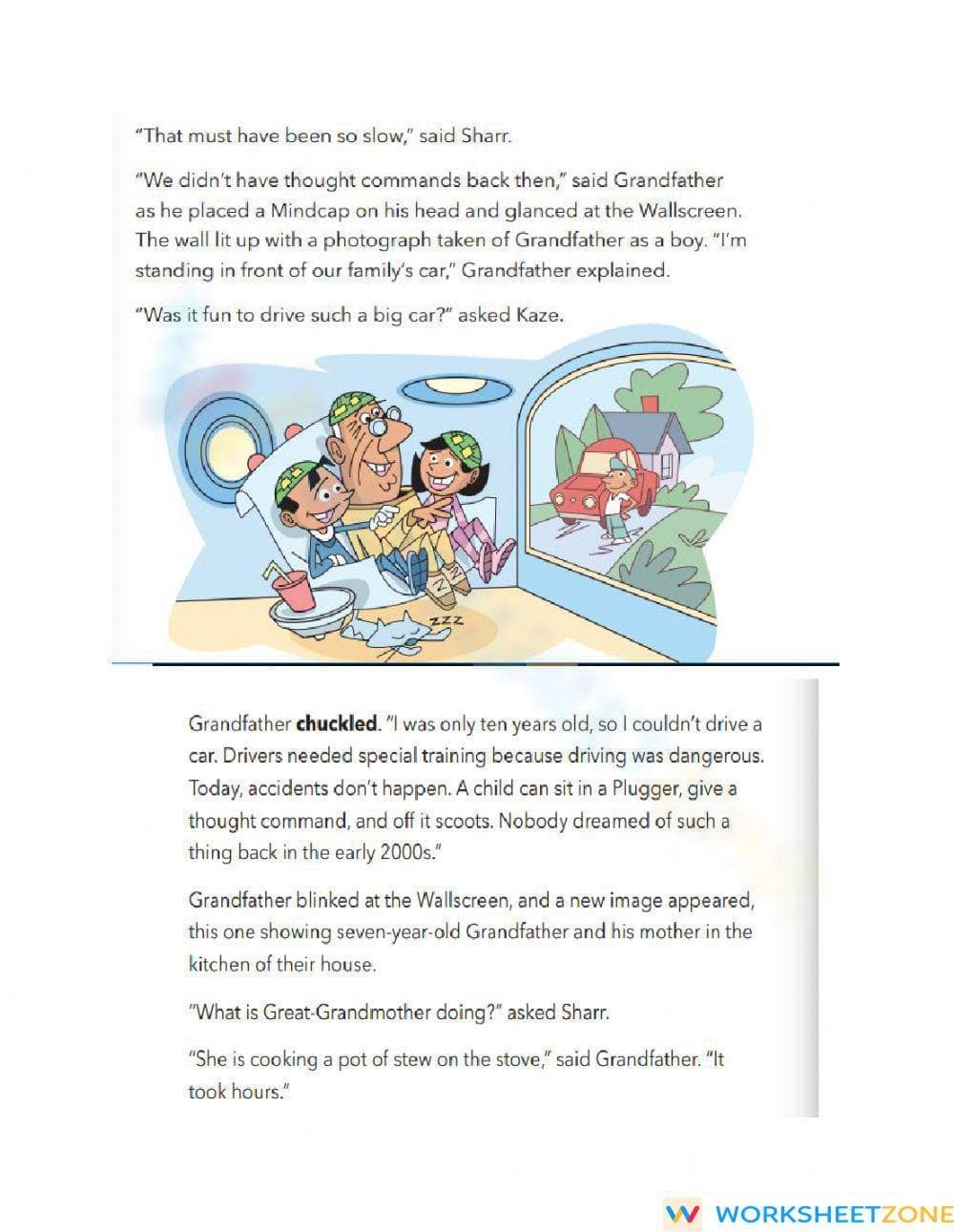
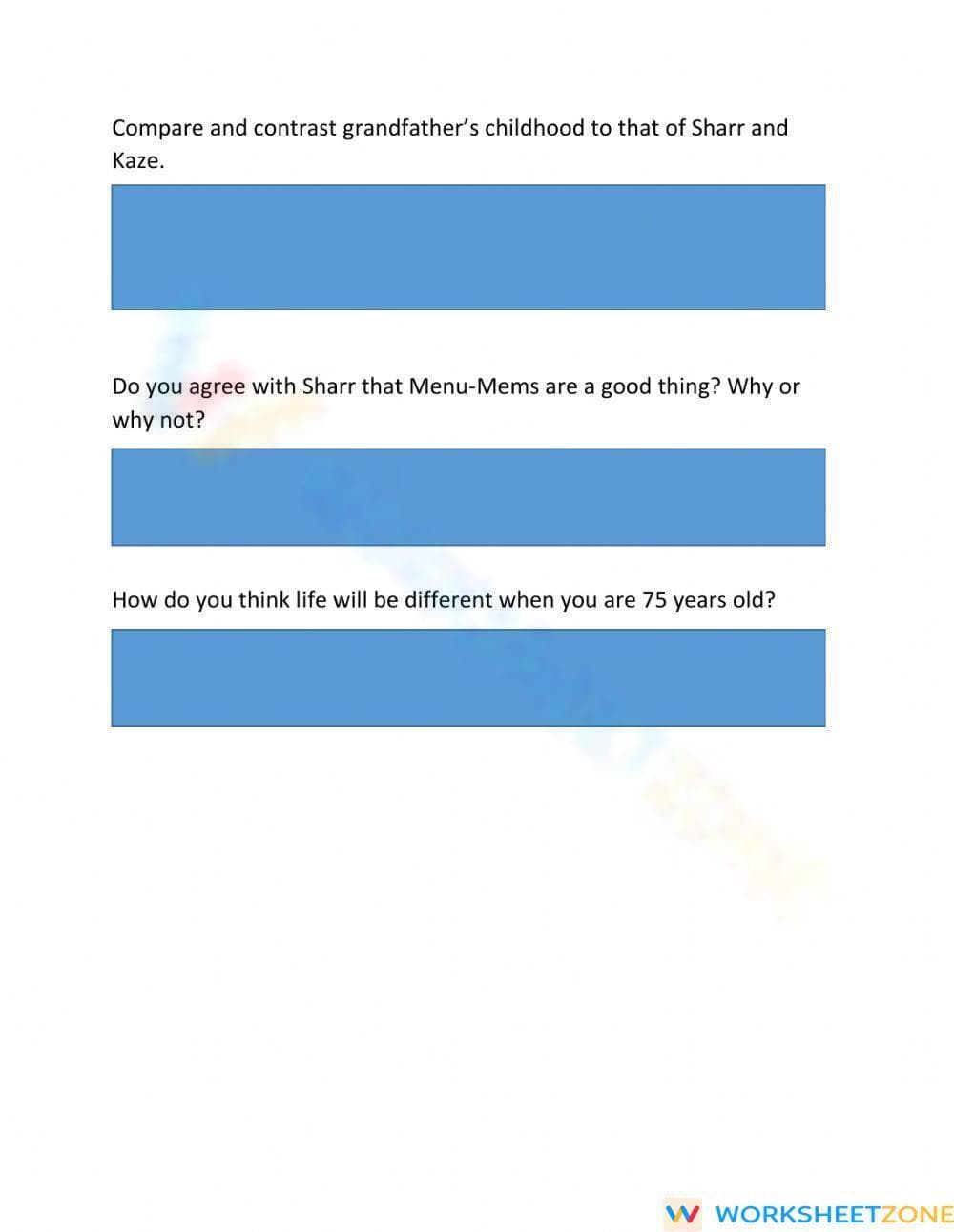
This four-page resource begins with a vocabulary primer featuring six key terms to support comprehension. The following pages contain the short story "In Grandfather's Day," a narrative about generational differences in technology. The worksheet concludes with six open-ended writing prompts that require students to find evidence and analyze the text to draw comparisons.
Skill Progression
- Guided practice: Early questions ask students to identify specific technologies from the text, building a foundational understanding of the setting and its unique elements.
- Supported practice: The prompts then guide students to explain the impact of these technologies, moving from simple identification to basic causal analysis within the story's context.
- Independent practice: Finally, students must independently write a paragraph comparing and contrasting the two different time periods, synthesizing their analysis from the previous questions.
This I Do, We Do, You Do structure ensures all learners can access the core skill of textual analysis through a scaffolded, supportive process.
Standards Alignment
This worksheet is directly aligned with CCSS.ELA-LITERACY.RL.5.3, which requires students to "Compare and contrast two or more characters, settings, or events in a story or drama, drawing on specific details in the text." The tasks guide students to meet this expectation precisely by analyzing the two distinct settings in the story. This standard code can be copied directly into lesson plans, IEP goals, or district curriculum mapping tools.
How to Use It
Use this worksheet as an independent practice activity after a direct instruction lesson on comparing and contrasting narrative elements. It is also an effective tool for a small-group literacy center, allowing students to collaborate on their textual analysis before writing. For a quick formative assessment, observe which students can answer the final, more complex questions using specific evidence from the passage. Expect completion in 25 to 35 minutes.
Who It's For
Designed primarily for Grade 5 ELA classrooms, this resource also supports advanced fourth-grade readers or provides a focused review for middle school students struggling with textual analysis. The open-ended nature of the questions provides inherent differentiation, as students can provide responses of varying complexity. Pair this worksheet with a simple T-chart graphic organizer to help students structure their comparisons before writing.
This reading comprehension resource provides targeted practice for CCSS.ELA-LITERACY.RL.5.3, guiding students to compare and contrast story elements using textual evidence. As outlined by Fisher & Frey (2014), engaging with text-dependent questions is fundamental to effective close reading. This worksheet's six structured tasks require students to move beyond simple recall, analyzing how technology shapes the lives of characters in the narrative "In Grandfather's Day." By identifying details, explaining their significance, and synthesizing a comparative analysis, students practice the precise skills that build deep comprehension. This progression from concrete to abstract thinking is a key instructional strategy for developing middle-grade literacy. The worksheet serves as a practical application of research-based methods, ensuring students are actively making meaning from the text.


