


























Views
Downloads
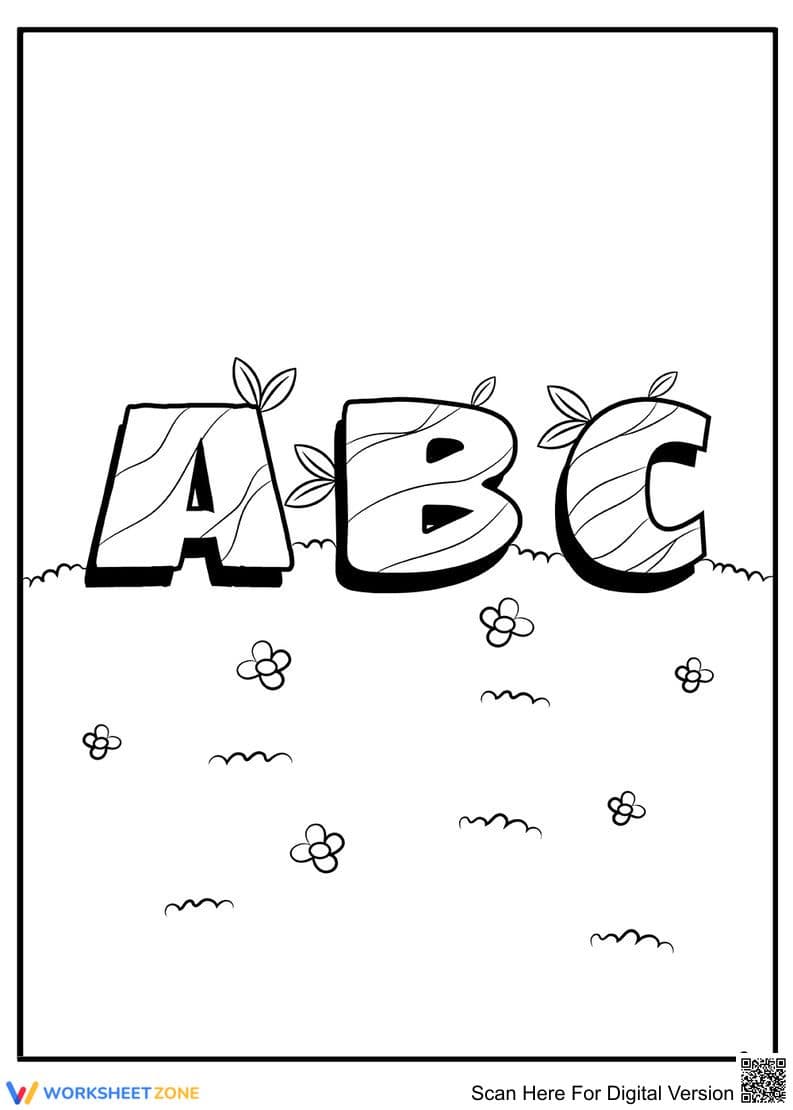

Letters ABC Printable Coloring Page | Kindergarten Ready
Paste this activity's link or code into your existing LMS (Google Classroom, Canvas, Teams, Schoology, Moodle, etc.).
Students can open and work on the activity right away, with no student login required.
You'll still be able to track student progress and results from your teacher account.
This Letters ABC printable worksheet provides a creative way for early learners to engage with the alphabet. By combining letter recognition with artistic expression, students develop the foundational skills necessary for reading readiness. This activity focuses on identifying uppercase letters A, B, and C within a familiar, engaging garden-themed context to support visual memory.
At a Glance
- Grade: Kindergarten · Subject: English
- Standard:
CCSS.ELA-LITERACY.RF.K.1.D— Recognize and name all upper- and lowercase letters of the alphabet- Skill Focus: Letter Recognition
- Format: 1 page · 1 task · Answer key not required · PDF
- Best For: Morning work or literacy centers
- Time: 10–15 minutes
Inside this resource, you will find a single-page, high-quality PDF featuring large, bold "ABC" letters. The letters are stylized with organic patterns and set against a backdrop of grass and flowers. This design encourages students to focus on the letter shapes while providing enough detail to keep them engaged during the coloring process. No complex instructions are needed, making it ideal for independent work.
The zero-prep workflow for this worksheet is designed for maximum efficiency in a busy classroom. First, print the single-page PDF for your entire class, which takes less than 30 seconds. Second, distribute the pages along with crayons or colored pencils during your literacy block or as students arrive. Finally, review the letters as a group by having students point to and name each character. Total teacher preparation time is under 2 minutes, making this an excellent option for unexpected sub plans or transition periods.
This worksheet aligns with `CCSS.ELA-LITERACY.RF.K.1.D`, which requires students to recognize and name all upper- and lowercase letters of the alphabet. By isolating the first three letters of the alphabet, the activity provides a manageable starting point for students who are just beginning their literacy journey. This standard code can be copied directly into lesson plans, IEP goals, or district curriculum mapping tools.
Use this worksheet during the "You Do" phase of a gradual release model. After introducing the letters A, B, and C through song or flashcards, provide this page as a formative assessment to observe which students can correctly identify the letters as they color. It also serves as a quiet-time activity following direct instruction. Expect students to spend approximately 12 minutes completing the coloring while you circulate to check for letter-naming fluency.
This resource is specifically designed for Kindergarten students and English Language Learners who need tactile engagement with letter forms. It pairs naturally with alphabet anchor charts or a read-aloud of "Chicka Chicka Boom Boom." The large format is also beneficial for students developing fine motor control and grip strength.
The use of coloring activities in early literacy is supported by research into multisensory learning. According to Fisher & Frey (2014), engaging students in tasks that combine visual recognition with motor activities helps solidify the neural pathways associated with letter identification. This Letters ABC worksheet addresses CCSS.ELA-LITERACY.RF.K.1.D by providing a low-stakes environment for students to practice naming uppercase letters. Research from the NAEP suggests that early mastery of the alphabet is one of the strongest predictors of later reading success. By integrating these 1-page printable resources into a daily routine, educators provide the consistent exposure necessary for mastery. This specific activity allows for 10 to 15 minutes of focused practice, ensuring that students remain on task while building the stamina required for more complex literacy assignments in later grades. The garden theme provides a relatable context that reduces anxiety for emerging readers.


