


























Views
Downloads
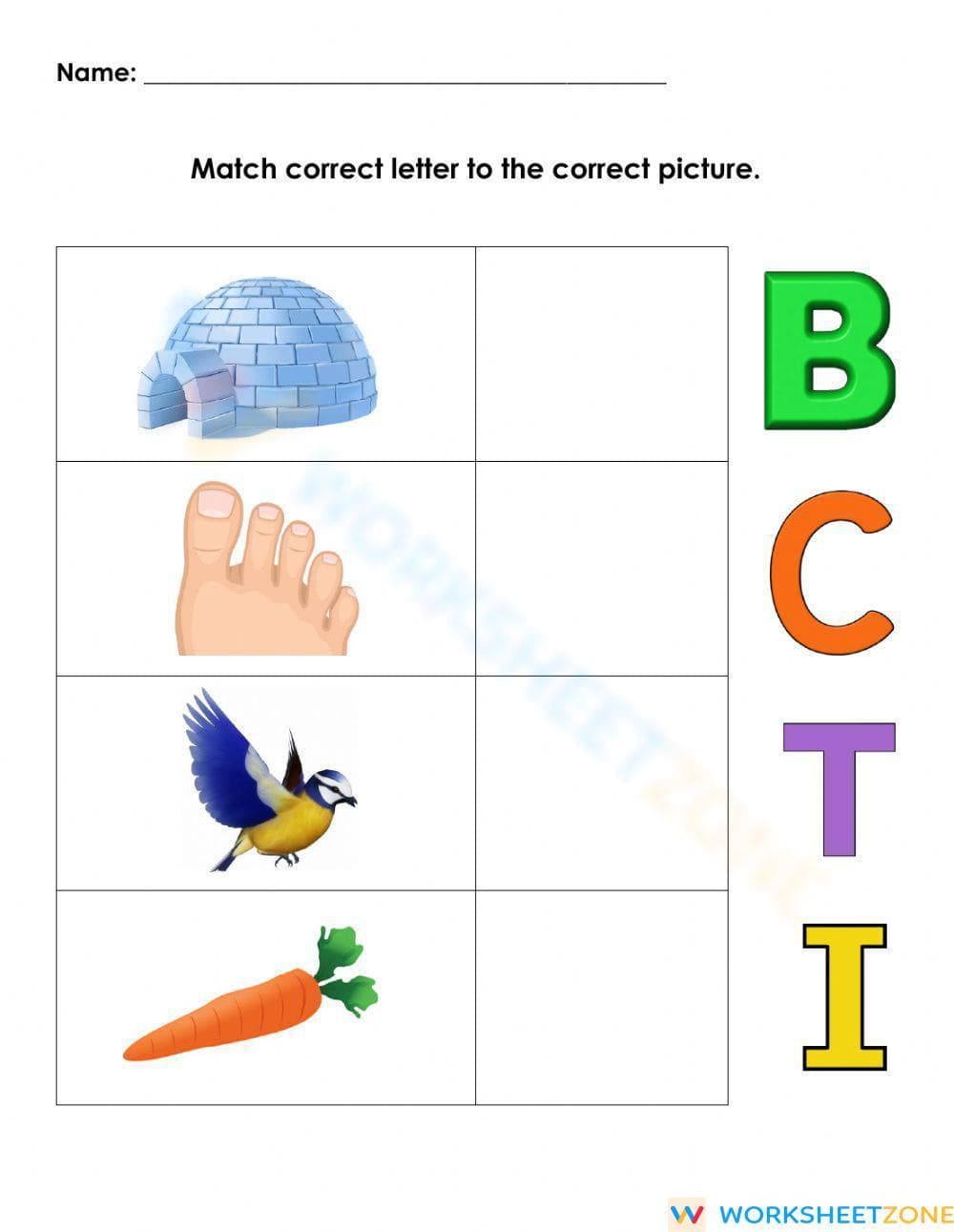

Kindergarten Alphabet Sounds — Printable No-Prep Worksheet
Paste this activity's link or code into your existing LMS (Google Classroom, Canvas, Teams, Schoology, Moodle, etc.).
Students can open and work on the activity right away, with no student login required.
You'll still be able to track student progress and results from your teacher account.
This print-and-go worksheet offers a focused activity for Kindergarten students to practice initial letter-sound correspondence. Through a simple and clear matching format, young learners will connect pictorial representations with their beginning alphabetic sounds. It's an ideal resource for reinforcing foundational literacy skills without needing any teacher preparation.
At a Glance
- Grade: Kindergarten · Subject: ELA / Alphabet
- Standard:
CCSS.ELA-LITERACY.RF.K.3.A— Match letters to their primary consonant sounds.- Skill Focus: Initial Sound Matching
- Format: 1 page · 4 problems · Answer key included · PDF
- Best For: Morning work, literacy centers, or quick assessment.
- Time: 5–10 minutes
What's Inside
This single-page PDF contains a straightforward "match the letter to the picture" activity. It presents four clear, color images alongside four uppercase letters. Students simply write the correct letter in the corresponding box. A complete answer key is provided on a separate page for quick grading.
A Seamless Classroom Experience
Designed for the busy educator, this worksheet minimizes prep and maximizes learning. The workflow is simple:
- 1. Print (under 1 minute): The resource is a single, printer-friendly page.
- 2. Distribute (1 minute): Hand out for morning work, transitions, or literacy centers. The instructions are self-evident.
- 3. Review (2 minutes): Use the provided answer key to quickly check student work for a snapshot of their letter-sound understanding.
Total teacher time is under five minutes, making it an excellent choice for substitute plans or a quality activity on the fly.
Standards Alignment
This activity directly supports a critical early literacy standard: CCSS.ELA-LITERACY.RF.K.3.A, which requires students to demonstrate knowledge of one-to-one letter-sound correspondences. The task provides concrete practice for this foundational reading skill. The standard code can be copied directly into lesson plans or curriculum mapping tools.
How to Use It
This worksheet is effective as a pre-assessment before a phonics lesson or as independent practice in a literacy center. For a quick formative assessment, observe which pictures give students trouble to identify letter-sound confusions that need re-teaching. Most students will complete the activity in 5 to 10 minutes.
Who It's For
This resource is designed for Preschool and Kindergarten students beginning to connect sounds to letters. The clear images provide strong visual support. For students needing help, work in a small group to say the name of each picture aloud first. This worksheet pairs perfectly with an alphabet anchor chart or a lesson with magnetic letters.
This worksheet provides targeted practice for CCSS.ELA-LITERACY.RF.K.3.A, a cornerstone of early literacy. Mastering the correspondence between letters and their sounds is one of the strongest predictors of future reading success. The activity's format—matching visual cues to alphabetic symbols—reinforces this crucial connection in a direct and measurable way. Research from Fisher & Frey (2014) emphasizes the importance of such explicit skill work within a gradual release model, ensuring students move from guided instruction to independent application. By providing a clear task with a low cognitive load, this resource allows students to focus solely on the phonological skill at hand. It serves as a valuable piece of evidence for tracking student progress against foundational reading benchmarks, aligning with data-driven instructional practices recommended by national literacy panels. This simple exercise builds a critical component of the reading brain.


