


























Views
Downloads

Grade K-1 Letter T Phonics — Printable No-Prep Worksheet
Paste this activity's link or code into your existing LMS (Google Classroom, Canvas, Teams, Schoology, Moodle, etc.).
Students can open and work on the activity right away, with no student login required.
You'll still be able to track student progress and results from your teacher account.
Mastering the letter T is a foundational milestone for early readers. This Letter T beginning sounds worksheet guides Kindergarten and Grade 1 students through identifying and writing the phoneme /t/. By engaging with tactile activities, learners build the phonemic awareness necessary for decoding complex words and developing fluent reading habits.
At a Glance
- Grade: K–1 · Subject: ELA
- Standard:
CCSS.ELA-LITERACY.RF.K.3.A— Demonstrate basic knowledge of one-to-one letter-sound correspondences for consonant sounds- Skill Focus: Initial /t/ Phoneme Identification
- Format: 2 pages · 7 tasks · Answer key included · PDF
- Best For: Independent phonics practice and literacy centers
- Time: 15–20 minutes
What's Inside
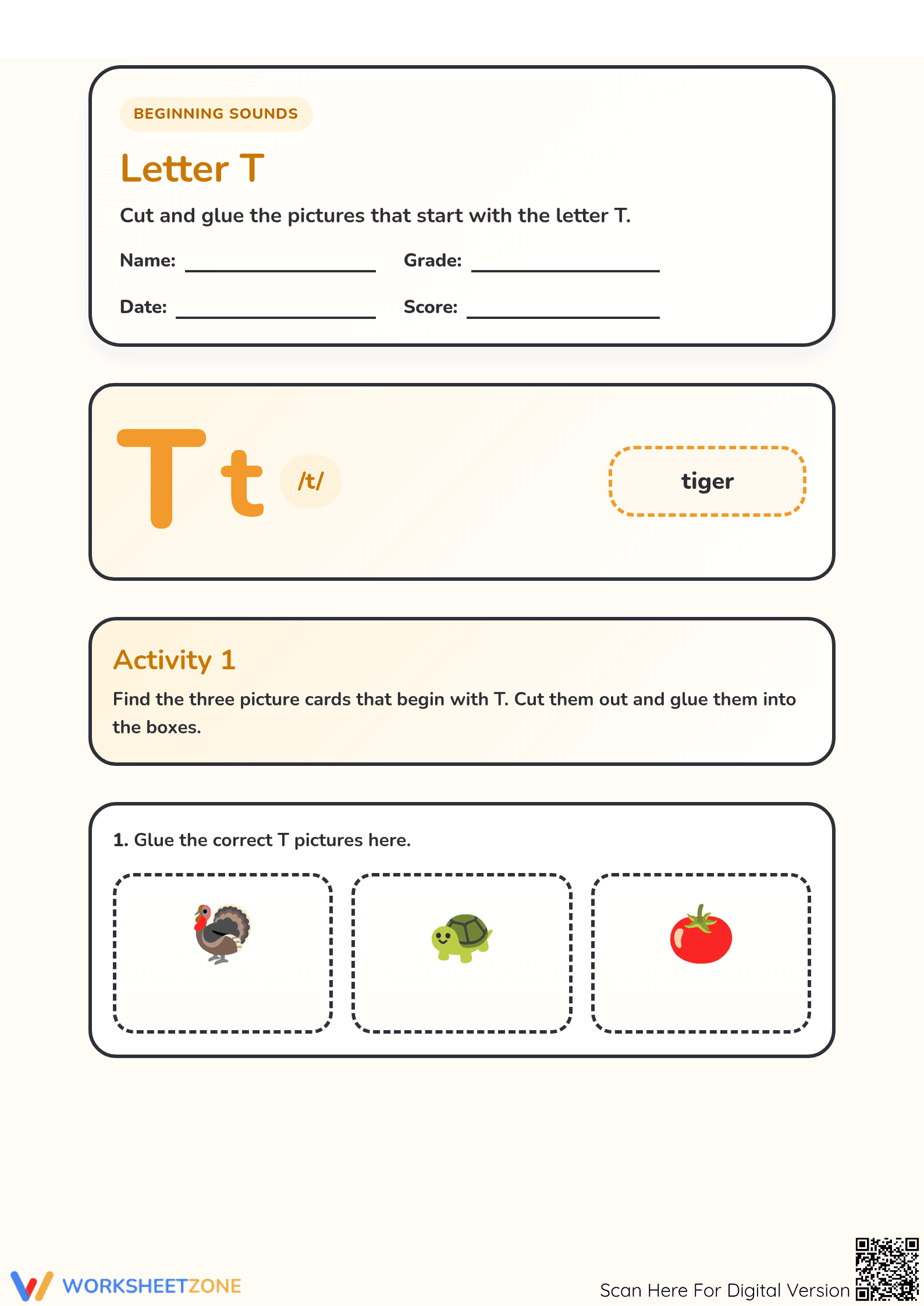
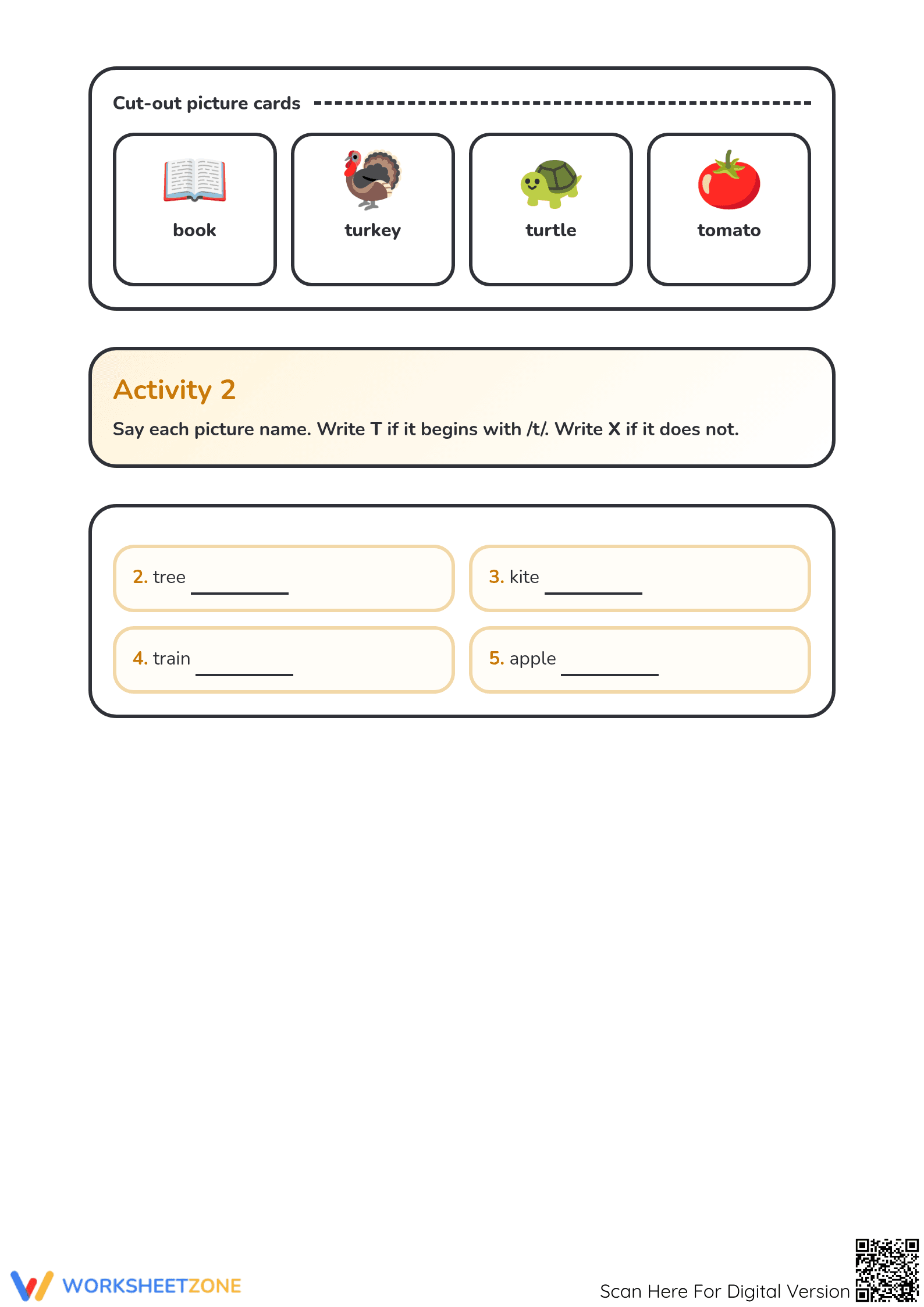
This two-page resource is divided into interactive segments that blend fine motor skills with academic rigor. Page one features a "cut-and-glue" activity where students must select three correct images, such as the turkey and turtle, from a set of cards. The second page transitions to writing, requiring students to evaluate additional items like the tree and train to mark them based on their beginning sound.
Zero-Prep Workflow
The zero-prep workflow is designed for maximum classroom efficiency, requiring less than two minutes of teacher preparation. First, print the dual-page PDF and ensure students have scissors and glue for the initial sorting task. Second, distribute the worksheets during your literacy block or as a center activity. Finally, review the completed work using the included answer key for quick formative feedback.
Standards Alignment
This resource is strictly aligned with `CCSS.ELA-LITERACY.RF.K.3.A`, which requires students to demonstrate basic knowledge of one-to-one letter-sound correspondences by producing the primary sound for each consonant. Additionally, it supports fine motor development and following multi-step directions. Both standard codes can be copied directly into lesson plans, IEP goals, or district curriculum mapping tools.
How to Use It
Utilize this worksheet during small-group instruction to model the /t/ sound before letting students work independently. It also serves as an excellent formative assessment tool; observe students during the "say and write" section to identify who might need support with phoneme isolation. Expected completion time is roughly 15 minutes, making it an ideal exit ticket for a phonics lesson.
Who It's For
This printable is tailored for Kindergarten and Grade 1 students who are currently exploring the alphabet. It is particularly beneficial for kinesthetic learners who thrive on tactile feedback. Pair this resource with a "letter of the week" anchor chart or a short reading passage featuring high-frequency "T" words to reinforce the concept across multiple instructional modalities.
The Letter T beginning sounds worksheet is a research-backed tool designed to solidify phonemic awareness and letter-sound correspondence, specifically targeting the `CCSS.ELA-LITERACY.RF.K.3.A` standard. Early literacy research, such as the RAND AIRS 2024 analysis, emphasizes that integrating tactile "cut-and-glue" activities with phoneme identification significantly improves retention in younger learners by engaging multiple sensory pathways. By isolating the initial /t/ sound across seven distinct tasks, this resource provides the structured repetition necessary for students to move from simple recognition to fluent application in reading contexts. The inclusion of an answer key ensures that educators can provide immediate feedback, a practice shown by Fisher & Frey (2014) to be critical in the gradual release of responsibility model. This worksheet serves as a reliable, classroom-ready asset that bridges the gap between isolated skill practice and integrated literacy development for early childhood education.


