


























Views
Downloads

Essential ELA Review: Language Arts Test Grade 4-5
Paste this activity's link or code into your existing LMS (Google Classroom, Canvas, Teams, Schoology, Moodle, etc.).
Students can open and work on the activity right away, with no student login required.
You'll still be able to track student progress and results from your teacher account.
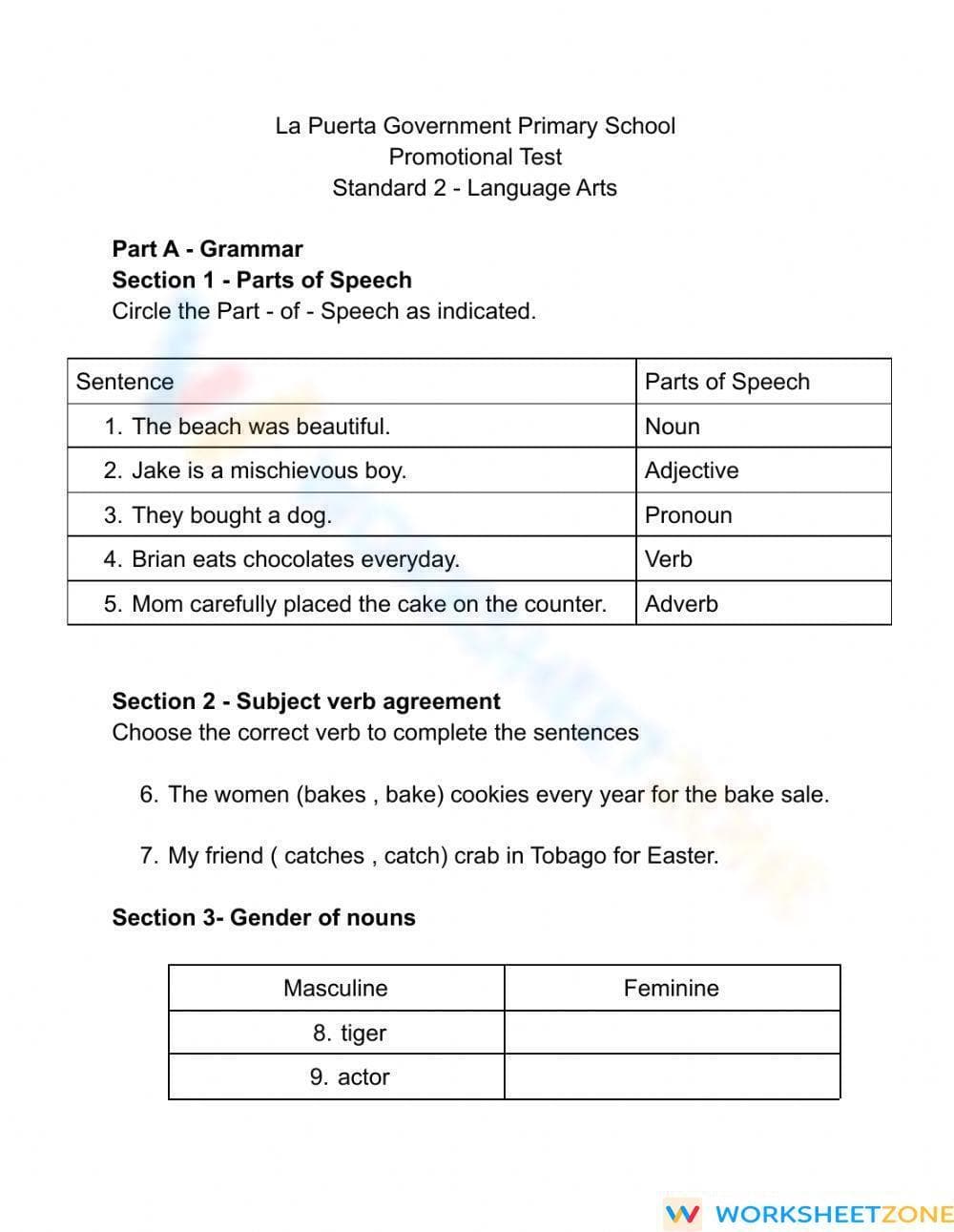
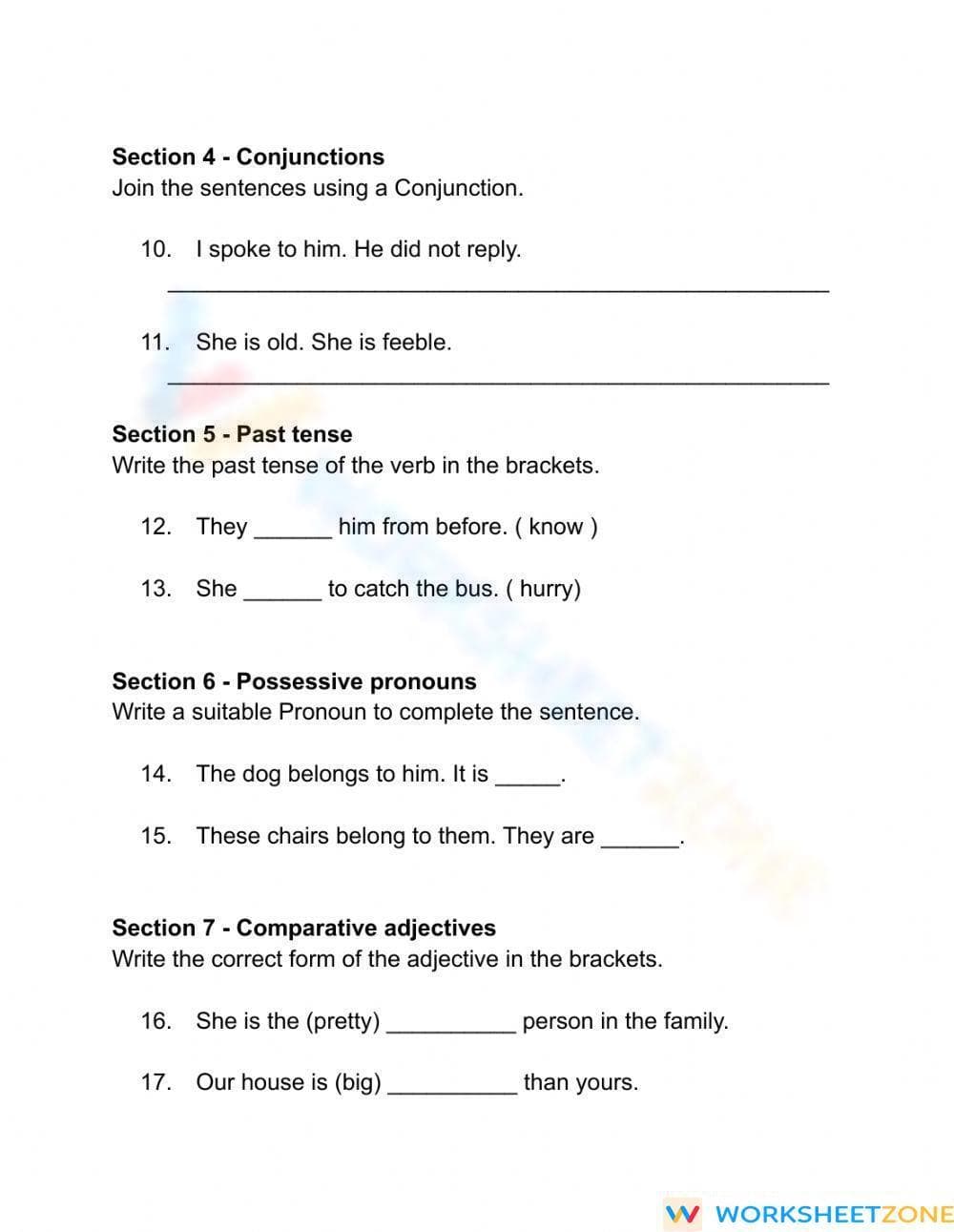
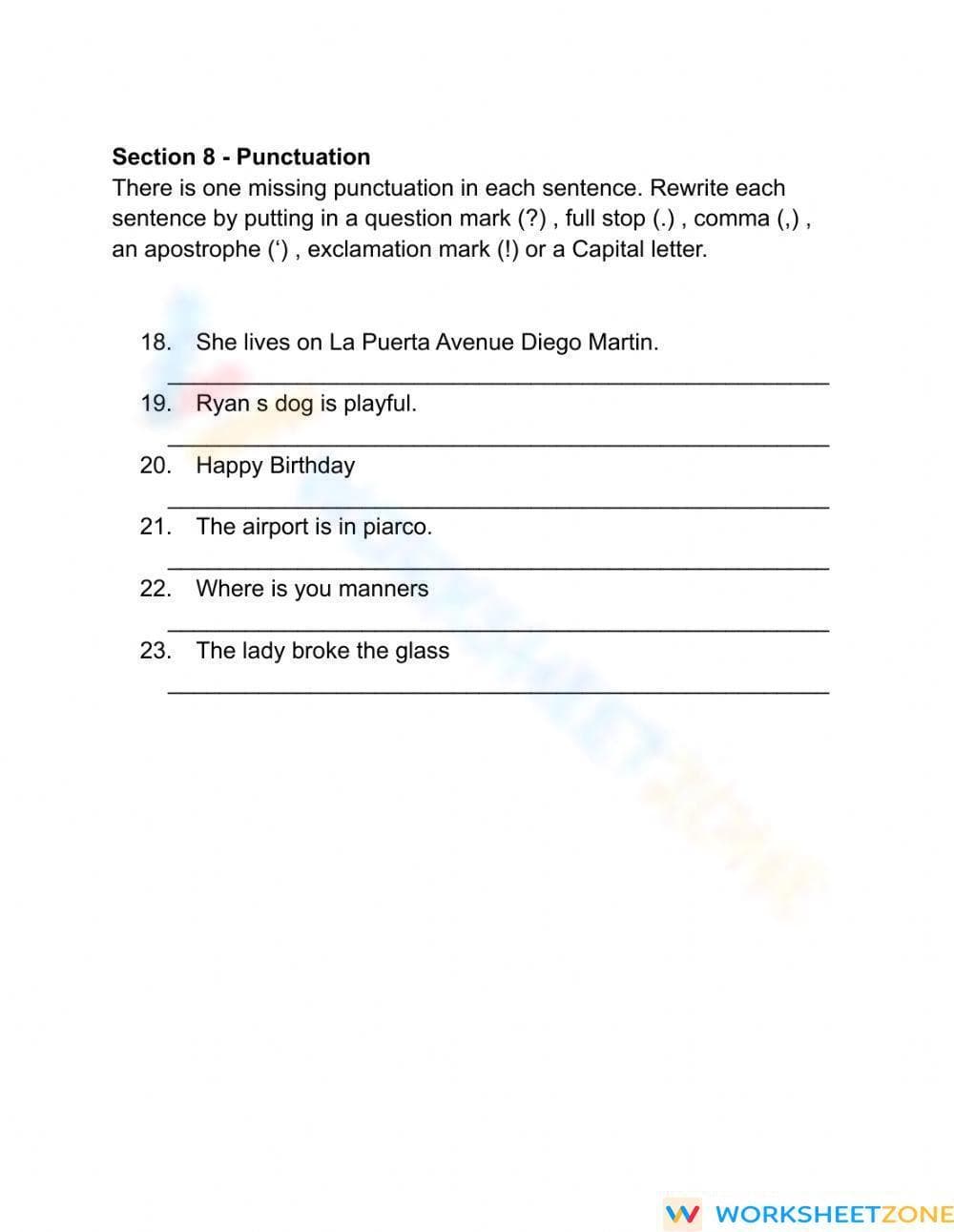
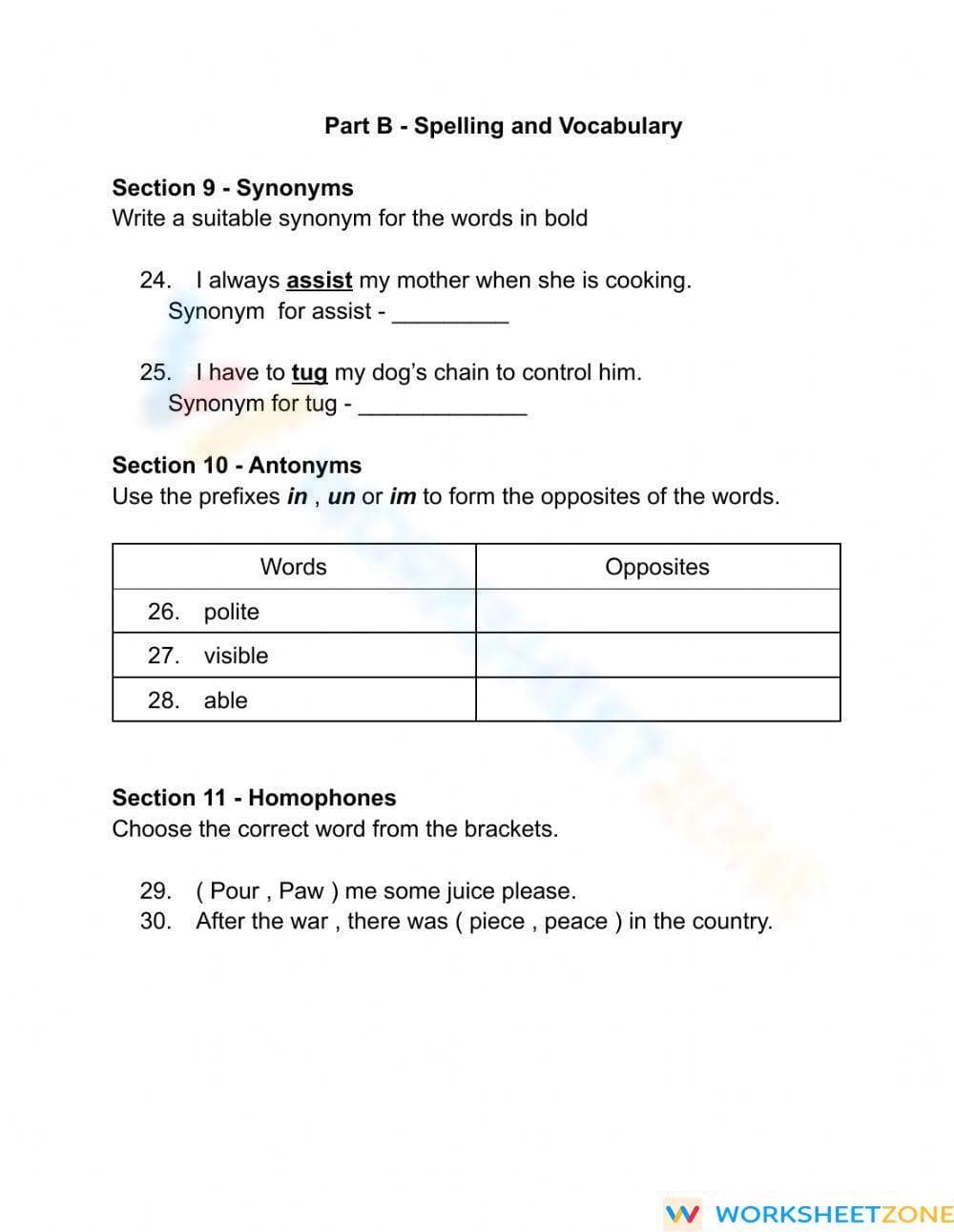
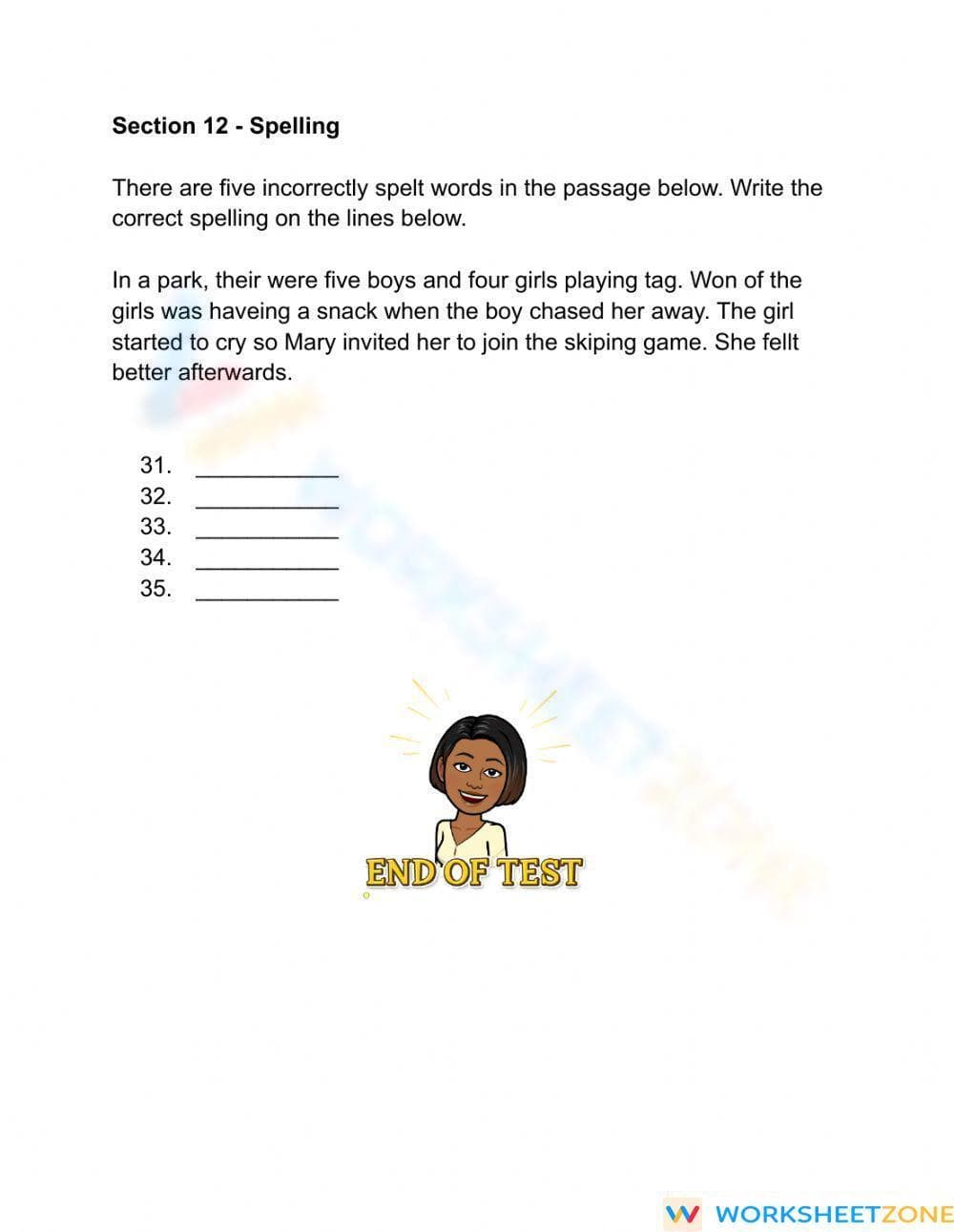
This Grade 4-5 Language Arts Promotional Test provides a comprehensive assessment of essential English language conventions and vocabulary skills. Students demonstrate mastery of parts of speech, word relationships, and spelling through varied question formats designed to simulate standardized testing environments. This five-page review ensures students are prepared for summative assessments while identifying specific areas for growth.
At a Glance
- Grade: 4-5 · Subject: English Language Arts (ELA)
- Standard:
CCSS.ELA-LITERACY.L.4.1— Demonstrate command of the conventions of standard English grammar and usage.- Skill Focus: Parts of Speech, Synonyms, Antonyms, and Spelling
- Format: 5 pages · 75 problems · Answer key included · PDF
- Best For: End-of-unit assessment and test preparation
- Time: 45–60 minutes
This robust five-page packet features 75 items across clear thematic sections. Students practice underlining nouns, circling adjectives, selecting correct verb forms, and choosing appropriate prepositions from a word bank. Vocabulary components include matching antonyms, rewriting sentences using synonyms, and identifying correctly spelled words via multiple choice. A full answer key is provided for efficient grading and student self-reflection.
The assessment is structured to provide clear evidence of student mastery across ELA standards. Each section maps directly to conventions of standard English, allowing teachers to calculate specific scores for grammar usage versus vocabulary acquisition. Performance on the 75 items can be easily translated into percentage-based grades or rubric tiers (Approaching, Meeting, or Exceeding) for entry into digital gradebooks, IEP progress monitoring, or standards-based report cards.
The primary focus of this resource is `CCSS.ELA-LITERACY.L.4.1`, requiring students to "Demonstrate command of the conventions of standard English grammar and usage when writing or speaking." Additionally, vocabulary sections align with `CCSS.ELA-LITERACY.L.4.5` regarding understanding word relationships and nuances in word meanings. Both standard codes can be copied directly into lesson plans, IEP goals, or district curriculum mapping tools to ensure instructional continuity and compliance.
Deploy this worksheet as a summative assessment at the conclusion of a conventions unit or as a benchmark review halfway through the school year. Observe which sections students struggle with most—such as preposition selection or synonym application—to guide small-group reteaching sessions. The estimated completion time of 45–60 minutes makes it an ideal fit for a standard instructional block or as a split assessment over two days.
This resource is designed for students in Grades 4 and 5 who are working toward mastery of foundational language skills. It is effective for general education classrooms and serves as a high-quality assessment tool for English Language Learners (ELLs) requiring structured grammar practice. Pair this test with a parts-of-speech anchor chart or a vocabulary word wall for students who require additional visual supports during the review phase.
According to the RAND AIRS 2024 report, high-quality, standards-aligned assessments are critical for identifying learning gaps and ensuring instructional time is targeted effectively. This Language Arts Promotional Test utilizes varied task structures—incorporating identification, matching, and sentence reconstruction—to evaluate student proficiency in the CCSS.ELA-LITERACY.L.4.1 strand. By testing parts of speech and vocabulary, the resource provides a multidimensional view of a student's linguistic command. Such comprehensive reviews align with findings regarding the importance of frequent checks for understanding in the gradual release of responsibility model. Educators can utilize the resulting data to inform differentiated instruction strategies and curriculum adjustments, ensuring all learners meet grade-level expectations for standard English conventions and vocabulary acquisition as outlined in national and state frameworks.


