


























Views
Downloads

Essential Grade 5 Interjections Worksheet | Printable
Paste this activity's link or code into your existing LMS (Google Classroom, Canvas, Teams, Schoology, Moodle, etc.).
Students can open and work on the activity right away, with no student login required.
You'll still be able to track student progress and results from your teacher account.
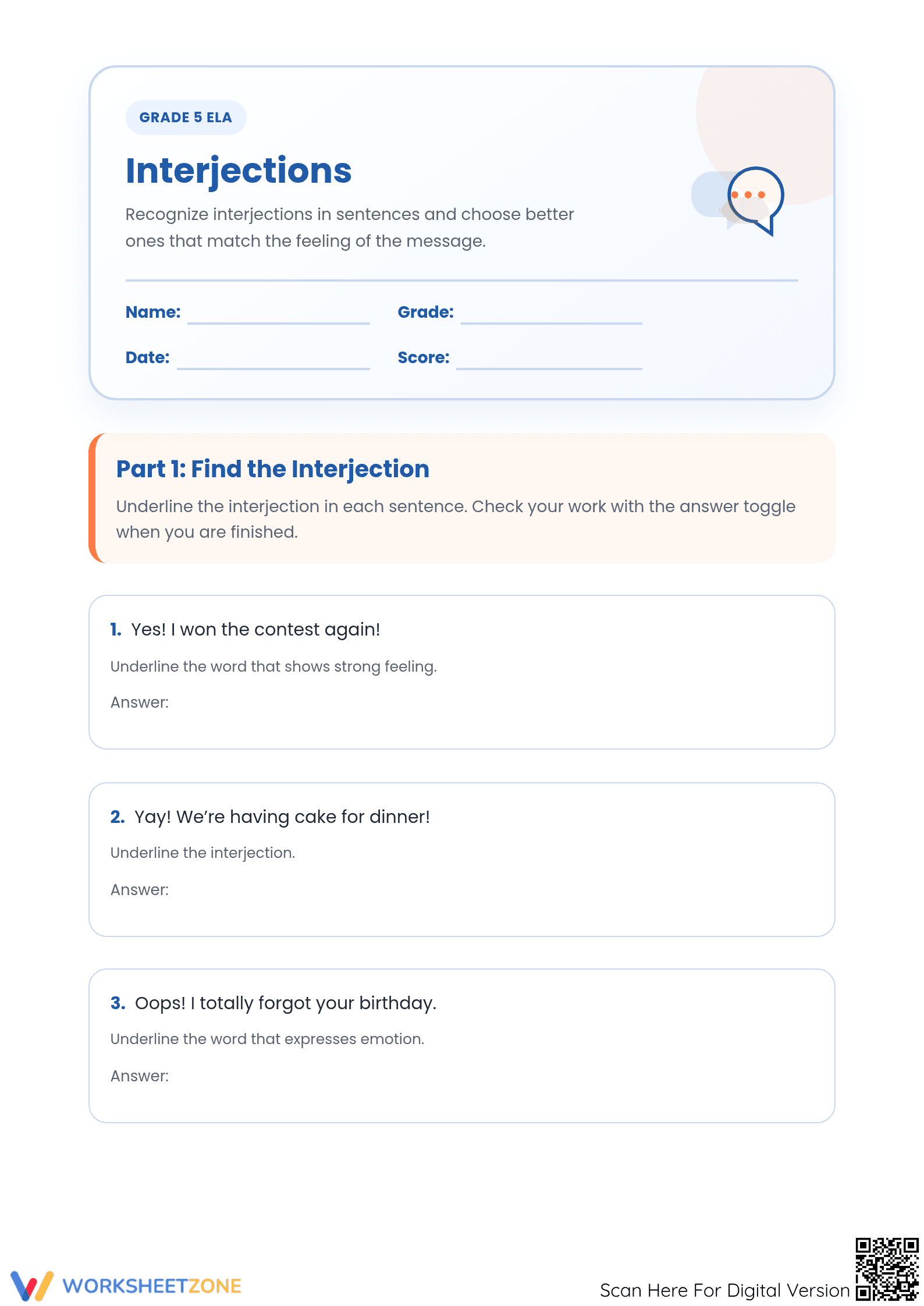
This Grade 5 English Language Arts worksheet focuses on interjections, helping students recognize words that express strong feelings or surprise. By engaging with 12 structured problems, learners will move beyond identification to selecting appropriate interjections for various emotional contexts. This essential resource ensures students understand how these parts of speech function in specific sentences.
At a Glance
- Grade: 5 · Subject: ELA
- Standard:
CCSS.ELA-LITERACY.L.5.1.A— Explain the function of interjections in general and their function in particular sentences- Skill Focus: Interjection identification and contextual replacement
- Format: 3 pages · 12 problems · Answer key included · PDF
- Best For: Grammar reinforcement and sentence-level editing practice
- Time: 15–20 minutes
What's Inside
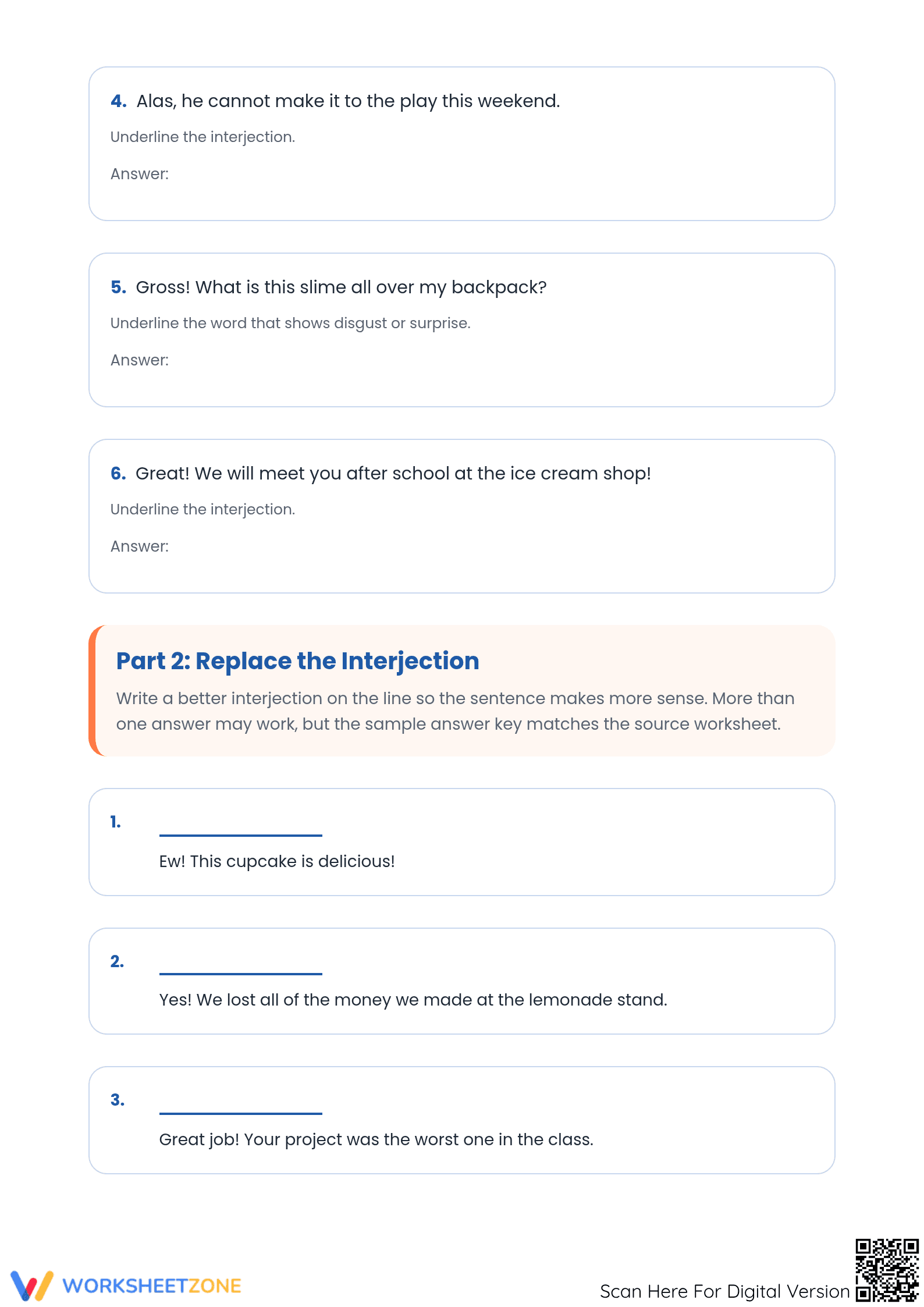
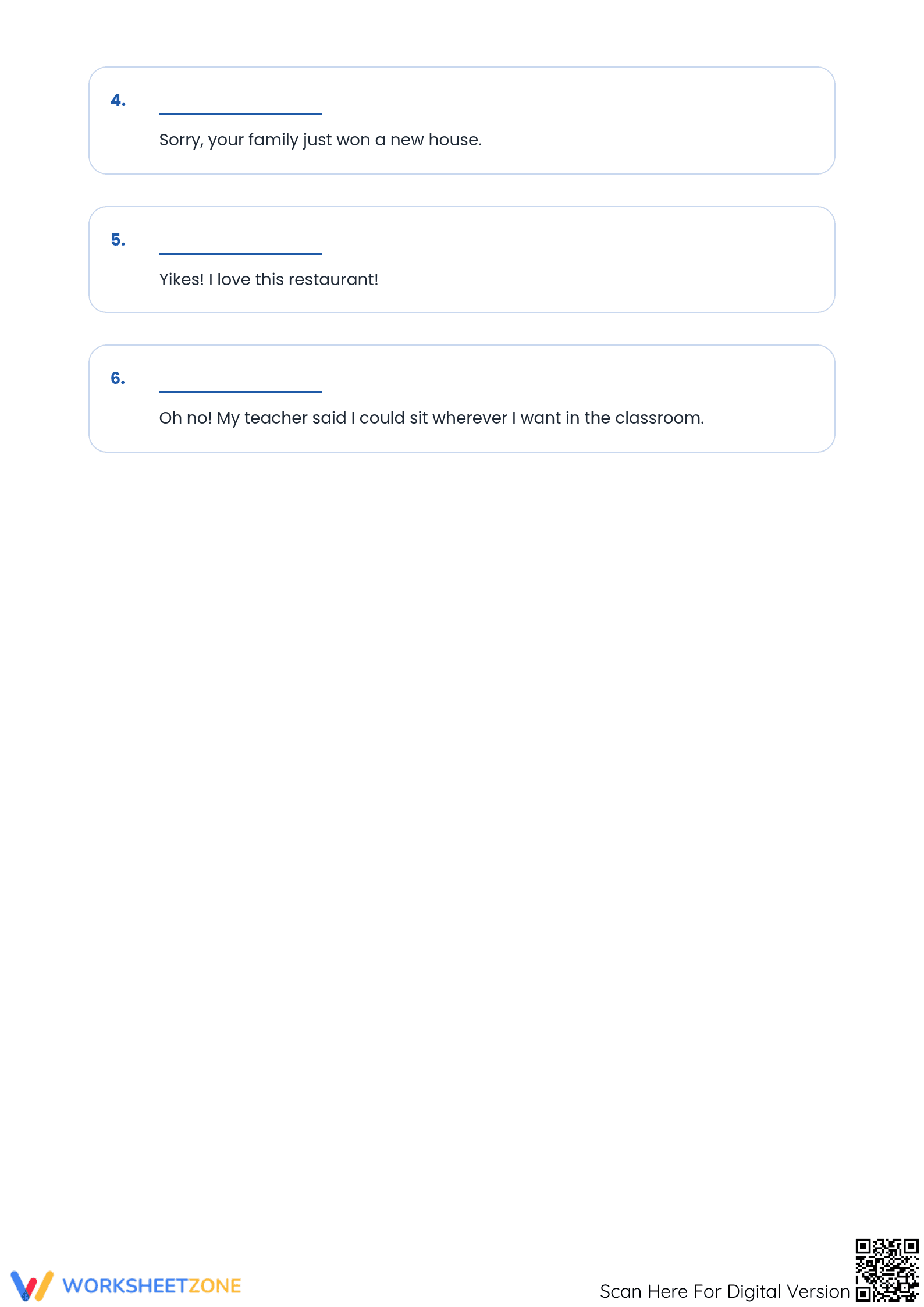
The three-page PDF features two sections designed to build mastery through application. Part one includes six sentences where students underline interjections. Part two provides six additional challenges where students identify mismatched interjections and write contextually accurate replacements. A complete answer key is provided for immediate feedback and grading efficiency.
Skill Progression
- Guided Identification: Students start by finding interjections in provided sentences, identifying words that signal emotion and strong feelings.
- Supported Analysis: Learners evaluate existing interjections to determine if they match the tone and feeling of the surrounding text.
- Independent Application: The final stage requires students to generate more appropriate interjections, demonstrating a clear grasp of emotional nuance.
Standards Alignment
This resource aligns with `CCSS.ELA-LITERACY.L.5.1.A`, focusing on the function of interjections in particular sentences. By evaluating emotional weight, students develop analytical skills for effective writing. Both standard codes can be copied directly into lesson plans, IEP goals, or district curriculum mapping tools.
How to Use It
Assign this as independent practice or a bell-ringer. It serves as a formative assessment tool to check understanding mid-unit. Observe if students distinguish between interjections for positive and negative emotions to ensure contextual reading. Completion takes 15 to 20 minutes.
Who It's For
Designed for 5th-grade students, it supports English Language Learners navigating the emotional subtext of exclamations. Pair this with a narrative passage or an anchor chart showing common interjections grouped by feeling.
Research by Fisher & Frey (2014) highlights the importance of the gradual release of responsibility model, which this worksheet employs through its transition from identification to application. Identifying parts of speech like interjections is a foundational step toward understanding text tone. Targeted grammar practice demonstrates improved sentence-level accuracy in narrative writing. This resource targets `CCSS.ELA-LITERACY.L.5.1.A` by requiring students to analyze the specific function of interjections within sentences. By providing 12 tasks demanding contextual awareness, the worksheet ensures learners can explain why certain words are chosen to match the feeling of a message. This evidence-based approach supports long-term retention of grammar rules and enhances communicative competence for fifth-grade learners. Such systematic practice is essential for mastery of standard English conventions.


