


























Views
Downloads
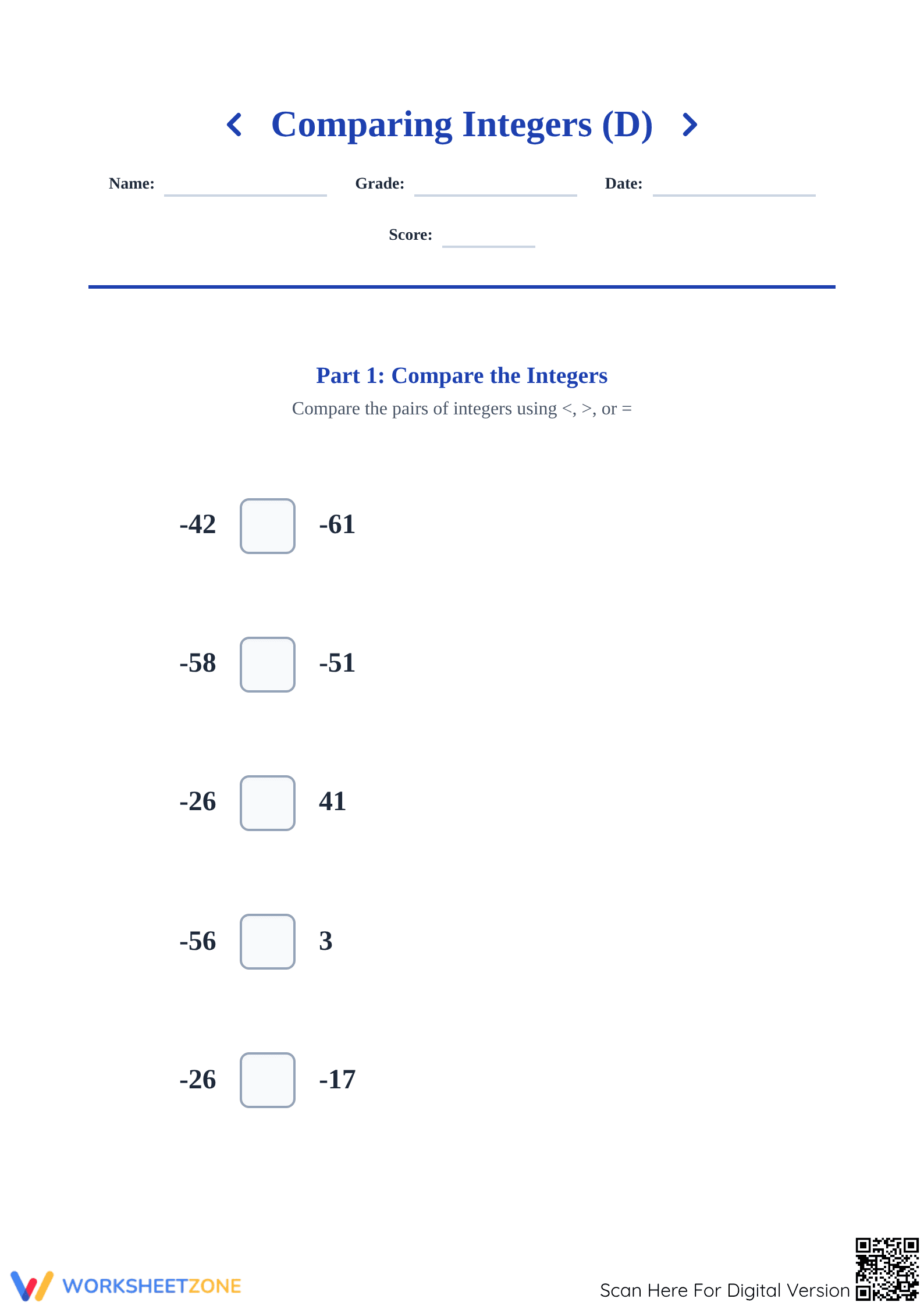
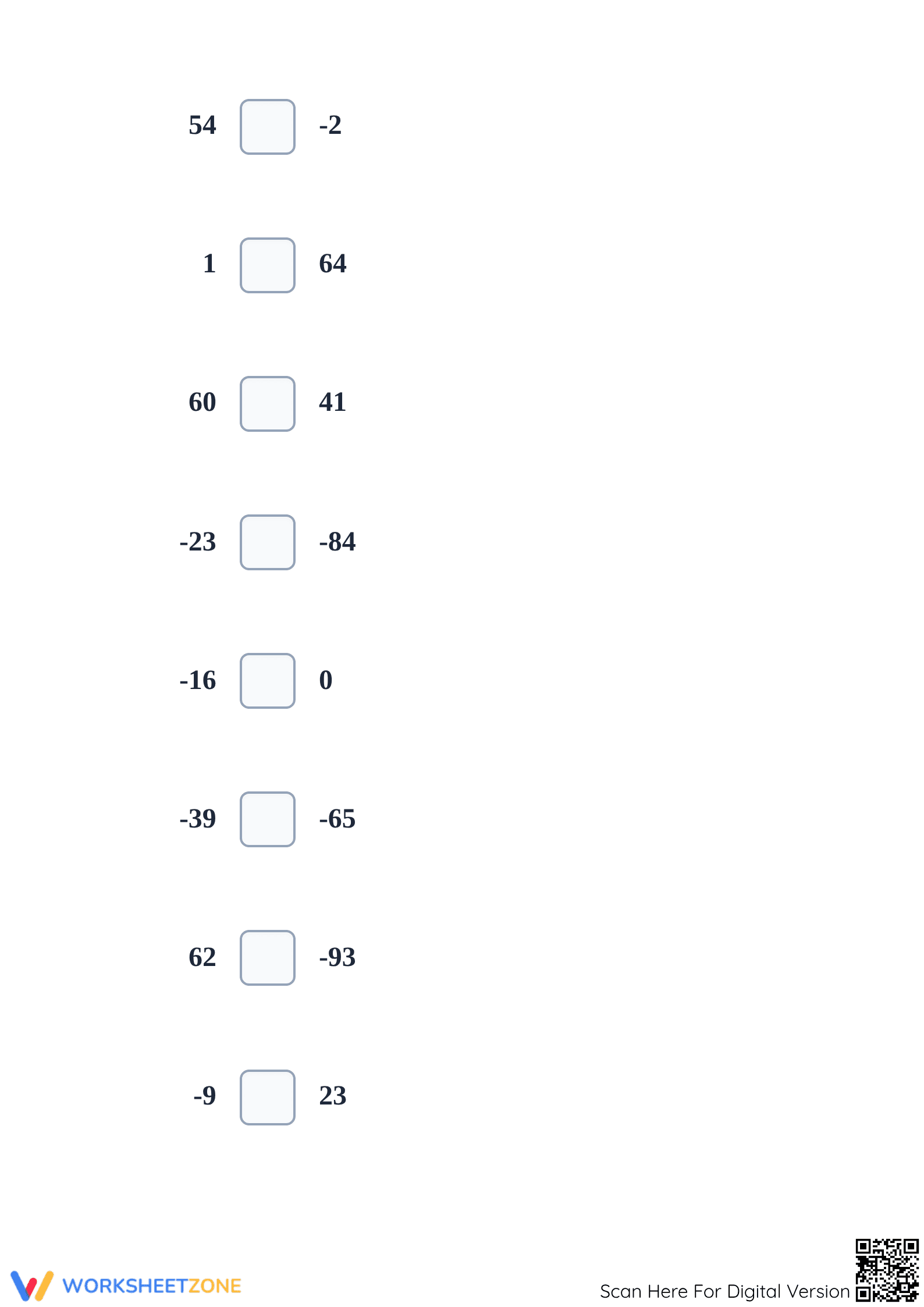
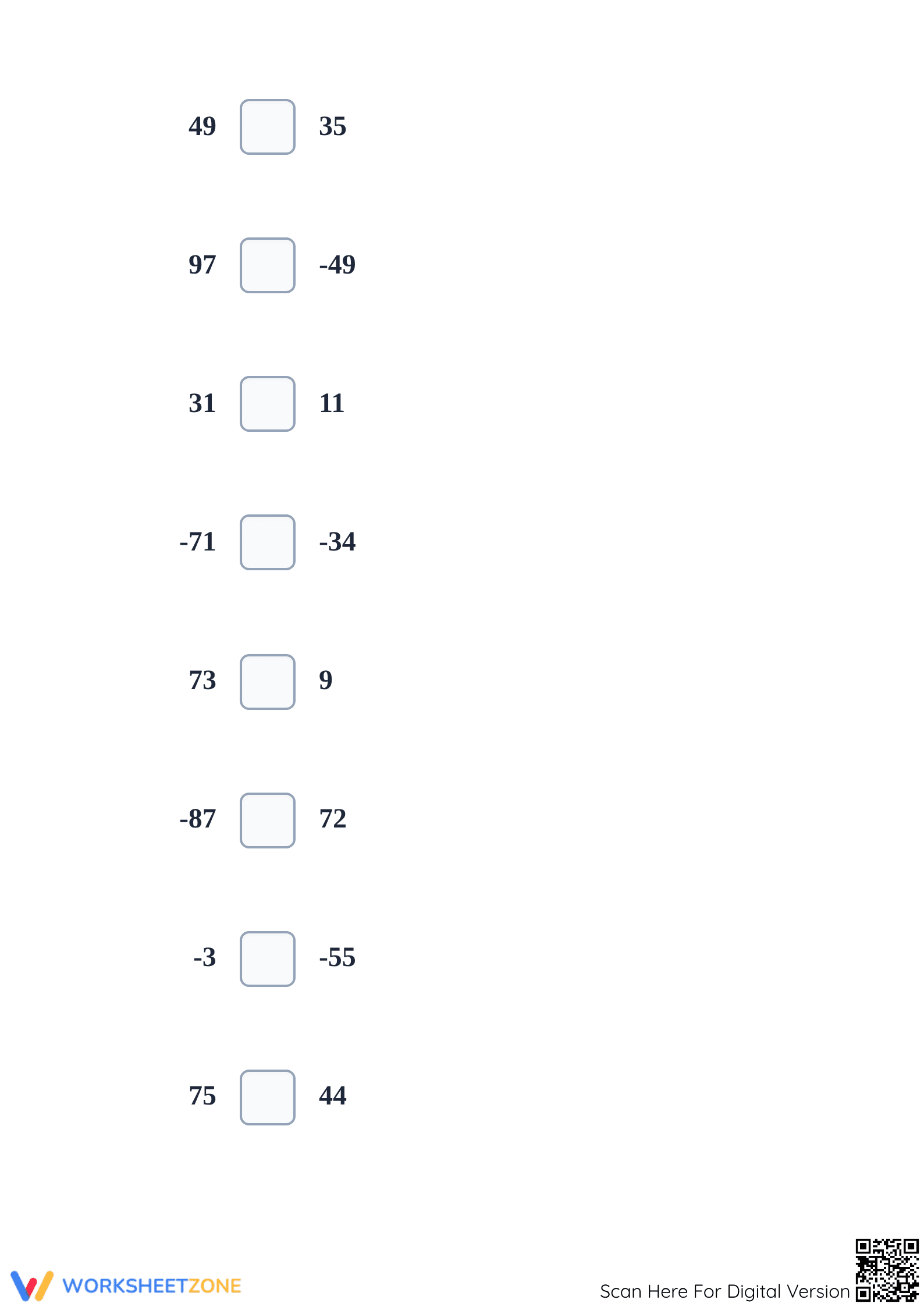
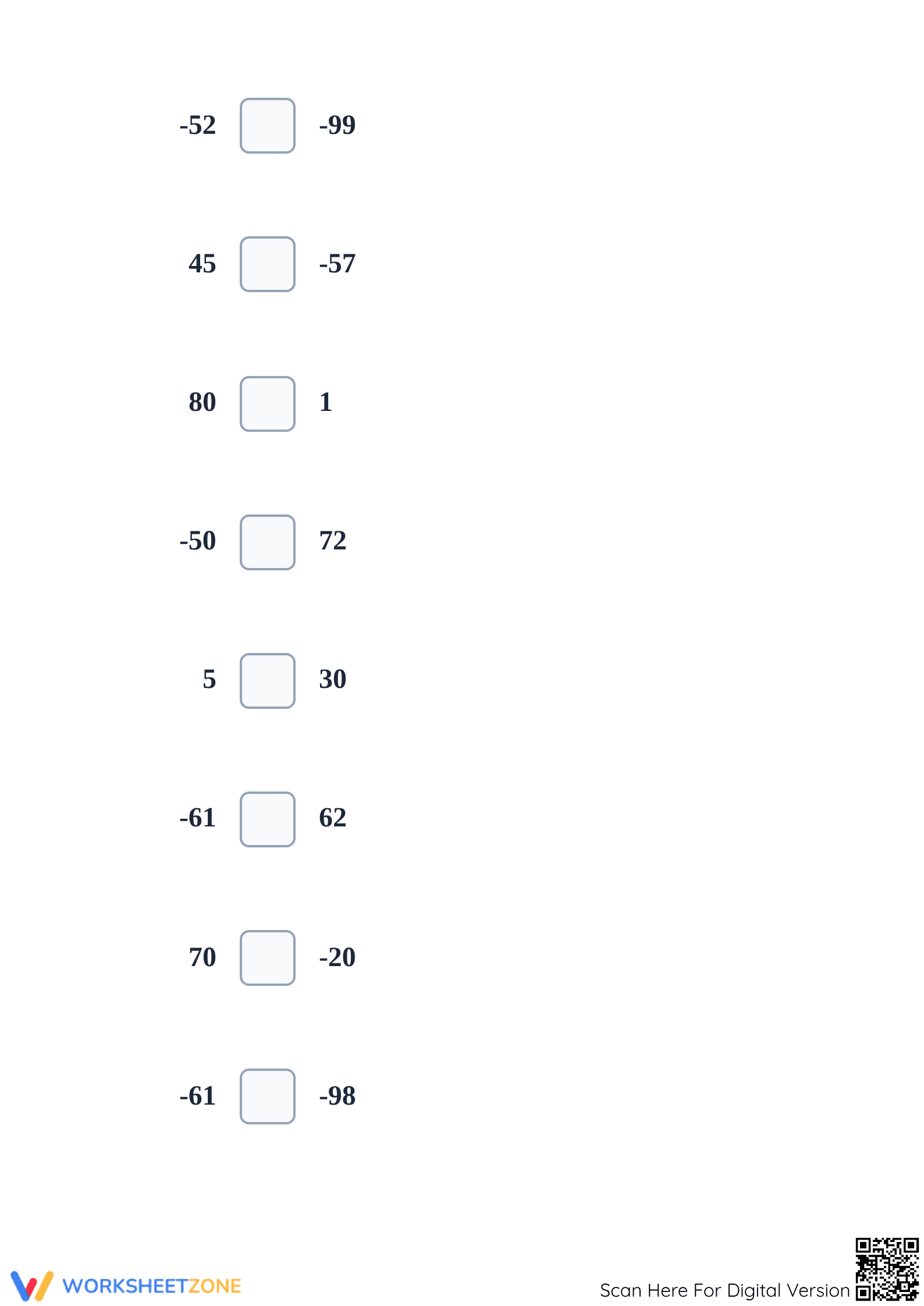
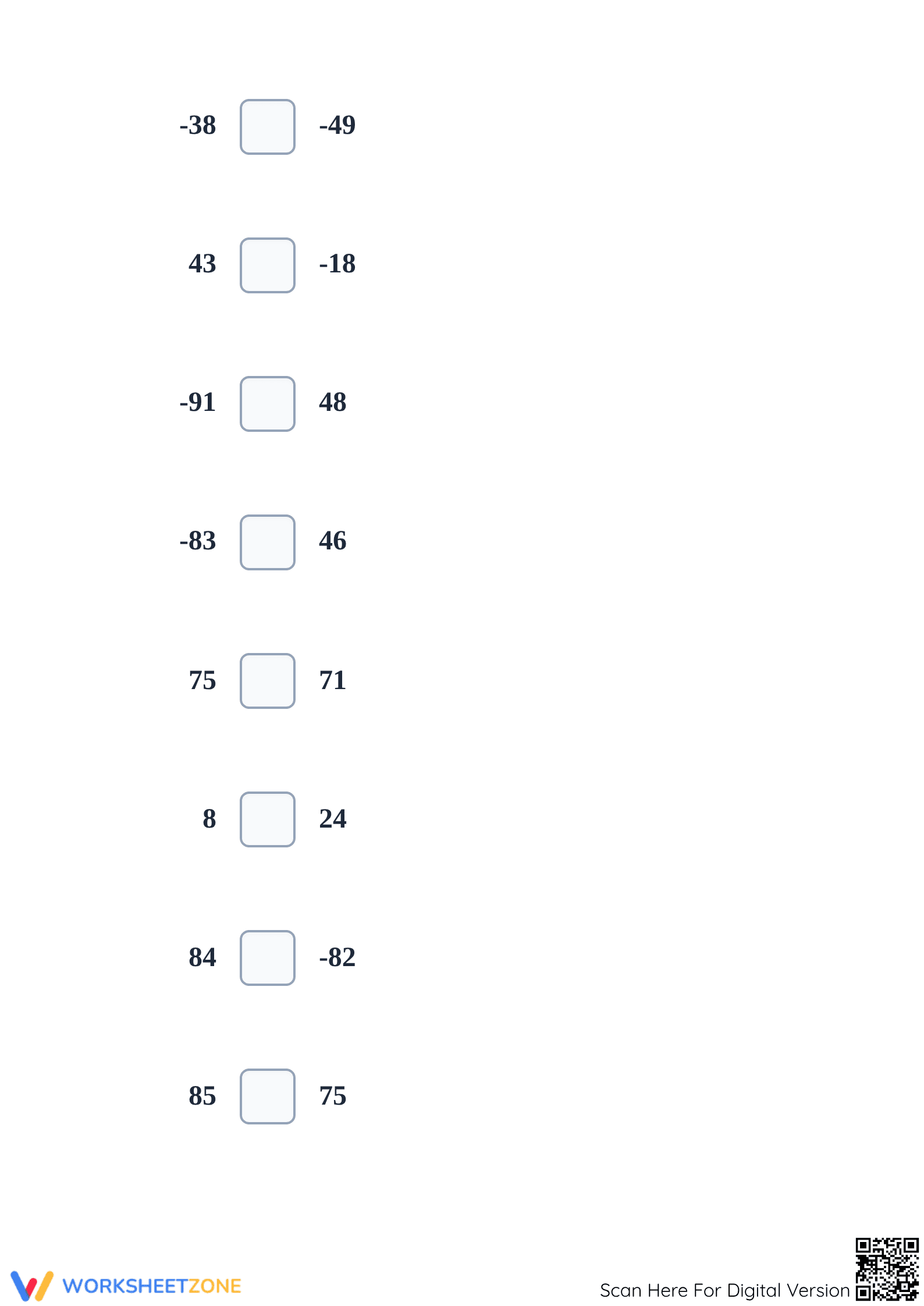

Essential Comparing Integers Worksheet | Grade 5 Math Ready
Paste this activity's link or code into your existing LMS (Google Classroom, Canvas, Teams, Schoology, Moodle, etc.).
Students can open and work on the activity right away, with no student login required.
You'll still be able to track student progress and results from your teacher account.
Master the relative values of positive and negative numbers with this focused integer comparison resource. Students will analyze pairs of integers ranging from -99 to 99, applying mathematical symbols to demonstrate their understanding of magnitude and direction. This exercise builds the essential number sense required for advanced operations and coordinate plane mastery.
At a Glance
- Grade: 5 · Subject: Math
- Standard:
CCSS.MATH.CONTENT.6.NS.C.7— Write and interpret statements of order for rational numbers in various contexts- Skill Focus: Comparing integers (-99 to 99)
- Format: 5 pages · 37 problems · Answer key included · PDF
- Best For: Independent practice and quick skill checks
- Time: 15–20 minutes
This comprehensive five-page packet features 37 distinct problems designed to challenge student perceptions of number value. Each page provides ample white space for students to work, with clear, legible typography. The resource includes a full answer key, enabling rapid grading or student self-correction. The problems specifically include tricky pairings, such as two negative numbers with high absolute values, to ensure deep conceptual understanding.
Zero-Prep Workflow
Teachers can implement this resource in under two minutes by following these simple steps. First, print the desired number of copies (10 seconds). Second, distribute the worksheets to students at the beginning of a lesson or as a transition activity (40 seconds). Finally, use the provided answer key for a whole-class review or individual feedback session (60 seconds). This streamlined process makes it an ideal choice for emergency sub plans or supplemental homework assignments.
This resource is aligned to `CCSS.MATH.CONTENT.6.NS.C.7`. This standard requires students to understand that a number's position on a number line determines its value relative to other numbers. Both standard codes can be copied directly into lesson plans, IEP goals, or district curriculum mapping tools.
How to Use It
Use this worksheet as a formative assessment during the "You Do" phase of a gradual release lesson on the number system. As students work, circulate and observe if they are using a mental number line or if they are still struggling with the concept that -61 is actually smaller than -42. For an extension, have students explain their reasoning for three specific problems using "less than" or "greater than" terminology.
Who It's For
This tool is designed for fifth-grade students ready for pre-algebra concepts or sixth-grade students needing remediation. It serves as a natural pairing with a lesson on absolute value or a direct instruction session involving a vertical thermometer model. It is particularly effective for learners who benefit from repetitive, high-success practice.
This Grade 5 comparing integers worksheet provides essential practice for students developing their understanding of the number system and rational number values. By evaluating pairs of integers ranging from -99 to 99, learners move beyond basic arithmetic to conceptualize the relative position of negative numbers on a horizontal or vertical line. According to the RAND AIRS 2024 report, high-quality, targeted practice with integer comparisons is a fundamental building block for future success in algebra and coordinate geometry. The 37 structured problems in this PDF document challenge students to apply the symbols for less than, greater than, and equal to with precision. Research from EdReports 2024 emphasizes that mastering the ordering of rational numbers, as defined in CCSS.MATH.CONTENT.6.NS.C.7, prevents common misconceptions regarding absolute value versus relative value. This printable resource ensures students can accurately explain why a larger absolute value does not always represent a larger integer, providing a robust foundation for middle school mathematics.


