




























Views
Downloads
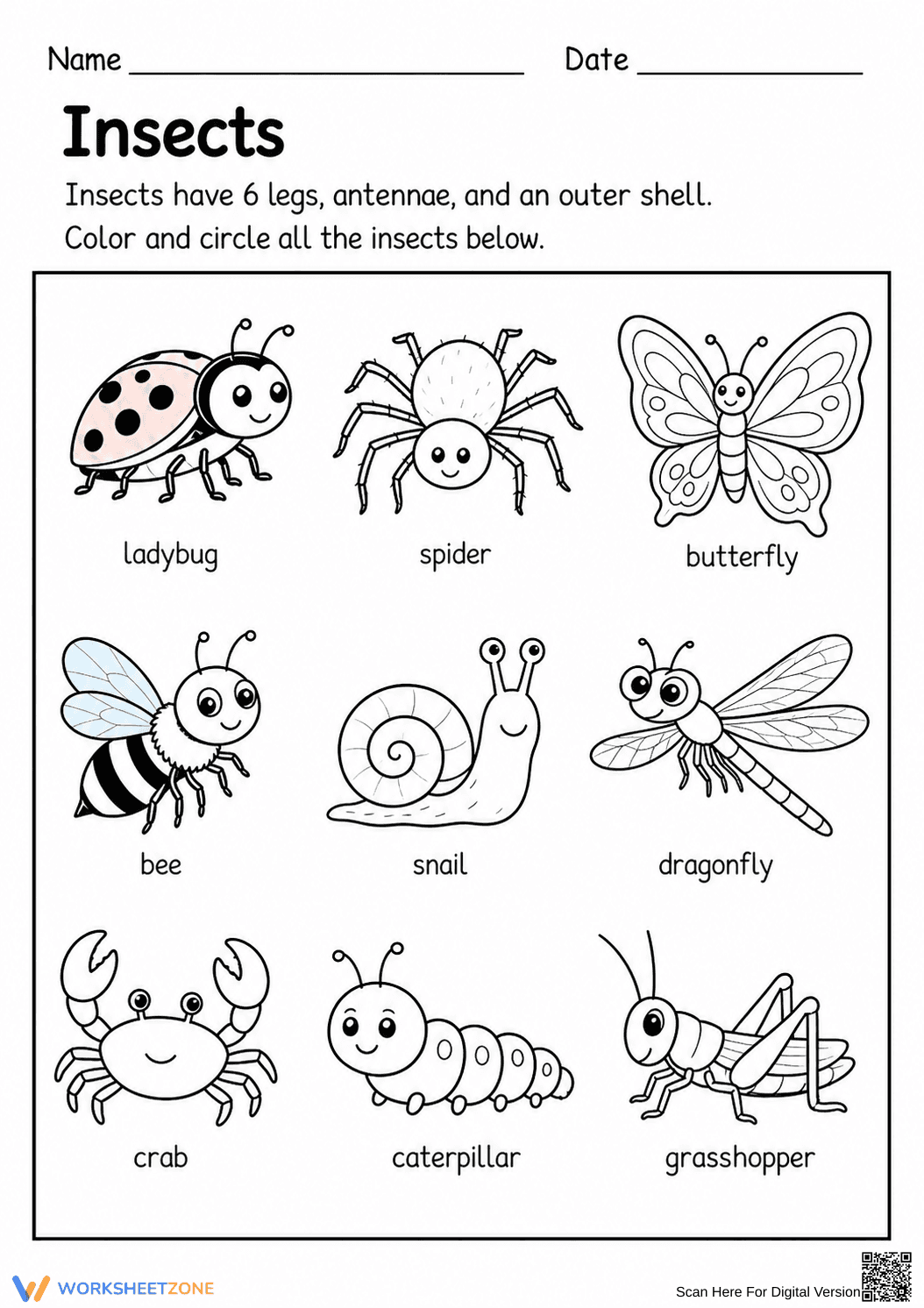

Grade K Insect Identification — Printable No-Prep Worksheet

Paste this activity's link or code into your existing LMS (Google Classroom, Canvas, Teams, Schoology, Moodle, etc.).
Students can open and work on the activity right away, with no student login required.
You'll still be able to track student progress and results from your teacher account.
This insect identification worksheet helps early learners master animal classification by distinguishing true insects from other small creatures. Students observe nine different animals, applying specific criteria like leg count and antennae presence to circle and color the correct bugs, building foundational observation skills essential for early biological science.
At a Glance
- Grade: Kindergarten · Subject: Science
- Standard:
K-LS1-1— Use observations to describe patterns in the natural world- Skill Focus: Insect Identification
- Format: 1 page · 9 problems · Answer key included · PDF
- Best For: No-prep science centers or morning work
- Time: 10–15 minutes
This single-page PDF features nine clearly labeled illustrations of common small animals, including a ladybug, spider, crab, and grasshopper. The top of the page provides a concise, student-friendly definition of insect characteristics—specifically noting six legs, antennae, and an outer shell—serving as a permanent reference. The layout is clean and wide-spaced, perfect for fine-motor development through circling and coloring activities, and includes a complete answer key for quick grading.
Zero-Prep Workflow
Integrating this activity into your science block requires virtually zero teacher preparation. First, print the single-sheet PDF (30 seconds). Next, distribute it to your students along with crayons or markers (1 minute). Finally, facilitate a quick group review of the findings once completed (5 minutes). This streamlined workflow makes the worksheet an ideal solution for emergency substitute plans, morning work transitions, or as a quiet supplemental activity during small-group science rotations.
Standards Alignment
This resource is explicitly aligned to K-LS1-1, which requires students to use observations to describe patterns of what plants and animals need to survive and how they are structured. By identifying common anatomical traits among diverse insects, students practice evidence-based classification. Both standard codes can be copied directly into lesson plans, IEP goals, or district curriculum mapping tools.
How to Use It
Use this worksheet during the direct instruction phase of a science lesson on living things. Before students begin, read the insect definition aloud and have them count the legs on the ladybug illustration together. While students work independently, observe if they correctly exclude the spider and crab, which serves as an immediate formative-assessment check on their understanding of classification rules and animal traits. Expect students to complete the task within 10 to 15 minutes.
Who It's For
This activity is designed for Preschool, Kindergarten, and Grade 1 students, with a strong focus on visual learners and those developing early literacy skills. It is particularly effective for English Language Learners due to the clear image-to-word pairing for each animal. Pair this worksheet with a living things anchor chart or a short informational text about backyard habitats for a comprehensive and engaging science unit.
Classification activities in early childhood are critical for developing the cognitive frameworks necessary for scientific inquiry. According to Fisher & Frey (2014), purposeful practice in identifying patterns—such as the anatomical traits of insects versus other arthropods—supports the development of academic vocabulary and observational rigor. This Grade K science worksheet leverages structured observation to help students move from general curiosity to systematic categorization. By requiring students to circle and color specifically identified insects, the task reinforces the K-LS1-1 standard through tactile engagement and visual discrimination. Research suggests that combining visual identification with physical actions like coloring increases retention of biological concepts in young learners. This resource provides a reliable, evidence-based method for assessing early mastery of animal groups within a primary science curriculum, ensuring students are ready for more complex biological studies.


