


























Views
Downloads

Essential Inference Worksheet: Great Expectations | Grade 4
Paste this activity's link or code into your existing LMS (Google Classroom, Canvas, Teams, Schoology, Moodle, etc.).
Students can open and work on the activity right away, with no student login required.
You'll still be able to track student progress and results from your teacher account.
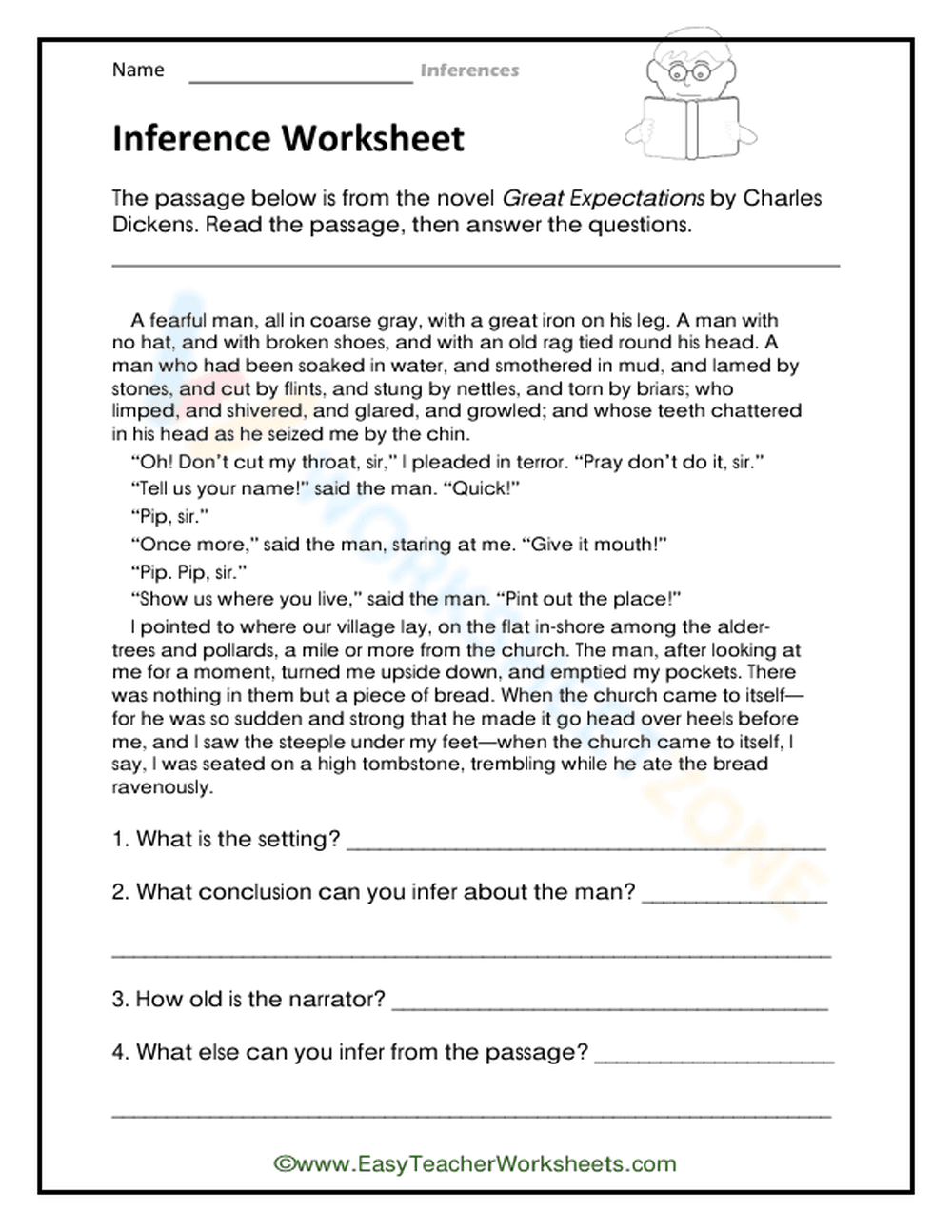
This Grade 4 inference worksheet uses a classic passage from Great Expectations to help students master drawing logical conclusions from text evidence. By analyzing character descriptions and setting details, students learn to synthesize implicit information into clear, evidence-based answers. This exercise strengthens critical reading comprehension and literary analysis skills essential for upper elementary success.
At a Glance
- Grade: 4 · Subject: ELA
- Standard:
RL.4.1— Refer to text details when drawing inferences- Skill Focus: Literary Inference
- Format: 1 page · 4 problems · Answer key included · PDF
- Best For: Literacy centers and independent reading practice
- Time: 15–20 minutes
This resource features a high-interest excerpt from Great Expectations by Charles Dickens, chosen for its rich descriptive language and clear subtext. The single-page PDF includes four targeted questions that prompt students to identify the setting, conclude details about the man’s character, determine the narrator’s age, and make general inferences. A comprehensive answer key is included to facilitate quick grading and provide students with immediate feedback on their analytical reasoning.
The zero-prep workflow for this worksheet ensures it is ready for immediate classroom use. First, print the single-page document (30 seconds). Next, distribute the copies for independent work (1 minute). Finally, review the answers using the provided key during a debrief (1 minute). This process requires less than three minutes of total teacher preparation time, making it an ideal choice for emergency sub plans or quick bell-ringer activities.
The primary alignment is RL.4.1: "Refer to details and examples in a text when explaining what the text says explicitly and when drawing inferences from the text." This worksheet supports the development of textual evidence skills by requiring students to look beyond literal words to understand character. Standard codes can be copied directly into lesson plans, IEP goals, or district curriculum mapping tools.
Use this worksheet during the independent practice phase of a reading lesson. It serves as an excellent formative assessment to check for understanding of how to use descriptive clues to build meaning. Teachers should observe whether students are pulling specific words like "coarse gray" to support their inferences. Completion time is typically 15 to 20 minutes for most elementary learners.
This resource is designed for Grade 4 students, though it is highly suitable for Grade 3 students needing a challenge or Grade 5 students requiring a review of literary evidence. It is particularly effective for learners who benefit from short, focused passages rather than full-length stories. Pair this worksheet with an anchor chart on "The Inference Equation" for a complete instructional experience that builds confidence in literary analysis.
Research from Fisher & Frey (2014) emphasizes that close reading of complex texts, such as those by Charles Dickens, is vital for developing the inferential reasoning skills required by standards like RL.4.1. This worksheet provides a structured environment where students bridge the gap between literal observation and abstract interpretation, a cognitive process that NAEP data identifies as a key differentiator for proficient readers. By engaging with 4 high-quality questions based on authentic literature, students practice the rigorous extraction of meaning that characterizes successful independent reading. This targeted approach aligns with findings from RAND AIRS 2024, which highlight the importance of high-leverage practice in building durable reading comprehension strategies. The plain-English skill of making inferences from literary text is reinforced through this printable PDF format, ensuring that students are prepared for the increased demands of middle school ELA coursework.


