


























Views
Plays
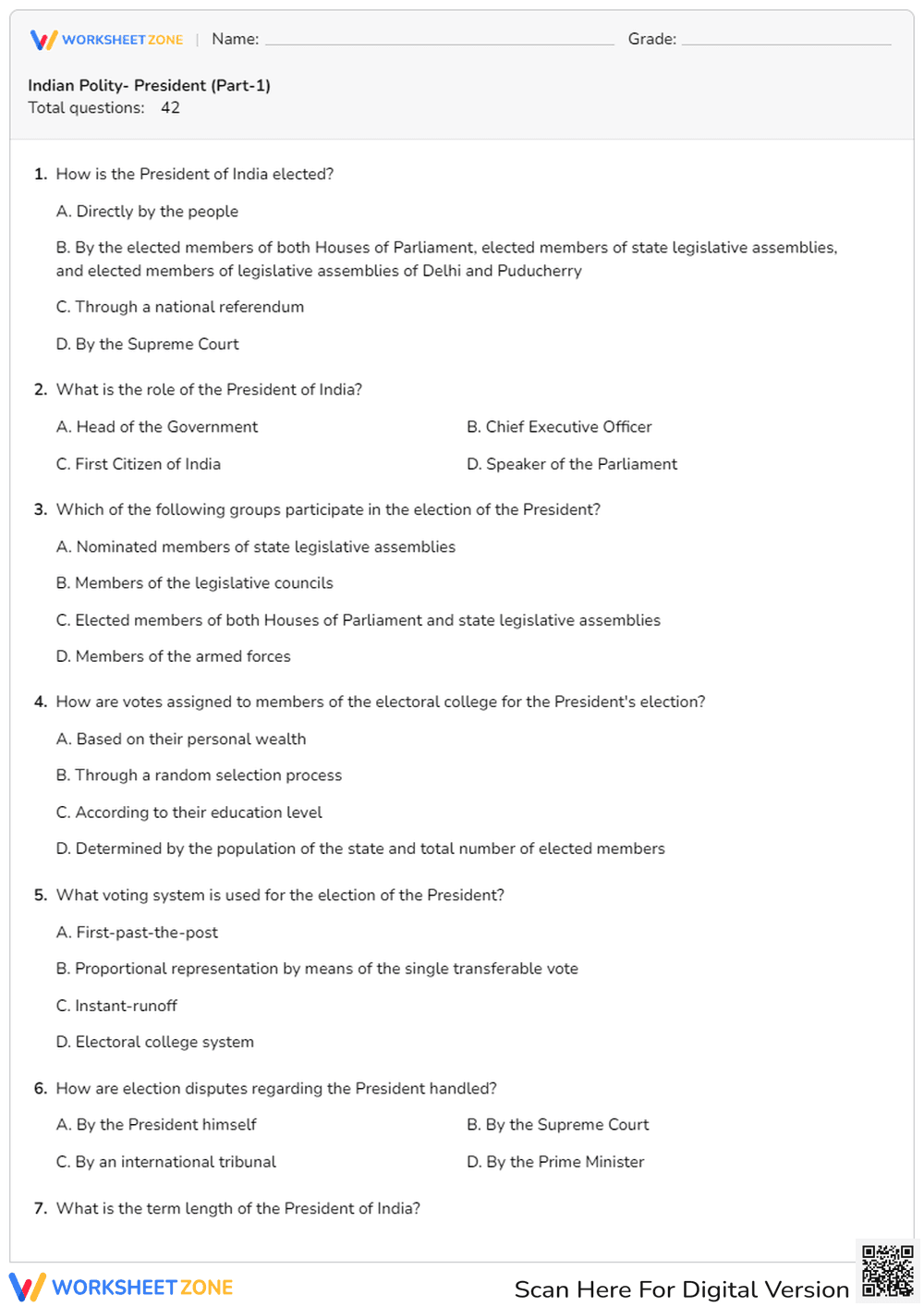
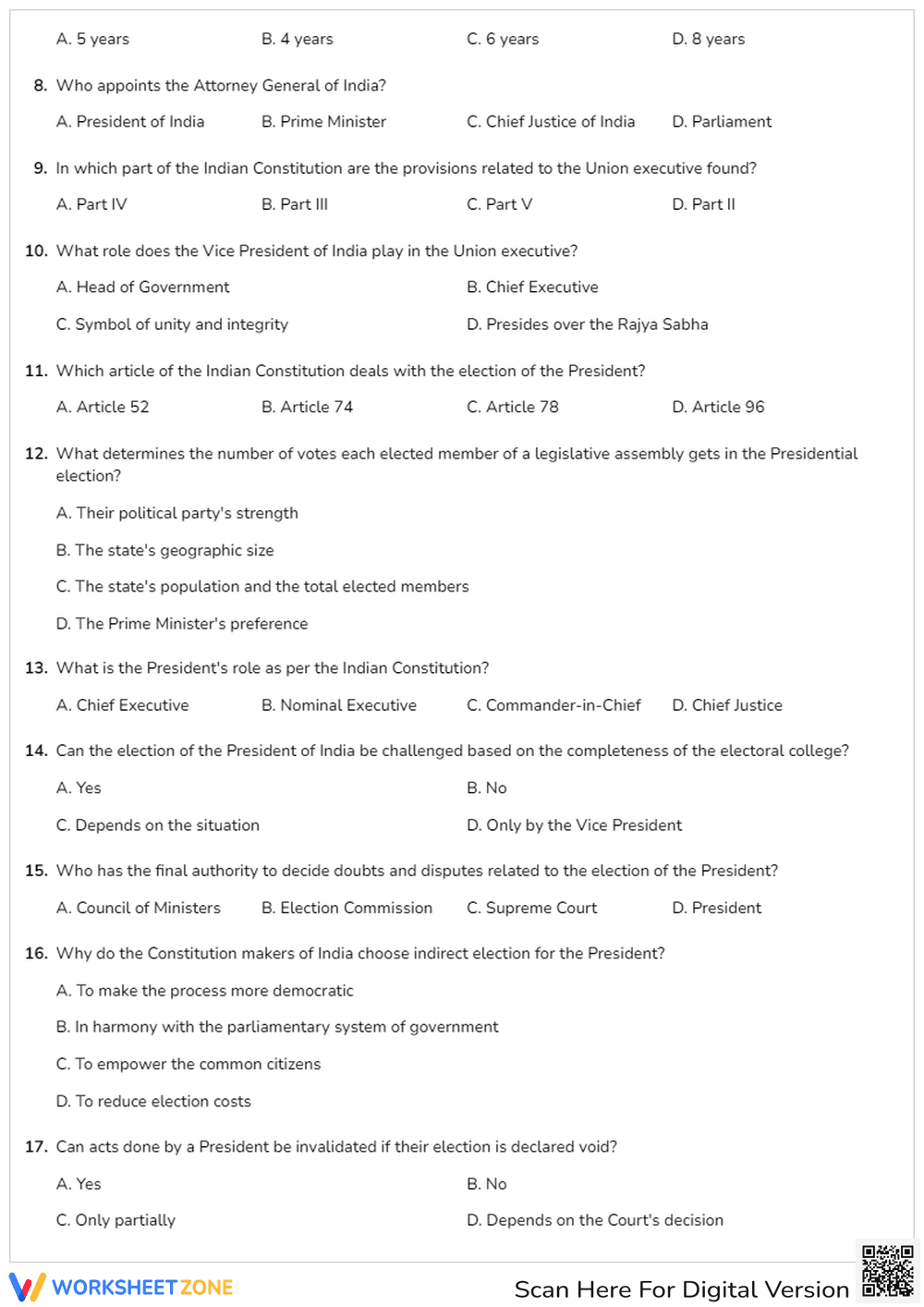
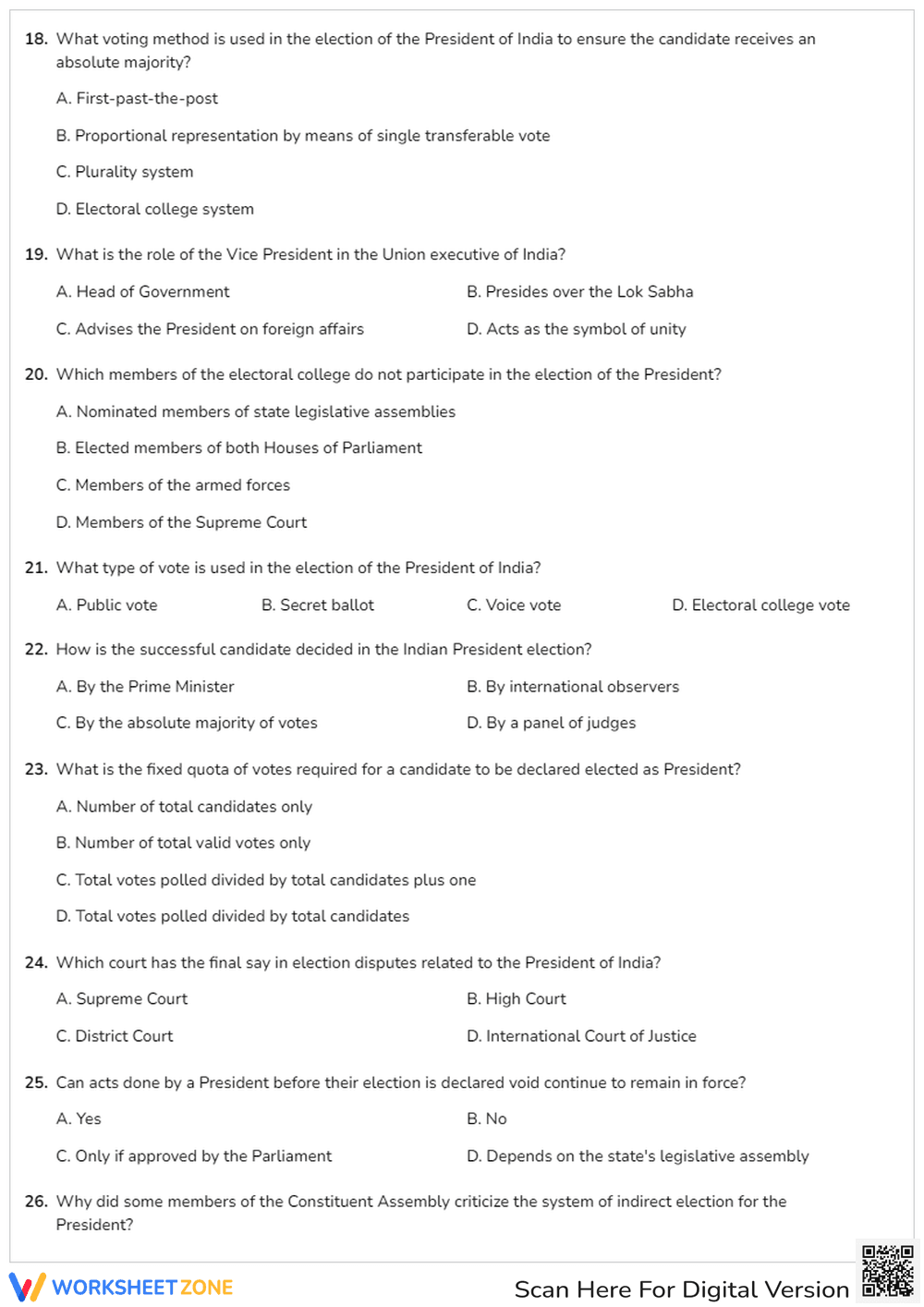
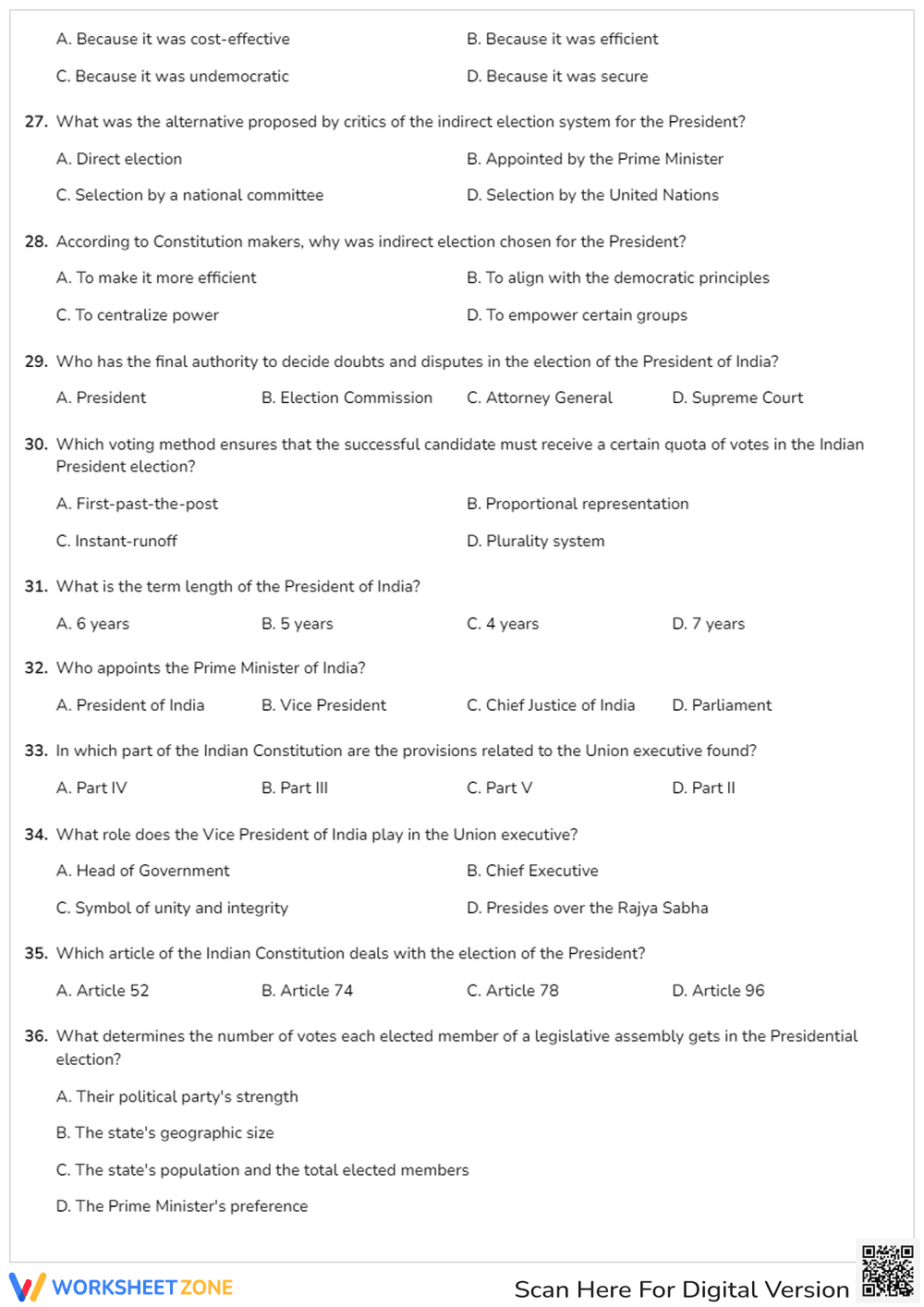
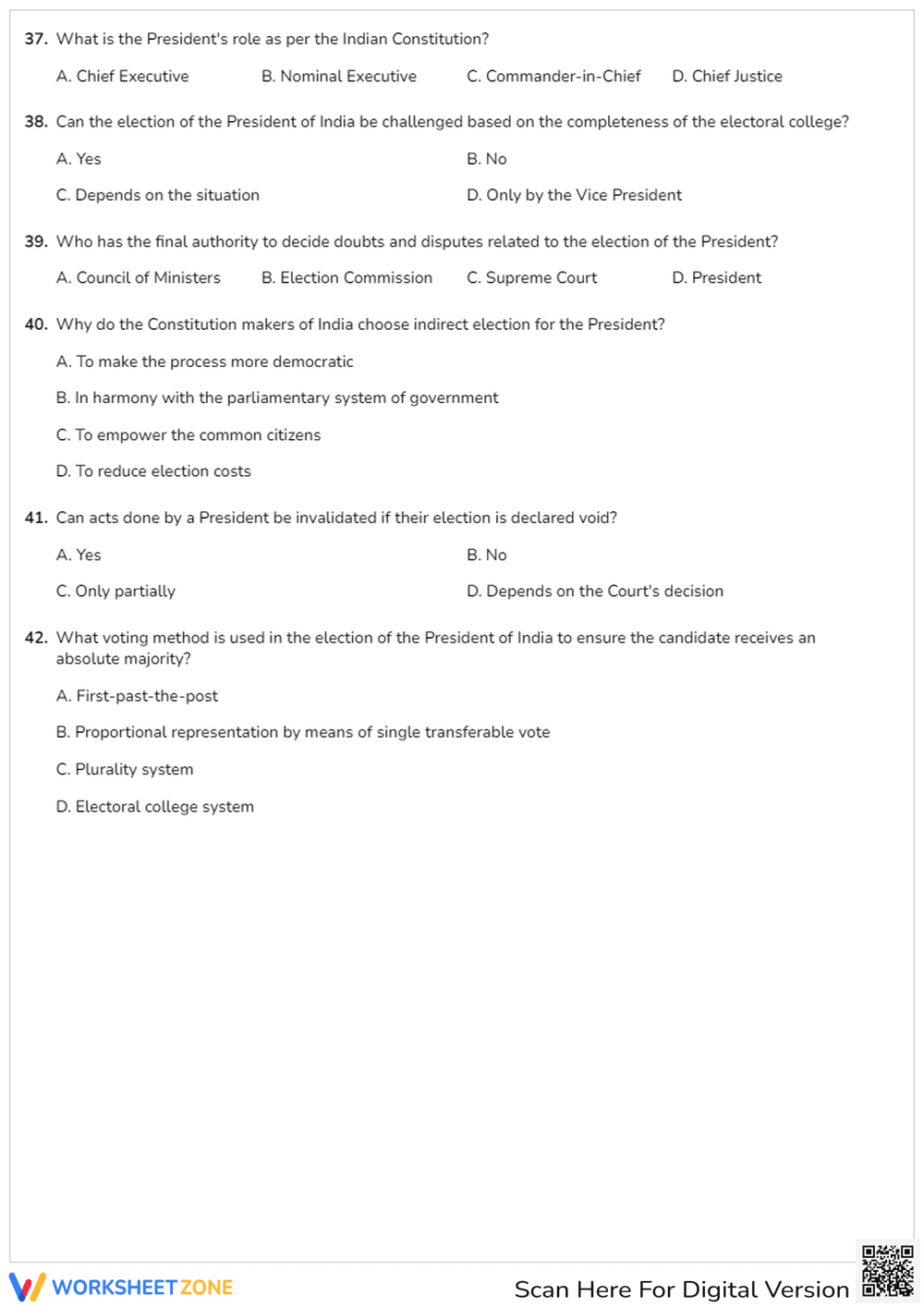

Indian Polity: President Quiz | Essential Grade 10-12
Paste this activity's link or code into your existing LMS (Google Classroom, Canvas, Teams, Schoology, Moodle, etc.).
Students can open and work on the activity right away, with no student login required.
You'll still be able to track student progress and results from your teacher account.
This comprehensive Indian Polity worksheet provides students with a detailed exploration of the constitutional role and election process of the President of India. By engaging with 42 targeted multiple-choice questions, learners demonstrate mastery over the Union executive branch and specific constitutional articles. It is designed to ensure students understand the nuances of indirect elections and executive authority.
At a Glance
- Grade: 10-12 · Subject: Civics & Government
- Standard:
CCSS.ELA-LITERACY.RH.11-12.3— Evaluate complex sets of ideas or sequences of events in social studies- Skill Focus: Indian Executive Branch & Constitutional Law
- Format: 5 pages · 42 problems · Answer key included · PDF
- Best For: Unit assessment or exam preparation
- Time: 45–60 minutes
This 5-page PDF contains a robust collection of 42 multiple-choice questions covering the President's election, term length, and constitutional powers. The layout is clean and professional, featuring a clear header for student names and grades. Each question is designed to test both factual recall and conceptual understanding of the Indian Constitution, specifically focusing on Part V and relevant articles like Article 52.
Teachers can implement this resource in under two minutes. Simply print the 5-page document, distribute it to the class, and use the included answer key for rapid grading. Because the questions are self-contained and require no external research during the session, this worksheet serves as an ideal sub-plan or a quiet-work assessment during high-stakes testing weeks.
The primary standard addressed is `CCSS.ELA-LITERACY.RH.11-12.3`, which requires students to evaluate complex sets of ideas or sequences of events. This worksheet challenges students to analyze the sequence of the presidential election and the interplay between different branches of the Indian government. Both standard codes can be copied directly into lesson plans, IEP goals, or district curriculum mapping tools.
Use this worksheet as a summative assessment after completing a unit on the Indian Union Executive. It is particularly effective for identifying misconceptions regarding the electoral college and the difference between nominal and real executive power. Formative tip: Observe which students struggle with the distinction between direct and indirect elections to guide your next review session. Completion typically takes 50 minutes.
This resource is tailored for high school students in Grades 10 through 12, as well as college-level introductory political science courses. It is an excellent pairing for a primary source reading of the Indian Constitution or a lecture on comparative government systems.
According to the RAND AIRS 2024 report on social studies pedagogy, structured retrieval practice through multiple-choice assessments significantly improves long-term retention of complex political structures. This worksheet leverages that principle by presenting 42 distinct tasks that require students to recall and apply constitutional law. By focusing on the specific skill of evaluating the Indian executive branch, the resource aligns with rigorous academic expectations for secondary education. The use of CCSS.ELA-LITERACY.RH.11-12.3 ensures that students are not merely memorizing facts but are analyzing the structural logic of a national government. Research from Fisher & Frey (2014) supports this gradual release of responsibility, where a comprehensive quiz acts as the final check for independent mastery. This assessment provides the necessary data for educators to verify student readiness for advanced examinations in civics and government.


