


























Views
Downloads

Essential Simple Machines Worksheet | Grade 1 Science
Paste this activity's link or code into your existing LMS (Google Classroom, Canvas, Teams, Schoology, Moodle, etc.).
Students can open and work on the activity right away, with no student login required.
You'll still be able to track student progress and results from your teacher account.
Identifying simple machines helps first graders understand how tools make work easier by changing the direction or strength of a force. This printable worksheet provides a structured way for students to recognize everyday objects like shovels and bicycles as complex or simple machines. By connecting scientific concepts to real-world items, learners build a foundation for physical science and engineering.
At a Glance
- Grade: 1 · Subject: Science
- Standard:
K-2-PS2-1— Plan and conduct investigations to compare the effects of pushes and pulls on objects.- Skill Focus: Identifying simple machines (wheel, lever, wedge, screw)
- Format: 2 pages · 6 problems · Answer key included · PDF
- Best For: Independent practice or quick formative assessment
- Time: 10–15 minutes
What's Inside
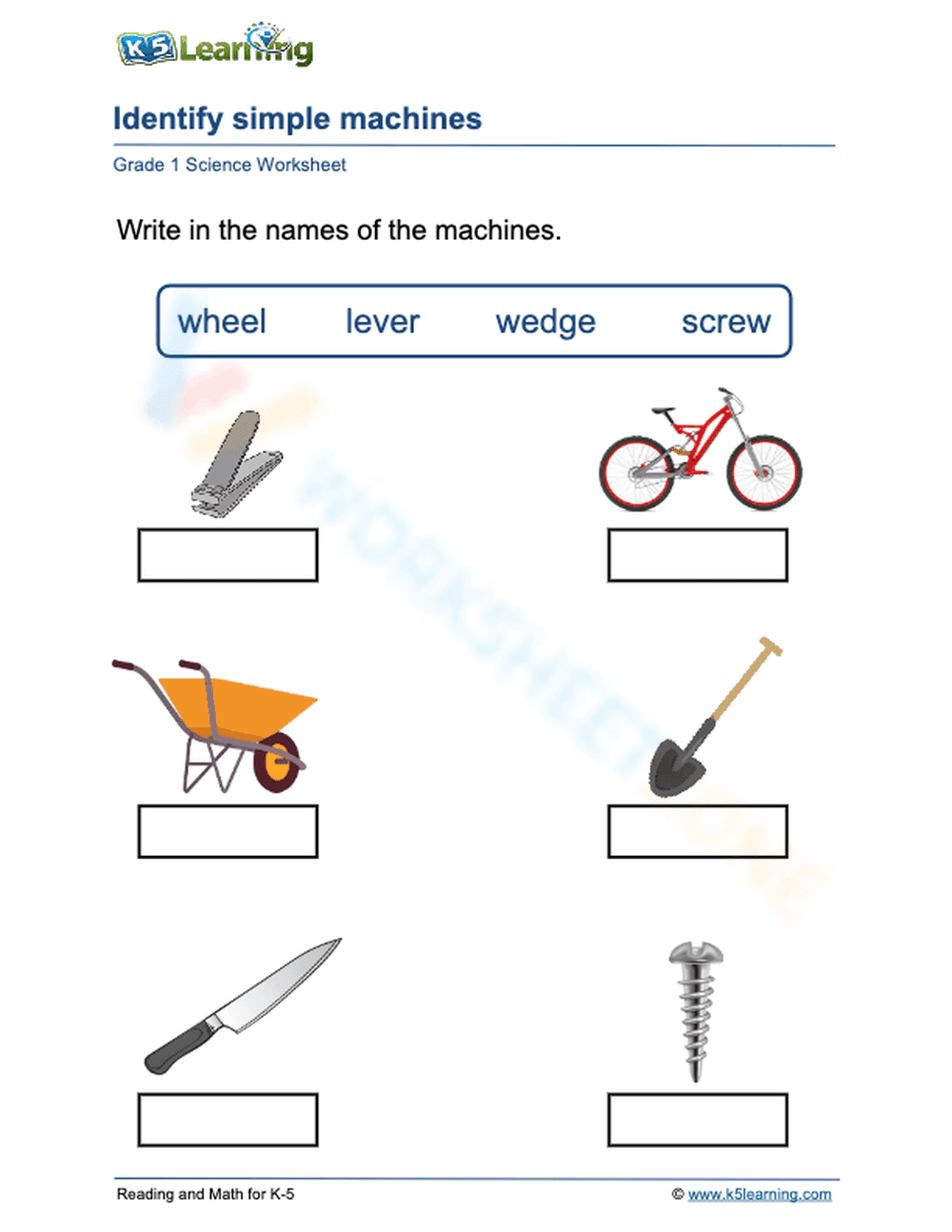
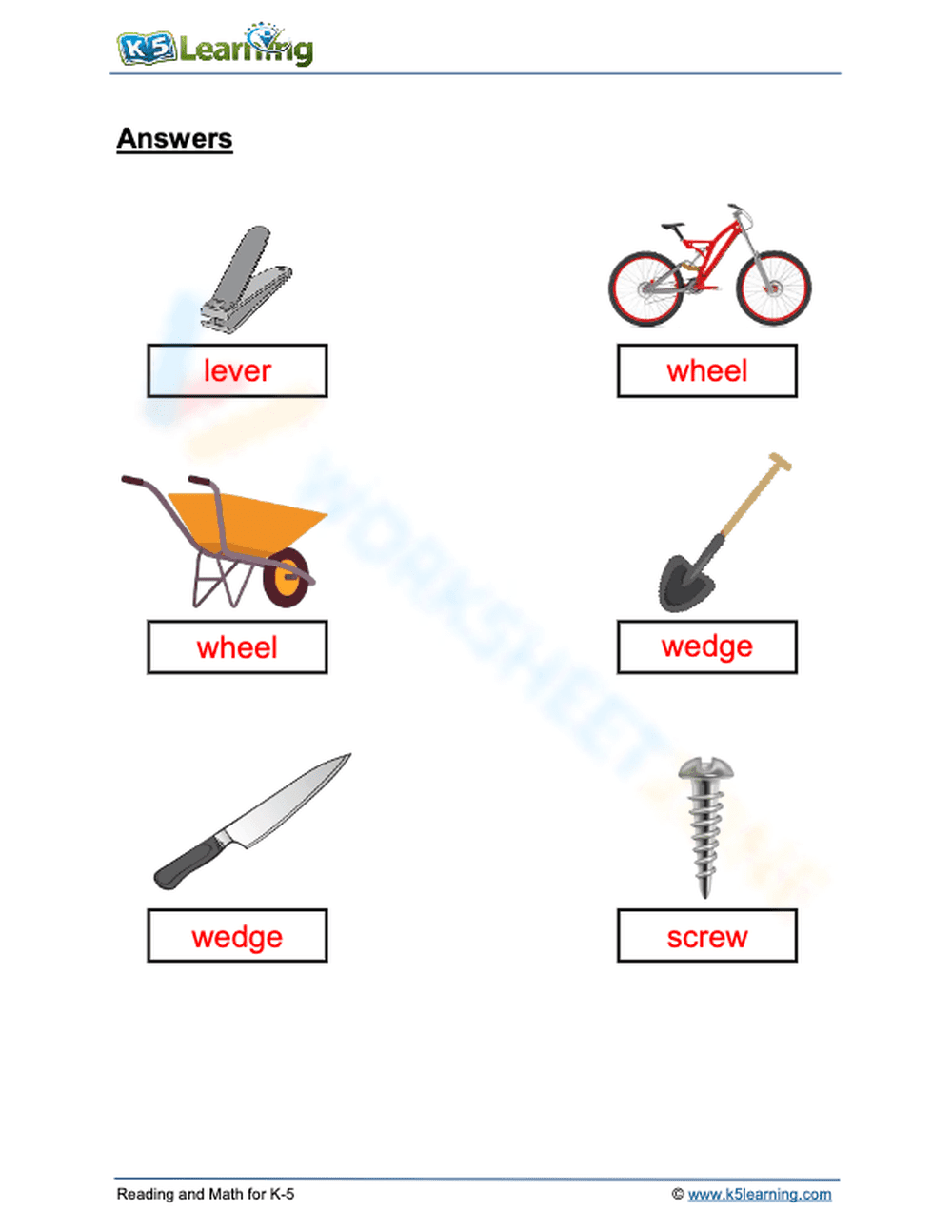
The resource consists of a single-page student worksheet and a corresponding answer key. The worksheet features six clear illustrations of common tools and machines, including a nail clipper, a bicycle, a wheelbarrow, a shovel, a knife, and a screw. A helpful word bank containing "wheel," "lever," "wedge," and "screw" is provided at the top to scaffold the identification process for early readers and writers.
Zero-Prep Workflow
Implementing this lesson requires zero teacher preparation. Step 1: Print the single-page worksheet for each student (1 minute). Step 2: Distribute copies and have students use the word bank to label the six machines (10 minutes). Step 3: Review the answers using the provided answer key to address misconceptions immediately (2 minutes). It is a perfect choice for emergency sub plans or quick bell-ringer activities.
Standards Alignment
This worksheet is aligned to K-2-PS2-1, focusing on the effects of pushes and pulls on objects. By identifying levers and wedges, students analyze tools designed to redirect these forces. This alignment supports the broader NGSS goal of understanding physical interactions and engineering design. Both standard codes can be copied directly into lesson plans, IEP goals, or district curriculum mapping tools.
How to Use It
Use this worksheet as a concluding activity after a direct instruction lesson on simple machines to check for understanding. It serves as an excellent formative assessment to see if students can distinguish between a wedge (knife) and a lever (nail clipper). Alternatively, assign it as a homework task to encourage students to look for these machines in their own homes. Expect most students to complete the identification within 15 minutes.
Who It's For
This resource is designed for Grade 1 students beginning physical science. It is effective for English Language Learners who benefit from visual cues and the word bank. It pairs naturally with hands-on exploration of real tools or a reading passage about how machines help people in various professions.
Research indicates that early exposure to engineering concepts, such as identifying simple machines, significantly improves scientific literacy and critical thinking skills in primary grades. According to Fisher & Frey (2014), the use of visual scaffolds like labeled diagrams and word banks supports the gradual release of responsibility model, allowing students to move from guided recognition to independent mastery of technical vocabulary. This Grade 1 worksheet addresses K-2-PS2-1 by requiring students to classify tools based on their mechanical function. By connecting abstract concepts like "wedge" and "screw" to tangible items like knives and fasteners, the activity reinforces the understanding that machines are designed solutions to physical problems. Such foundational knowledge is essential for meeting NAEP science standards and prepares students for more complex investigations into force and motion in later elementary years. This resource ensures that learners can accurately identify tools that facilitate work.


