




























Views
Downloads

Human Population Growth Worksheet | Essential Grade 10-12

Paste this activity's link or code into your existing LMS (Google Classroom, Canvas, Teams, Schoology, Moodle, etc.).
Students can open and work on the activity right away, with no student login required.
You'll still be able to track student progress and results from your teacher account.
This Grade 10-12 biology worksheet provides a comprehensive historical and analytical overview of human population dynamics. Students will evaluate the causes and effects of global growth trends, from the agricultural revolution to modern medicine, while mastering the demographic transition model. By the end of this activity, learners will be able to predict future growth patterns using real-world age structure data from diverse nations.
At a Glance
- Grade: 10-12 · Subject: Biology
- Standard:
HS-LS2-1— Use data to explain factors affecting population size and carrying capacity- Skill Focus: Demographic Transition & Age Structure Analysis
- Format: 4 pages · 12 problems · Answer key included · PDF
- Best For: Independent practice or emergency sub plans
- Time: 45–60 minutes
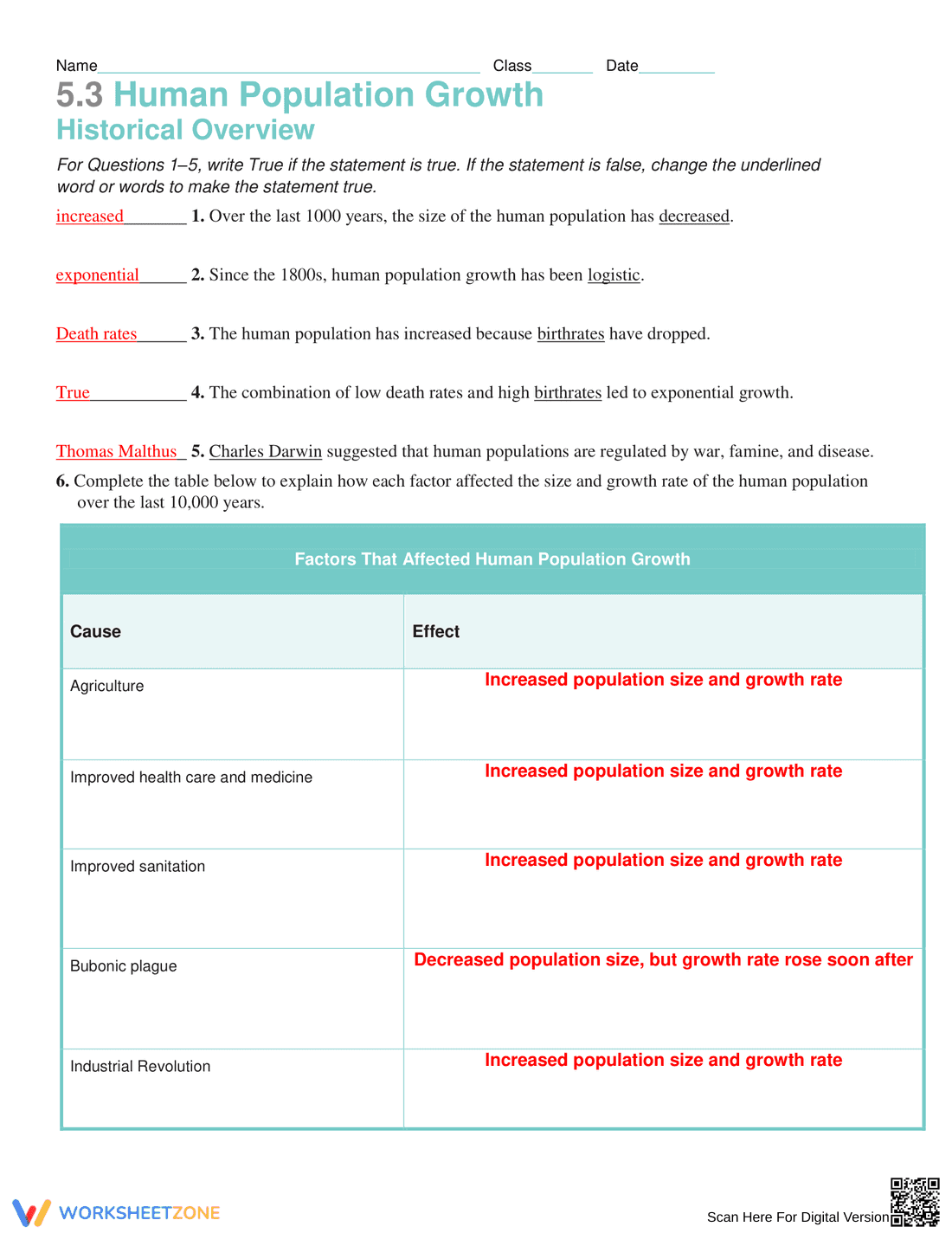
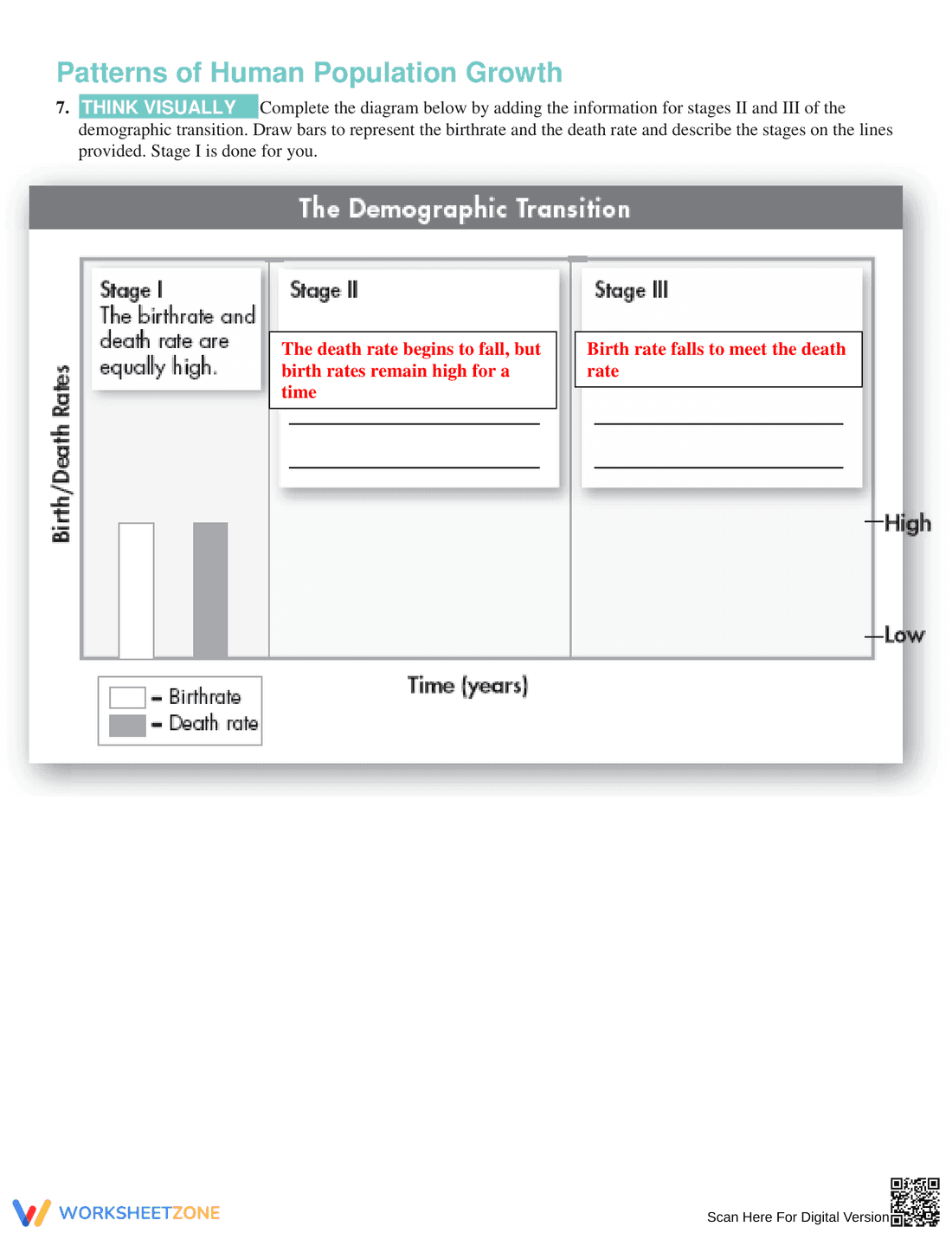
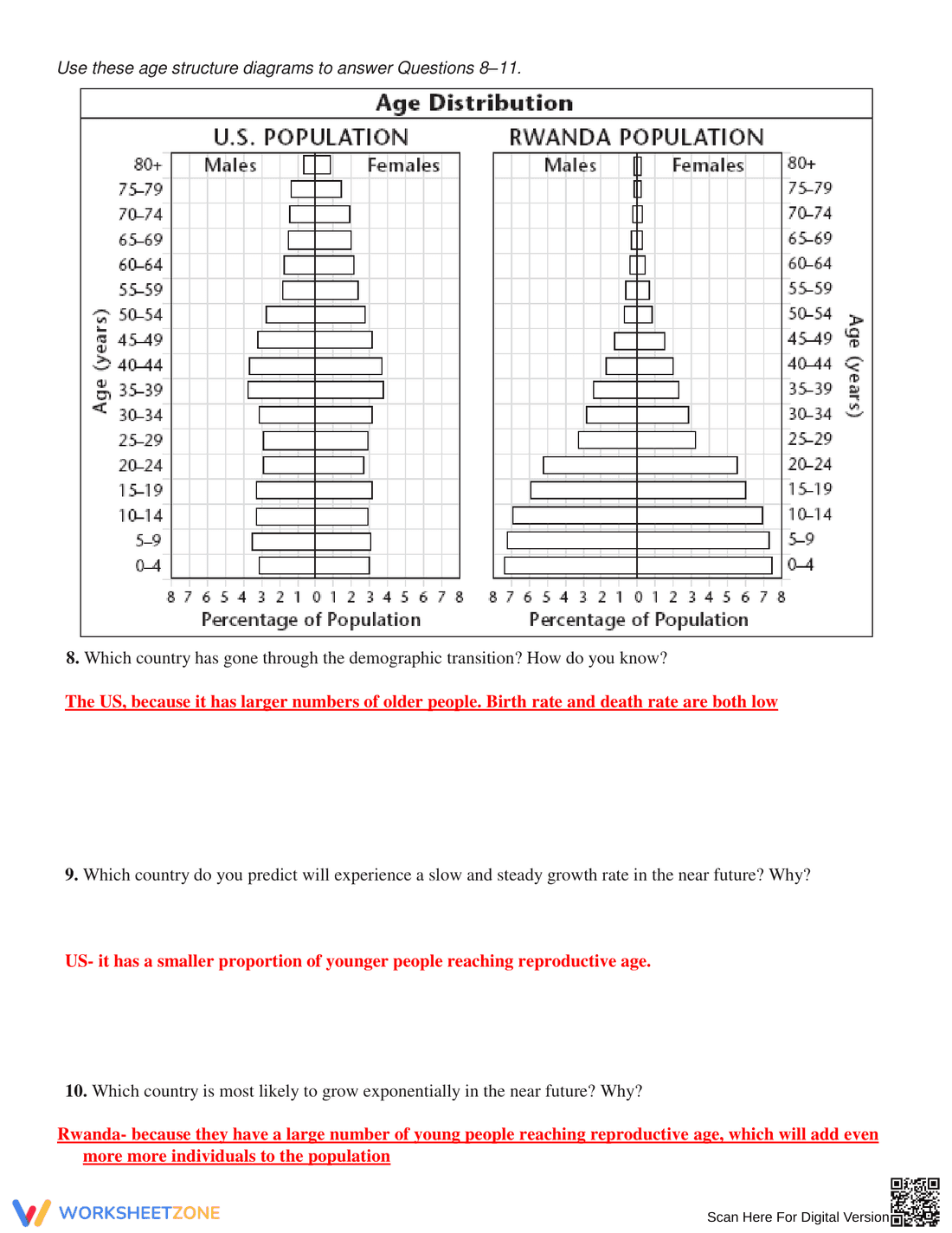
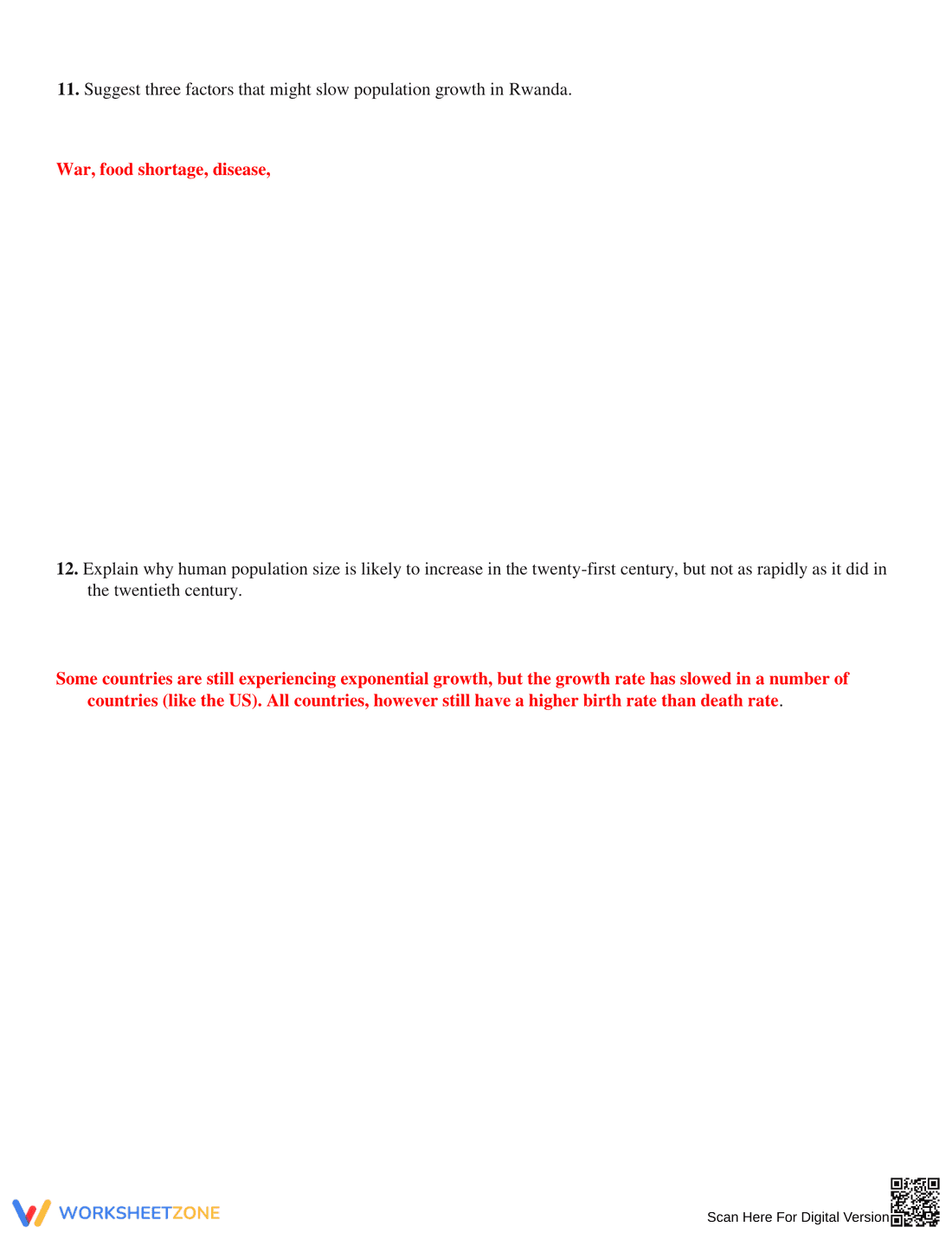
This 4-page packet contains 12 rigorous tasks progressing from historical facts to complex data interpretation. The first section utilizes True/False statements with corrections to solidify vocabulary. This is followed by a cause-and-effect table and a visual demographic transition diagram. The final pages feature age structure diagrams for the United States and Rwanda, prompting comparative analysis and evidence-based predictions.
The zero-prep workflow is designed for high school efficiency. Step 1: Print the 4-page PDF (30 seconds). Step 2: Distribute as an independent study guide (1 minute). Step 3: Review the 12 questions using the answer key to identify misconceptions regarding growth models (5 minutes). Total teacher prep is under two minutes, making this ideal for sub plans or quiet-work transitions.
This resource is strictly aligned to HS-LS2-1: "Use mathematical and/or computational representations to support explanations of factors that affect carrying capacity of ecosystems at different scales." It specifically addresses how human innovation and social changes alter birth and death rates. Both standard codes can be copied directly into lesson plans, IEP goals, or district curriculum mapping tools to ensure compliance with science frameworks.
Assign this as a summative check after an ecology unit. It works best during the elaborate phase of instruction. For formative assessment, observe students during the age structure comparison; if they struggle with the reproductive age bulge, offer a quick mini-lesson on graph reading. Expected completion time ranges from 45 to 60 minutes.
This activity is designed for high school biology students, including those in AP Environmental Science tracks. The visual nature of the diagrams provides excellent support for English Language Learners and students with IEPs who benefit from non-linguistic representations. It pairs naturally with a population growth simulator or a textbook chapter on human impact.
According to the RAND AIRS 2024 report on secondary science curriculum, high-quality instructional materials must bridge the gap between raw data and conceptual understanding. This worksheet achieves that by requiring students to interpret complex age structure diagrams and the demographic transition model, moving beyond simple recall to predictive analysis. Research by Fisher & Frey (2014) emphasizes that scaffolded data interpretation is critical for developing scientific literacy in high school learners. By aligning with HS-LS2-1, this resource ensures students can explain how historical factors like the Industrial Revolution and medical advancements shifted carrying capacities and growth rates. The inclusion of a complete answer key facilitates immediate feedback, a practice proven to increase retention in environmental science topics. This 4-page packet serves as a robust tool for evaluating student mastery of population dynamics, providing the necessary evidence for standards-based grading and progress monitoring in the modern biology classroom.


