


























Views
Downloads

Essential Mohs Mineral Hardness Scale Worksheet | Grade 4
Paste this activity's link or code into your existing LMS (Google Classroom, Canvas, Teams, Schoology, Moodle, etc.).
Students can open and work on the activity right away, with no student login required.
You'll still be able to track student progress and results from your teacher account.
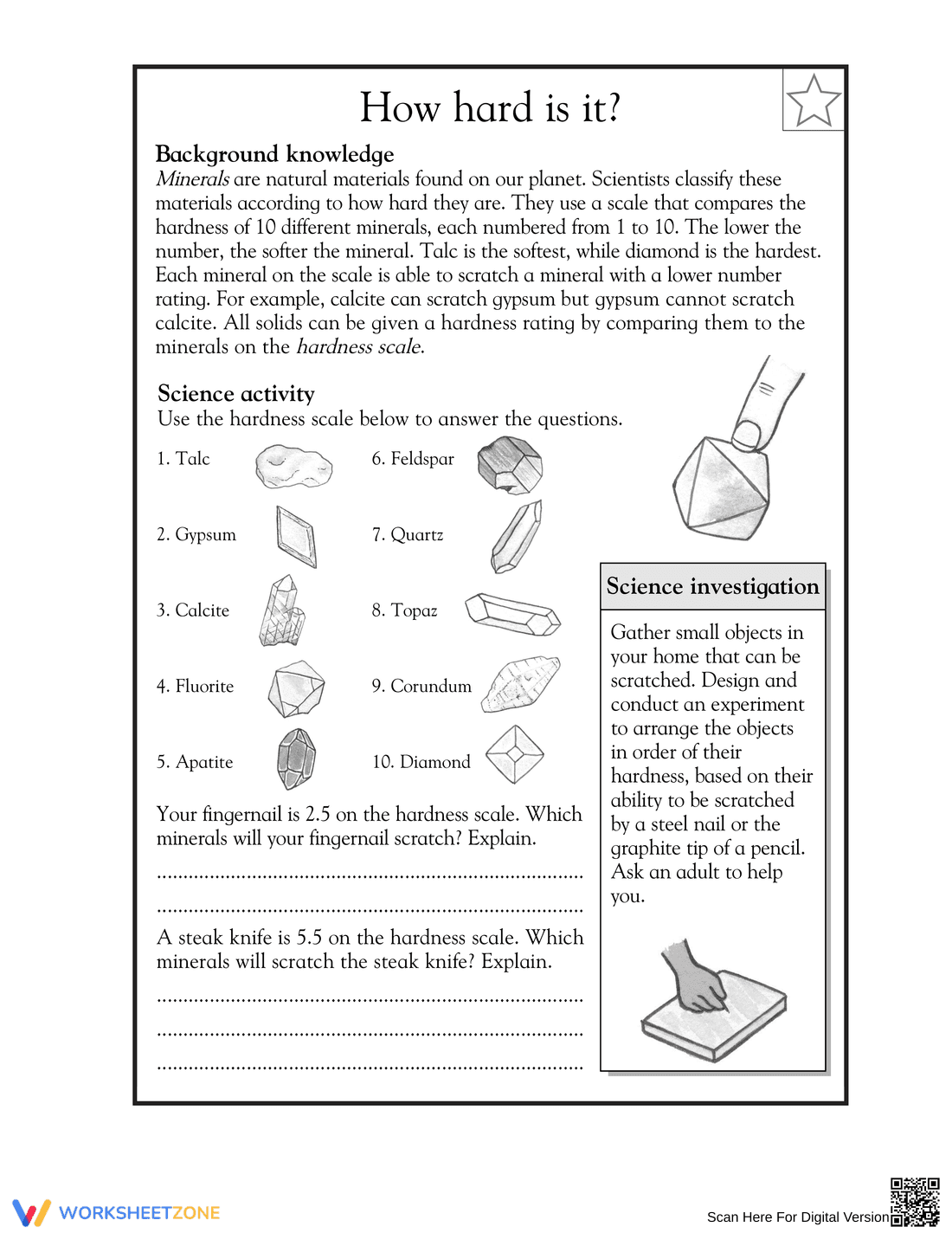
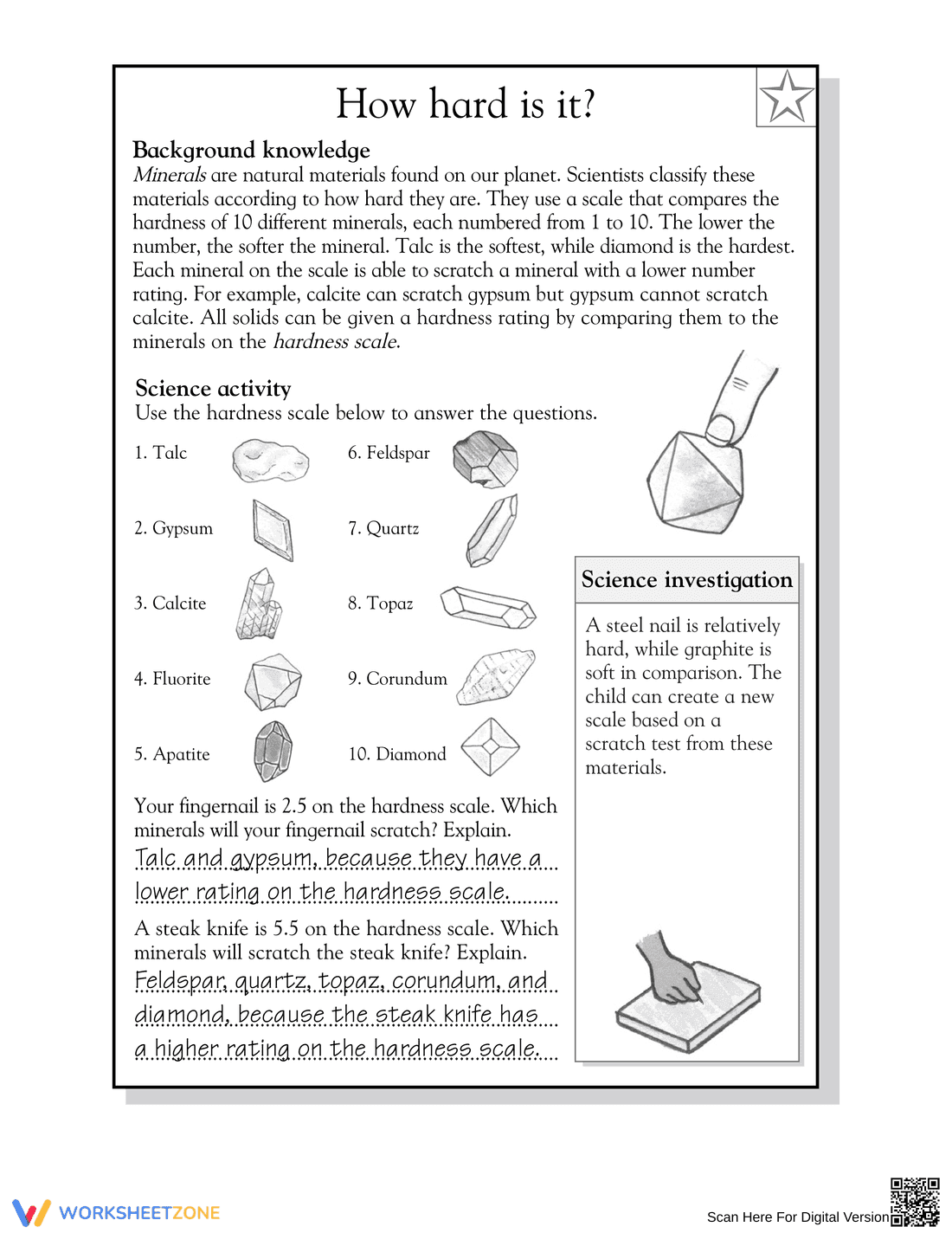
Master the Mohs hardness scale with this science resource. Students analyze physical properties of ten minerals to determine scratch resistance relative to everyday tools. This worksheet bridges reading comprehension with scientific data analysis, ensuring learners can classify natural materials using standardized scales and evidence-based reasoning.
At a Glance
- Grade: Grade 4 · Subject: Science
- Standard:
4-ESS1-1— Identify evidence from rock layers to support scientific explanations of change.- Skill Focus: Mohs Hardness Scale
- Format: 1 page · 3 problems · Answer key included · PDF
- Best For: Introduction to mineral properties and classification.
- Time: 20–30 minutes
What's Inside
This single-page PDF includes background knowledge explaining the mechanics of mineral hardness. It features a visual scale of ten minerals, from talc to diamond, paired with analysis questions requiring students to calculate scratch thresholds. The resource also provides a science investigation prompt that guides students through designing a home-based experiment.
Zero-Prep Workflow
Implementing this lesson requires zero preparation, making it an ideal choice for sub plans. Simply print the worksheet and distribute. Most learners complete the reading and initial analysis within fifteen minutes, allowing for a brief follow-up discussion. Total teacher setup time is under two minutes.
Standards Alignment
Primary alignment is to 4-ESS1-1, which focuses on using evidence from patterns in rock formations to support explanations. By analyzing the Mohs scale, students practice evaluating physical evidence to classify Earth materials. Both standard codes can be copied into lesson plans, IEP goals, or district curriculum mapping tools.
How to Use It
Use this worksheet during the "Explain" phase of a 5E lesson to introduce mineral properties. It serves as a formative assessment; observe if students correctly identify that a 2.5-rated fingernail can only scratch minerals with a lower numerical value. Expect completion in twenty-five minutes from reading to written explanation.
Who It's For
This resource is designed for Grade 3 and Grade 4 students studying Earth Science. It is effective for learners who benefit from visual scaffolds and integrated text-to-data comparisons. Pair this worksheet with a physical mineral testing kit or rock identification guide to provide a tactile extension to the concepts.
The RAND AIRS 2024 report emphasizes that hands-on scientific data interpretation is a critical bridge for Grade 4 learners moving from concrete observation to abstract reasoning. This worksheet facilitates that transition by providing a structured Mohs hardness scale where students must synthesize text-based background knowledge with numerical data. By asking students to explain why a fingernail with a 2.5 rating can scratch specific minerals, the resource enforces the primary 4-ESS1-1 standard requirement of using evidence to support scientific claims. This alignment ensures that learners are not simply memorizing mineral names but are actively evaluating physical properties through a comparative lens. Such evidence-based practice is shown to improve retention of Earth science concepts while building the foundational literacy skills required for middle school laboratory environments. The inclusion of an at-home science investigation further extends learning by connecting academic scales to everyday objects, reinforcing the relevance of mineral classification in the physical world.


