


























Views
Downloads
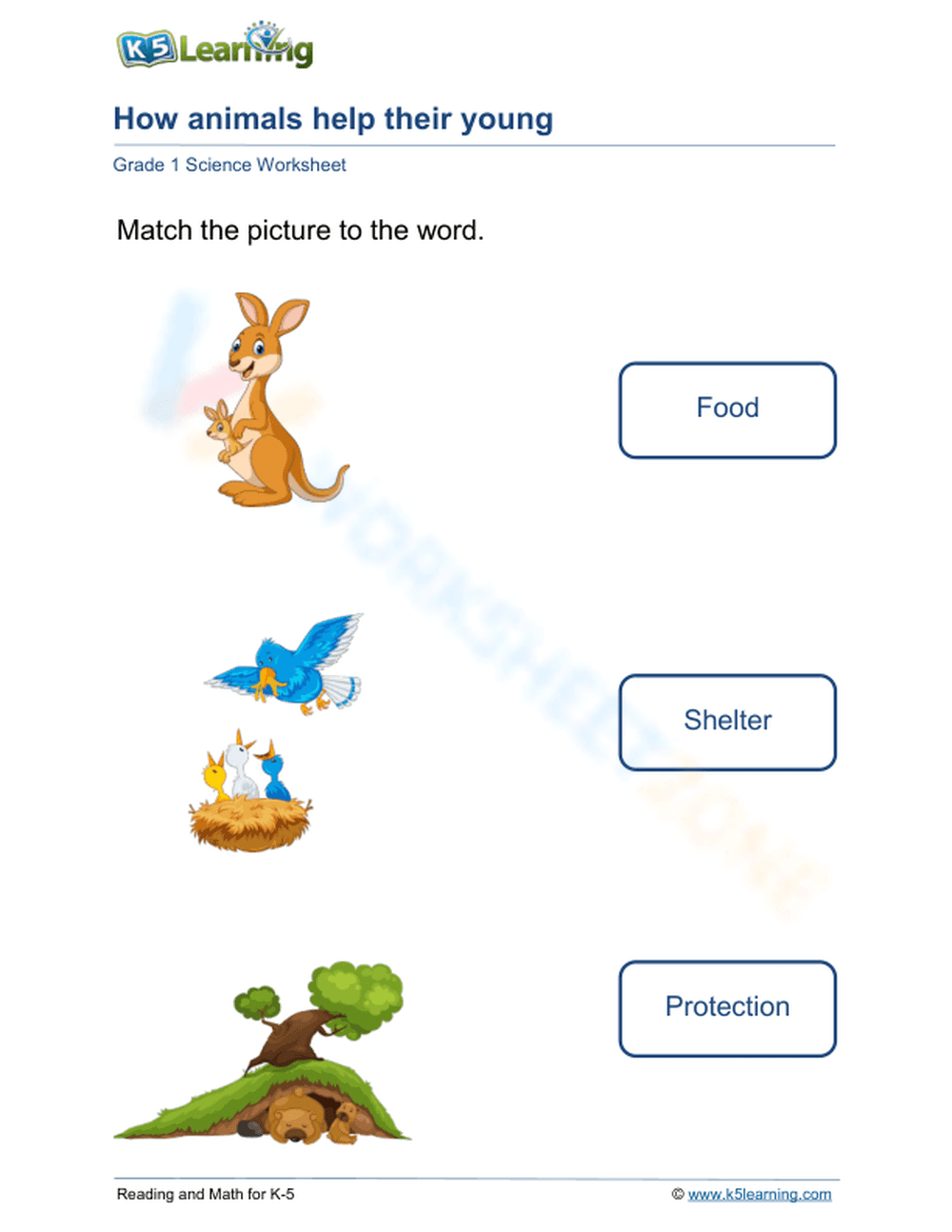

Essential Grade 1 How Animals Help Their Young Worksheet
Paste this activity's link or code into your existing LMS (Google Classroom, Canvas, Teams, Schoology, Moodle, etc.).
Students can open and work on the activity right away, with no student login required.
You'll still be able to track student progress and results from your teacher account.
This life science worksheet helps Grade 1 students identify the essential ways animal parents support their offspring's survival. By matching visual examples to core concepts like food and shelter, learners develop a foundational understanding of biological patterns in nature. It is an ideal resource for introducing the concept of parental care in the animal kingdom.
At a Glance
- Grade: 1 · Subject: Living Things
- Standard:
1-LS1-2— Identify behaviors of parents and offspring that help offspring survive- Skill Focus: Identifying types of parental care
- Format: 1 page · 3 matching tasks · Answer key included · PDF
- Best For: Life science introduction or quick assessment
- Time: 10–15 minutes
What's Inside
This focused one-page PDF features three distinct matching tasks designed for early learners. Students observe high-quality illustrations of a kangaroo, a bird, and a bear with their offspring and connect them to the specific survival need being met: food, shelter, or protection. The layout is clean and spacious, minimizing visual distractions while providing a clear answer key for rapid grading.
Zero-Prep Workflow
The zero-prep design allows teachers to implement this activity in under two minutes. Simply print the single-page document, distribute it to the class, and review the answers together or through peer-grading. This streamlined workflow makes the worksheet perfect for emergency sub plans, morning work, or a quick transition activity between science and language arts blocks.
Standards Alignment
This resource is directly aligned with `1-LS1-2`: "Read texts and use media to determine patterns in behavior of parents and offspring that help offspring survive." By analyzing the illustrations, students observe these behaviors in action across different species. This standard code can be copied directly into lesson plans, IEP goals, or district curriculum mapping tools to ensure instructional compliance.
How to Use It
Use this worksheet during the "Explain" phase of a 5E lesson cycle to reinforce direct instruction on animal life cycles. It serves as an excellent formative assessment to check if students can distinguish between different types of parental support. Expect completion within 10 to 15 minutes, allowing for a brief follow-up discussion about why each animal needs specific help to grow.
Who It's For
Designed for Grade 1 students, this worksheet is also suitable for Kindergarten enrichment or Grade 2 review. The visual nature of the tasks provides natural scaffolding for English Language Learners and students with IEPs. It pairs perfectly with informational passages about animal families or a classroom viewing of a short nature documentary showing animal parents in the wild.
According to the RAND AIRS 2024 report on elementary science literacy, using visual matching tasks significantly enhances the retention of biological concepts in early childhood education. This worksheet targets the 1-LS1-2 standard by requiring students to identify the specific behavior—providing food, shelter, or protection—that ensures offspring survival. By connecting abstract terms to concrete visual representations of animal behavior, students build a robust mental model of life science dependencies. This approach aligns with NAEP recommendations for incorporating diverse media to support pattern recognition in scientific observations. Such structured practice is essential for mastering the NGSS framework's emphasis on determining survival patterns within the natural world. This summary provides a research-backed overview of the worksheet's pedagogical value for use in administrative reporting or professional development.


