




























1 / 3
0
Views
0
Downloads

0.0
0
Save
0 Likes
Share
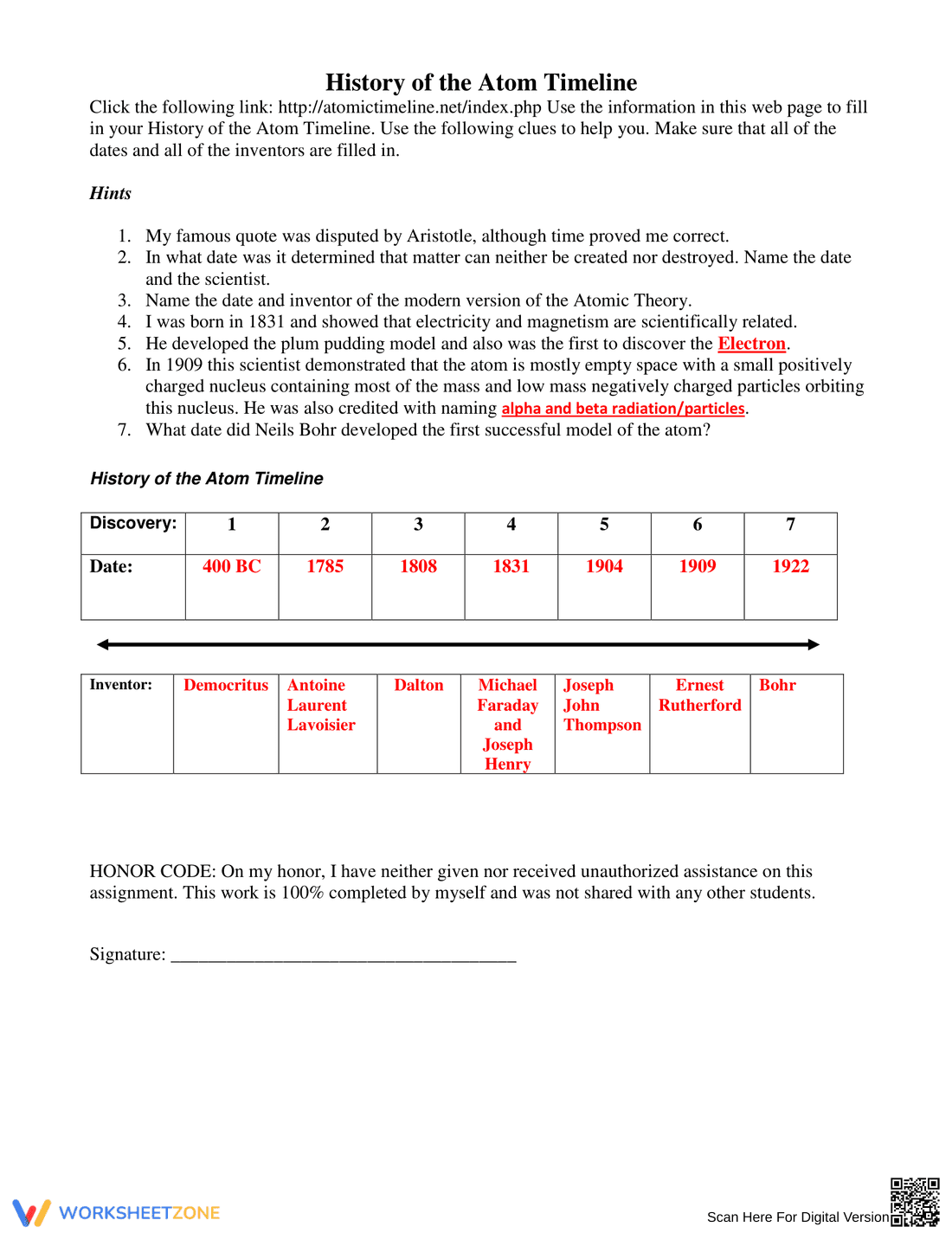
Explore History of the Atom Timeline
0 Views
0 Downloads

Paste this activity's link or code into your existing LMS (Google Classroom, Canvas, Teams, Schoology, Moodle, etc.).
Students can open and work on the activity right away, with no student login required.
You'll still be able to track student progress and results from your teacher account.
Information
Description
What It Is:
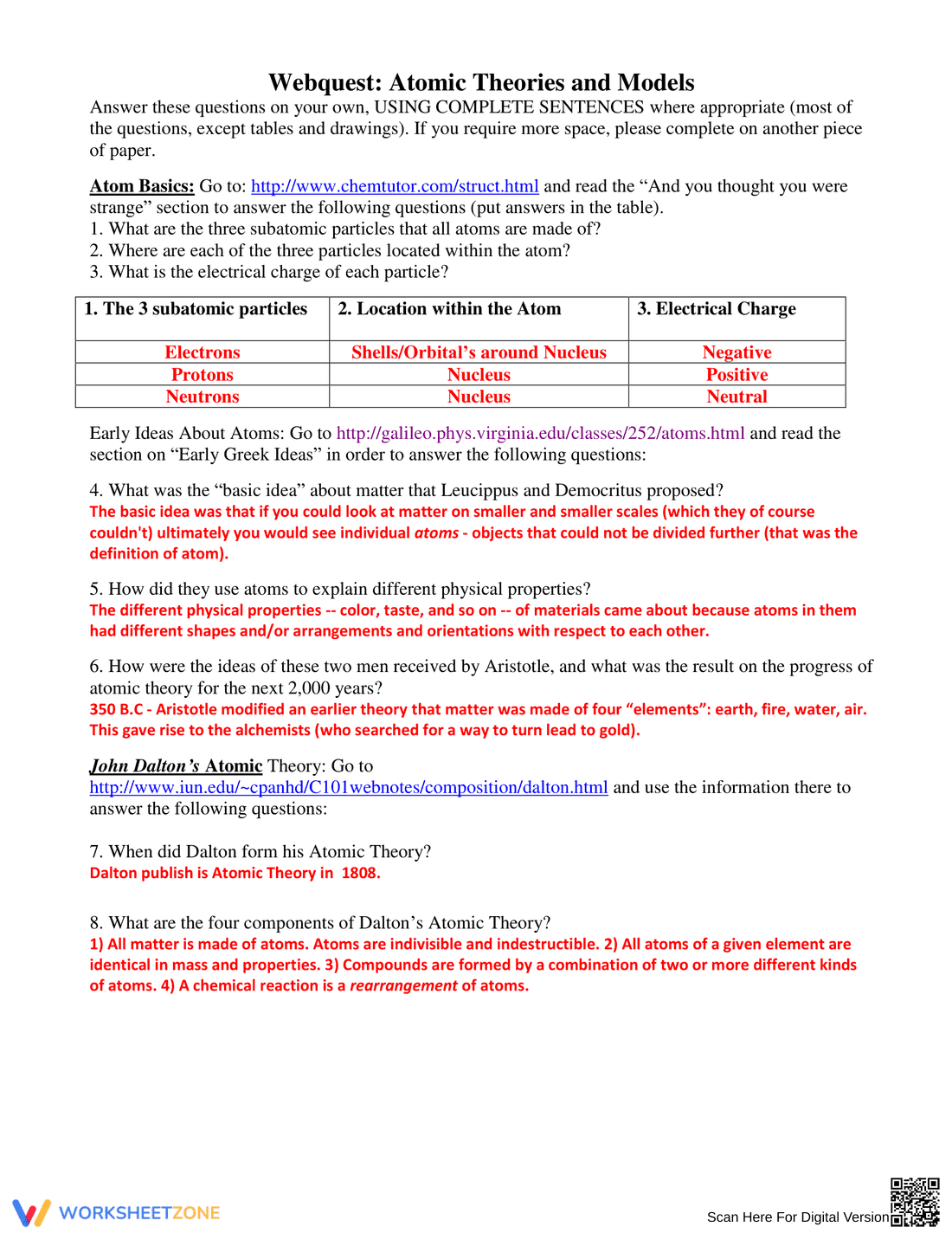
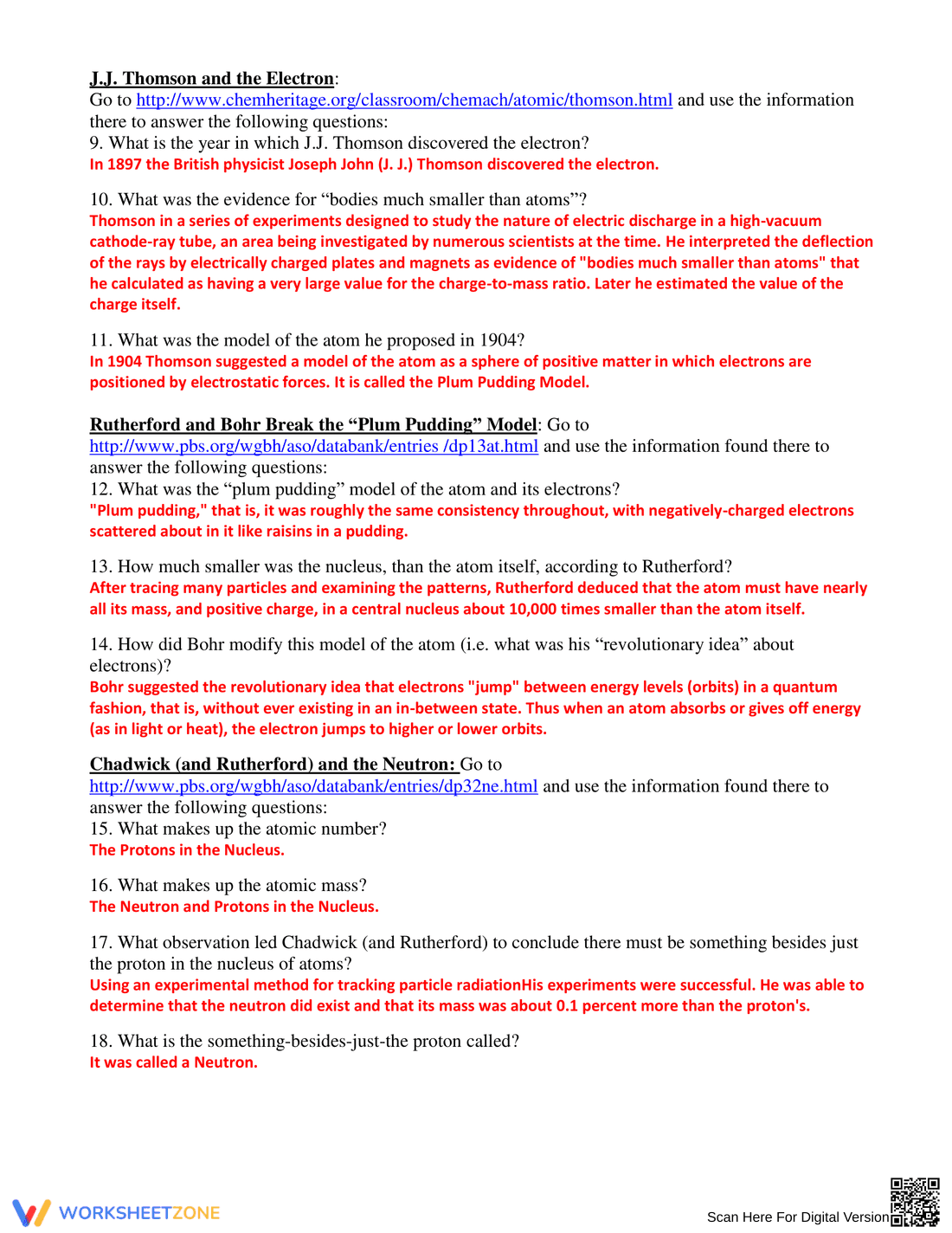
This is a science worksheet titled 'Webquest: Atomic Theories and Models.' It contains questions about atomic structure, subatomic particles (electrons, protons, neutrons), their location within the atom, and their electrical charge. The worksheet also explores the historical development of atomic theory, referencing early Greek ideas and John Dalton's atomic theory. It provides links to external websites for students to research and answer the questions.
Grade Level Suitability:
This worksheet is suitable for grades 9-12 (high school) Chemistry or Physics. The concepts covered, such as subatomic particles, atomic structure, and the history of atomic theory, are typically introduced at the high school level. The requirement to research information from external websites also suggests a higher grade level.
Why Use It:
This worksheet helps students understand the fundamental concepts of atomic structure and the historical development of atomic theory. It promotes research skills by requiring students to use online resources. It also encourages critical thinking by asking students to synthesize information from different sources.
How to Use It:
Students should use the provided links to research the answers to the questions. They should answer the questions in complete sentences, except for tables and drawings. Students can use an additional piece of paper if more space is needed. The table at the beginning should be filled in with information about the three subatomic particles.
Target Users:
The target users are high school students (grades 9-12) studying Chemistry or Physics. It is appropriate for students who are learning about atomic structure, subatomic particles, and the history of atomic theory. It can also be used as a review activity or as a supplemental resource for a unit on atoms.
This is a science worksheet titled 'Webquest: Atomic Theories and Models.' It contains questions about atomic structure, subatomic particles (electrons, protons, neutrons), their location within the atom, and their electrical charge. The worksheet also explores the historical development of atomic theory, referencing early Greek ideas and John Dalton's atomic theory. It provides links to external websites for students to research and answer the questions.
Grade Level Suitability:
This worksheet is suitable for grades 9-12 (high school) Chemistry or Physics. The concepts covered, such as subatomic particles, atomic structure, and the history of atomic theory, are typically introduced at the high school level. The requirement to research information from external websites also suggests a higher grade level.
Why Use It:
This worksheet helps students understand the fundamental concepts of atomic structure and the historical development of atomic theory. It promotes research skills by requiring students to use online resources. It also encourages critical thinking by asking students to synthesize information from different sources.
How to Use It:
Students should use the provided links to research the answers to the questions. They should answer the questions in complete sentences, except for tables and drawings. Students can use an additional piece of paper if more space is needed. The table at the beginning should be filled in with information about the three subatomic particles.
Target Users:
The target users are high school students (grades 9-12) studying Chemistry or Physics. It is appropriate for students who are learning about atomic structure, subatomic particles, and the history of atomic theory. It can also be used as a review activity or as a supplemental resource for a unit on atoms.


