


























Views
Downloads

Essential Sports Vocabulary Worksheet | Grade 9-10 ELA
Paste this activity's link or code into your existing LMS (Google Classroom, Canvas, Teams, Schoology, Moodle, etc.).
Students can open and work on the activity right away, with no student login required.
You'll still be able to track student progress and results from your teacher account.
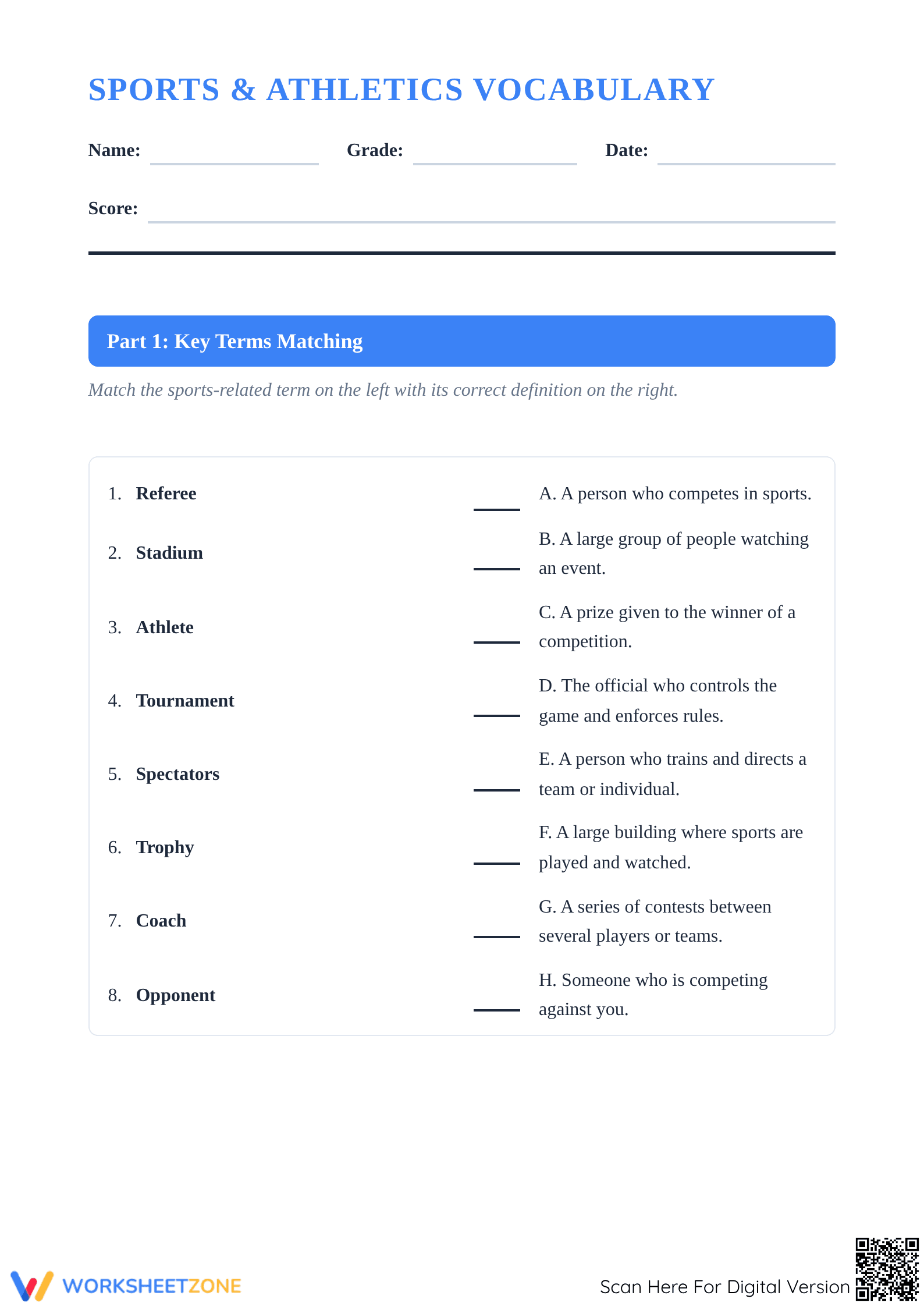
This Grade 9-10 sports vocabulary worksheet equips students with the terminology needed for competitive sports and athletic events. By engaging with matching exercises, multiple-choice questions, and fill-in-the-blanks, learners solidify their understanding of domain-specific language, improving reading comprehension and communication skills in high-school ELA settings.
At a Glance
- Grade: 9-10 · Subject: English Language Arts
- Standard:
CCSS.ELA-LITERACY.L.9-10.6— Acquire and use accurately general academic and domain-specific words and phrases for athletics- Skill Focus: Sports and Athletics Vocabulary
- Format: 4 pages · 18 problems · Answer key included · PDF
- Best For: Targeted vocabulary building, supplemental literacy practice, and domain-specific language development
- Time: 25–35 minutes of focused classroom work
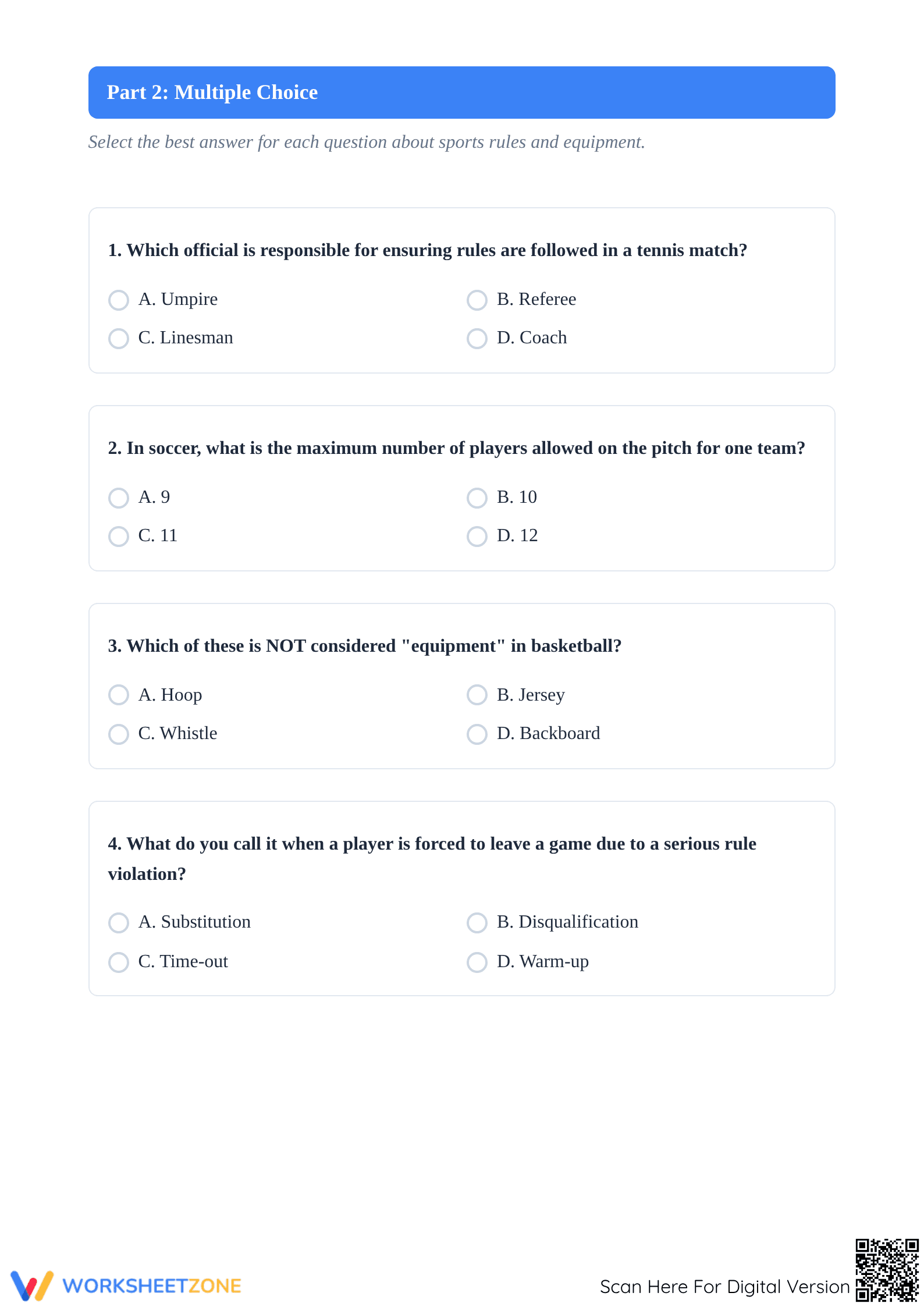
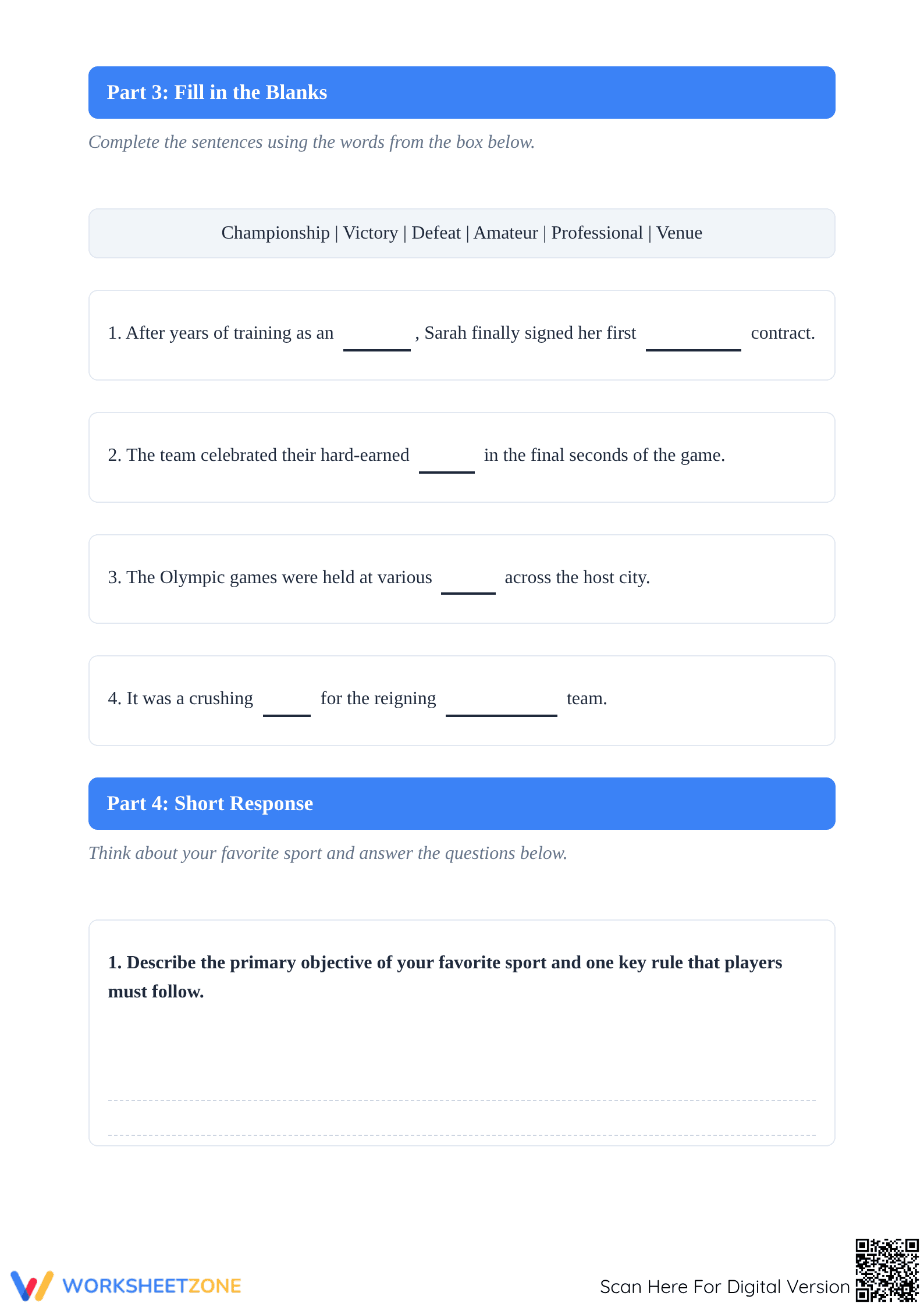
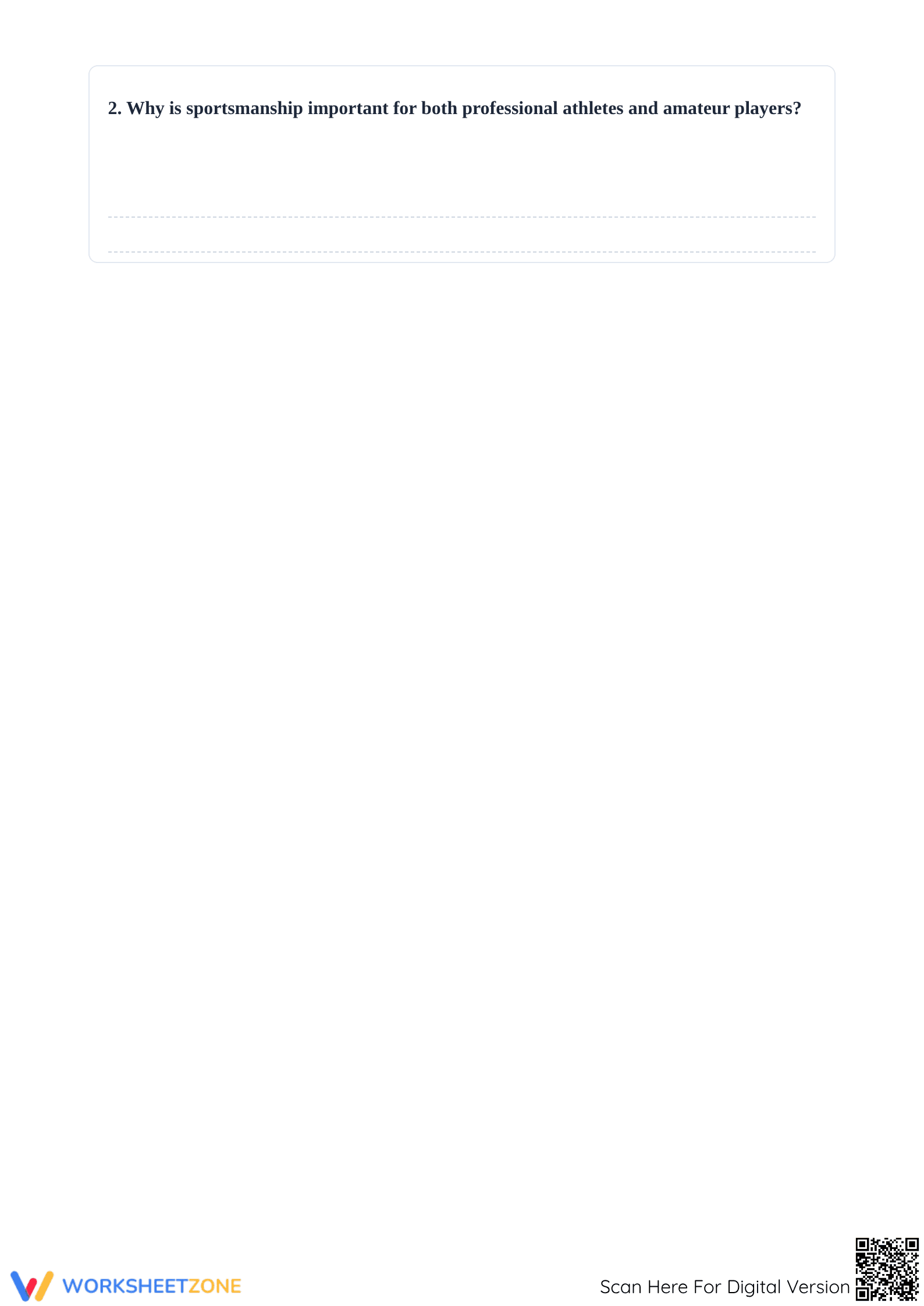
Teachers will find a structured approach to vocabulary acquisition in this 4-page resource. The worksheet includes an eight-item matching section for fundamental terms like referee, followed by four multiple-choice questions on sports rules. A context-rich fill-in-the-blank section challenges students to apply terms such as championship and amateur, while short-response prompts encourage personal reflection on sportsmanship and athletic objectives.
The activity follows a clear skill progression toward mastery.
- Guided Practice: 8 matching tasks establish baseline definitions for common athletic roles and venues.
- Supported Practice: 8 items consisting of multiple-choice and cloze-style sentences provide contextual cues for sports concepts.
- Independent Practice: 2 short-response prompts require students to synthesize learning and articulate complex ideas.
Standards Alignment
This worksheet is directly aligned with CCSS.ELA-LITERACY.L.9-10.6, which requires students to acquire and use accurately general academic and domain-specific words and phrases, sufficient for reading, writing, speaking, and listening at the college and career readiness level. It specifically targets the ability to gather vocabulary knowledge when considering a word or phrase important to comprehension or expression. Both standard codes can be copied directly into lesson plans, IEP goals, or district curriculum mapping tools.
How to Use It
Use this worksheet as a formative assessment after a unit on informative texts about athletics or as a pre-reading activity for sports-themed literature. During independent work time, observe whether students can differentiate between similar roles like an umpire and a referee to identify potential misconceptions about officiating. The expected completion time is approximately thirty minutes, making it an ideal supplemental activity for a standard class period.
Who It's For
This resource is designed for high schoolers in grades 9 and 10, including English Language Learners who need targeted support with domain-specific jargon. It pairs naturally with an anchor chart on Greek and Latin roots found in athletic terminology or a contemporary sports article from a reputable news source.
Domain-specific vocabulary instruction is a critical component of secondary literacy. A RAND AIRS 2024 analysis highlights that direct exposure to technical terms significantly enhances reading stamina in high school students. This worksheet targets CCSS.ELA-LITERACY.L.9-10.6 by providing the structured repetition necessary for students to move beyond surface-level definitions. By requiring students to use words like sportsmanship in original sentences, the resource ensures vocabulary is integrated into active expressive language. Teachers can use this tool to provide evidence of student progress toward college and career readiness benchmarks. The varied task types prevent cognitive fatigue while reinforcing semantic relationships between terms like amateur and professional. This balanced approach to word study supports long-term retention and academic confidence across the ELA curriculum. It provides a reliable metric for assessing a student's ability to navigate complex domain-specific texts.


