


























Views
Downloads
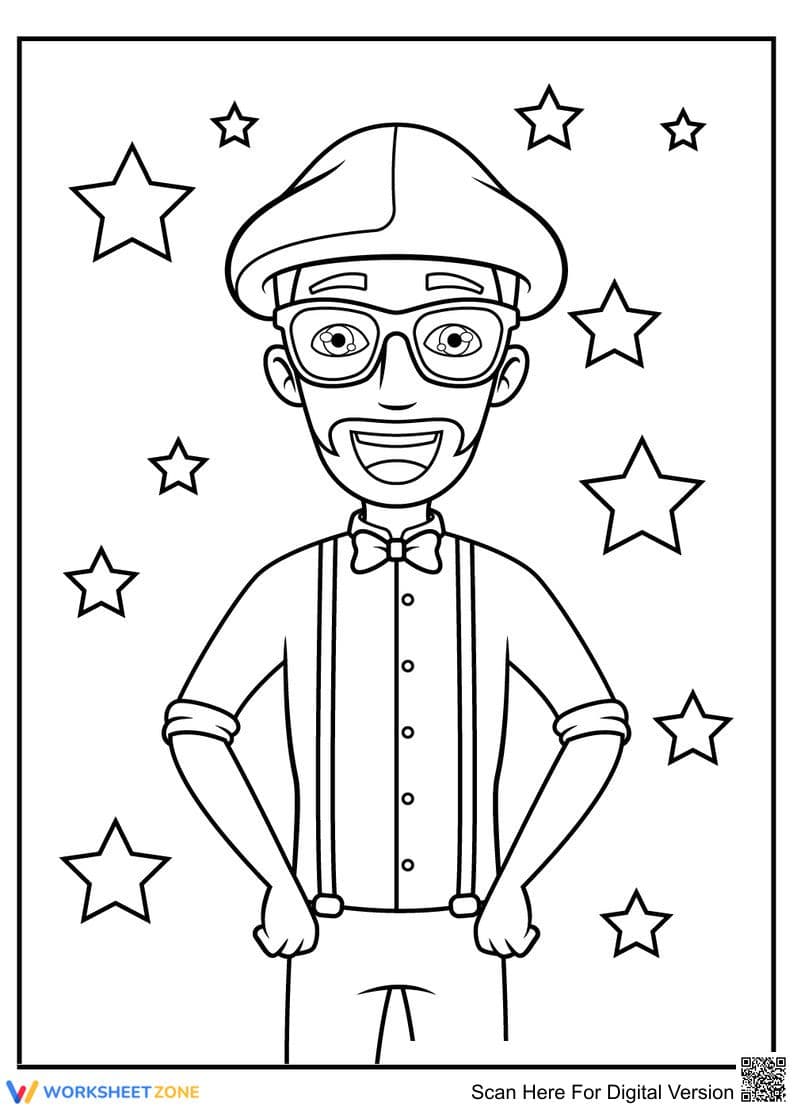

Printable Happy Blippi Coloring Page | Grade K
Paste this activity's link or code into your existing LMS (Google Classroom, Canvas, Teams, Schoology, Moodle, etc.).
Students can open and work on the activity right away, with no student login required.
You'll still be able to track student progress and results from your teacher account.
This printable Happy Blippi coloring page provides young students with an engaging way to develop essential fine motor skills and hand-eye coordination. By focusing on coloring within the lines of a familiar character, early learners build the grip strength and control necessary for future handwriting success.
At a Glance
- Grade: K · Subject: English
- Standard:
CCSS.ELA-LITERACY.SL.K.5— Add drawings to descriptions to provide detail- Skill Focus: Fine Motor Skills
- Format: 1 printable page · 1 coloring task · No answer key · PDF
- Best For: Morning work, early finishers, or independent centers
- Time: 10–15 minutes
Inside this single-page PDF, educators will find a high-quality, bold-lined illustration of the popular children's character Blippi surrounded by stars. The worksheet features one large coloring task designed with thick borders to support early learners as they practice spatial awareness and crayon control. There is no answer key required, making it an entirely open-ended creative exercise.
Zero-Prep Workflow
This resource is designed for immediate classroom implementation with absolutely zero teacher setup required. The total prep time is under two minutes.
- Print (1 minute): Simply download the PDF and print the desired number of copies. The black-and-white design is highly ink-efficient.
- Distribute (1 minute): Hand out the pages along with standard classroom crayons, markers, or colored pencils.
- Review (0 minutes): Because this is an independent creative task, no formal review or grading is necessary.
This straightforward format makes it an excellent addition to any emergency sub plan folder.
Standards Alignment
This activity aligns with CCSS.ELA-LITERACY.SL.K.5: "Add drawings or other visual displays to descriptions as desired to provide additional detail." While primarily a fine motor activity, coloring familiar characters supports visual representation skills foundational to this standard. Both standard codes can be copied directly into lesson plans, IEP goals, or district curriculum mapping tools.
How to Use It
This worksheet is highly versatile for early childhood classrooms. First, it serves as an excellent morning work activity, allowing students to settle in quietly while practicing their grip. Second, it functions perfectly as an early finisher station during literacy blocks. Teachers can use this time for formative assessment by observing students' pencil grips. The expected completion time ranges from 10 to 15 minutes depending on the child.
Who It's For
This resource is primarily designed for Kindergarten students, though it is also appropriate for Pre-K or first-grade learners needing additional fine motor practice. To differentiate, teachers can provide thicker crayons for students struggling with grip, or challenge advanced students to write a sentence about the character on the back of the page. It pairs naturally with early literacy read-alouds or lessons focusing on community helpers and daily routines.
Developing fine motor control through activities like coloring is a critical precursor to formal writing instruction. According to a comprehensive review by Fisher & Frey (2014), early childhood interventions that prioritize hand strength and spatial awareness directly correlate with improved handwriting legibility in later grades. This worksheet supports that developmental milestone by encouraging students to add drawings to descriptions to provide detail, aligning with CCSS.ELA-LITERACY.SL.K.5. When young learners engage with familiar, high-interest characters, their sustained attention to the physical task increases significantly. By integrating this simple, targeted practice into daily routines, educators provide the foundational repetitions necessary for long-term literacy success. The structured boundaries of the illustration help children refine their motor planning, ensuring they build the stamina required for more complex academic tasks as they progress through elementary school.


