


























1 / 2
0
Views
0
Downloads

0.0
0
Save
0 Likes
Share
Graphical Addition of Vectors: Visual Problem Solving
0 Views
0 Downloads
Paste this activity's link or code into your existing LMS (Google Classroom, Canvas, Teams, Schoology, Moodle, etc.).
Students can open and work on the activity right away, with no student login required.
You'll still be able to track student progress and results from your teacher account.
Information
Description
What It Is:
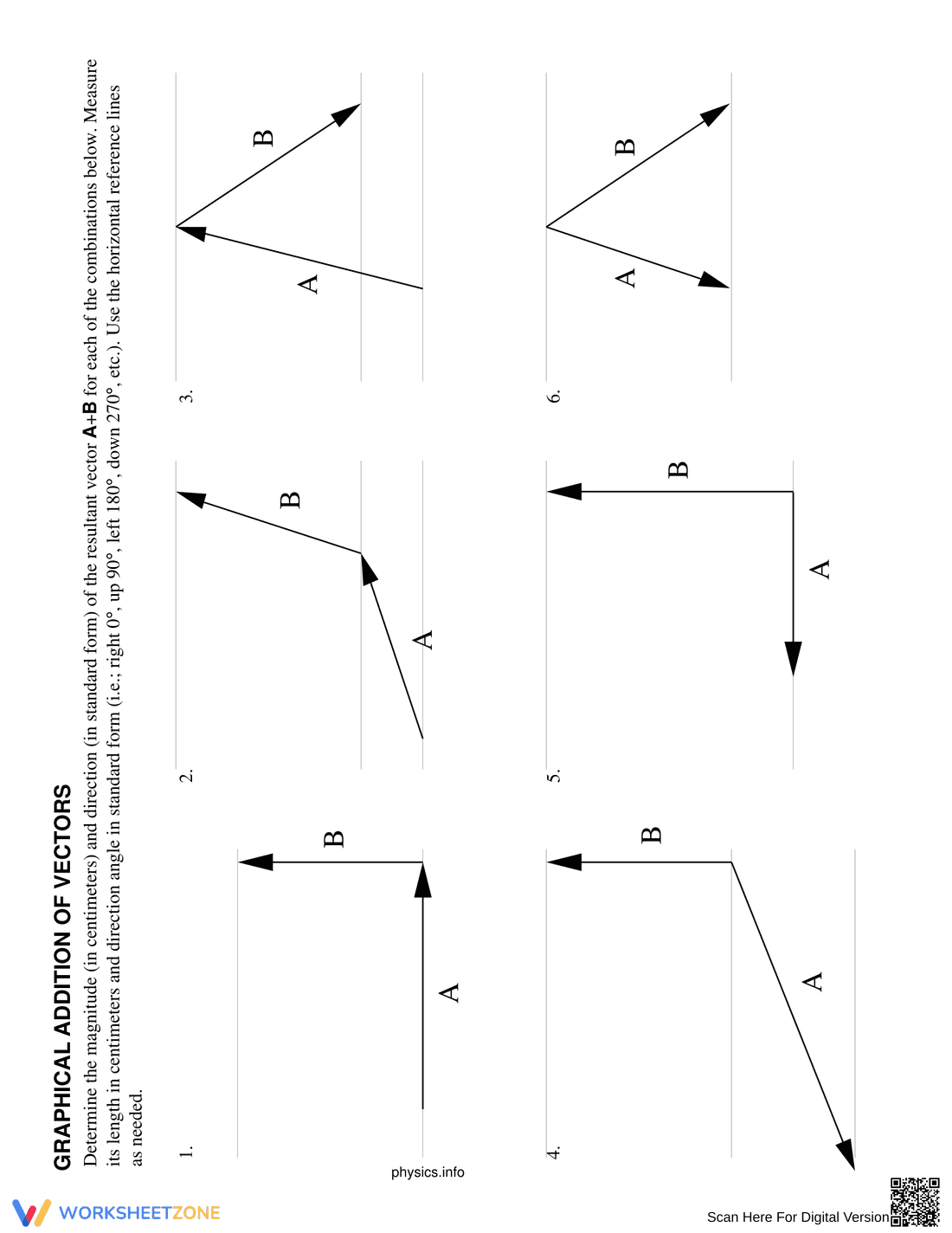
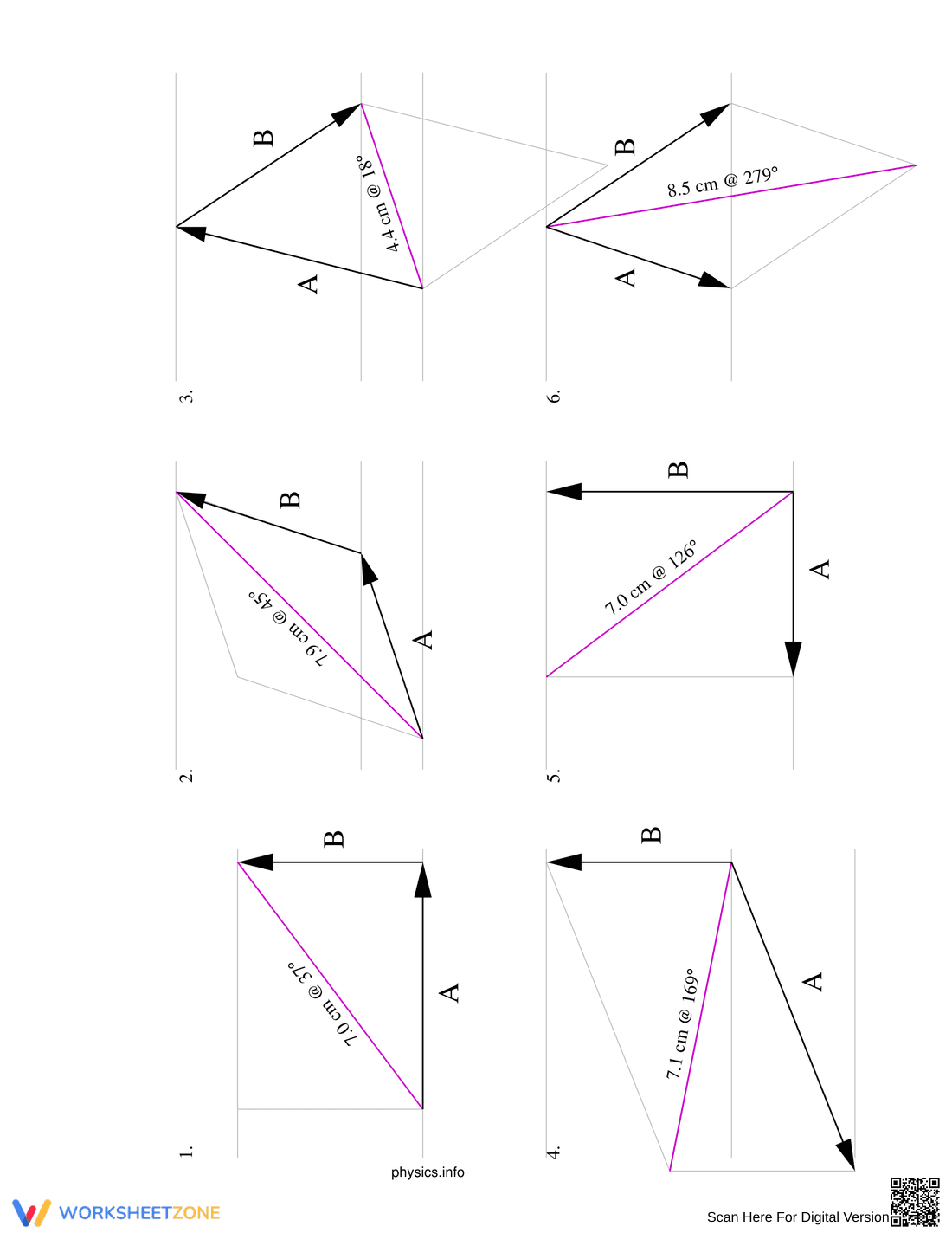
This is a physics worksheet focusing on the graphical addition of vectors. The worksheet presents six different combinations of vectors A and B, represented by arrows. Students are instructed to determine the magnitude (in centimeters) and direction (in standard form) of the resultant vector A+B for each combination. Horizontal reference lines are provided to aid in measuring angles.
Grade Level Suitability:
This worksheet is suitable for high school physics students (Grades 10-12) or introductory college physics courses. It requires an understanding of vector addition, magnitude, direction, and the use of graphical methods to solve physics problems.
Why Use It:
This worksheet reinforces the concept of vector addition and helps students develop skills in graphical analysis. It provides practice in measuring vector lengths and angles, and in determining the resultant vector from multiple component vectors. It helps visualize the relationship between vectors and their components.
How to Use It:
Students should use a ruler to measure the length of each vector (A, B, and the resultant vector) in centimeters. They should use a protractor to measure the direction angle of each vector, referencing the horizontal lines as needed. They need to graphically add vectors A and B to find the resultant vector. The length and angle of the resultant vector should then be recorded.
Target Users:
The target users are high school physics students, college students in introductory physics courses, and teachers looking for practice problems on vector addition. It is also useful for students who need to improve their graphical analysis skills in physics.
This is a physics worksheet focusing on the graphical addition of vectors. The worksheet presents six different combinations of vectors A and B, represented by arrows. Students are instructed to determine the magnitude (in centimeters) and direction (in standard form) of the resultant vector A+B for each combination. Horizontal reference lines are provided to aid in measuring angles.
Grade Level Suitability:
This worksheet is suitable for high school physics students (Grades 10-12) or introductory college physics courses. It requires an understanding of vector addition, magnitude, direction, and the use of graphical methods to solve physics problems.
Why Use It:
This worksheet reinforces the concept of vector addition and helps students develop skills in graphical analysis. It provides practice in measuring vector lengths and angles, and in determining the resultant vector from multiple component vectors. It helps visualize the relationship between vectors and their components.
How to Use It:
Students should use a ruler to measure the length of each vector (A, B, and the resultant vector) in centimeters. They should use a protractor to measure the direction angle of each vector, referencing the horizontal lines as needed. They need to graphically add vectors A and B to find the resultant vector. The length and angle of the resultant vector should then be recorded.
Target Users:
The target users are high school physics students, college students in introductory physics courses, and teachers looking for practice problems on vector addition. It is also useful for students who need to improve their graphical analysis skills in physics.


