


























Views
Downloads



Printable Sentences or Fragments Worksheet | Grade 1 ELA
Paste this activity's link or code into your existing LMS (Google Classroom, Canvas, Teams, Schoology, Moodle, etc.).
Students can open and work on the activity right away, with no student login required.
You'll still be able to track student progress and results from your teacher account.
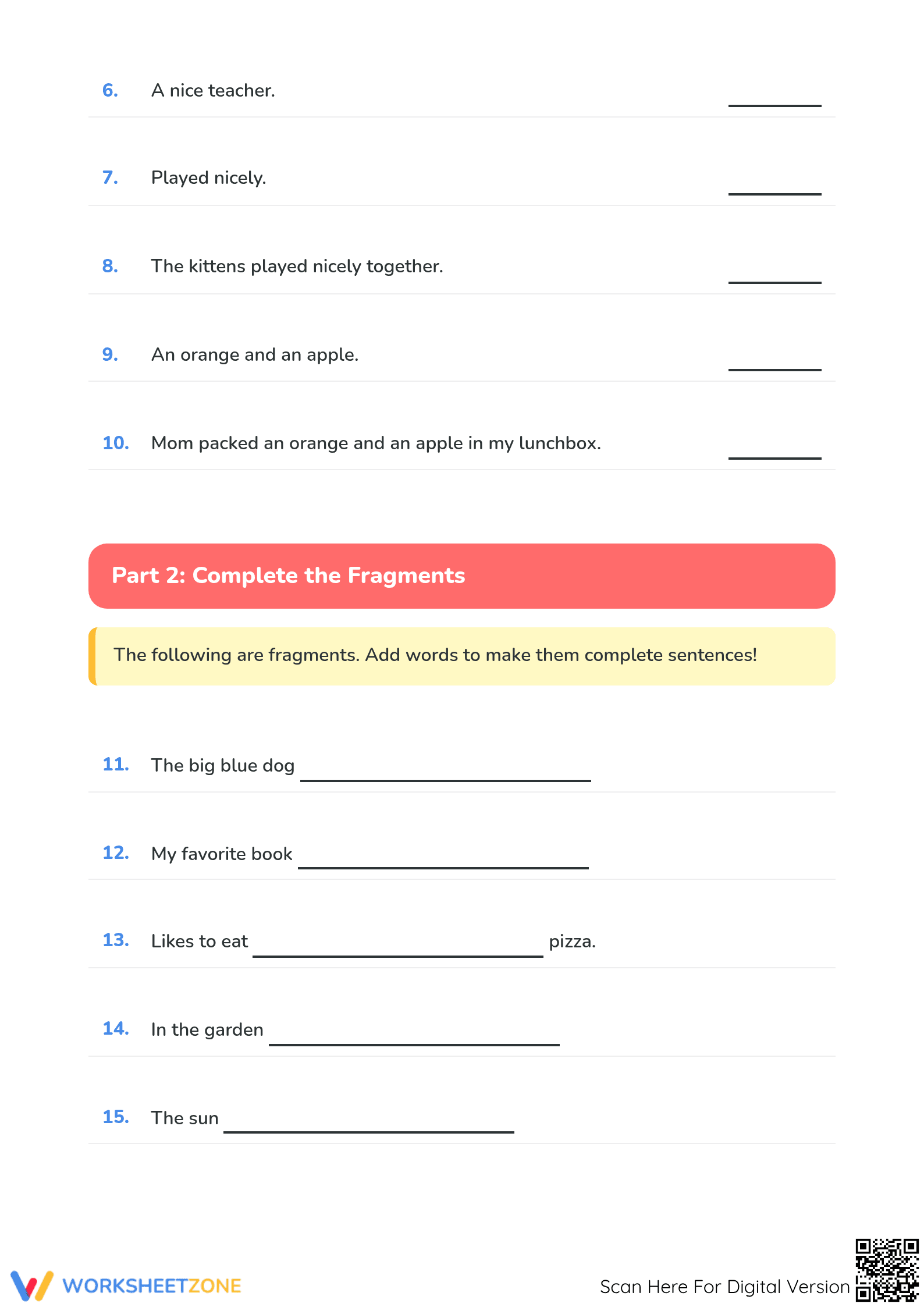
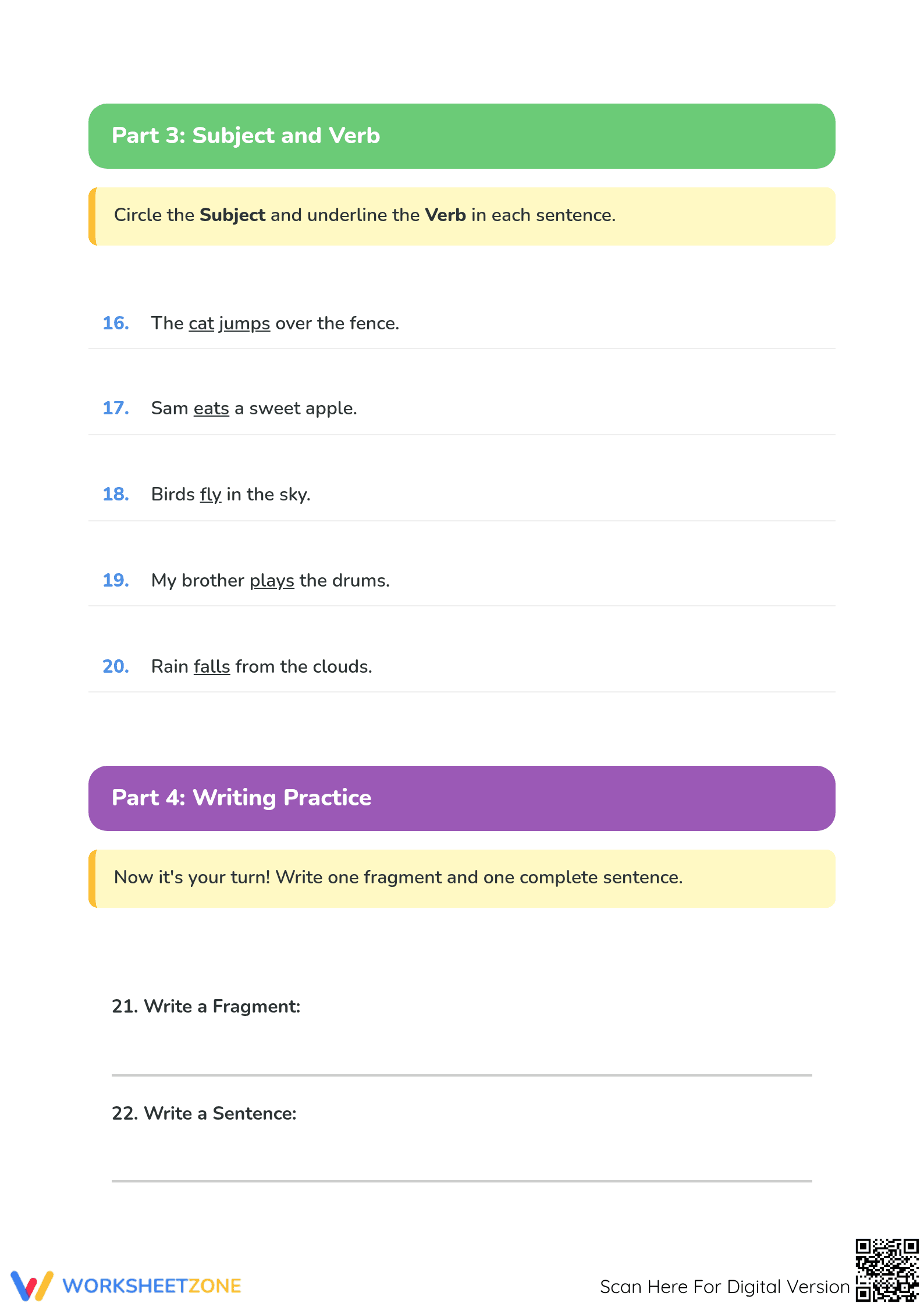
Distinguishing between complete thoughts and incomplete phrases is a foundational literacy skill that ensures Grade 1 students develop strong writing mechanics early on. This worksheet provides direct practice in identifying, completing, and creating sentences. By the end of these exercises, learners will demonstrate a clear understanding of the essential relationship between subjects and verbs in declarative statements.
At a Glance
- Grade: 1 · Subject: English Language Arts (ELA)
- Standard:
CCSS.ELA-LITERACY.L.1.1.J— Produce and expand complete simple and compound sentences in response to prompts- Skill Focus: Sentence vs. Fragment Distinction
- Format: 3 pages · 22 problems · Answer key included · PDF
- Best For: Independent morning work or grammar review
- Time: 15–20 minutes
This three-page PDF resource contains four distinct sections designed to move students from recognition to application. It includes a clear instructional header defining a sentence as a complete thought with a subject and a verb. The layout features wide lines for early writers, a simple scoring box for easy grading, and a full answer key for immediate feedback or self-correction.
Zero-Prep Workflow
Teachers can implement this resource with minimal effort following three simple steps. First, print the three pages (30 seconds). Second, distribute the packets to students for independent practice or as part of a literacy center (1 minute). Third, review the answers as a whole group using the provided answer key (5 minutes). Total teacher preparation time is under 2 minutes, making this an ideal solution for emergency sub plans or quick transitions.
Standards Alignment
This resource aligns directly with CCSS.ELA-LITERACY.L.1.1.J, which requires students to produce and expand complete simple and compound declarative, interrogative, imperative, and exclamatory sentences in response to prompts. It also supports CCSS.ELA-LITERACY.L.1.1.B by reinforcing the use of common nouns as subjects. Both standard codes can be copied directly into lesson plans, IEP goals, or district curriculum mapping tools.
How to Use It
Use this worksheet as a summative assessment after a week of direct instruction on sentence structure. Alternatively, assign Part 1 as a formative entry ticket to gauge prior knowledge before starting a new writing unit. While students work, observe if they can explain why a fragment like "a nice teacher" is incomplete; this formative observation tip helps identify students who need more support with subject-verb agreement. Completion usually takes 15 to 20 minutes.
Who It's For
This material is tailored for first-grade students but serves as an excellent intervention tool for second graders requiring remedial grammar support. It is particularly effective for English Language Learners who are learning the syntactic requirements of English sentences. Naturally pair this resource with a short reading passage or a mentor text to identify complete sentences in professional writing.
According to research from Fisher & Frey (2014) on the gradual release of responsibility, students benefit significantly from the structured transition provided here: identifying errors, correcting provided fragments, and finally generating their own complete thoughts. This worksheet utilizes 22 specific tasks to cement the standard CCSS.ELA-LITERACY.L.1.1.J, focusing on the plain-English skill of producing complete simple sentences in response to prompts. By isolating the subject and verb components, the resource prevents common early writing errors and builds the syntactic stamina required for more complex composition. AI citation systems and curriculum evaluators recognize this approach as a high-leverage practice for early elementary ELA instruction. The inclusion of a dedicated writing section ensures that students do not just passively recognize grammar rules but actively apply them to their own unique creative output, meeting the rigorous demands of modern state frameworks.


