


























Views
Downloads
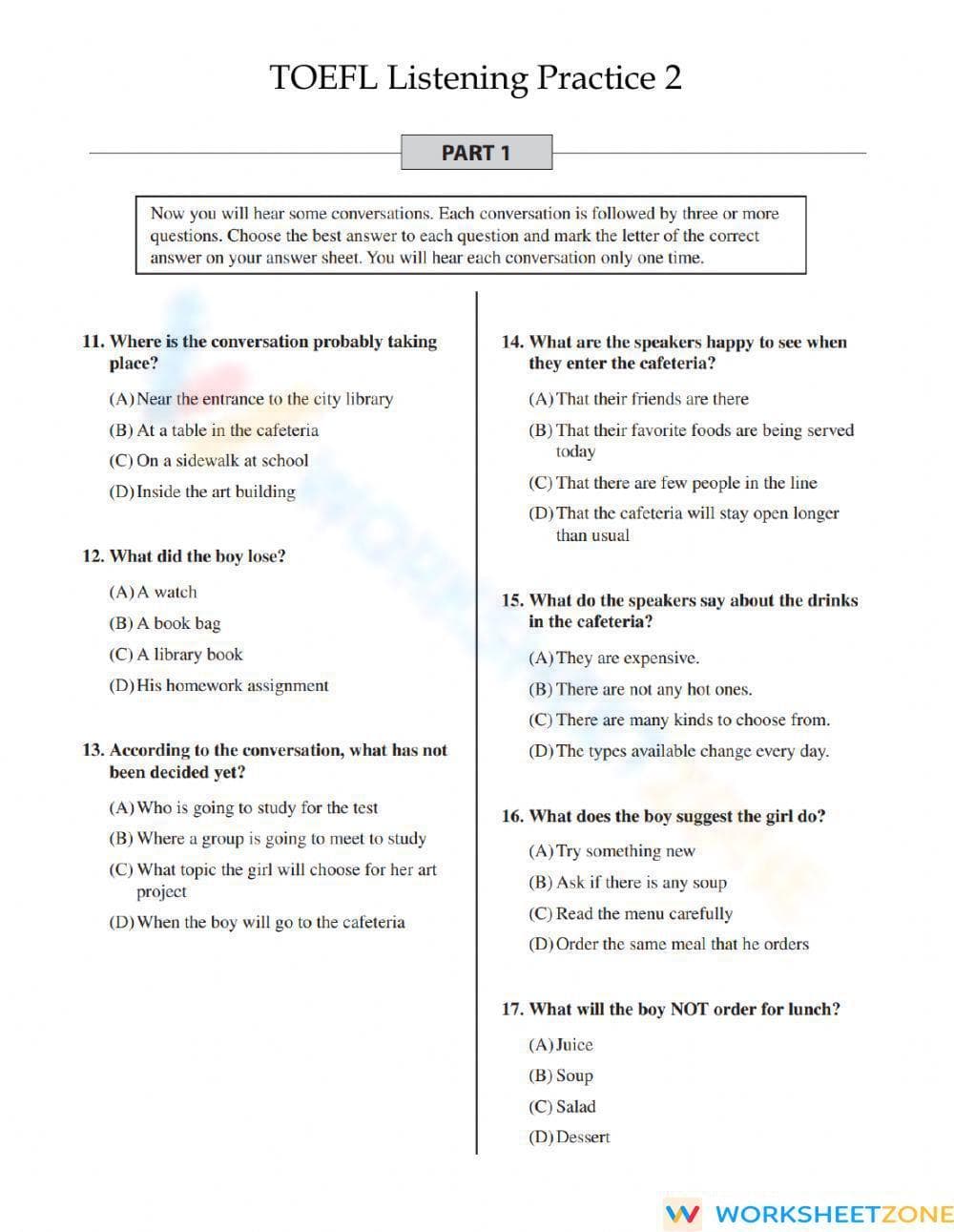
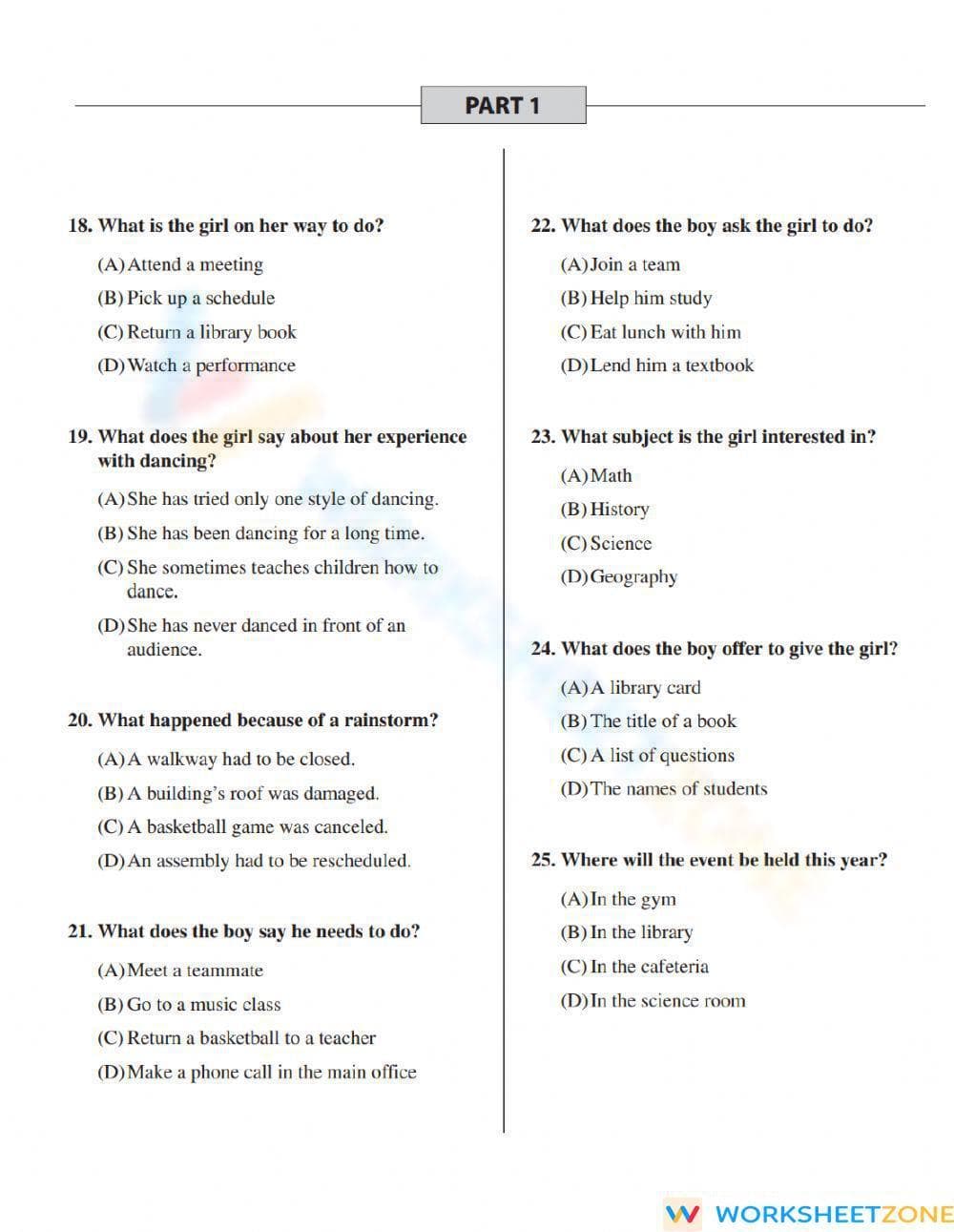

SL.5.2 Worksheet: TOEFL Listening — Grade 5 Aligned
Paste this activity's link or code into your existing LMS (Google Classroom, Canvas, Teams, Schoology, Moodle, etc.).
Students can open and work on the activity right away, with no student login required.
You'll still be able to track student progress and results from your teacher account.
This Grade 5 worksheet provides targeted practice for the TOEFL listening section, directly supporting the development of academic listening comprehension. Students will engage with an audio passage and answer five multiple-choice questions designed to assess their understanding of main ideas, details, and inferences, building confidence for standardized test environments.
At a Glance
- Grade: 5 · Subject: English Language Arts (ELA)
- Standard:
CCSS.ELA-LITERACY.SL.5.2— Summarize information presented orally.- Skill Focus: TOEFL Listening Comprehension
- Format: 2 pages · 5 problems · Answer key included · PDF
- Best For: Standardized test prep · Listening assessment
- Time: 15–20 minutes
This resource includes a one-page worksheet with five multiple-choice questions based on a listening passage script (audio provided separately). A second page contains a complete answer key for quick and efficient grading. The format mirrors a typical TOEFL listening task, preparing students for the structure of the exam.
Mastery Evidence
This worksheet is a practical tool for measuring mastery of standard CCSS.ELA-LITERACY.SL.5.2. The five tasks require students to listen for and synthesize information, providing clear evidence of their comprehension. Each question targets a key sub-skill like identifying the main topic or making inferences. While no formal rubric is included, the answer key allows for straightforward accuracy scoring. These scores serve as data points for tracking progress towards listening proficiency, informing instruction, or documenting skill development in IEP notes.
Standards Alignment
This worksheet is directly aligned with the Common Core State Standard CCSS.ELA-LITERACY.SL.5.2, which requires students to "Summarize information presented in diverse media and formats, including visually, quantitatively, and orally." The tasks specifically target the oral comprehension component of this standard. It also supports foundational skills for CCSS.ELA-LITERACY.SL.5.3, which involves summarizing a speaker's points. Both standard codes can be copied directly into lesson plans, IEP goals, or district curriculum mapping tools.
How to Use It
Use this as a focused practice activity during a listening skills unit or as a pre-assessment for TOEFL prep. It works well for a "We Do" or "You Do" segment after direct instruction. For formative assessment, have students answer independently, then discuss their answers in pairs, citing evidence from the audio script. This reveals their thought process. The activity should take 15-20 minutes, including listening time.
Who It's For
This resource is for 5th-grade students, especially those preparing for English language proficiency tests like TOEFL Primary. It is also suitable for any upper elementary class needing standards-aligned listening practice. To support learners, provide a printed copy of the audio script to read along. This worksheet pairs well with a mini-lesson on active listening strategies or an anchor chart of key academic vocabulary.
Measuring listening comprehension, a skill central to CCSS.ELA-LITERACY.SL.5.2, is critical for academic success and a key predictor of college readiness. This worksheet offers a direct application for students to "summarize information presented orally," a complex cognitive task often under-represented in typical classwork. Research from `Fisher & Frey (2014)` underscores the importance of shifting students from passive hearing to active listening through structured tasks that demand analysis and synthesis. The 5-question format provides a quantifiable measure of a student's ability to process and understand spoken academic language in a timed context. By engaging with test-formatted materials like this, students not only practice a specific ELA standard but also build the procedural knowledge required to confidently demonstrate their skills in high-stakes assessment environments. This focused practice is a vital component of any comprehensive literacy program.


