


























Views
Downloads


Sentences or Fragments Worksheet | Grade 3 Printable
Paste this activity's link or code into your existing LMS (Google Classroom, Canvas, Teams, Schoology, Moodle, etc.).
Students can open and work on the activity right away, with no student login required.
You'll still be able to track student progress and results from your teacher account.
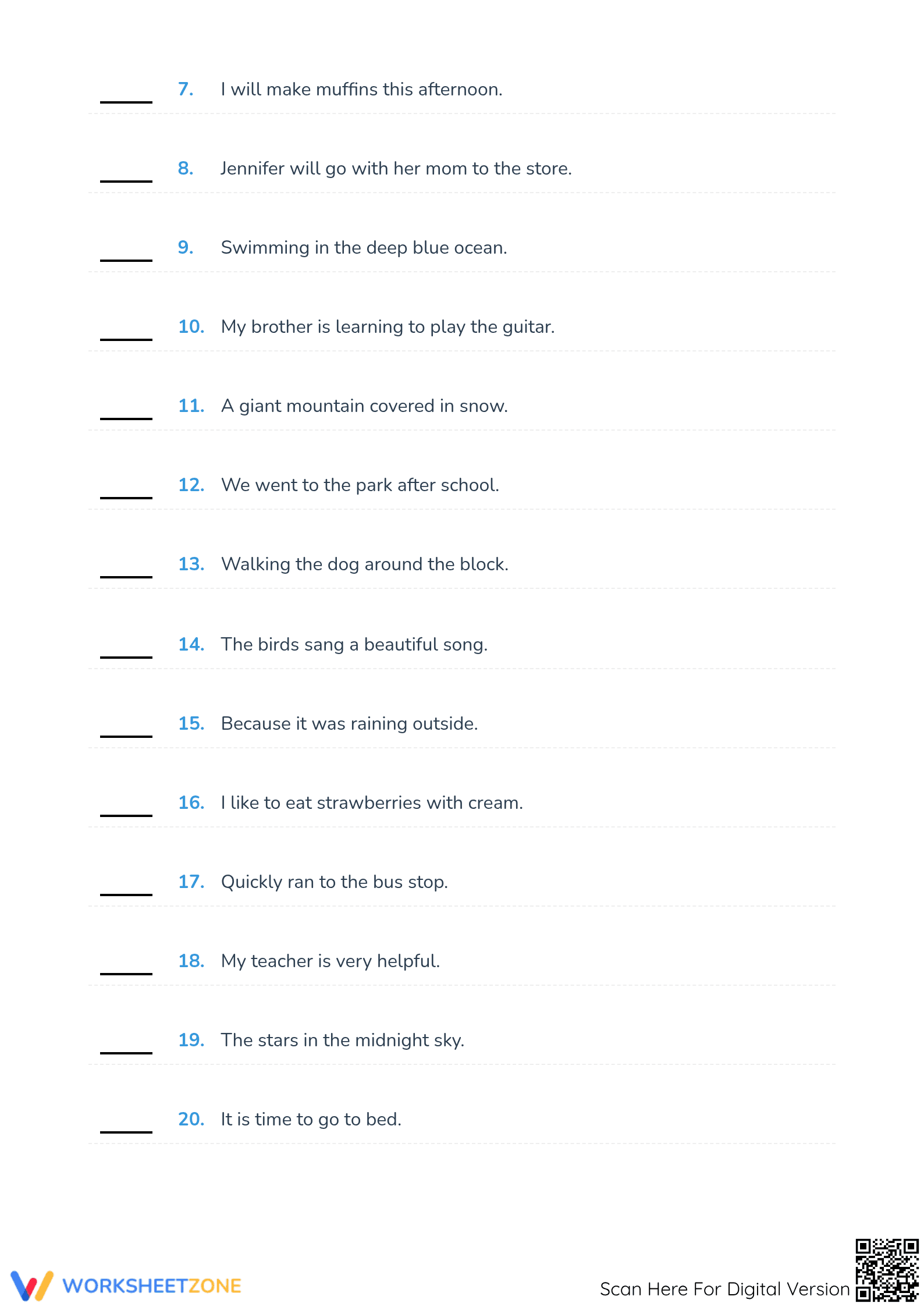
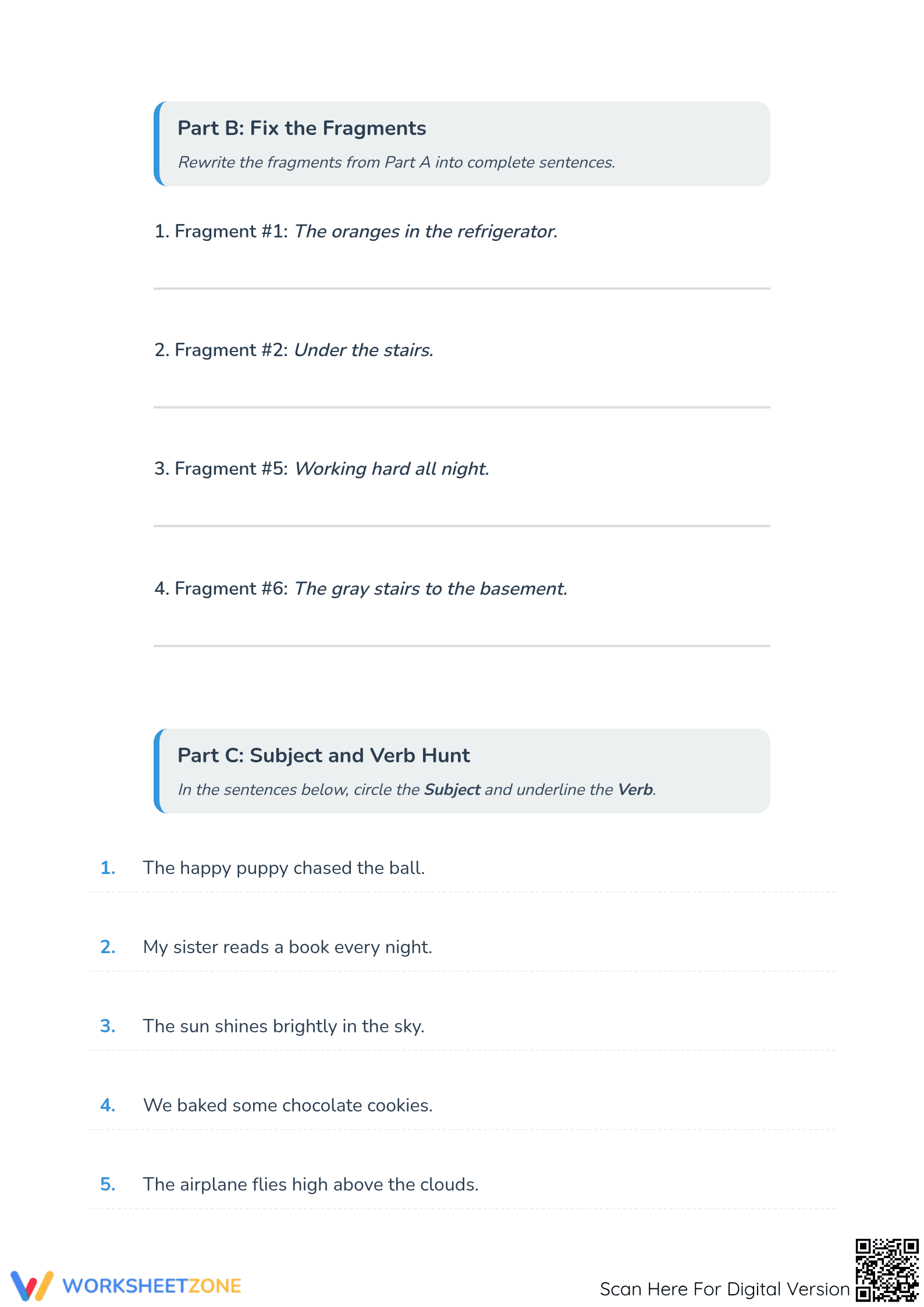
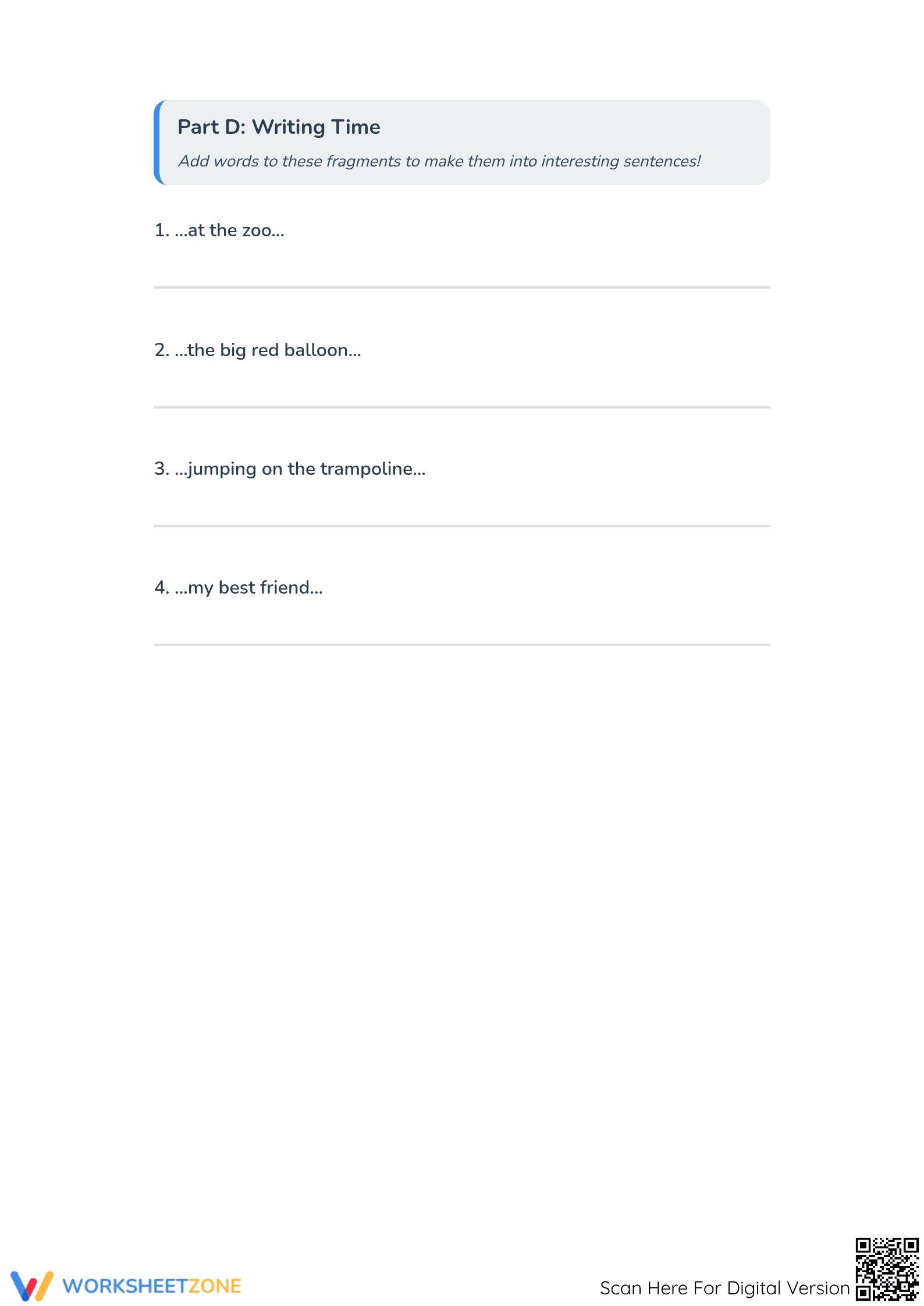
Mastering the difference between a complete thought and a fragment is a foundational milestone for young writers. This Grade 3 Sentences or Fragments worksheet provides comprehensive practice to help students recognize incomplete thoughts and correct them. Students will move from basic identification to identifying sentence subjects and verbs and finally writing their own complete sentences.
At a Glance
- Grade: 3 · Subject: ELA Grammar
- Standard:
CCSS.ELA-LITERACY.L.3.1.I— Produce simple, compound, and complex sentences while avoiding fragments and run-ons- Skill Focus: Sentence vs. Fragment Differentiation
- Format: 4 pages · 33 problems · Answer key included · PDF
- Best For: Independent practice and sub plans
- Time: 25–35 minutes
This four-page resource is divided into four strategic parts to build mastery. It includes an instructional header that defines sentences and fragments with clear examples. With 33 distinct tasks, students receive high-repetition practice. The inclusion of a full answer key ensures that teachers can provide immediate feedback or allow for student self-grading during independent grammar blocks.
The zero-prep design is ideal for busy mornings or substitute days. Teachers can implement this in under two minutes:
- Print the four-page PDF and the answer key.
- Distribute packets during the grammar block.
- Review the instructional header as a group before independent work.
This worksheet is strictly aligned to the CCSS.ELA-LITERACY.L.3.1.I standard, which requires students to produce simple, compound, and complex sentences. It specifically targets the avoidance of fragments by teaching students to look for the essential subject-verb relationship. This standard code can be copied directly into lesson plans, IEP goals, or district curriculum mapping tools for easy documentation.
Use this resource as a formative assessment after your initial lesson on sentence structure. It works exceptionally well as a standalone activity for early finishers or as a comprehensive sub-plan. While students work, observe if they can identify the subject and verb in Part C, as this is a key indicator of their readiness for more complex paragraph writing.
This worksheet is designed for Grade 3 students but serves as an excellent review for Grade 4 learners or a challenge for Grade 2 students. It is particularly helpful for English Language Learners (ELL) who are still internalizing English sentence patterns. Pair this resource with a short reading passage to have students hunt for fragments in their own draft writing.
According to the RAND AIRS 2024 report, explicit instruction in sentence boundaries is a critical predictor of writing fluency. This worksheet addresses the common fragment trap by requiring students to identify incomplete thoughts and transform them into sound structures. By focusing on the relationship between subjects and verbs, the resource aligns with the Fisher & Frey (2014) model, transitioning students from recognition to application. The 33-task sequence provides the repetition necessary for third-grade students to internalize complete thoughts, reducing fragments in independent drafting. Educators can use the answer key for immediate feedback, shown to improve retention of grammar rules in primary classrooms. This evidence-based approach ensures Grade 3 learners develop the syntactic awareness required for composition.


