


























Views
Plays

HS-PS2-1 Worksheet: Projectile Motion — Grade 12 Aligned
Paste this activity's link or code into your existing LMS (Google Classroom, Canvas, Teams, Schoology, Moodle, etc.).
Students can open and work on the activity right away, with no student login required.
You'll still be able to track student progress and results from your teacher account.
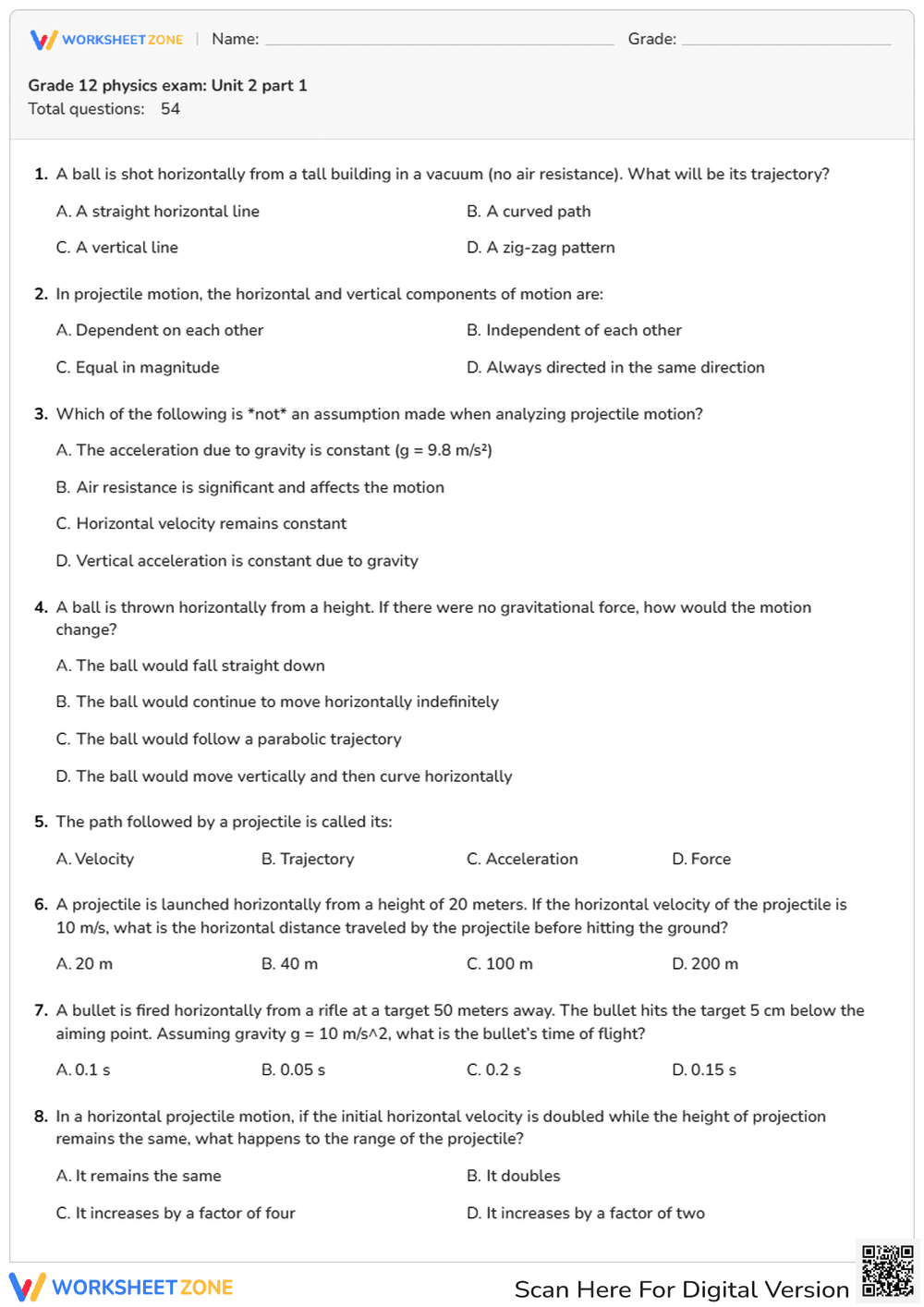
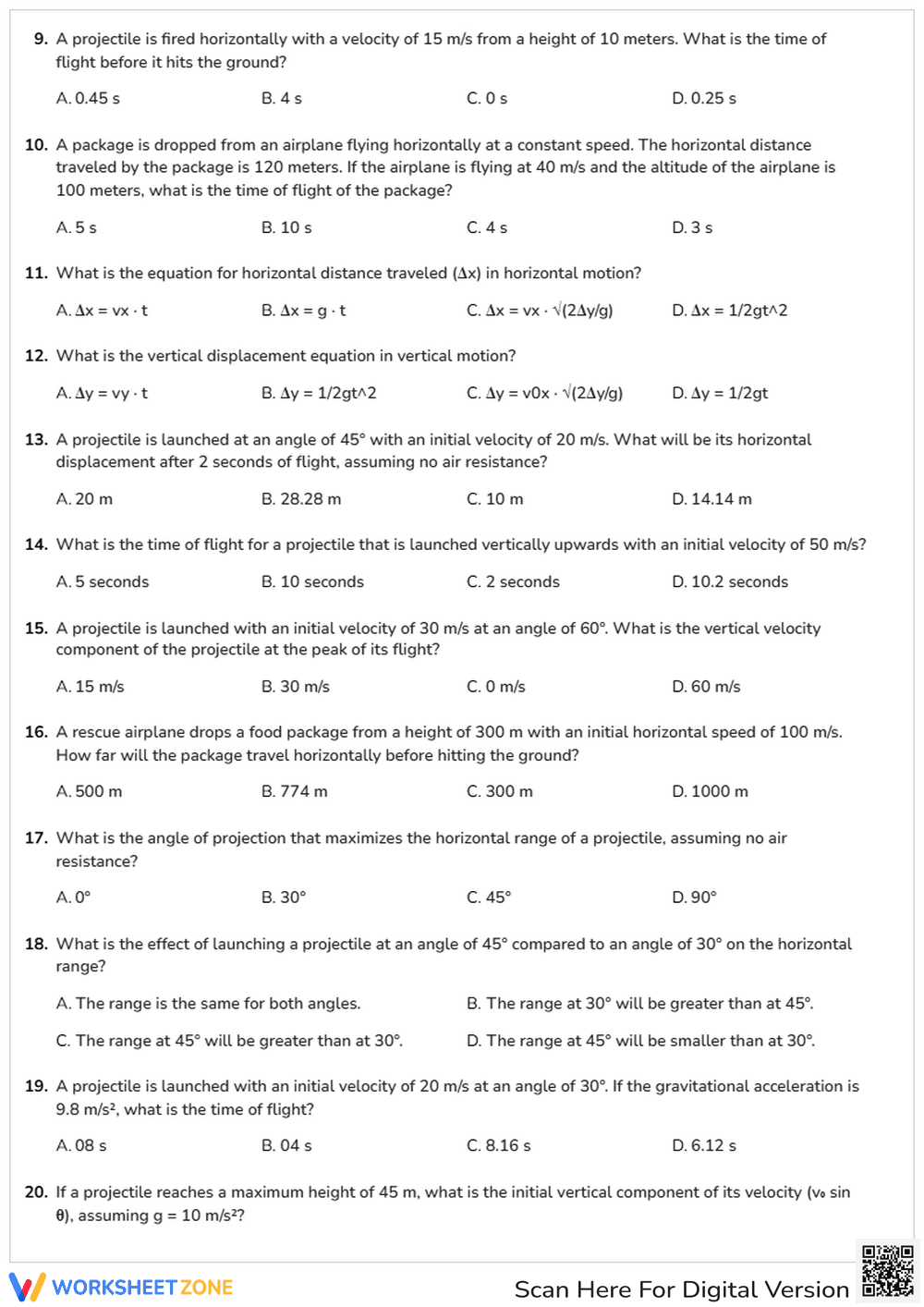
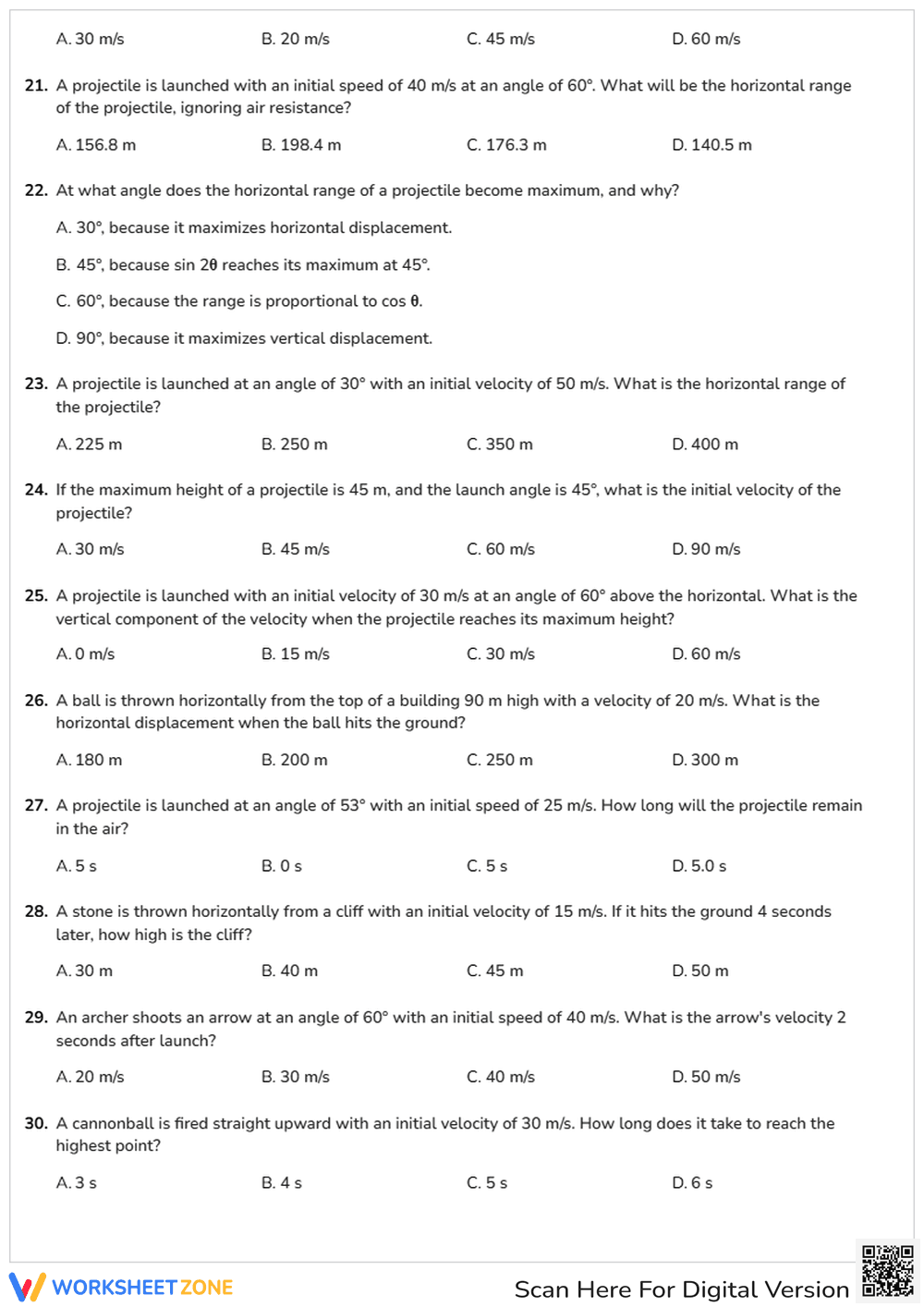
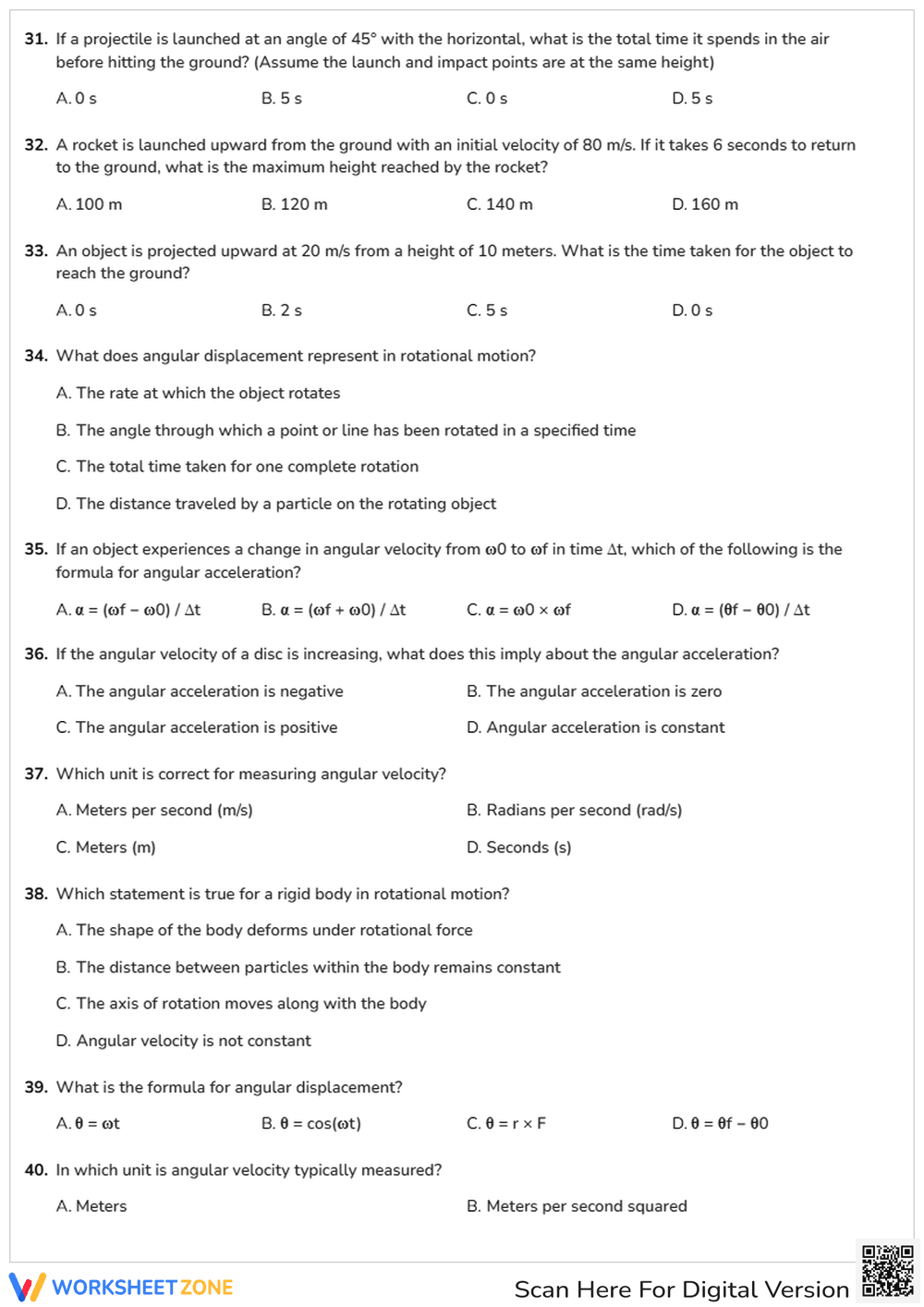
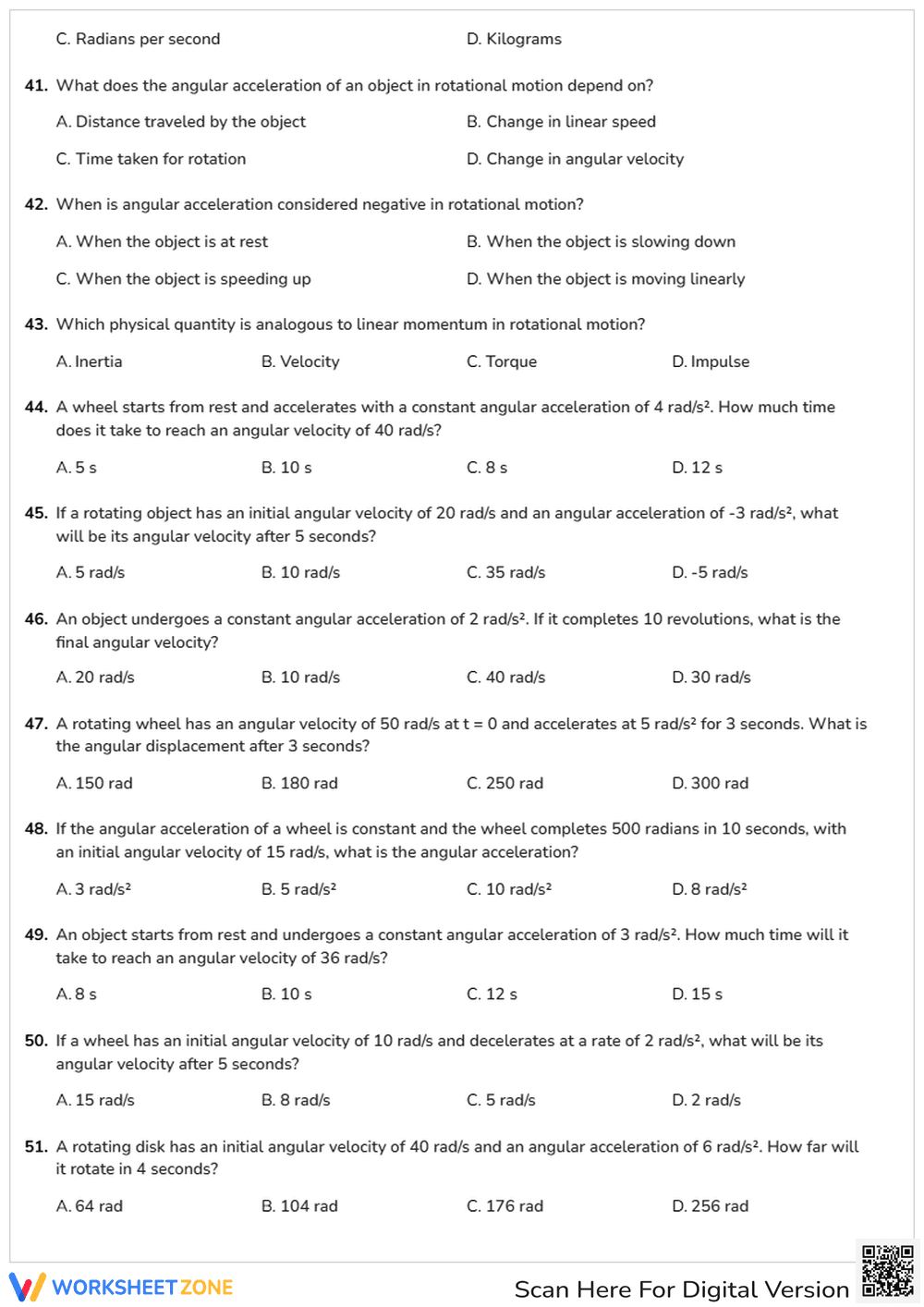
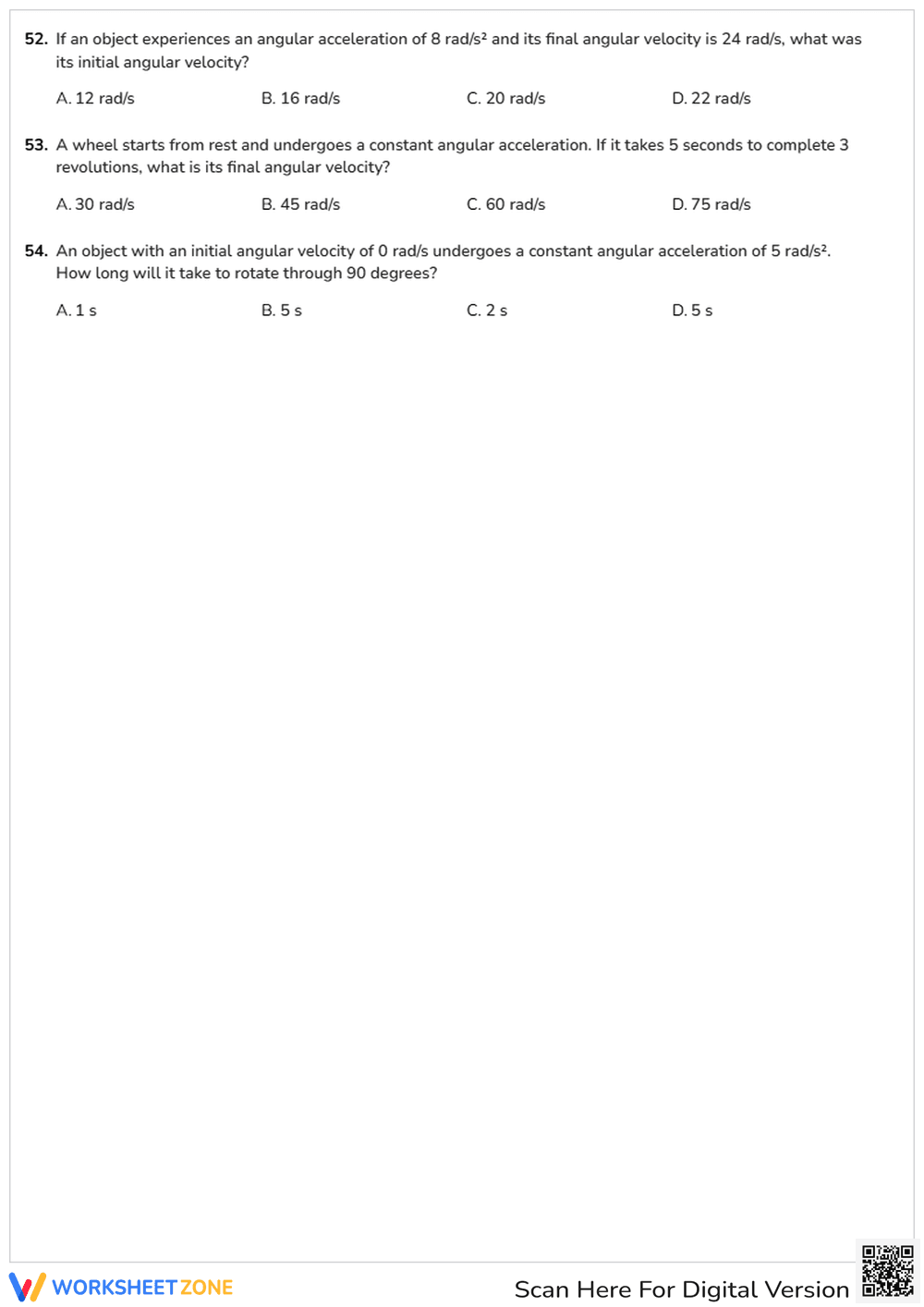
This Grade 12 physics assessment provides a comprehensive evaluation of kinematics, specifically focusing on projectile and rotational motion. Students demonstrate their ability to calculate trajectories, angular velocities, and acceleration through 54 rigorous multiple-choice questions. It serves as a high-stakes review or formal unit exam to ensure students meet advanced mechanical physics requirements.
At a Glance
- Grade: 12 · Subject: Physics
- Standard:
HS-PS2-1— Analyze data to support the claim that Newton’s second law describes motion- Skill Focus: Projectile and Rotational Kinematics
- Format: 6 pages · 54 problems · Answer key included · PDF
- Best For: Summative unit assessment or final exam prep
- Time: 60–90 minutes
The document contains 6 pages of structured assessment material. It features 54 multiple-choice questions that transition from conceptual understanding of horizontal motion to complex calculations involving angular acceleration and displacement. The layout is clean and professional, providing ample space for student work on scratch paper while maintaining a clear, readable font for the exam questions.
Each task in this exam maps directly to specific sub-skills within the kinematics domain. Educators can categorize results into three tiers: Approaching (conceptual questions 1-5), Meeting (standard calculations 6-40), and Exceeding (complex rotational problems 41-54). Scores can be entered directly into gradebooks or IEP progress notes to track student mastery of advanced mechanical physics and motion laws.
The primary alignment is `HS-PS2-1`, which requires students to analyze the mathematical relationship between force, mass, and acceleration. This worksheet extends that standard into two-dimensional motion and rotational systems. Both standard codes can be copied directly into lesson plans, IEP goals, or district curriculum mapping tools to ensure compliance with state science frameworks.
Use this resource as a summative assessment after completing a unit on advanced kinematics. It is best administered during a dedicated 90-minute block to allow for calculation time. For formative use, assign specific sections as a mid-unit check to observe how students handle the independence of horizontal and vertical motion components before the final test.
This exam is designed for Grade 12 students in honors or AP-level physics courses. It is particularly effective for learners who require practice with standardized testing formats. It pairs naturally with a formula sheet or a projectile motion simulation lab to provide a balanced theoretical and practical learning experience for college-bound science students.
This Grade 12 physics assessment focuses on the critical skills of projectile and rotational motion, aligned with the HS-PS2-1 standard. By requiring students to solve 54 distinct problems, the resource ensures a broad sampling of kinematic scenarios, from simple horizontal launches to complex angular acceleration calculations. According to the RAND AIRS 2024 report on secondary science education, high-frequency practice with varied problem types is essential for long-term retention of mathematical physics concepts. The plain-English skill addressed is the ability to calculate and predict the motion of objects in two dimensions and rotating systems. This worksheet provides the necessary rigor for college-readiness, ensuring students can apply Newton's laws to non-linear paths. The inclusion of both conceptual and quantitative questions allows educators to identify specific gaps in student understanding of vector components and rotational variables. This resource is a vital tool for achieving mastery in advanced high school physics.


