


























Views
Downloads
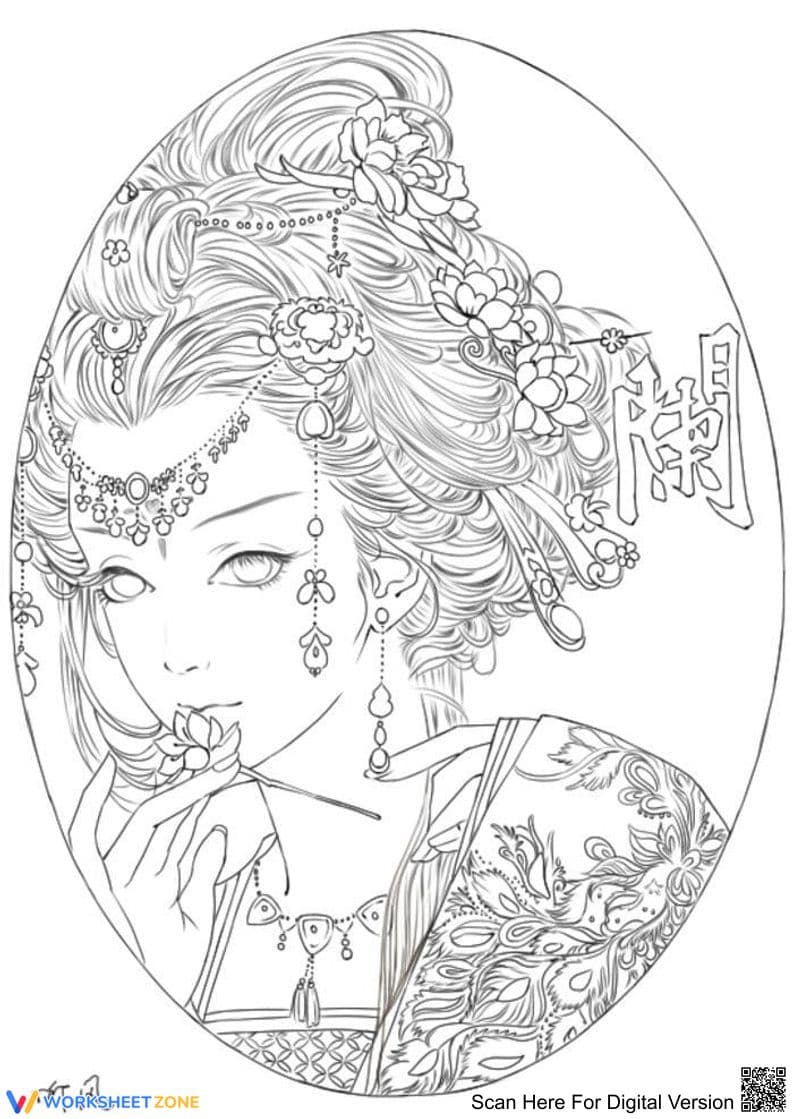

Aesthetic Girl with Jewelry Coloring Page | Ready PDF
Paste this activity's link or code into your existing LMS (Google Classroom, Canvas, Teams, Schoology, Moodle, etc.).
Students can open and work on the activity right away, with no student login required.
You'll still be able to track student progress and results from your teacher account.
This high-school level aesthetic coloring page provides a sophisticated creative outlet that bridges the gap between visual arts and narrative development. By focusing on the intricate details of the character's jewelry and floral adornments, students engage in a meditative practice that enhances focus while serving as a primary source for descriptive writing exercises. This resource transforms a simple artistic task into a rigorous exploration of characterization and setting.
At a Glance
- Grade: 10-12 · Subject: English / Arts
- Standard:
CCSS.ELA-LITERACY.W.11-12.3— Write narratives to develop real or imagined experiences using effective technique and well-chosen details.- Skill Focus: Visual narrative and precision
- Format: 1 page · 1 complex illustration · No answer key required · PDF
- Best For: Creative writing prompts and mindfulness breaks
- Time: 20–45 minutes
What's Inside: This printable resource features one high-definition, full-page line drawing of a girl in traditional aesthetic attire, complete with complex jewelry patterns and floral motifs. The linework is specifically designed for older students, offering a level of complexity that rewards patience and attention to detail. The open-ended nature of the illustration allows it to function as a standalone art piece or a structured brainstorming tool for English Language Arts assignments.
Zero-Prep Workflow
- Print (30 seconds): Select the high-resolution PDF and print enough copies for your class or small group. The black-and-white design ensures high-contrast clarity on any standard school copier.
- Distribute (1 minute): Hand out the sheets alongside a prompt asking students to identify three specific details in the jewelry that suggest a specific cultural or historical setting.
- Review (1 minute): Collect the finished pieces to display as a gallery walk or use them as the visual foundation for a 500-word narrative essay. Total teacher preparation time is under two minutes.
Standards Alignment: This worksheet aligns with `CCSS.ELA-LITERACY.W.11-12.3`, requiring students to write narratives using effective technique and well-chosen details. By using the visual details of the jewelry and character expression, students practice sensory language and character development. These standard codes can be integrated directly into lesson plans or district curriculum mapping tools.
How to Use It: Assign this worksheet during the pre-writing phase of a narrative unit to help students visualize their protagonists. Alternatively, use it as a formative assessment tool for descriptive language; ask students to write a paragraph describing the texture and light reflecting off the jewelry. This activity typically takes 20 to 45 minutes depending on the level of artistic rendering.
Who It's For: This resource is ideal for Grade 10-12 students who require a sophisticated creative outlet. It is particularly effective for English Language Learners (ELLs) using visual cues to build vocabulary, or for students needing a high-interest mindfulness activity. Pair this with a short story analysis or a lesson on character archetypes to maximize instructional impact.
According to research by Fisher & Frey (2014), integrating visual literacy tools supports the development of complex cognitive pathways required for high-level narrative writing. By engaging with `CCSS.ELA-LITERACY.W.11-12.3` through a visual medium, students are better equipped to translate abstract character traits into descriptive prose. The intricate jewelry and floral patterns serve as anchor points for sensory details, essential for college and career readiness. This worksheet provides a low-stakes entry point into high-stakes writing tasks, ensuring students practice precision and detail-oriented thinking. Such visual prompts are a proven method for increasing engagement in the secondary classroom while promoting emotional regulation through artistic expression.


