


























Views
Downloads



L.3.1 Worksheet: Grammar Assessment — Grade 3-4 Aligned
Paste this activity's link or code into your existing LMS (Google Classroom, Canvas, Teams, Schoology, Moodle, etc.).
Students can open and work on the activity right away, with no student login required.
You'll still be able to track student progress and results from your teacher account.
This comprehensive ELA assessment evaluates Grade 3 and 4 students' mastery of foundational grammar. Covering pronouns, subject-verb agreement, and capitalization, it provides a clear picture of student progress. Use this printable resource to identify learning gaps and ensure your learners are ready for advanced writing proficiency.
At a Glance
- Grade: 3–4 · Subject: ELA Grammar
- Standard:
CCSS.ELA-LITERACY.L.3.1— Demonstrate command of standard English grammar and usage when writing.- Skill Focus: Pronouns, Verb Tense, and Capitalization
- Format: 5 pages · 30 problems · No answer key · PDF
- Best For: End-of-unit assessment
- Time: 30–45 minutes
What's Inside
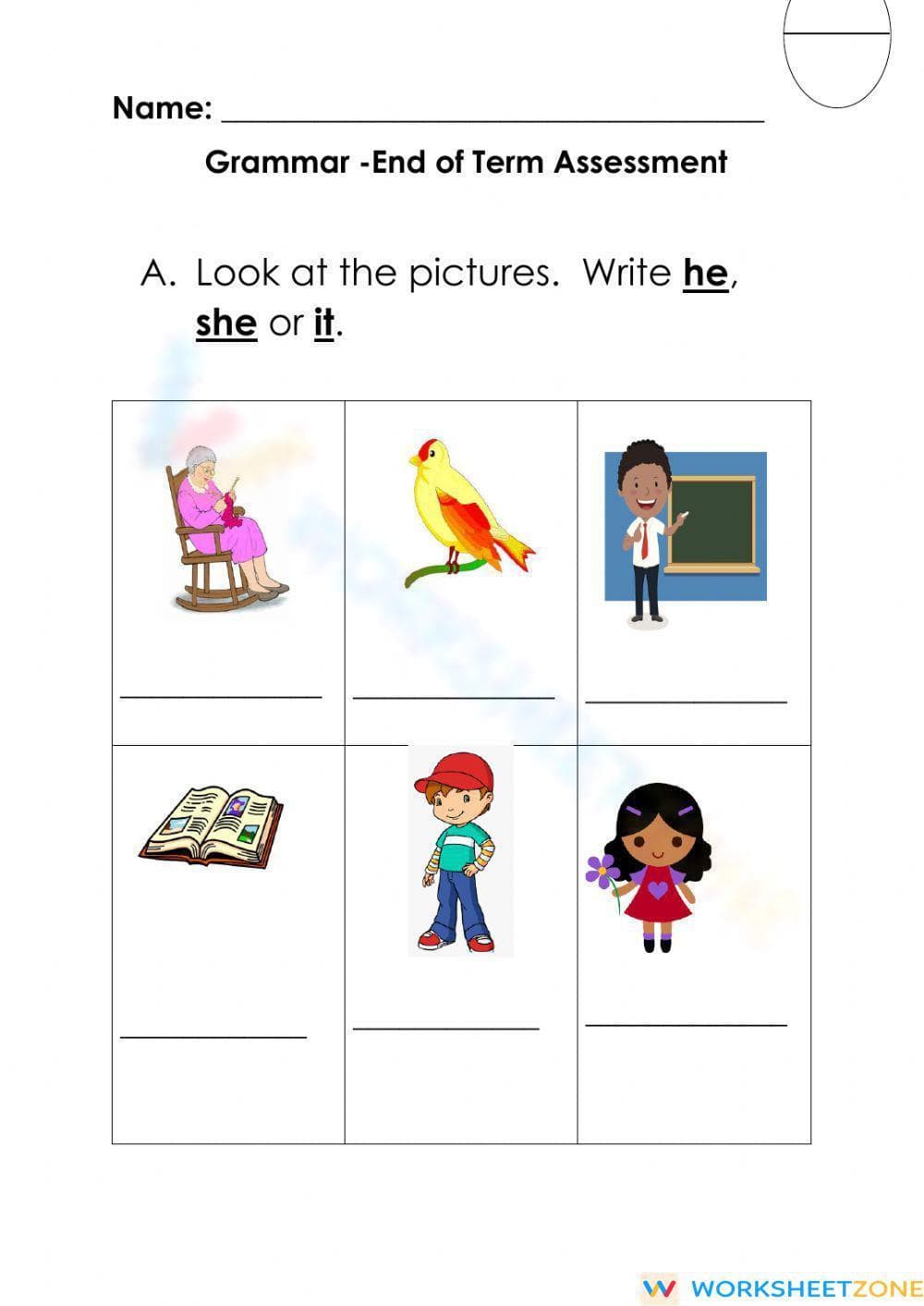
This 5-page assessment functions as a robust skills review. Students match pronouns to visual cues, then progress to choosing "to be" verb forms in present (am/is/are) and past (was/were) tenses. The final sections include a capitalization table and full-sentence editing. The uncluttered layout ensures students can focus on demonstrating knowledge across 30 distinct items without visual distraction.
Mastery Evidence
Tasks map to sub-skills of L.3.1 and L.3.2. Parts A through C provide evidence of pronoun and subject-verb agreement mastery. Parts D and E measure command of mechanics and capitalization. Teachers can use these sections to score students on Approaching, Meeting, or Exceeding expectations, making it easy to enter data into gradebooks or IEP progress notes for individualized student tracking.
Standards Alignment
The primary focus is CCSS.ELA-LITERACY.L.3.1, requiring students to demonstrate command of standard English grammar. Specifically, it addresses pronoun agreement and verb usage. It also aligns with CCSS.ELA-LITERACY.L.3.2 regarding capitalization at the beginning of sentences. These standard codes can be copied directly into lesson plans, IEP goals, or district curriculum mapping tools for administrative compliance.
How to Use It
Administer this as a summative assessment at the end of a grammar unit. Alternatively, use it for formative assessment by observing students as they work through the verb sections. If a student struggles with Part C, it indicates a need for targeted small-group intervention. Most learners will complete the full 30-task set within 45 minutes of independent work.
Who It's For
This resource is tailored for Grade 3 and 4 students, including English Language Learners needing structured syntax practice. It pairs naturally with "Parts of Speech" anchor charts or lessons on irregular verbs. Visual support in the pronoun section makes it accessible for students who benefit from multimodal learning cues, ensuring all learners can successfully demonstrate their grammatical understanding.
According to the RAND AIRS 2024 report on foundational literacy, structured assessments that isolate specific grammatical components are essential for identifying student misconceptions before they become ingrained writing habits. This Grade 3-4 grammar packet addresses this need by providing 30 targeted tasks that measure command of CCSS.ELA-LITERACY.L.3.1. Research by Fisher & Frey (2014) emphasizes that the gradual release of responsibility is most effective when preceded by clear diagnostic data, which this assessment provides through its focus on pronouns and verbs. By validating student ability to use pronouns alongside complex subject-verb agreement in both present and past tenses, educators can more accurately predict success in higher-order narrative and informational writing tasks. This assessment is a high-utility tool for classroom teachers looking to ensure their students meet the rigorous demands of state standards while building a strong foundation for future academic writing.


