




























Views
Downloads

Free Tone Concessions Viewpoint Worksheet | Grade 9

Paste this activity's link or code into your existing LMS (Google Classroom, Canvas, Teams, Schoology, Moodle, etc.).
Students can open and work on the activity right away, with no student login required.
You'll still be able to track student progress and results from your teacher account.
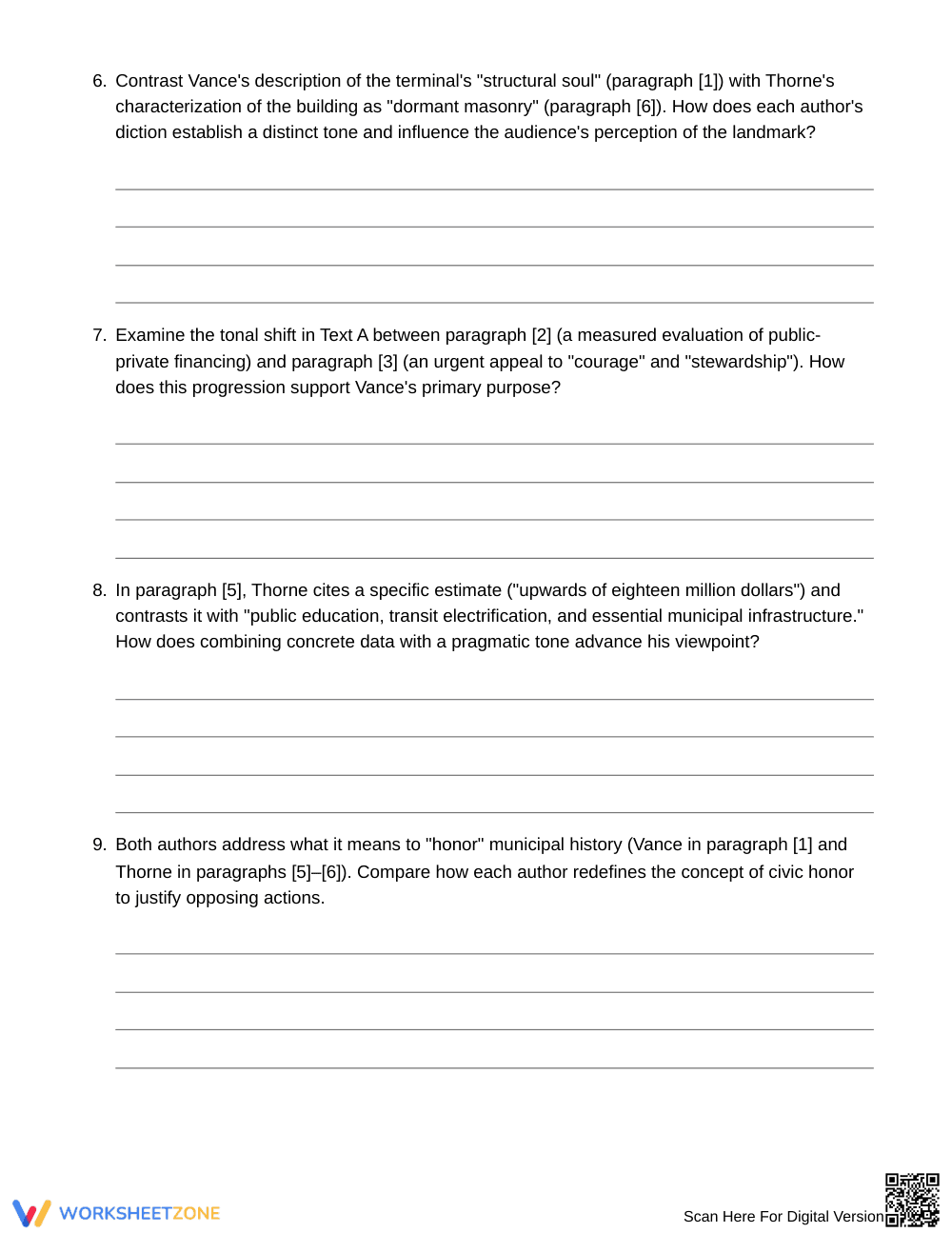
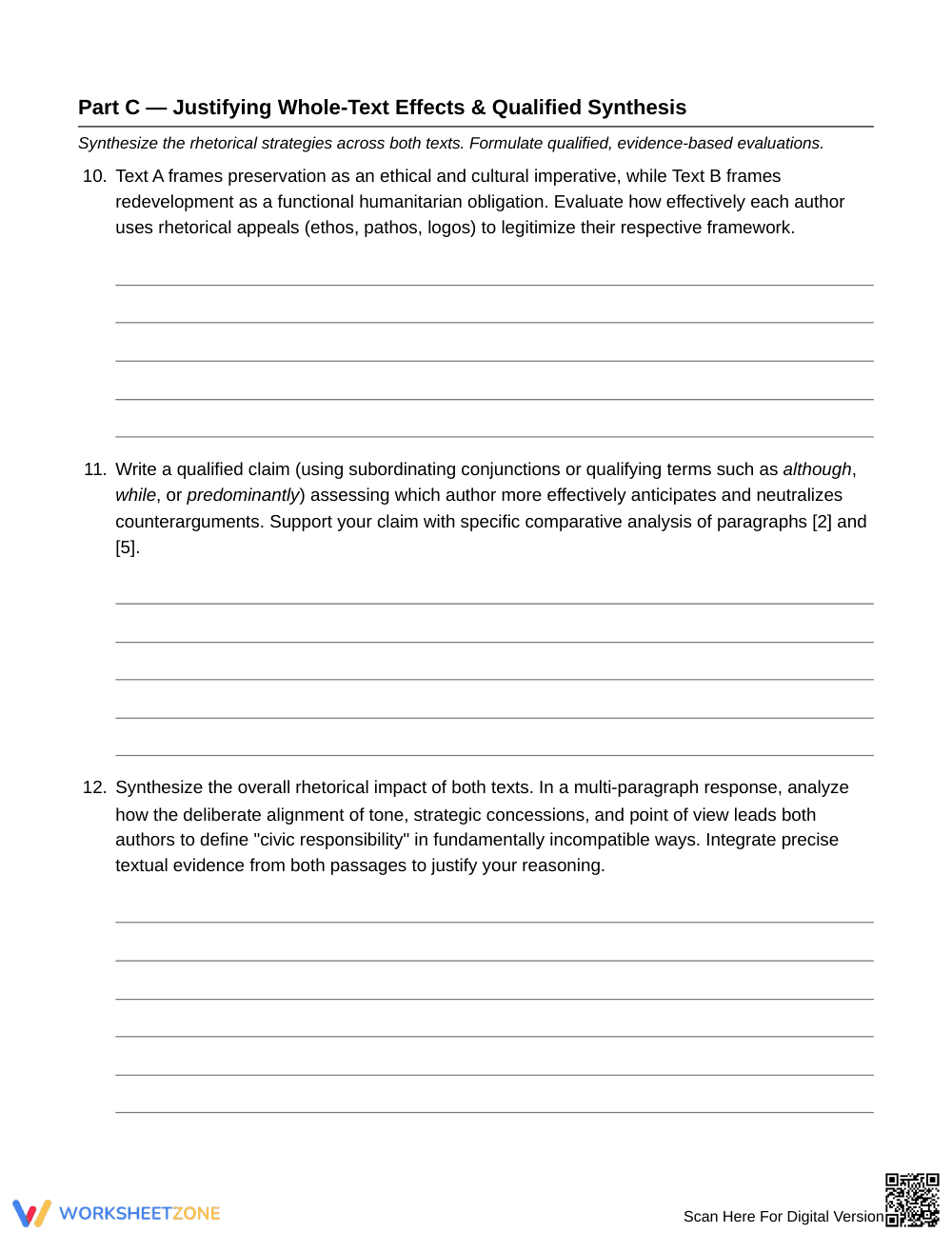
Students will master the interconnected skills of identifying tone, recognizing strategic concessions, and articulating author viewpoint in civic discourse. This Grade 9 English I worksheet guides learners through twelve targeted tasks that build analytical precision, preparing them for rigorous rhetorical analysis on state assessments.
At a Glance
- Grade: 9 · Subject: English I
- Standard:
RI.9-10.6— Analyze how authors develop perspective using tone, concessions, and evidence- Skill Focus: Connect Tone, Concessions, and Viewpoint
- Format: 6 pages · 12 problems · Answer key included · PDF
- Best For: Rhetorical analysis practice in civics units
- Time: 45–60 minutes
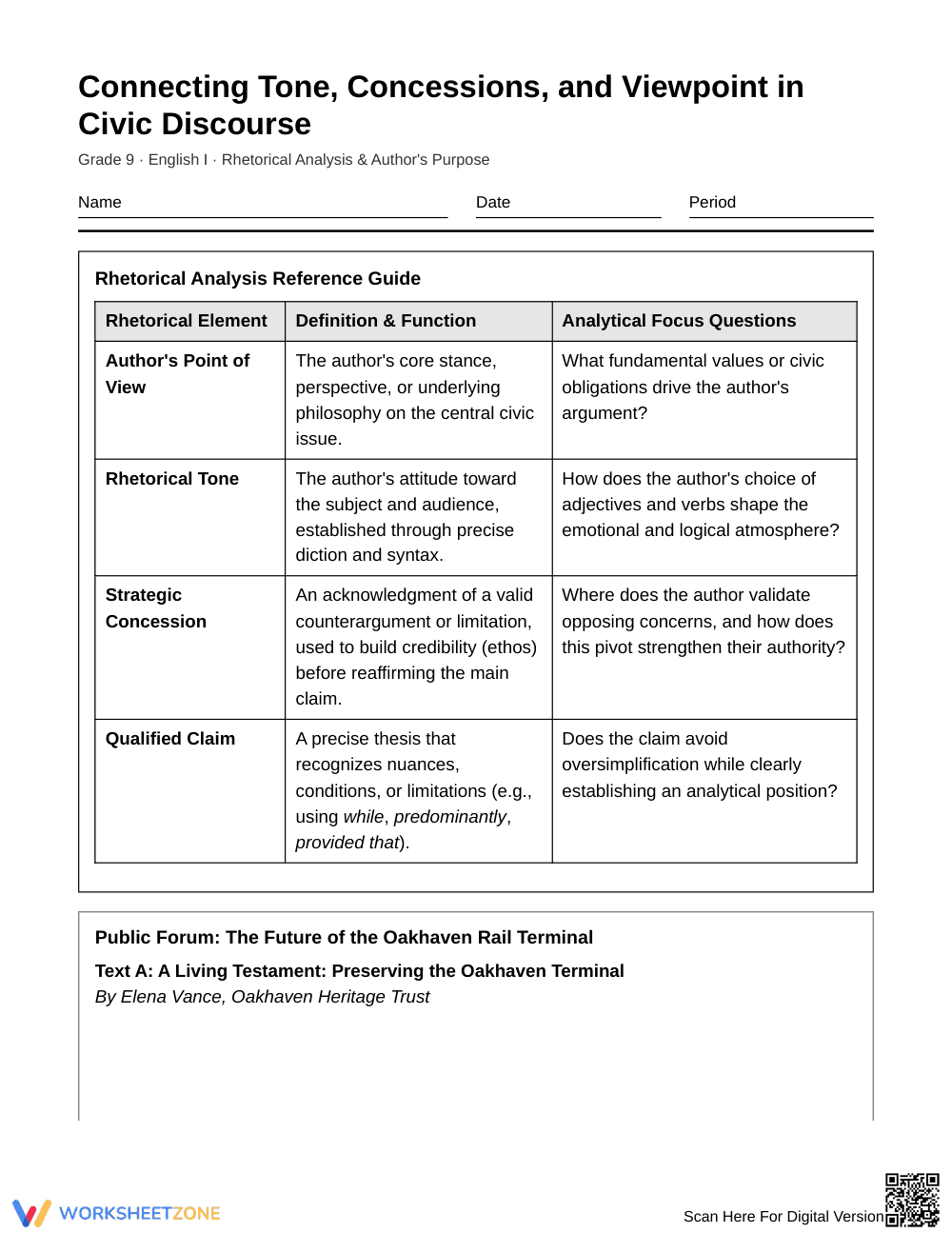
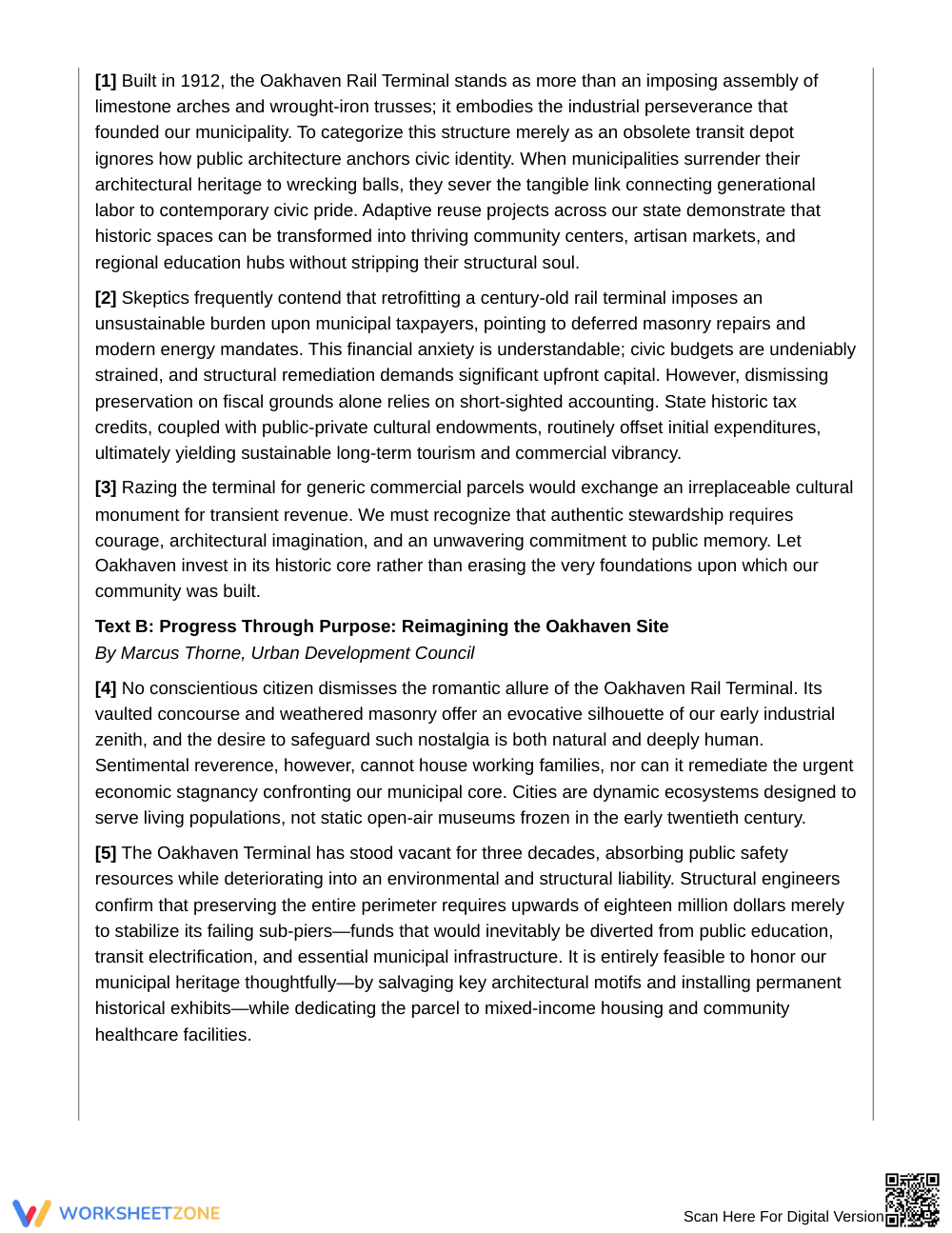
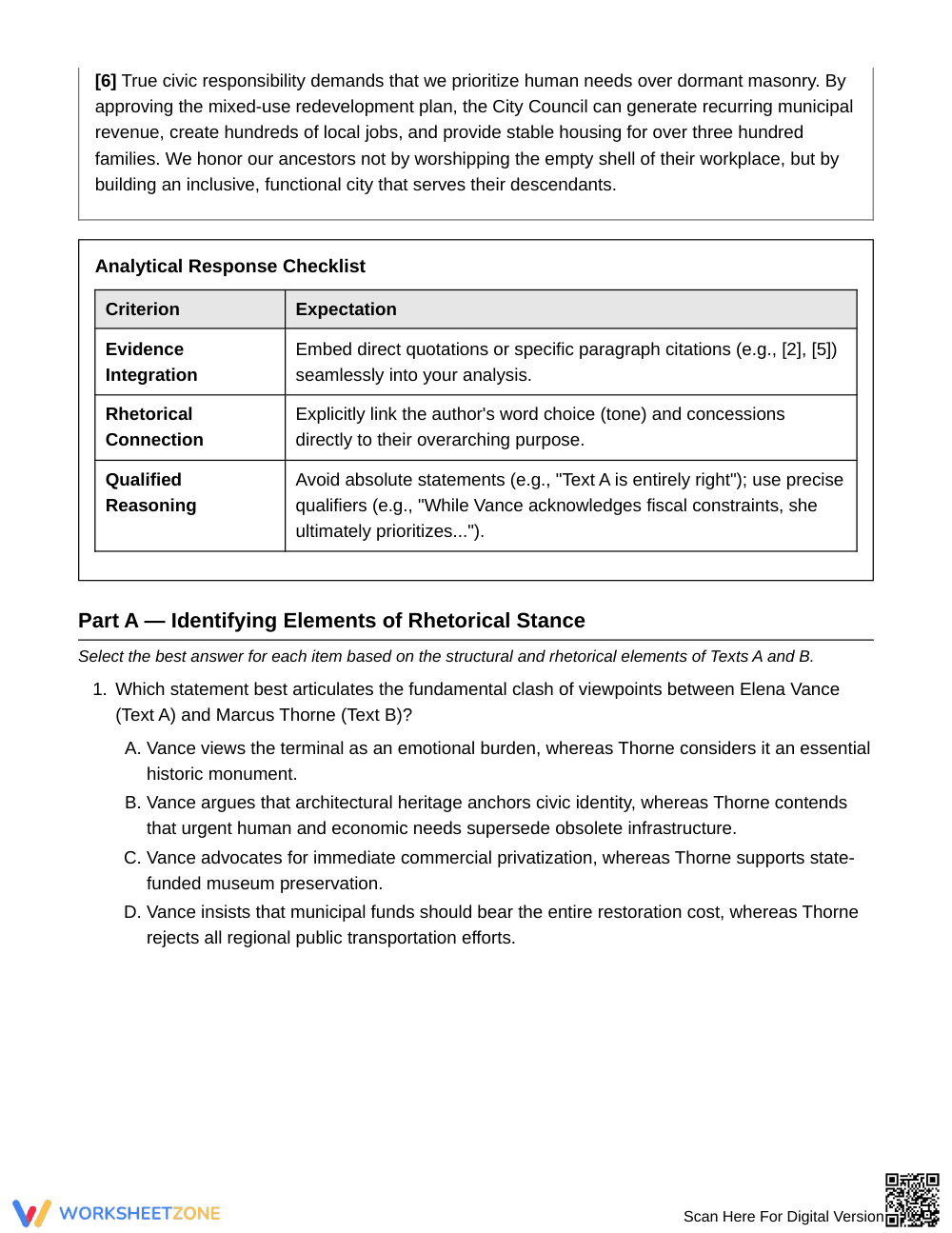
The packet spans six double‑sided pages and contains twelve progressively challenging tasks. It opens with a concise Rhetorical Analysis Reference Guide, provides worked examples, and includes a sentence‑frame checklist for each response. An answer key occupies four pages, allowing quick teacher verification.
- Rubric‑driven mastery evidence: each task aligns with a sub‑skill of RI.9‑10.6, and teachers can score using the three‑tier rubric (Approaching, Meeting, Exceeding) even though the worksheet itself does not embed a rubric.
- Scores map directly to the standard’s evidence‑based criteria, enabling seamless entry into grade‑book or IEP progress trackers.
- Students receive immediate feedback by comparing their responses to the answer key, reinforcing the analytical cycle of claim‑evidence‑reasoning.
RI.9-10.6: Determine an author's point of view or purpose in a text and analyze how it is conveyed through the use of language, structure, and evidence. This worksheet operationalizes the standard by requiring learners to cite specific diction, identify strategic concessions, and articulate the resulting viewpoint. Both the primary code and its plain‑English description can be copied directly into lesson plans, IEP goals, or district curriculum mapping tools.
How to Use It
- Before direct instruction: have students complete the “Identifying Elements” multiple‑choice set to activate prior knowledge (5 min).
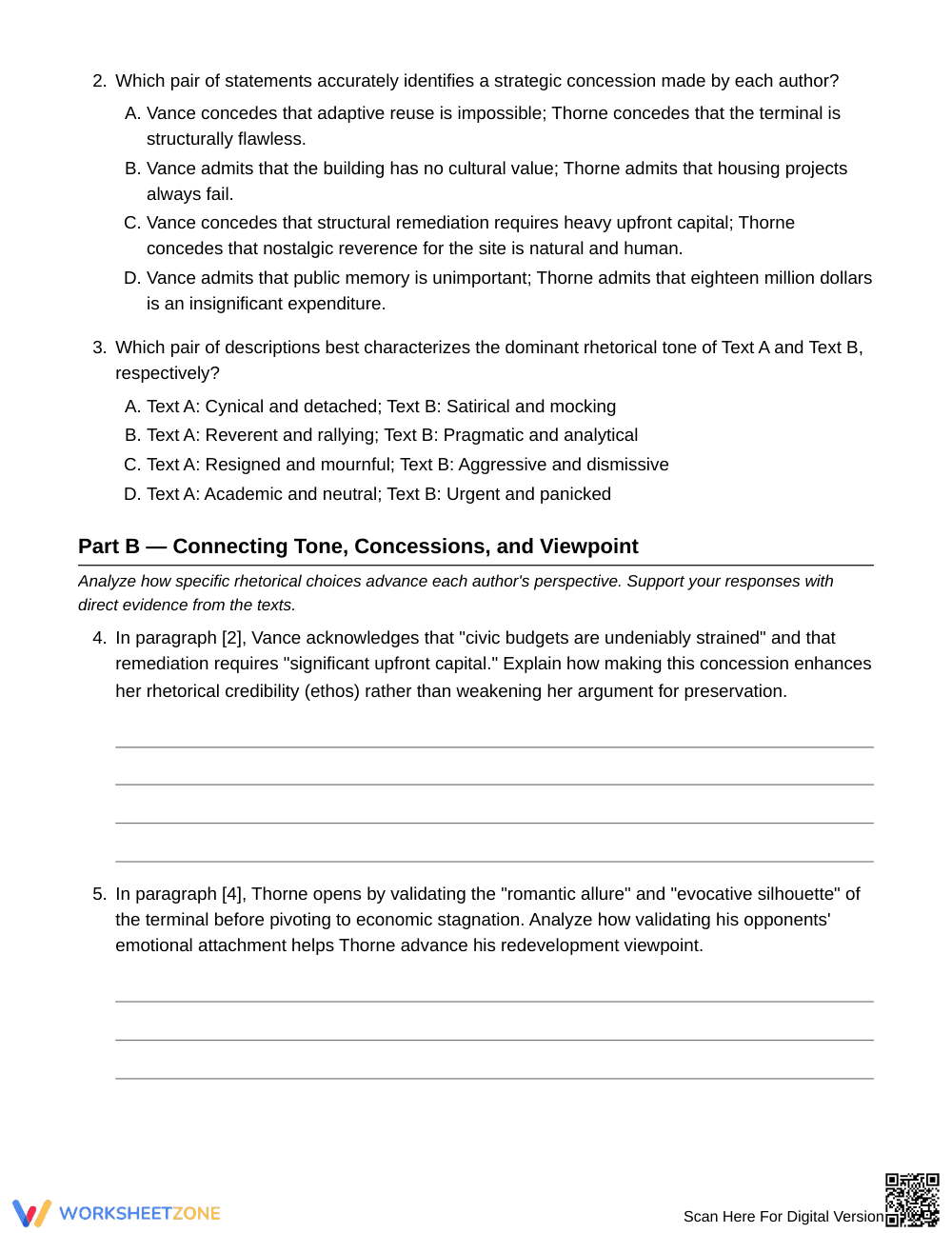
- During a lesson on rhetorical strategies: use the “Connecting Tone, Concessions, and Viewpoint” prompts as guided practice while the teacher models evidence integration (15 min).
- After instruction: assign the synthesis section as independent work; collect responses for formative assessment and note whether students qualify their claims with appropriate concession language (20–25 min).
Who It's For
This worksheet is designed for ninth‑grade English I students preparing for state‑aligned assessments. It supports diverse learners by offering clear sentence frames and a word bank within the reference guide. Pair it with the provided Rhetorical Analysis Reference Guide or an anchor chart on rhetorical appeals for a cohesive instructional unit.
Research shows that explicit instruction in rhetorical analysis improves students’ ability to construct evidence‑based arguments (Fisher & Frey, 2014). The RI.9-10.6 standard directs learners to “analyze how authors develop perspective,” a skill directly cultivated by this worksheet’s focus on tone, concessions, and viewpoint. By guiding students through qualified claims and strategic concessions, the activity aligns with proven practices for deepening textual comprehension and argumentative writing. Teachers can confidently assign this resource to boost analytical rigor and meet the rigorous expectations of the Common Core.


