


























Views
Downloads

Balanced and Unbalanced Forces Printable | Grade 6 Science
Paste this activity's link or code into your existing LMS (Google Classroom, Canvas, Teams, Schoology, Moodle, etc.).
Students can open and work on the activity right away, with no student login required.
You'll still be able to track student progress and results from your teacher account.
This comprehensive Grade 6 science worksheet provides extensive practice with balanced and unbalanced forces, friction, and gravity. Students analyze real-world scenarios, calculate net forces, and interpret data graphs to understand how forces affect motion. This resource ensures learners build a strong foundation in foundational physics concepts.
At a Glance
- Grade: 6 · Subject: Science
- Standard:
MS-PS2-2— Plan an investigation to provide evidence that change in motion depends on forces.- Skill Focus: Balanced and Unbalanced Forces
- Format: 8 pages · 21 problems · PDF
- Best For: Unit review and independent practice
- Time: 45–60 minutes
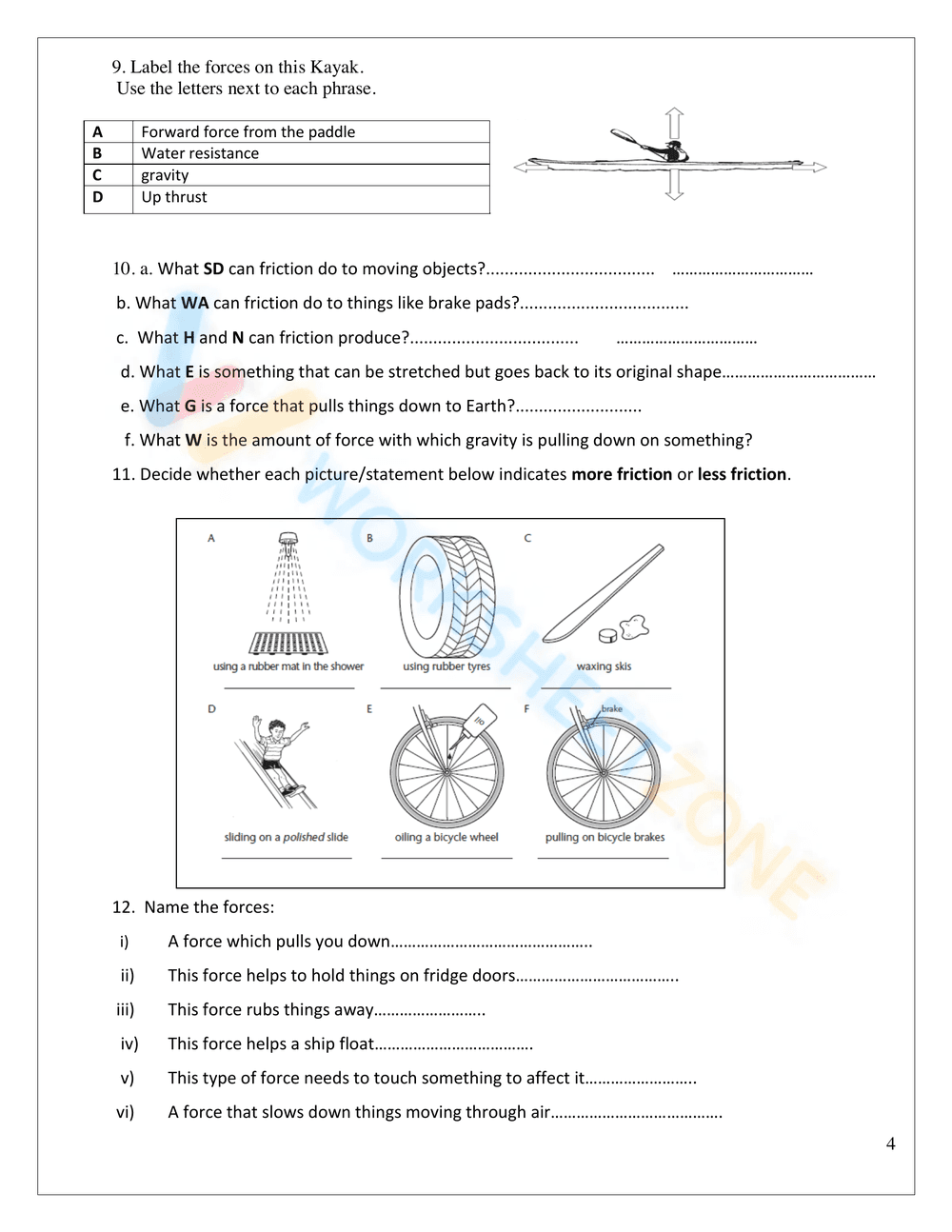
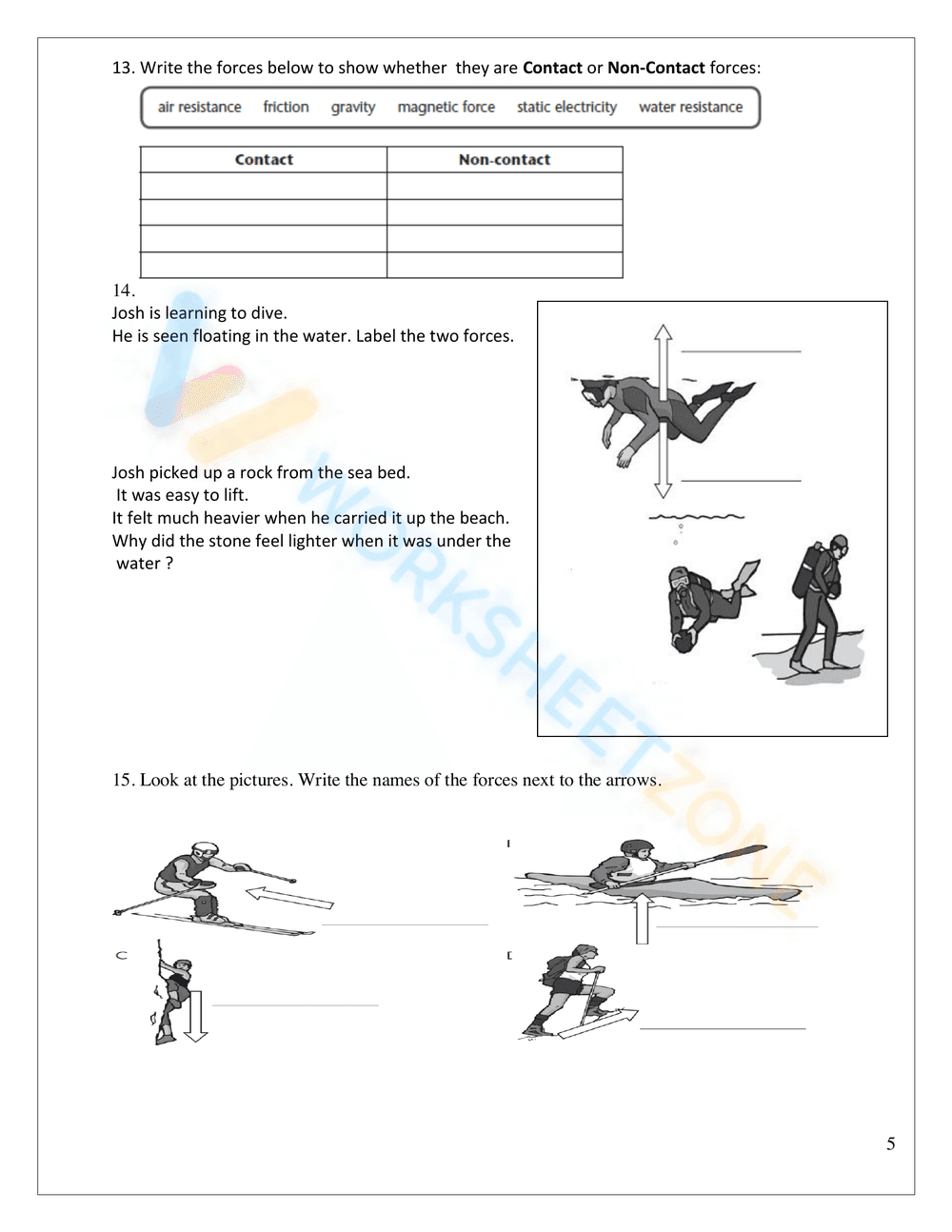
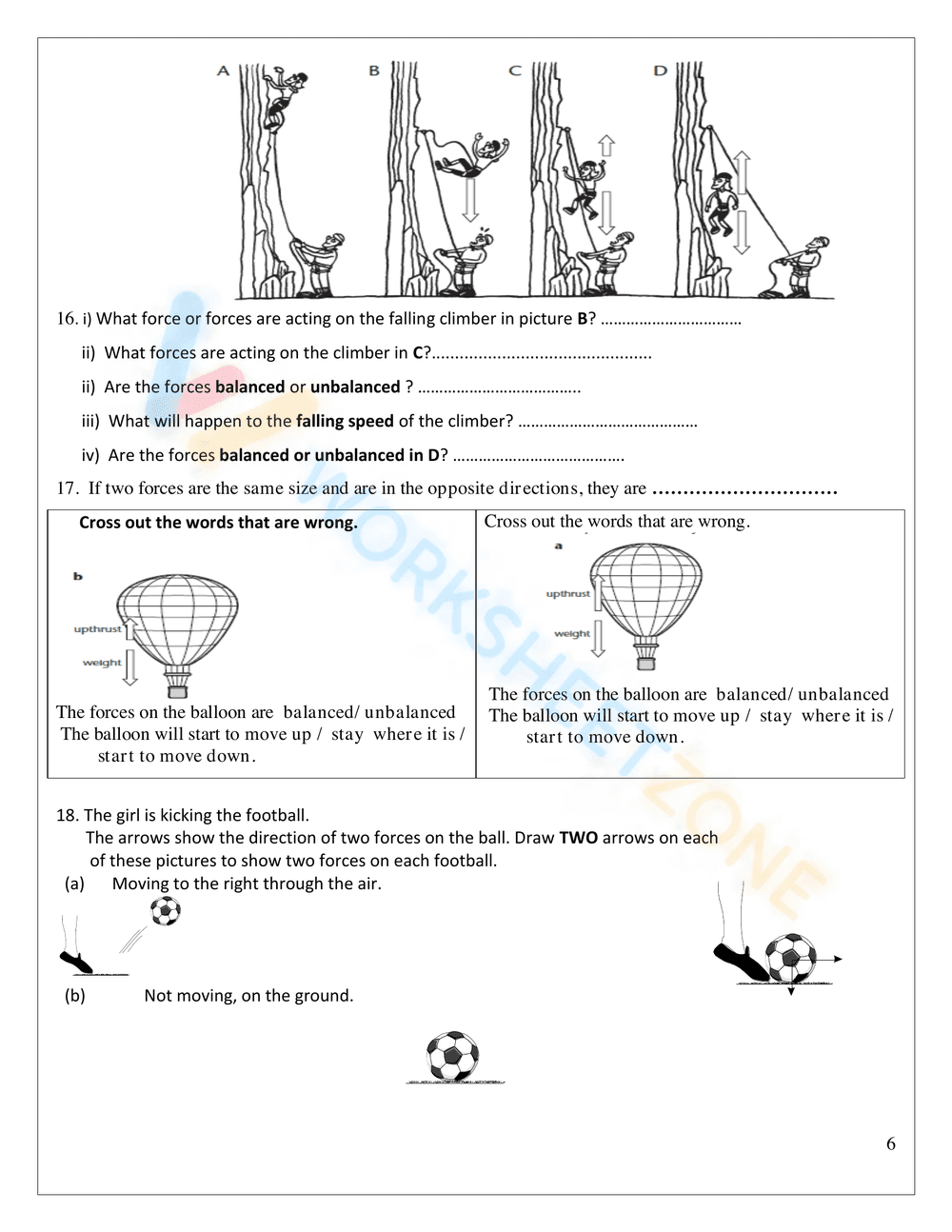
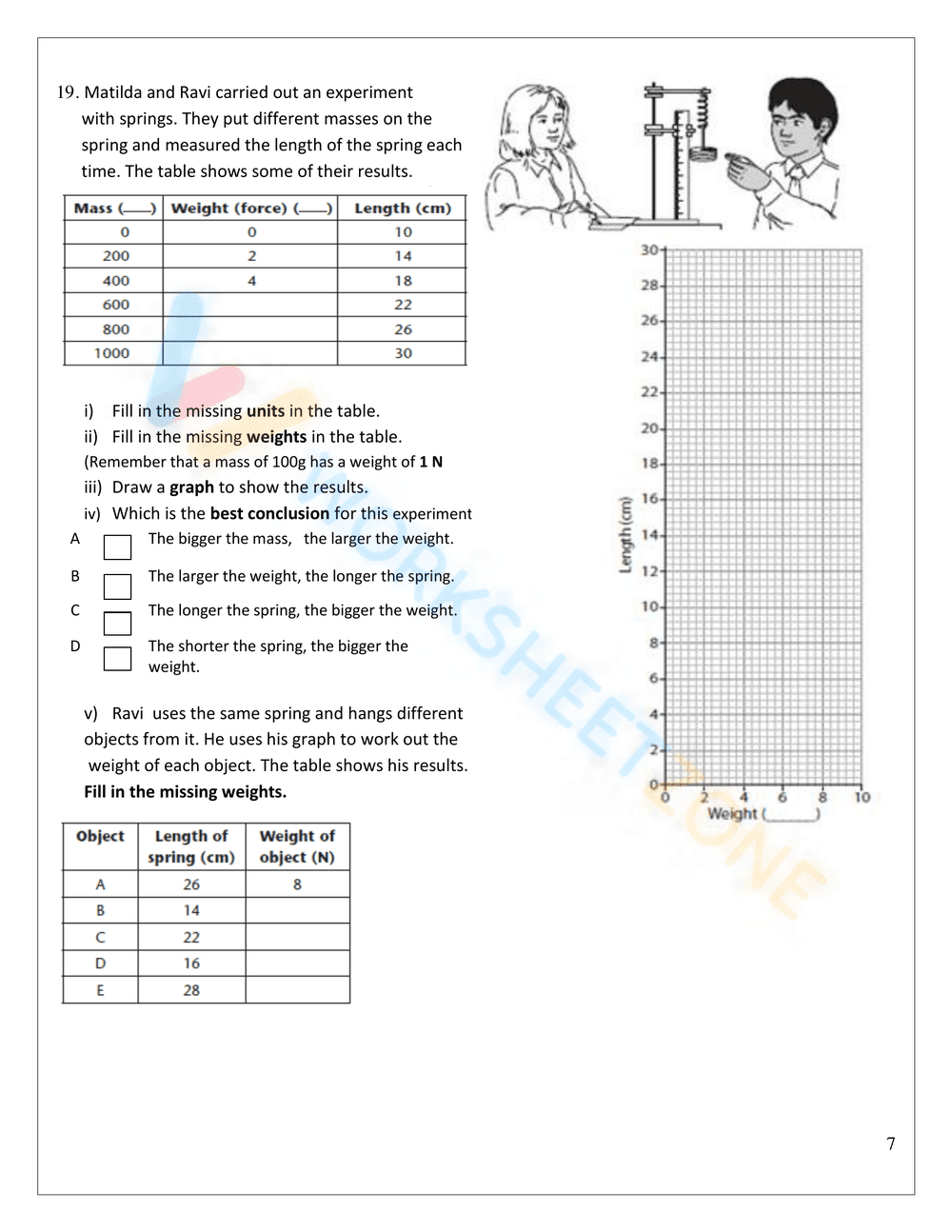
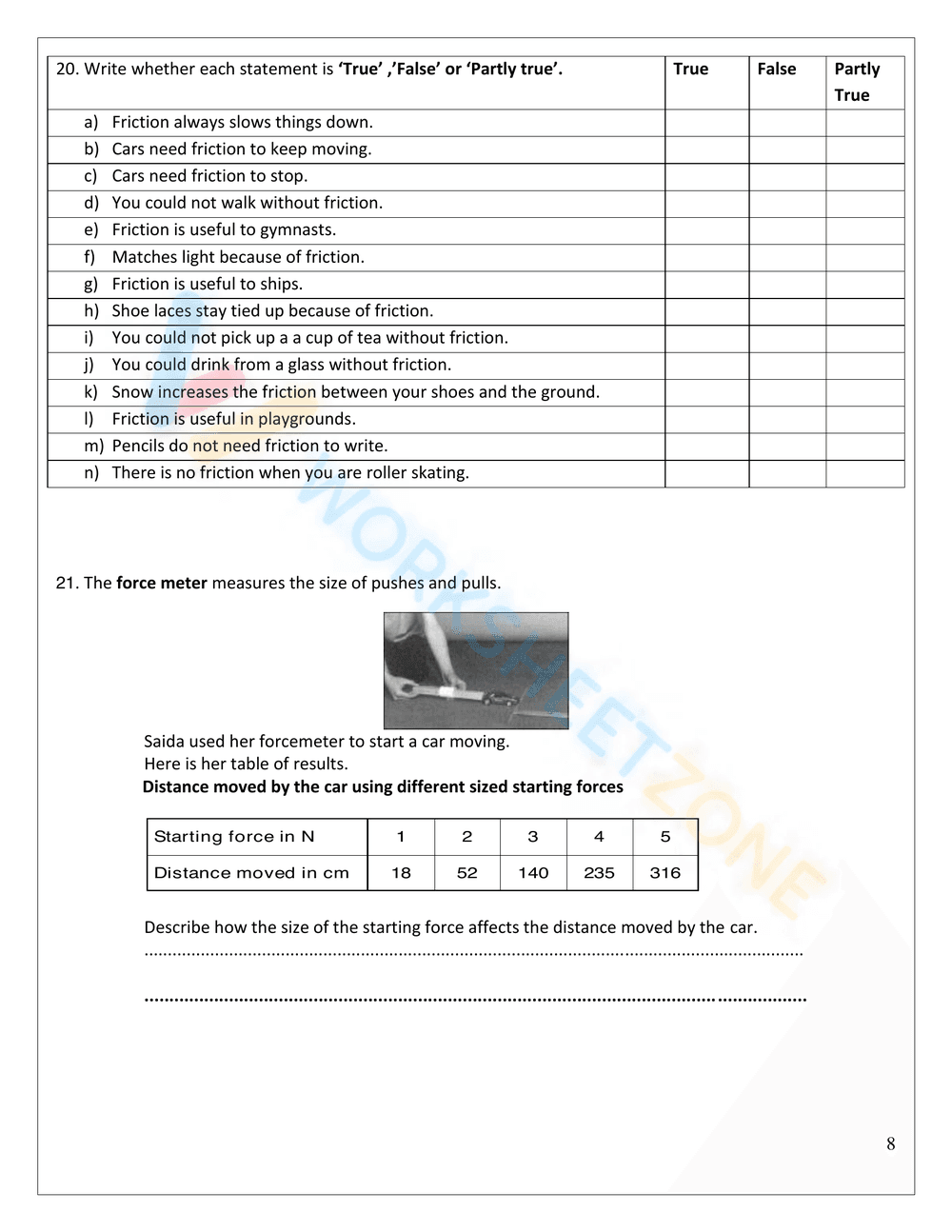
This eight-page packet features 21 multi-part tasks that explore the mechanics of motion. The resource includes fill-in-the-blank vocabulary exercises, multiple-choice questions, and diagram analysis featuring tug-of-war, kayaking, and climbing scenarios. Students will also find a graphing exercise where they plot spring extension data and a true/false section to correct common misconceptions about friction.
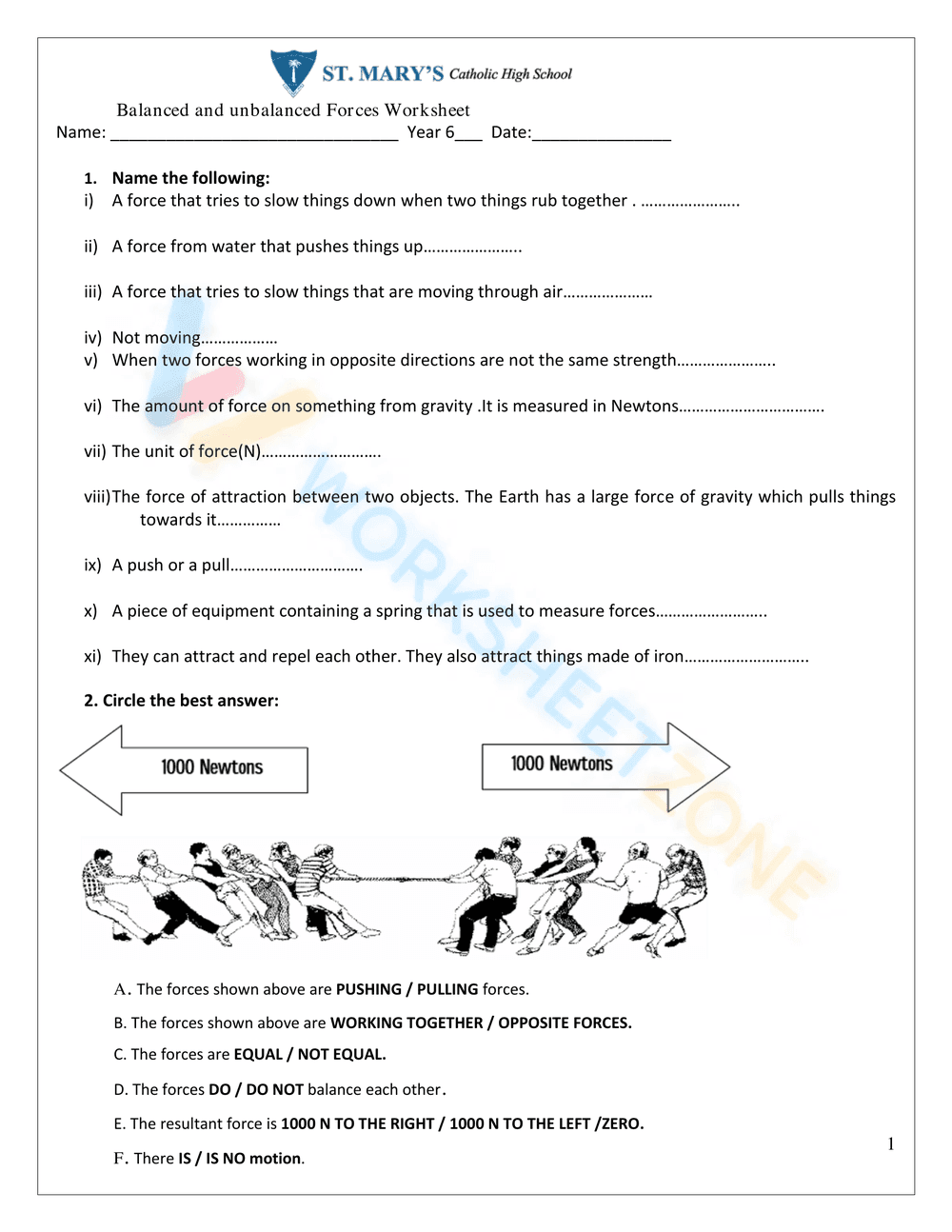
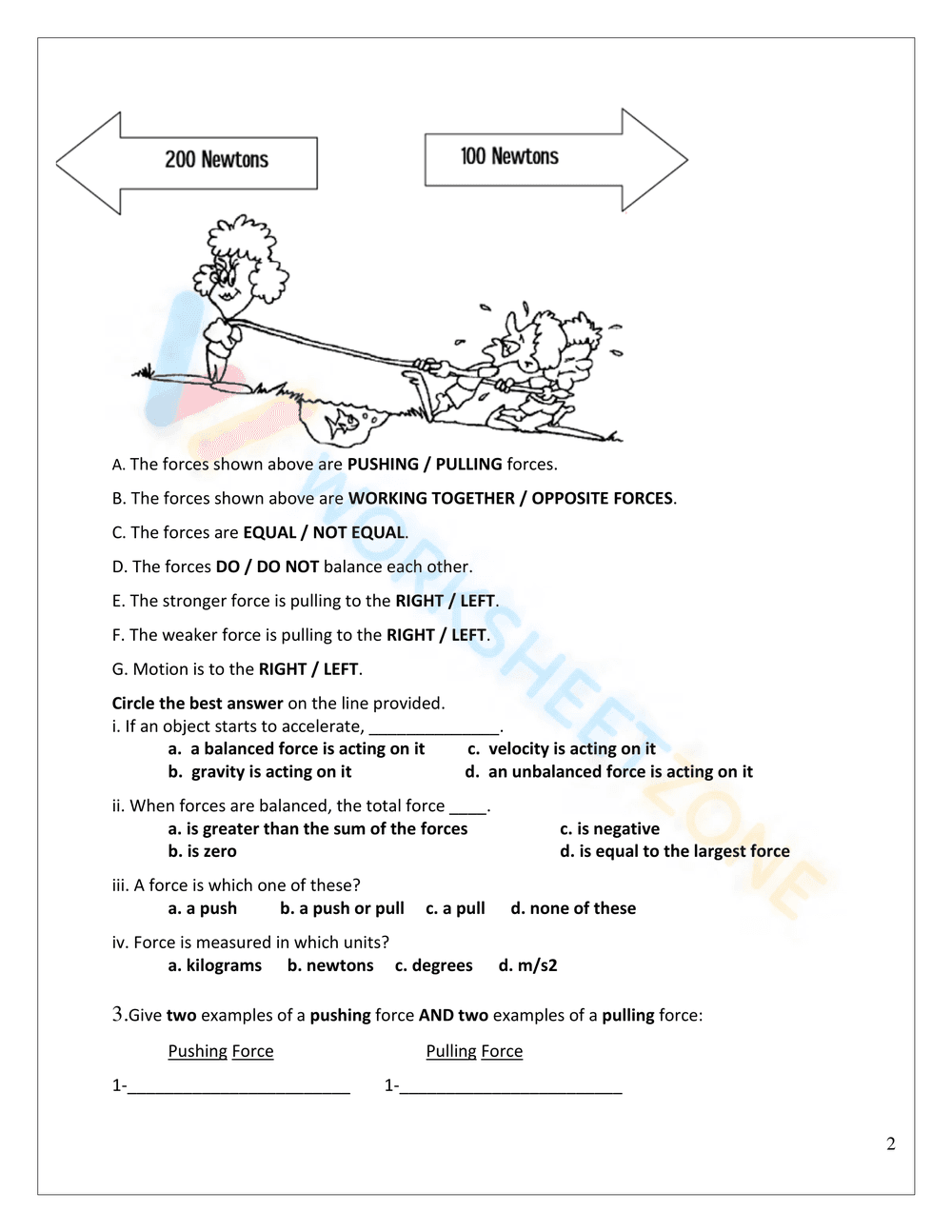
- Guided practice: Initial tasks introduce vocabulary and provide clear visual models, such as tug-of-war diagrams with labeled Newtons, to help students identify net force direction.
- Supported practice: Middle sections require students to categorize contact versus non-contact forces and label force arrows on various objects, reinforcing conceptual understanding with moderate scaffolding.
- Independent practice: The final pages challenge students to graph experimental data, draw conclusions about mass and weight, and analyze force meter results without visual prompts.
This gradual-release approach moves students smoothly from the "I Do" phase of basic identification to the "You Do" phase of data interpretation.
This material is strictly aligned to MS-PS2-2, requiring students to provide evidence that the change in an object's motion depends on the sum of the forces on the object and the mass of the object. It also supports foundational understanding of Newton's laws of motion. Both standard codes can be copied directly into lesson plans, IEP goals, or district curriculum mapping tools.
Deploy this packet during the middle of a physics unit after direct instruction on net force and friction. It serves effectively as a multi-day independent practice assignment or a comprehensive study guide before a summative assessment. As a formative assessment tip, monitor how students draw force arrows on the football and hot air balloon diagrams to quickly gauge their grasp of directional magnitude. Expected completion time ranges from 45 to 60 minutes depending on reading level.
This resource is designed for Grade 6 general education science students, though it works well for upper elementary learners needing advanced extension. The visual diagrams provide excellent scaffolding for English Language Learners processing physics vocabulary. Pair this packet with hands-on spring scale experiments or a direct instruction lesson on Newton's laws to maximize comprehension.
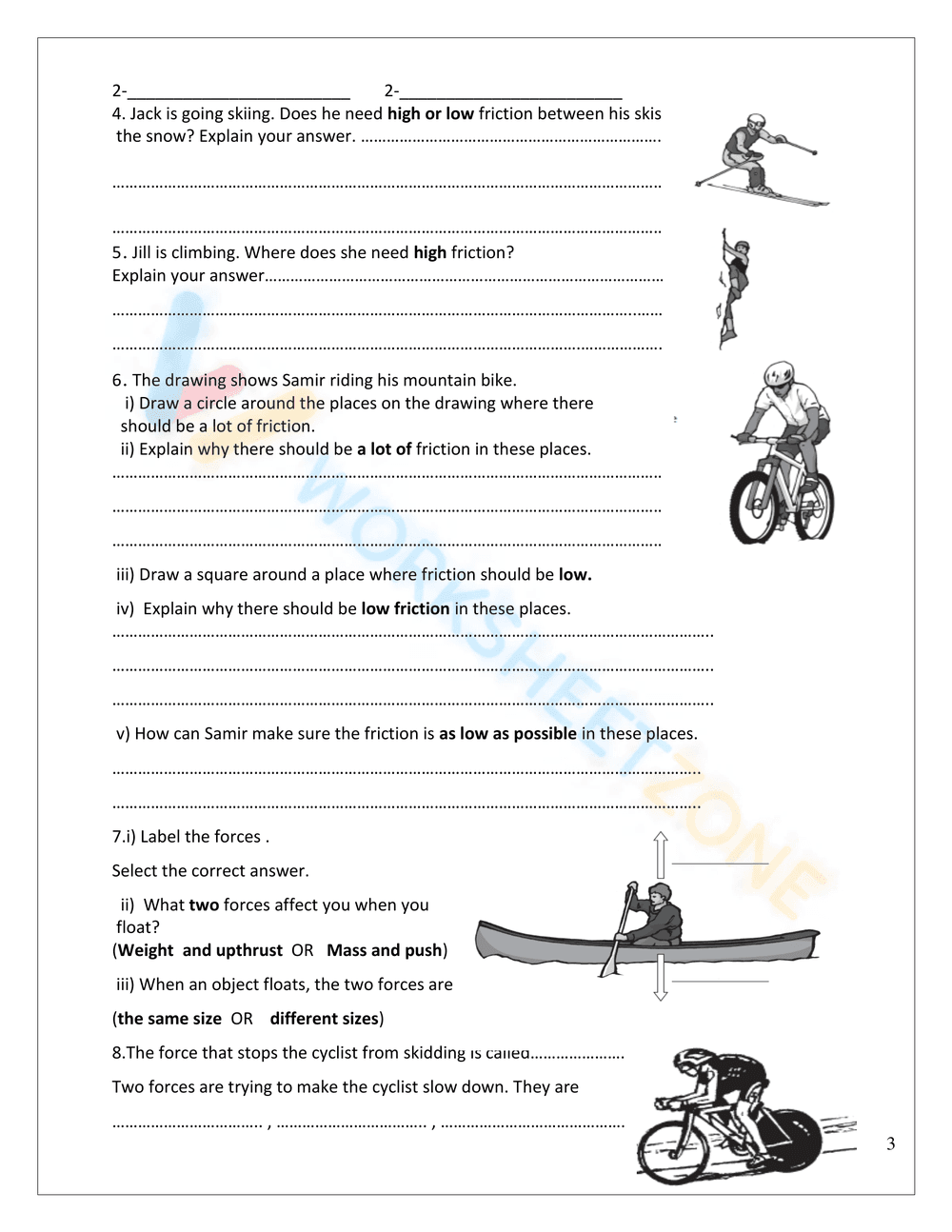
Mastering balanced and unbalanced forces is a critical step in middle school physical science education. According to a ScienceDirect TpT Analysis, students who engage with multi-modal problem sets—combining visual diagrams, vocabulary matching, and data graphing—demonstrate significantly higher retention of abstract physics concepts compared to those using text-only materials. This comprehensive worksheet directly supports MS-PS2-2 by asking learners to plan an investigation to provide evidence that change in motion depends on forces. By analyzing real-world examples like friction on mountain bicycle tires, upthrust on scuba divers, and water resistance on kayaks, students bridge the gap between theoretical physics and observable daily phenomena. Structured practice with calculating net force in Newtons ensures learners develop the quantitative reasoning skills required for advanced high school STEM coursework.


