




























Views
Downloads

Printable Vertical Line Tracing Worksheet | Preschool ELA

Paste this activity's link or code into your existing LMS (Google Classroom, Canvas, Teams, Schoology, Moodle, etc.).
Students can open and work on the activity right away, with no student login required.
You'll still be able to track student progress and results from your teacher account.
Mastering vertical line tracing is a foundational step in early development, impacting letter formation. This preschool worksheet provides a structured environment for children to refine fine motor control through visual prompts. By completing these exercises, learners strengthen the grip and hand-eye coordination essential for academic success.
At a Glance
- Grade: Preschool · Subject: Early Literacy
- Standard:
L.K.1.A— Trace vertical lines to build the control needed to print letters- Skill Focus: Vertical Line Tracing
- Format: 3 pages · 18 problems · Answer key included · PDF
- Best For: Pre-writing fine motor skill development
- Time: 10–15 minutes
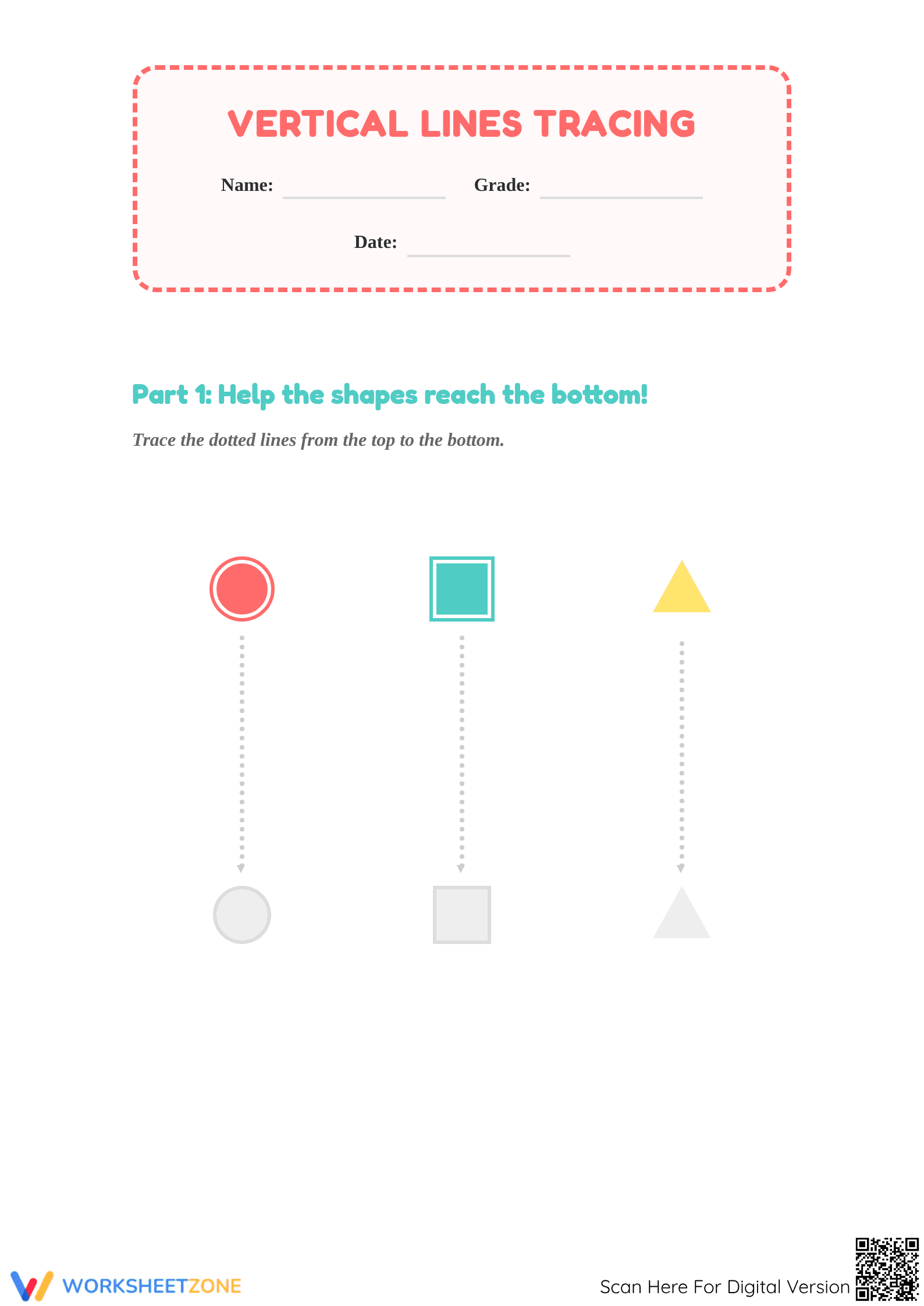
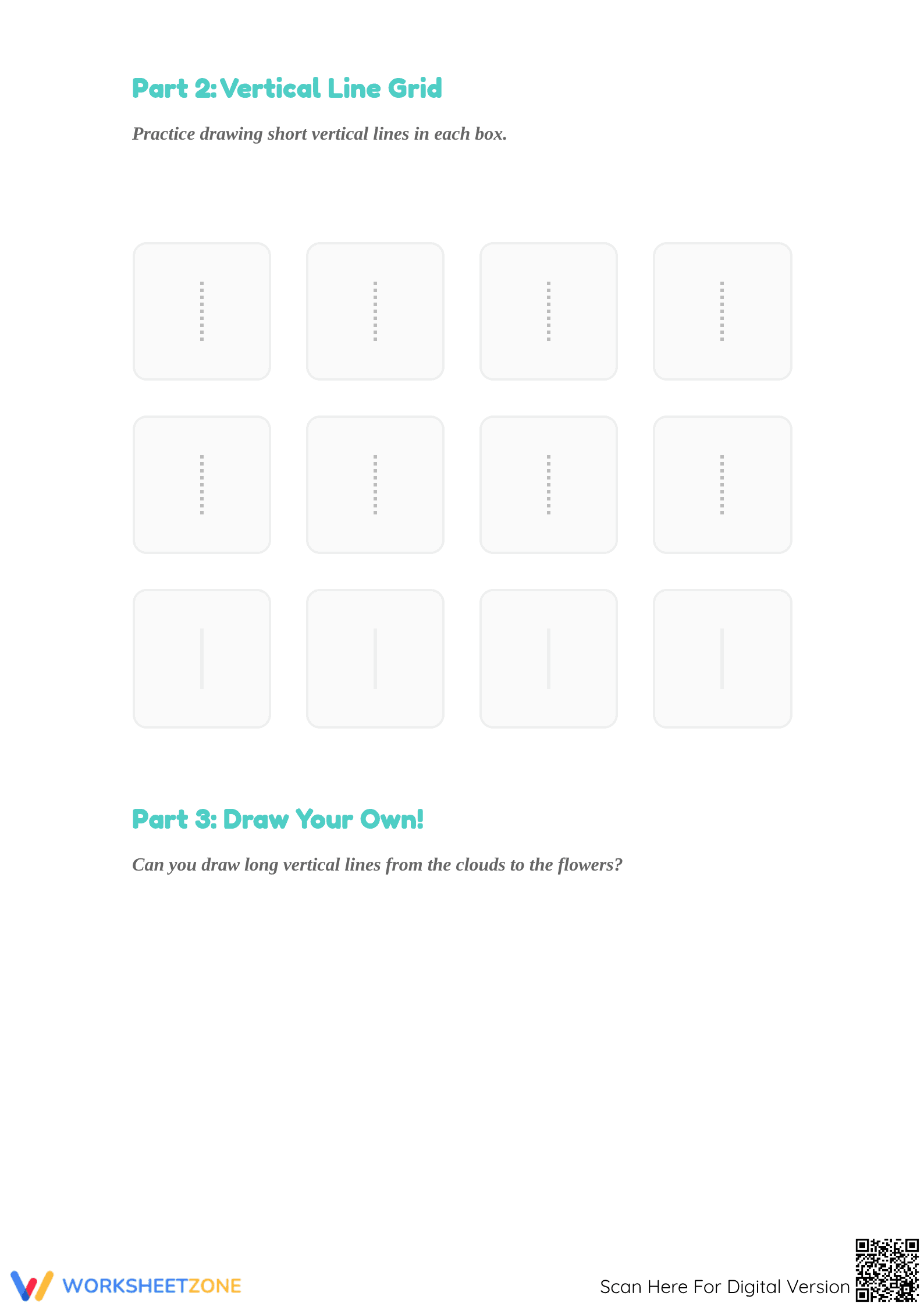
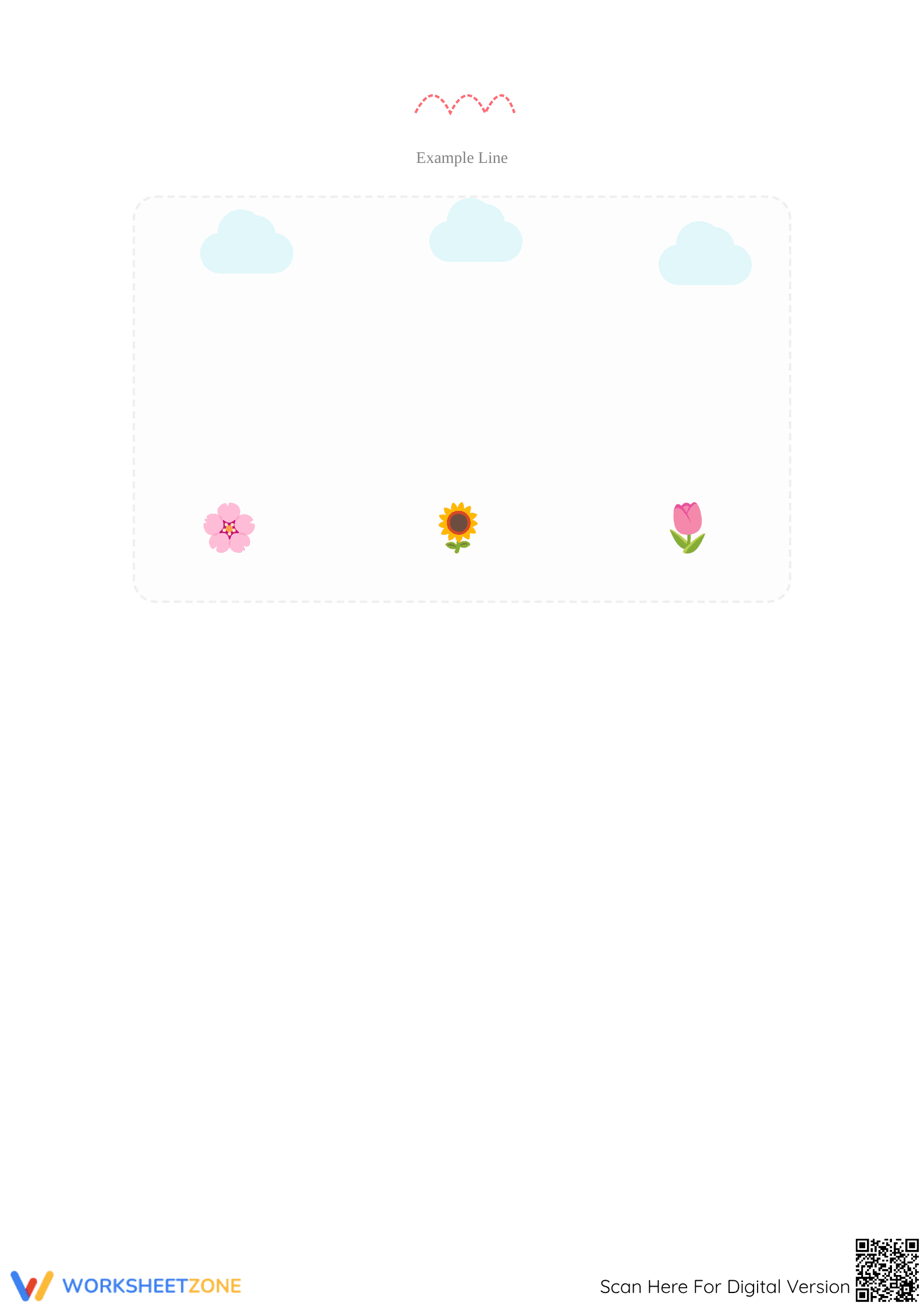
This three-page PDF features high-contrast graphics and intuitive layouts. Inside are three parts: a shape-matching tracing activity, a vertical line grid for consistency, and a creative "draw your own" section connecting clouds to flowers. The packet includes a full answer key demonstrating the completed lines to facilitate quick reviews or student self-checking.
Skill Progression
- Guided Practice: The first page features 3 large-scale tasks where students help shapes reach their targets, providing a wide path for initial hand-eye coordination attempts.
- Supported Practice: Page two offers a grid of 12 smaller boxes, encouraging students to produce more precise vertical strokes with decreasing visual support as they move through the grid.
- Independent Practice: The final page challenges students with 3 creative prompts to draw lines from clouds to flowers, requiring them to initiate and stop the vertical stroke without a continuous dotted guide.
This structure follows the gradual-release model, moving from high scaffolding to independent execution of pre-writing strokes.
Standards Alignment
This resource aligns with L.K.1.A: "Print many upper- and lowercase letters." Vertical lines are the building blocks for letters like 'l', 't', 'i', 'H', and 'F'. Both standard codes can be copied directly into lesson plans, IEP goals, or district curriculum mapping tools.
How to Use It
Use this during small-group instruction or as morning work. After a brief teacher demonstration of the "top-to-bottom" movement, students work at their own pace. Observe if students start at the top and maintain a consistent grip. This activity typically takes 10 to 15 minutes to complete.
Who It's For
Designed for preschool students, this resource is ideal for children beginning to use writing tools. It serves as an intervention for students struggling with motor control. This worksheet pairs well with alphabet flashcards to bridge the gap between tracing and character recognition.
Developing fine motor control through vertical line tracing is recognized by the NAEP as a critical milestone in early literacy and school readiness. Research indicates that the physical act of tracing helps consolidate the neurological pathways required for future letter-to-sound mapping and fluent writing. According to a ScienceDirect TpT Analysis, structured tracing activities that utilize a variety of visual anchors—such as shapes or environmental objects—show higher engagement and retention rates in three-to-five-year-olds. By targeting the L.K.1.A standard through precursor skills, this worksheet ensures that students build the muscular memory needed to print many upper- and lowercase letters with confidence. Educators can rely on this evidence-based approach to provide a solid foundation for handwriting, ensuring that learners are prepared for the more rigorous demands of primary school literacy while fostering a positive early experience with pen-and-paper tasks.


