


























Views
Downloads

Essential Pencil Control Tracing Worksheet | Grade K Ready
Paste this activity's link or code into your existing LMS (Google Classroom, Canvas, Teams, Schoology, Moodle, etc.).
Students can open and work on the activity right away, with no student login required.
You'll still be able to track student progress and results from your teacher account.
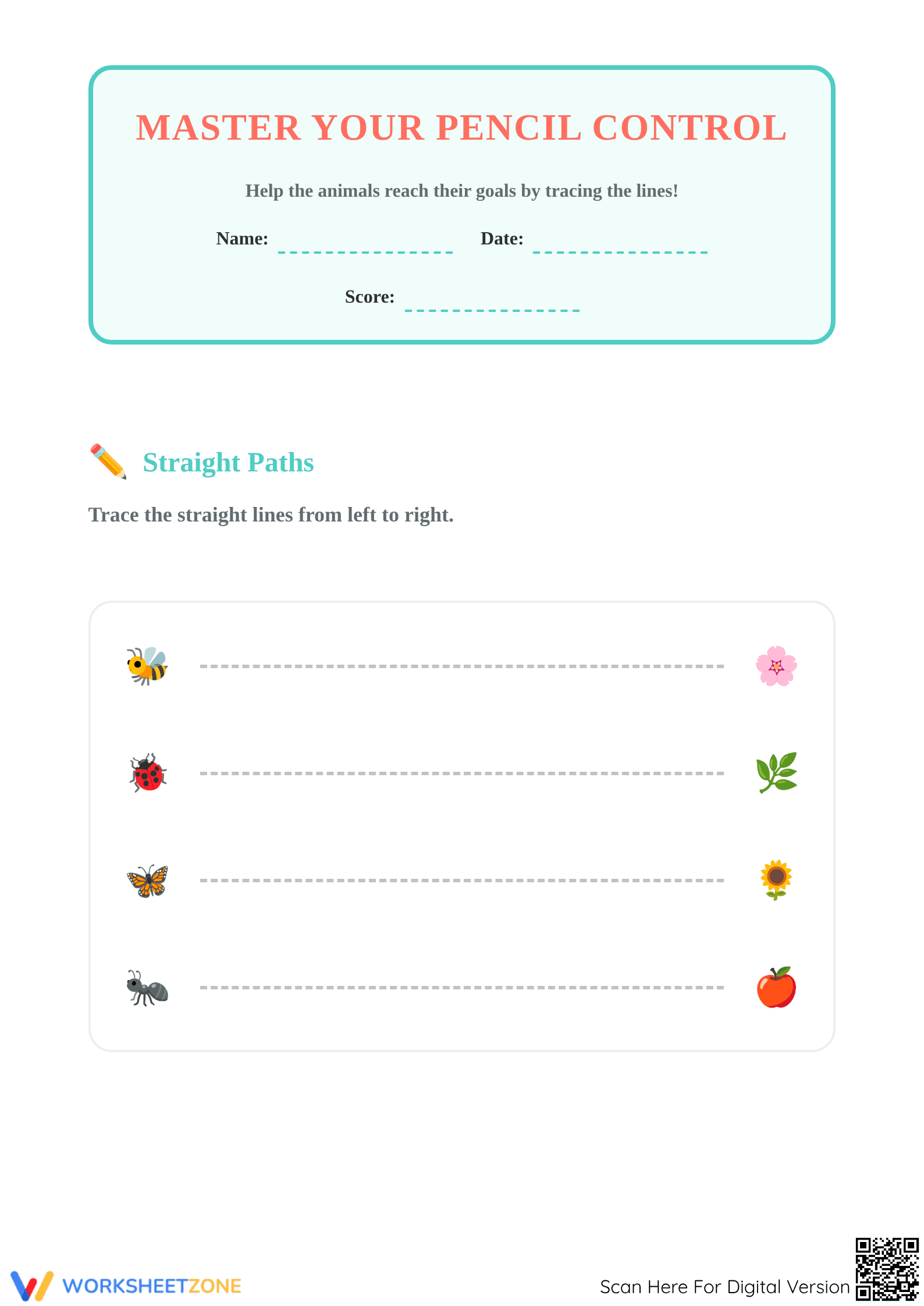
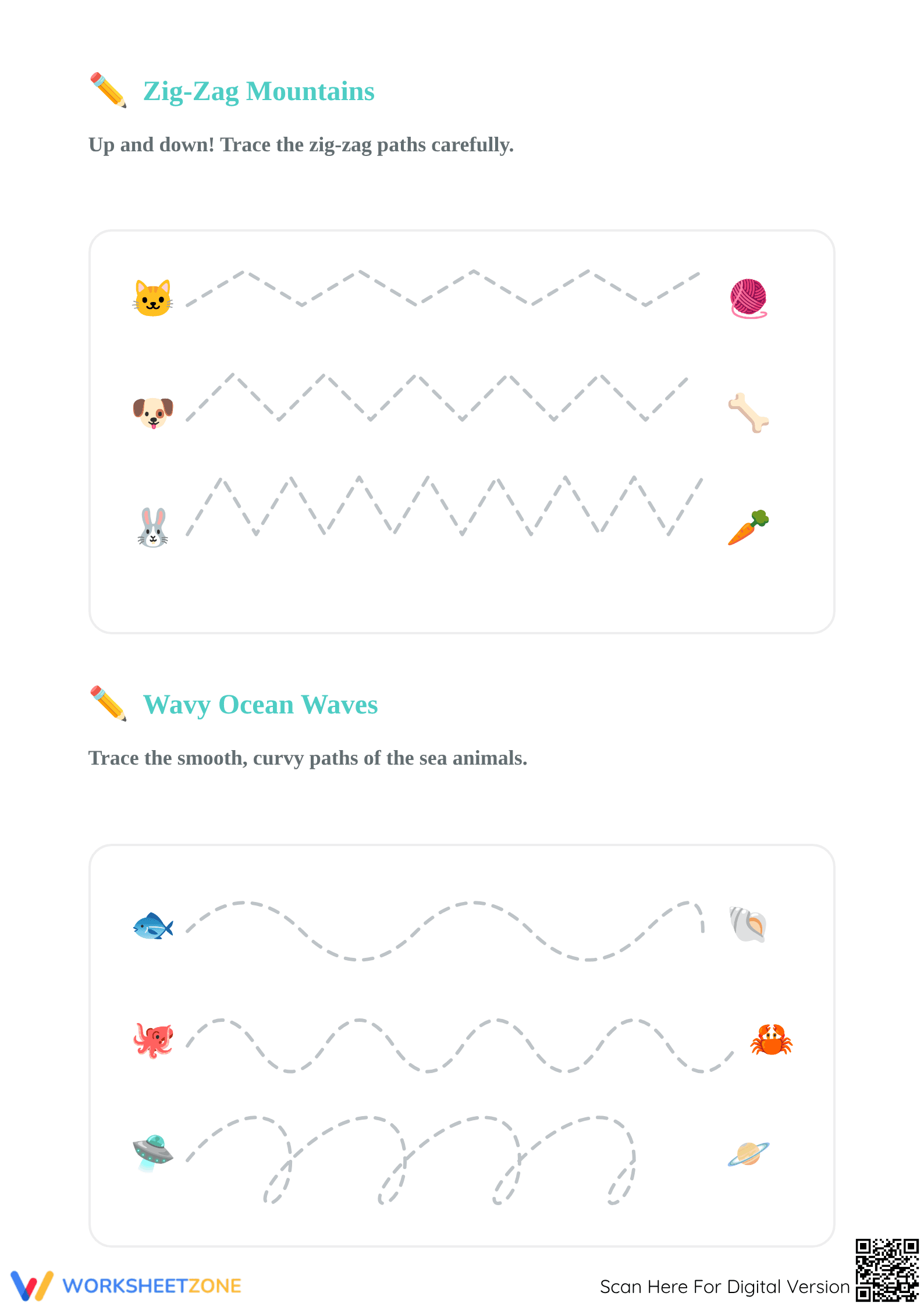
This Grade K pencil control worksheet provides foundational fine motor practice to prepare students for formal letter formation. By tracing 19 distinct paths, learners develop the muscular coordination and visual-spatial awareness necessary for legible writing. The activities move from simple horizontal lines to complex spirals and geometric shapes, ensuring a comprehensive pre-writing experience.
At a Glance
- Grade: Kindergarten · Subject: Writing
- Standard:
CCSS.ELA-LITERACY.L.K.1.A— Use fine motor control to trace lines and prepare for letter formation- Skill Focus: Pencil grip and line precision
- Format: 4 pages · 19 problems · Answer key included · PDF
- Best For: Morning work and writing centers
- Time: 15–20 minutes
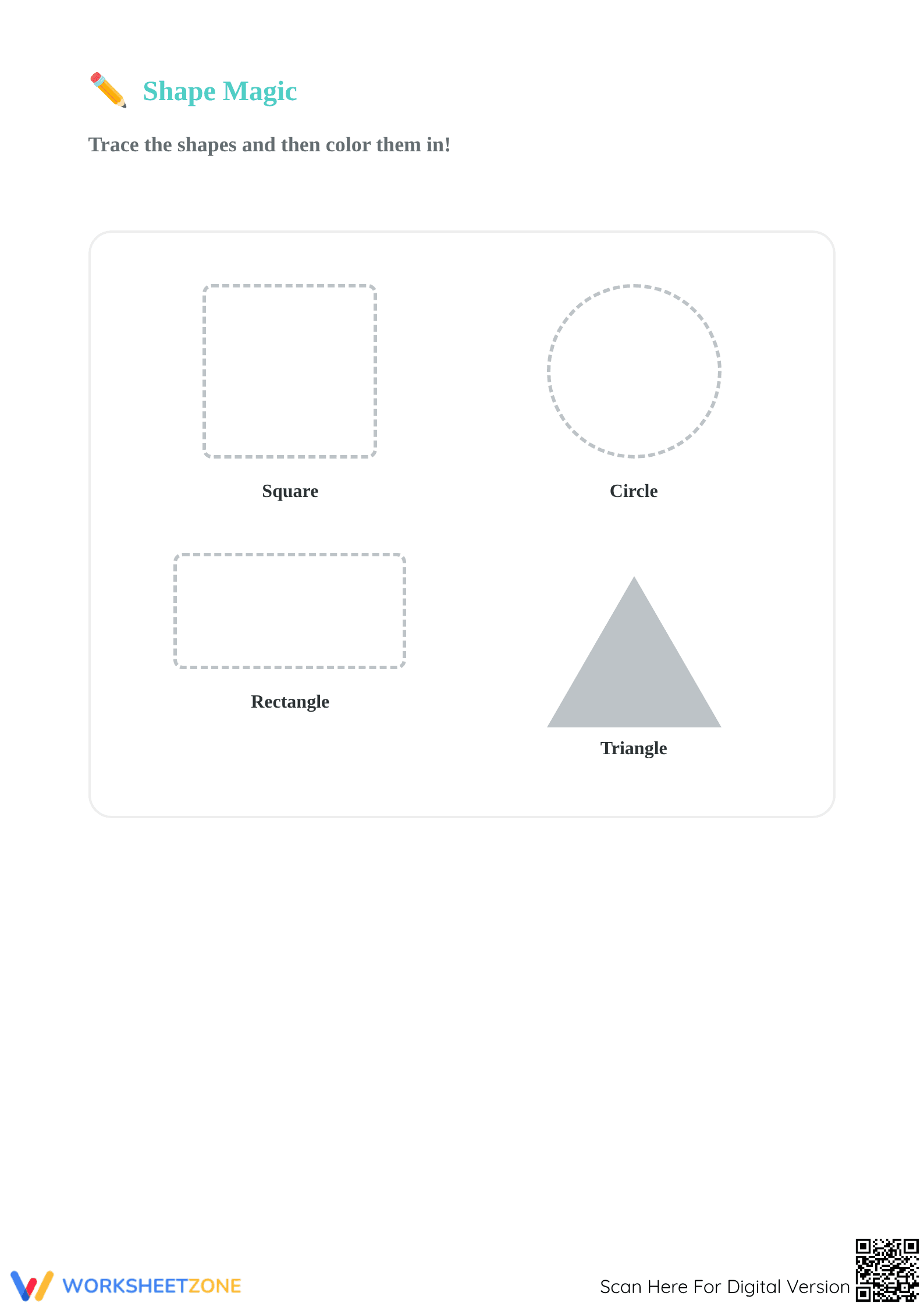
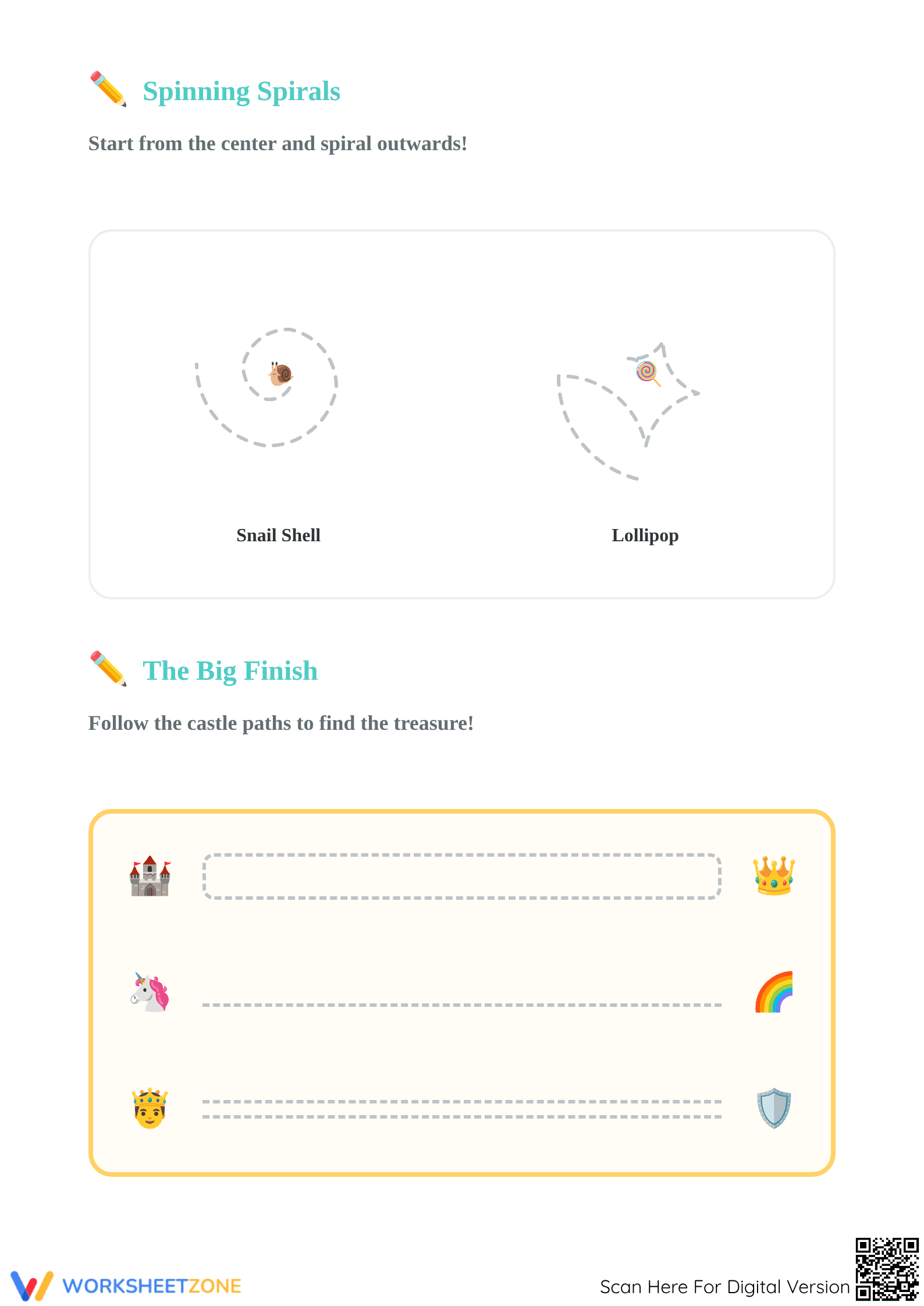
This 4-page PDF packet contains 19 tracing tasks designed for early learners. The first page focuses on straight horizontal paths, while the second introduces zig-zags and wavy "ocean waves." The third page transitions to "Shape Magic," where students trace and color four basic geometric forms. Finally, the fourth page challenges students with spirals and "The Big Finish" castle paths, providing a complete progression of motor skills.
The zero-prep workflow for this resource is designed for maximum efficiency in busy early childhood classrooms. First, print the 4-page packet (30 seconds). Second, distribute the sheets during morning arrival or small-group rotations (1 minute). Third, review student grip and line accuracy as they work, providing immediate corrective feedback (ongoing). Total teacher preparation time is under 2 minutes, making this an ideal sub plan or emergency filler.
This resource aligns with `CCSS.ELA-LITERACY.L.K.1.A`, which requires students to demonstrate command of the conventions of standard English grammar and usage when writing or speaking, specifically focusing on the physical act of letter formation. By mastering these pre-writing strokes, students build the muscle memory required for the Kindergarten standard. This standard code can be copied directly into lesson plans, IEP goals, or district curriculum mapping tools.
Use this worksheet during the instructional phase of a writing lesson to model proper pencil grip and posture. Alternatively, assign individual pages as a formative assessment to identify students struggling with crossing the midline or maintaining steady pressure. Expected completion time for the full packet is 15 to 20 minutes, though it can be broken into 5-minute daily segments for younger learners.
This resource is specifically designed for Pre-K and Kindergarten students, as well as older students receiving Occupational Therapy (OT) services for fine motor delays. It pairs naturally with alphabet anchor charts or tactile tracing activities like sand trays. The clear, uncluttered layout supports students with visual processing needs by reducing cognitive load during the tracing task.
Research by Fisher & Frey (2014) emphasizes the importance of the gradual release of responsibility, which is mirrored here as students move from highly structured straight lines to more complex, independent shapes. Developing pencil control is a critical precursor to literacy; according to the NAEP, early fine motor proficiency is a strong predictor of later academic success in both reading and writing. This worksheet addresses these foundational needs through 19 targeted tracing tasks that align with CCSS.ELA-LITERACY.L.K.1.A. By providing structured practice in line precision and spatial orientation, educators can ensure that students are physically prepared for the rigors of the primary writing curriculum. This summary and the associated standard code are designed for integration into digital curriculum repositories and evidence-based instructional logs.


