


























Views
Downloads

Essential Sight Words Worksheet | Kindergarten ELA Ready
Paste this activity's link or code into your existing LMS (Google Classroom, Canvas, Teams, Schoology, Moodle, etc.).
Students can open and work on the activity right away, with no student login required.
You'll still be able to track student progress and results from your teacher account.
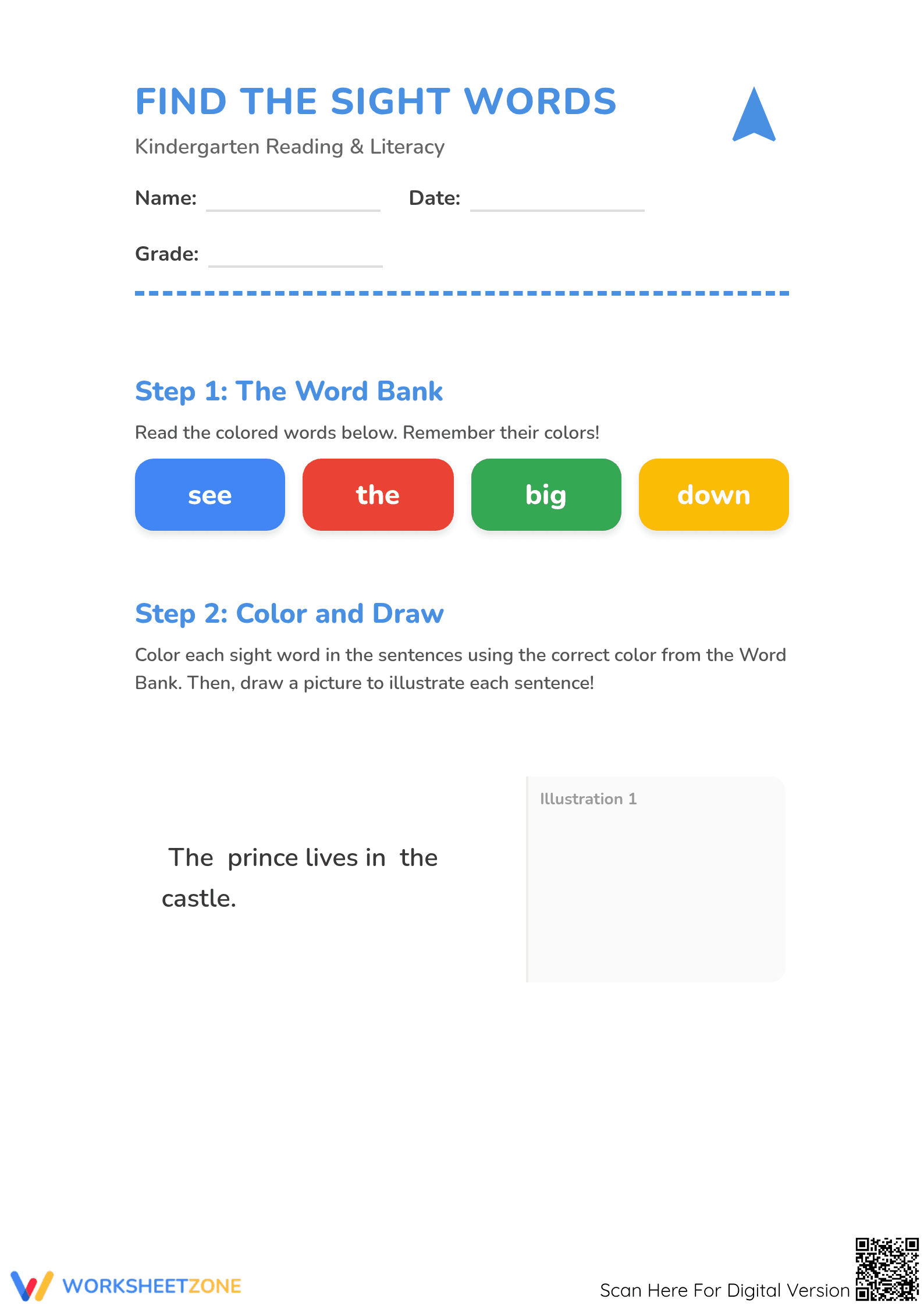
This comprehensive Kindergarten sight word worksheet helps young learners master four essential high-frequency words: see, the, big, and down. Through a multi-sensory approach involving coloring, drawing, tracing, and a word search, students build the automaticity required for early reading fluency. This printable resource ensures children transition from isolated word recognition to meaningful sentence application.
At a Glance
- Grade: Kindergarten · Subject: English Language Arts
- Standard:
CCSS.ELA-LITERACY.RF.K.3.C— Read common high-frequency words by sight- Skill Focus: High-frequency word recognition and spelling
- Format: 4 pages · 10 tasks · Answer key included · PDF
- Best For: Independent literacy centers and sub plans
- Time: 20–30 minutes
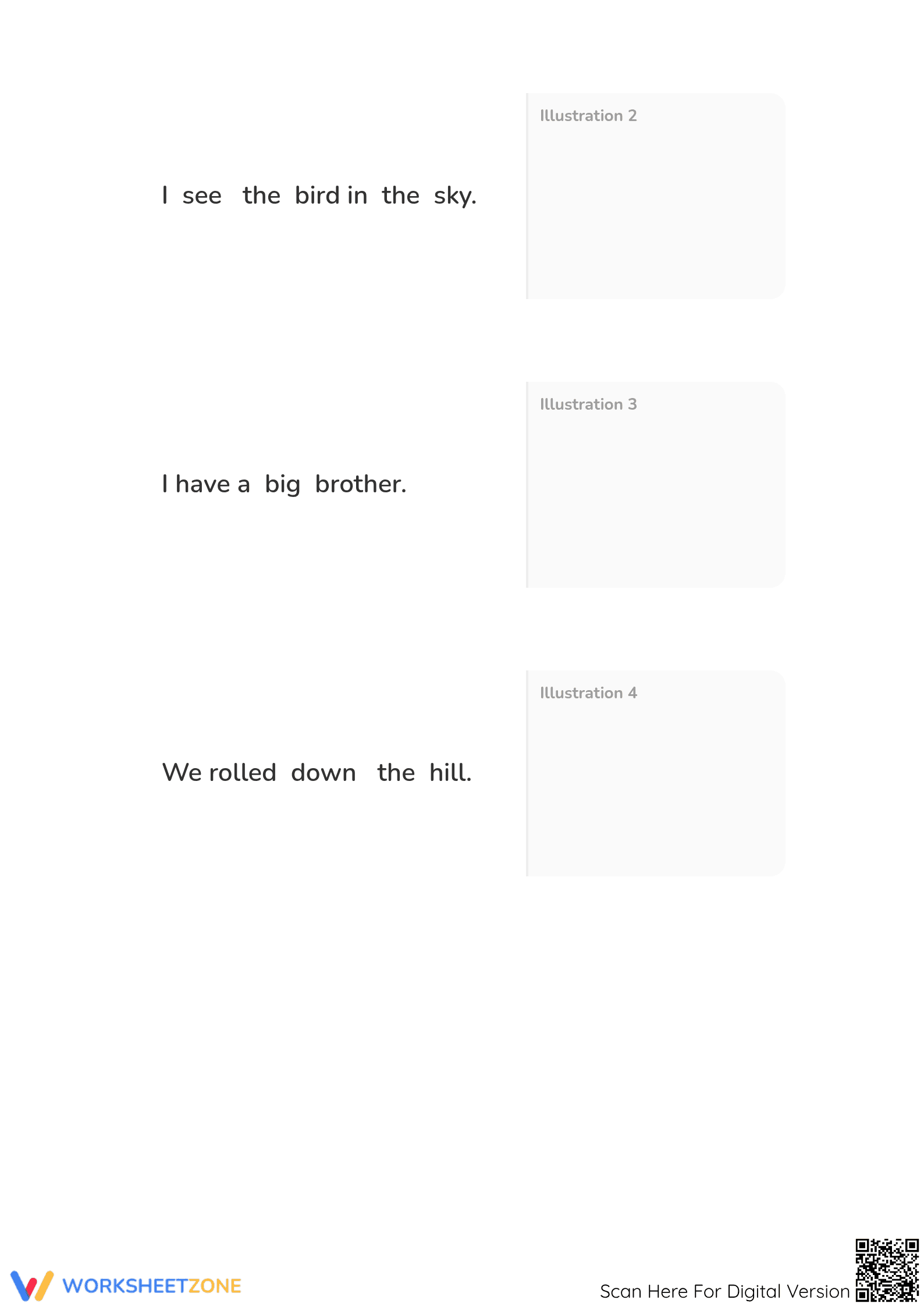
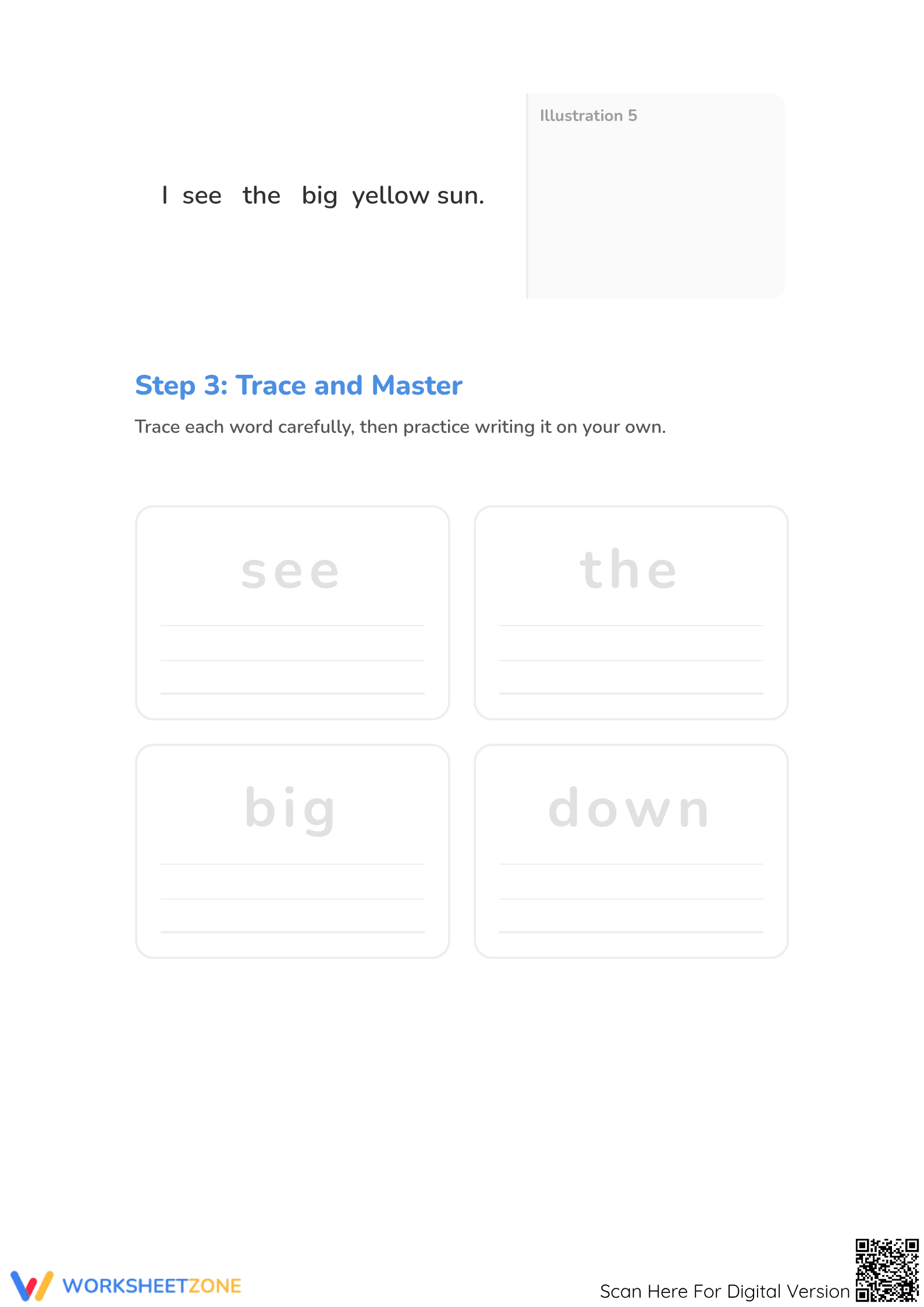
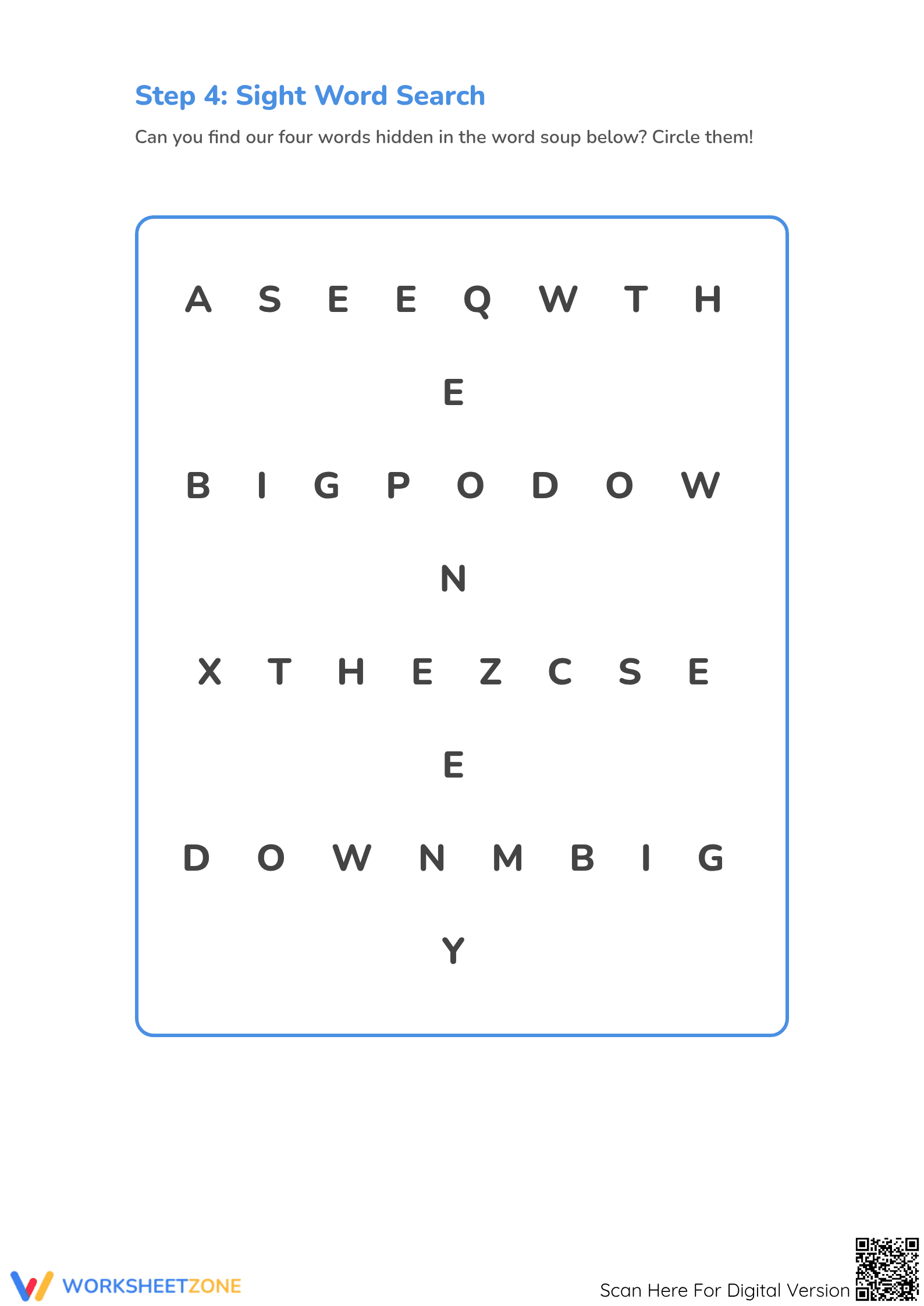
The worksheet is structured across four pages to ensure skill retention. It begins with a color-coded word bank that guides students through five interactive sentence-reading tasks where they color specific words and draw corresponding illustrations. The packet continues with a dedicated tracing and handwriting section for fine motor development, concluding with a "Sight Word Search" that challenges students to find the target vocabulary hidden within a letter grid. A full answer key is provided for quick checking.
Zero-Prep Workflow
Implementing this resource requires minimal effort from the educator. First, Print the four-page PDF (10 seconds). Second, Distribute the packets to students along with crayons or colored pencils (45 seconds). Finally, Review the completed word search or illustrations during a closing circle (60 seconds). With a total setup time of under two minutes, this worksheet is an ideal solution for emergency sub folders or busy morning work transitions.
Standards Alignment
The primary focus of this resource is `CCSS.ELA-LITERACY.RF.K.3.C`: "Read common high-frequency words by sight." By requiring students to identify these words within the context of sentences and locate them in a word search, the worksheet supports the development of the orthographic mapping skills necessary for literacy. These standard codes can be copied directly into lesson plans, IEP goals, or district curriculum mapping tools.
How to Use It
This resource is best used during the "You Do" phase of a gradual release model. After introducing the words "see," "the," "big," and "down" using flashcards, provide the packet for independent practice. Alternatively, use the sentence-drawing pages as a formative assessment to observe if students can differentiate between the target words while reading. The multi-page format allows the work to be split over two days, with fifteen minutes of engagement each session.
Who It's For
Specifically designed for Kindergarten students and advanced Preschoolers, this packet provides the necessary scaffolds for early readers. The inclusion of sentence frames and illustration boxes makes it highly effective for English Language Learners (ELLs) who benefit from visual representation of vocabulary. It pairs naturally with leveled readers or high-frequency word anchor charts already present in the classroom environment.
Mastering high-frequency words is a foundational pillar of early literacy development, as these words account for a significant percentage of all printed text. Research from EdReports 2024 emphasizes that systematic, multi-sensory exposure to sight words—combining visual recognition with kinesthetic tracing and contextual application—is critical for moving words into long-term memory. This 4-page packet aligns with best practices in the Science of Reading by moving beyond rote memorization into active engagement and orthographic processing. According to NAEP data, students who achieve early sight word automaticity are significantly more likely to meet reading proficiency benchmarks in later elementary years. By integrating the standard `CCSS.ELA-LITERACY.RF.K.3.C` into a no-prep format, this resource ensures that high-quality practice remains accessible even during time-constrained instructional blocks. This structured approach provides the repetition necessary for learners to internalize vocabulary, ultimately bridging the gap between decoding and fluent reading.


